Visual recognition skills Worksheets for Ages 7-8
3 filtered results
-
From - To
Enhance your child's visual recognition skills with our engaging worksheets designed specifically for ages 7-8! Our resources promote critical thinking and observational abilities while keeping learning fun and interactive. Each worksheet features colorful images and stimulating activities tailored to challenge young learners through matching games, sorting exercises, and pattern recognition tasks. With a focus on improving attention to detail and memory, these worksheets are perfect for classroom or home use. Foster your child’s cognitive growth and boost their confidence as they complete puzzles and tasks that sharpen their perception, setting a strong foundation for future academic success. Explore our collection today for effective learning tools!
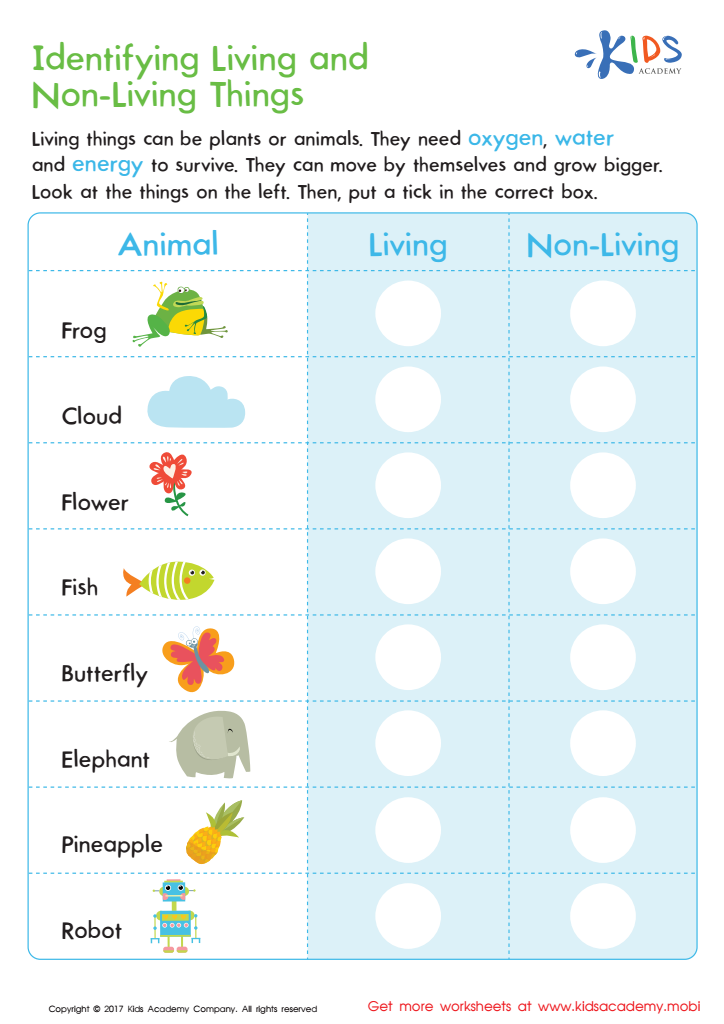
Identifying Living or Non–living Worksheet
 Assign to My Students





Visual recognition skills are critical for children aged 7-8, as they significantly influence learning and development. At this age, children begin to engage more deeply with reading, math, and science, where strong visual recognition plays a fundamental role. Understanding letters, words, shapes, and symbols enhances their ability to read and comprehend, which is paramount for academic success.
Moreover, visual recognition is closely tied to critical thinking and problem-solving. As students encounter various stimuli in their environments, the ability to identify and interpret visual cues aids in making sense of the world around them. This skill also fosters creativity, as children learn to analyze visual elements in art and media.
Additionally, strong visual recognition supports social development; children can better interpret non-verbal cues from peers and adults, which is essential for effective communication and building relationships. For parents and teachers, nurturing these skills can lead to improved academic performance, greater self-confidence, and overall better engagement in classroom activities. Incorporating games, puzzles, and activities that emphasize visual recognition can create an enriching environment that motivates children and enhances their learning experiences. Investing time in developing these skills will yield long-term benefits across various areas of a child's life.








