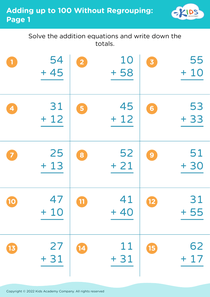
Fine Motor Skills Adding up to 100 with Regrouping Worksheets for Ages 7-8
3 filtered results
-
From - To
Enhance your child's fine motor skills with our engaging "Adding up to 100 with Regrouping Worksheets" designed specifically for ages 7-8. These worksheets not only reinforce essential math concepts such as addition and regrouping but also encourage the development of coordination and precision in hand movements. Perfect for young learners, these activities blend educational content with fun, making math practice enjoyable. By using these worksheets, children can improve their writing skills, number formation, and overall dexterity while mastering the art of adding numbers up to 100. Download now and watch your child's confidence and abilities soar!
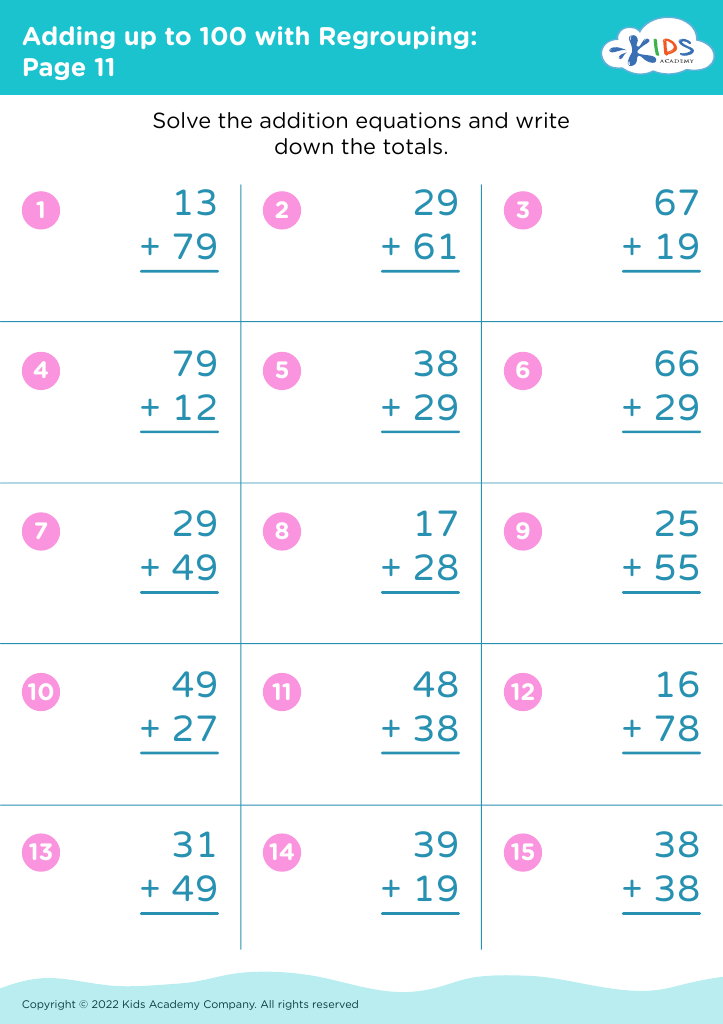
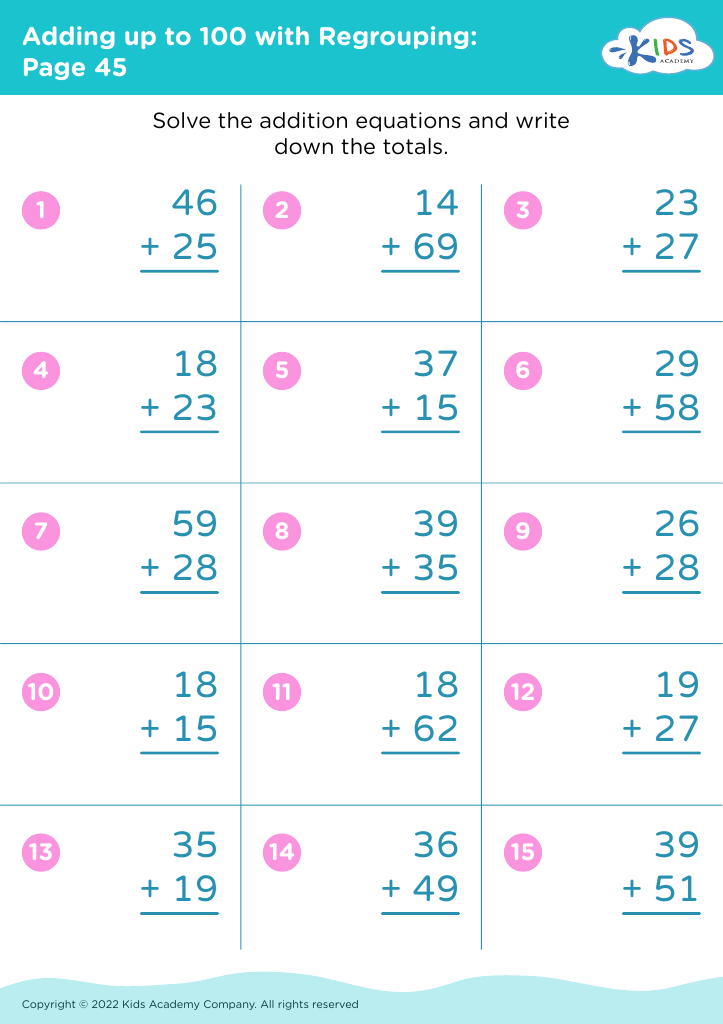
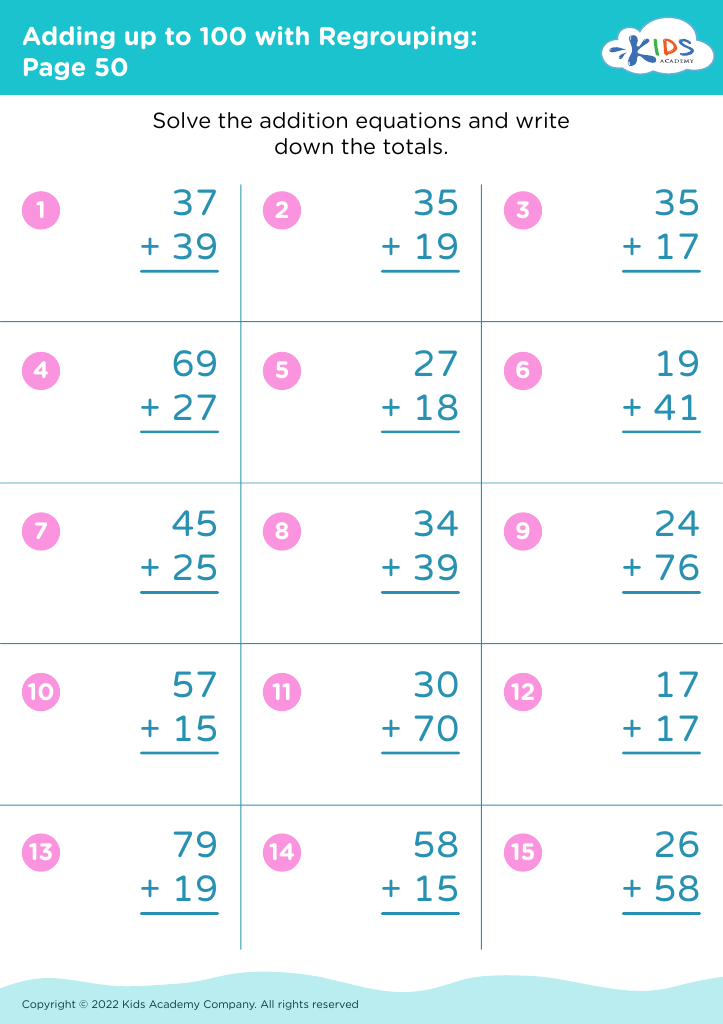




Fine motor skills and mathematical concepts, such as adding up to 100 with regrouping, are crucial for children aged 7-8. Developing fine motor skills, which involve the coordination of small muscles in the hands and fingers, is essential for tasks like writing and manipulating objects. Mastery of fine motor skills enhances a child’s ability to confidently use pencils, scissors, and other educational tools.
Adding up to 100 with regrouping contributes significantly to a child’s cognitive and academic development. At this age, students are typically introduced to more complex addition problems, requiring them to regroup numbers effectively. Understanding this mathematical concept helps build a strong foundation for future math challenges, fostering critical thinking and problem-solving skills.
Parents and teachers should care because proficient fine motor skills positively impact academic performance and self-esteem. Students who struggle with fine motor tasks may find writing and math challenging, leading to frustration and disengagement. By nurturing both fine motor skills and mathematical understanding, adults can promote a love for learning, encourage persistence, and support children in becoming independent, confident learners. Collaboration between parents and teachers in these areas cultivates an environment conducive to growth and success in both academic and life skills.