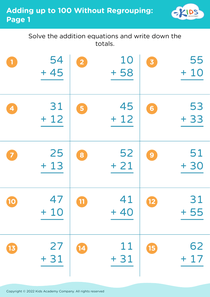
Recognize patterns Adding up to 100 with Regrouping Worksheets for Ages 7-8
3 filtered results
-
From - To
Unlock the power of math for your 7 to 8-year-olds with our "Recognize Patterns: Adding Up to 100 with Regrouping Worksheets." These engaging, printable worksheets are designed to help young learners identify numerical patterns and develop their skills in addition through regrouping. By practicing with our innovative exercises, children will enhance their understanding of how to efficiently solve addition problems that total up to 100. Each worksheet promotes critical thinking and boosts confidence, making math fun and accessible. Equip your child with essential math strategies and watch their proficiency soar! Start their learning journey today!
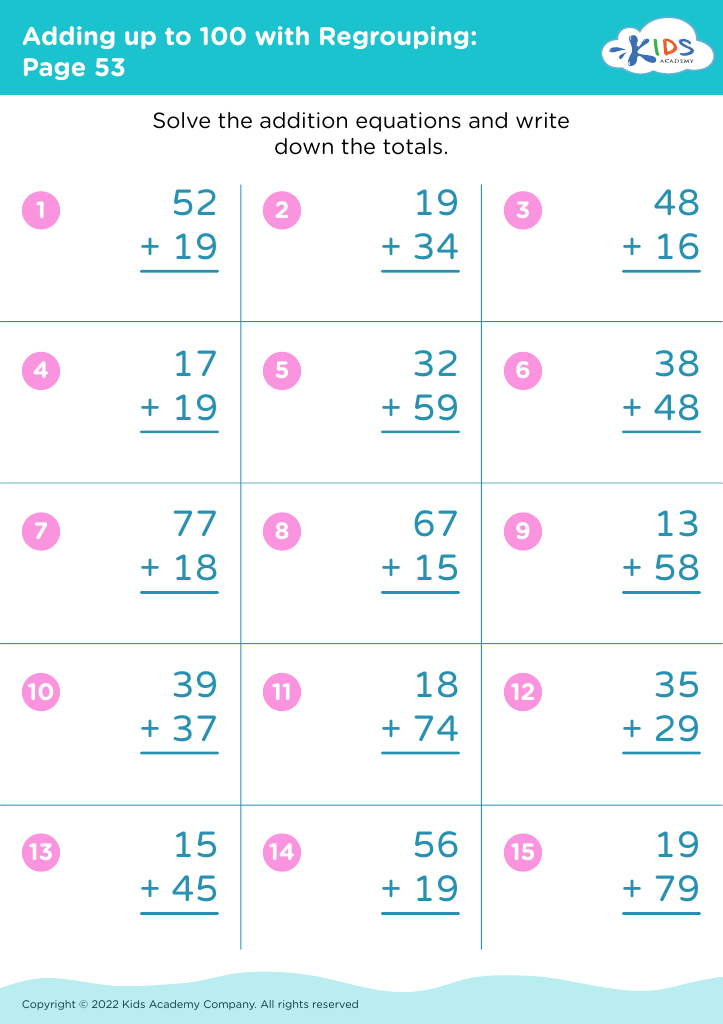
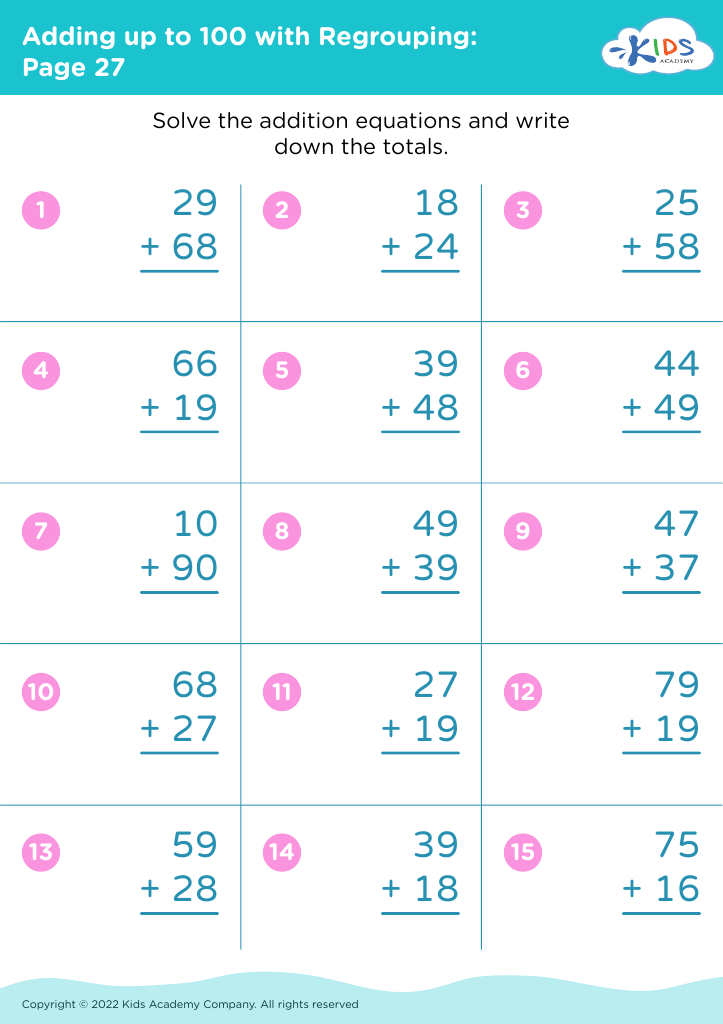
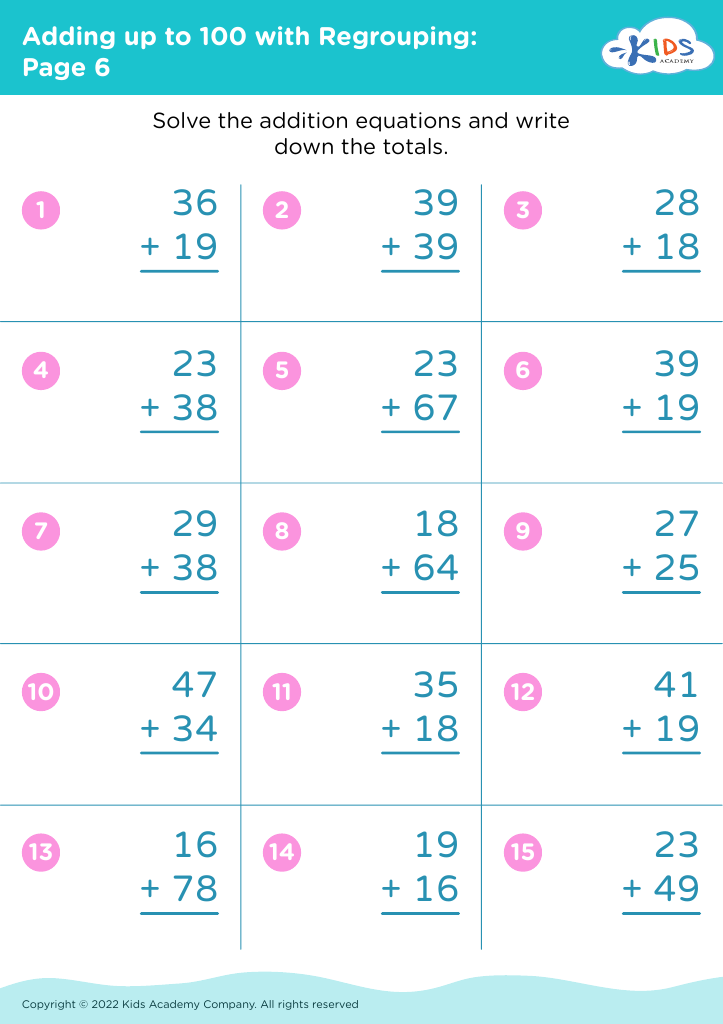




Recognizing patterns in addition, particularly when adding up to 100 with regrouping, is a vital skill for children aged 7-8. This foundational concept not only enhances mathematical fluency but also improves problem-solving abilities, critical thinking, and cognitive development. When children learn to identify patterns, they can make connections between numbers, simplifying complex operations and building a deeper understanding of the relationships among them.
For parents and teachers, fostering this skill encourages a sense of achievement and boosts confidence. Students learn that math is not merely rote memorization but a logical, interconnected subject. Moreover, being proficient in pattern recognition and regrouping prepares children for more advanced mathematical concepts, such as place value and multi-digit addition.
As kids navigate various problem-solving scenarios, they develop resilience, learning that mistakes are opportunities for growth. Recognizing patterns leads to greater abstraction and the ability to transfer these skills to real-world situations, such as budgeting or planning. By nurturing these skills early, parents and teachers equip students with the tools they need for academic success and everyday life, fostering a lifelong appreciation for math and its importance.