Counting skills Adding up to 100 Without Regrouping Worksheets for Ages 7-8
6 filtered results
-
From - To
Boost your child's counting confidence with "Counting Skills: Adding up to 100 Without Regrouping" worksheets, perfect for ages 7-8! Designed by educational experts, these engaging activities help young learners practice essential addition skills without the complication of regrouping. Each worksheet focuses on enhancing mental math abilities, fostering a deep understanding of number relationships, and promoting independent problem-solving. With colorful, kid-friendly designs, these worksheets make mastering math fun and accessible. Equip your child with the tools they need to succeed in math and beyond with our carefully crafted counting exercises tailored to their growing minds.
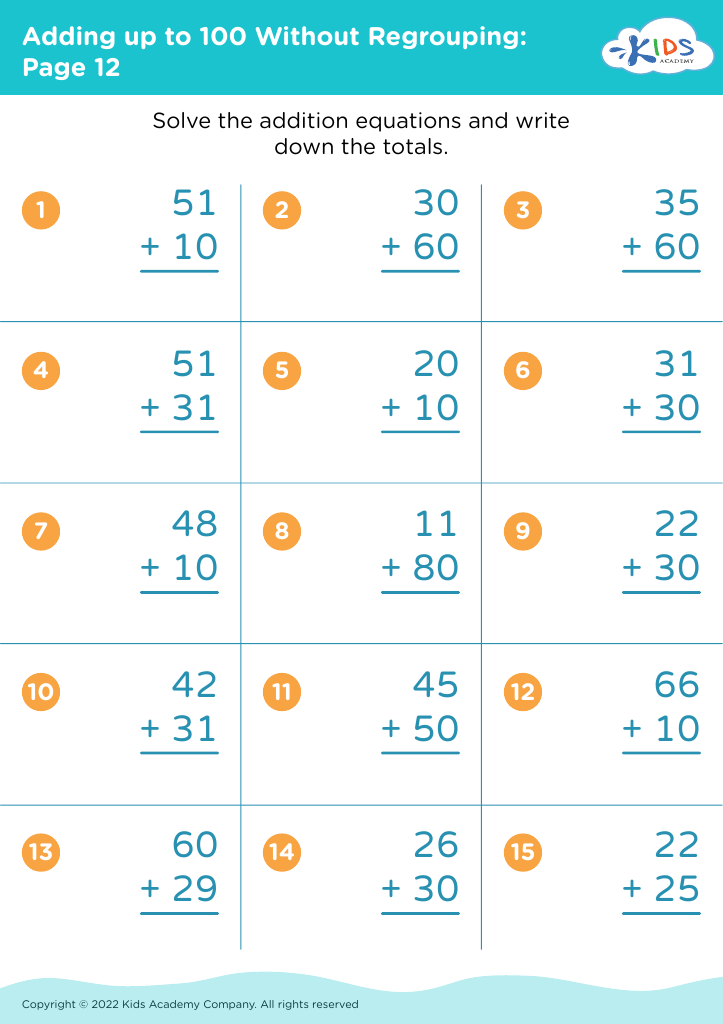
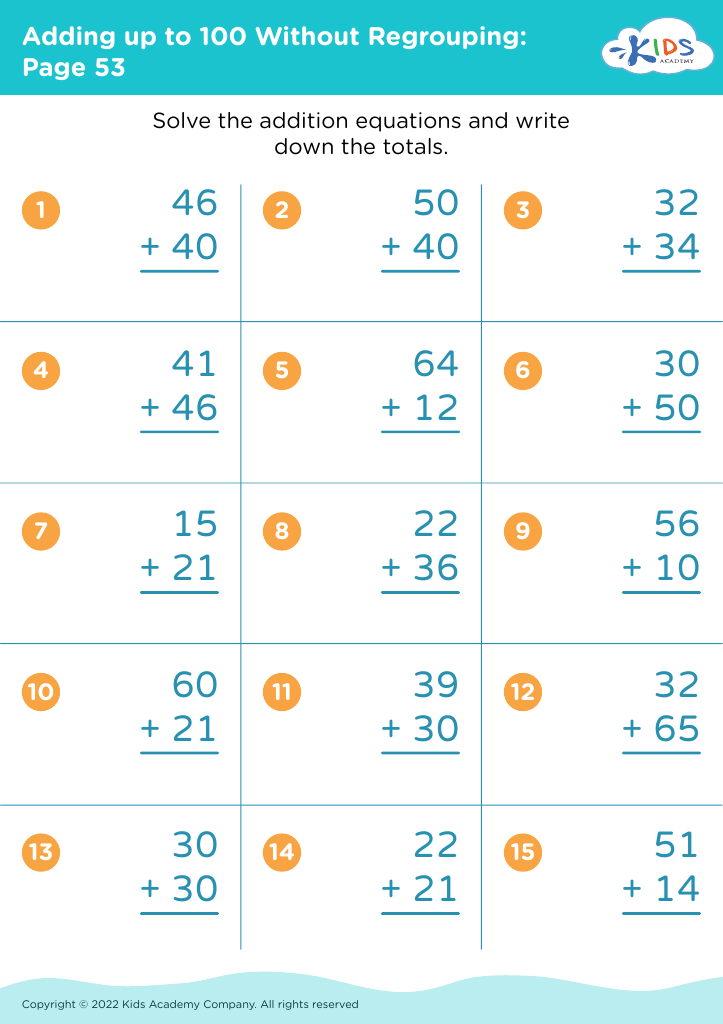
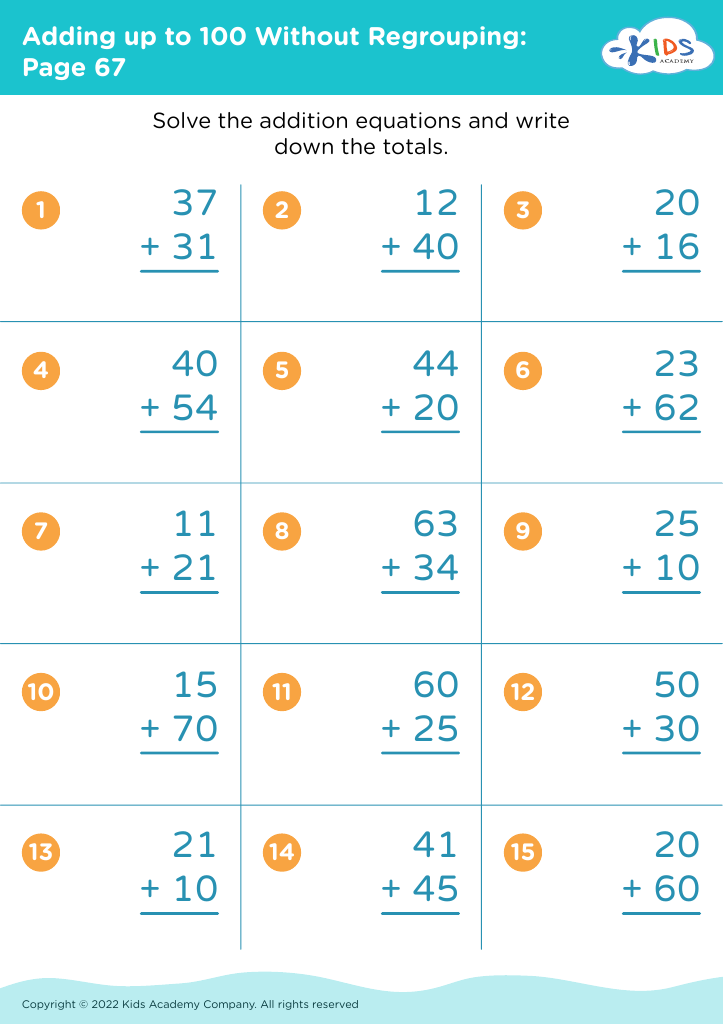
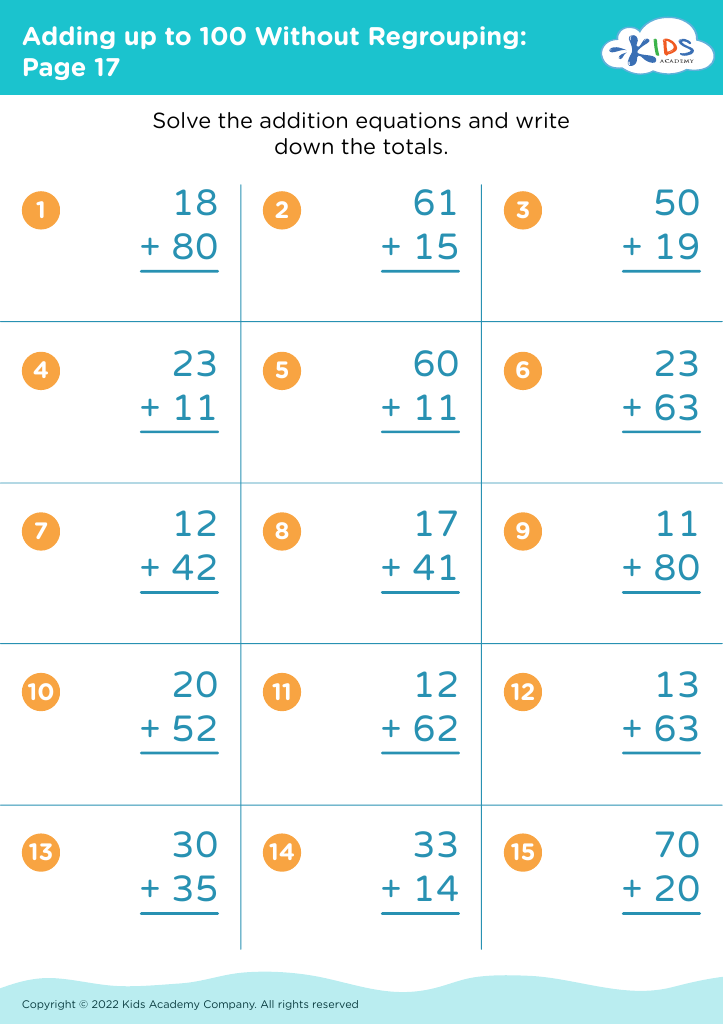
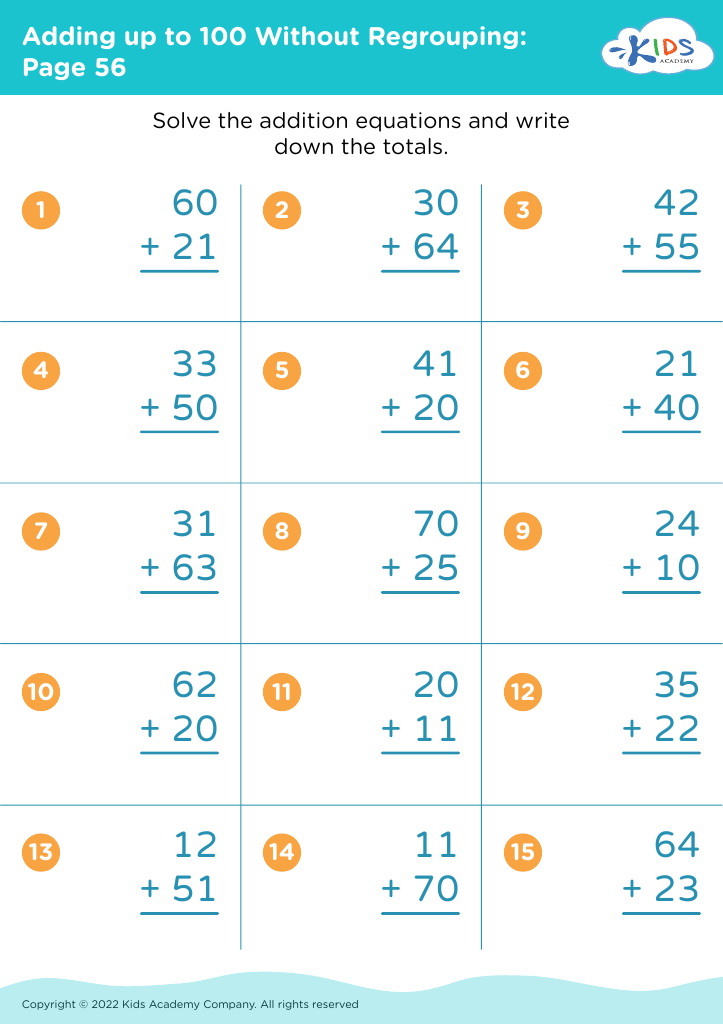
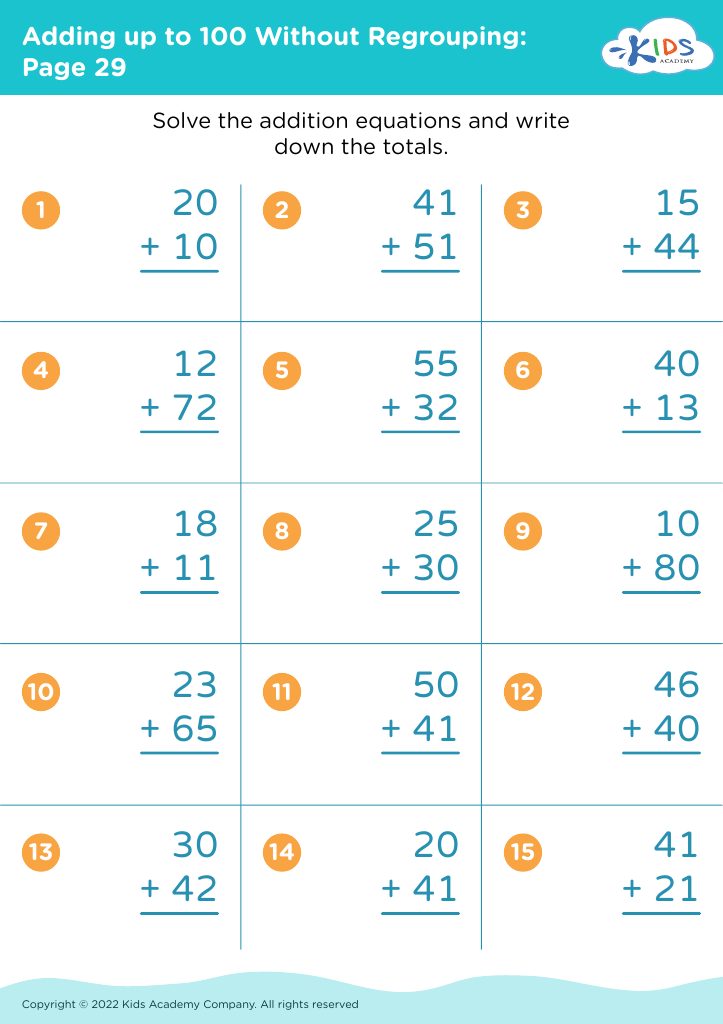




Counting and adding up to 100 without regrouping are foundational math skills that are crucial for children aged 7-8. At this stage, young learners are developing their understanding of numbers, and mastery in these skills enhances their numerical fluency.
For parents and teachers, ensuring that children grasp these concepts is important as it builds the basis for more complex arithmetic operations they'll encounter later, such as subtraction, multiplication, and division. Being able to count and add efficiently boosts a child's confidence and allows them to tackle math problems with ease, reducing anxiety around the subject.
Moreover, these skills foster problem-solving and logical thinking. When kids learn to add numbers accurately, they sharpen their attention to detail and ability to follow multi-step instructions. This not only benefits their math abilities but also improves general cognitive functions and academic performance.
Practice in counting and adding without regrouping helps children understand order and relationships between numbers, essential components of critical thinking. This smooth progression keeps them engaged and sets a positive trajectory for lifelong learning and curiosity in mathematics.
In essence, establishing a solid grasp of counting and basic addition up to 100, devoid of regrouping, prepares children for future mathematical challenges and promotes a strong educational foundation.