Basic arithmetic skills Adding up to 100 Worksheets for Ages 7-8
3 filtered results
-
From - To
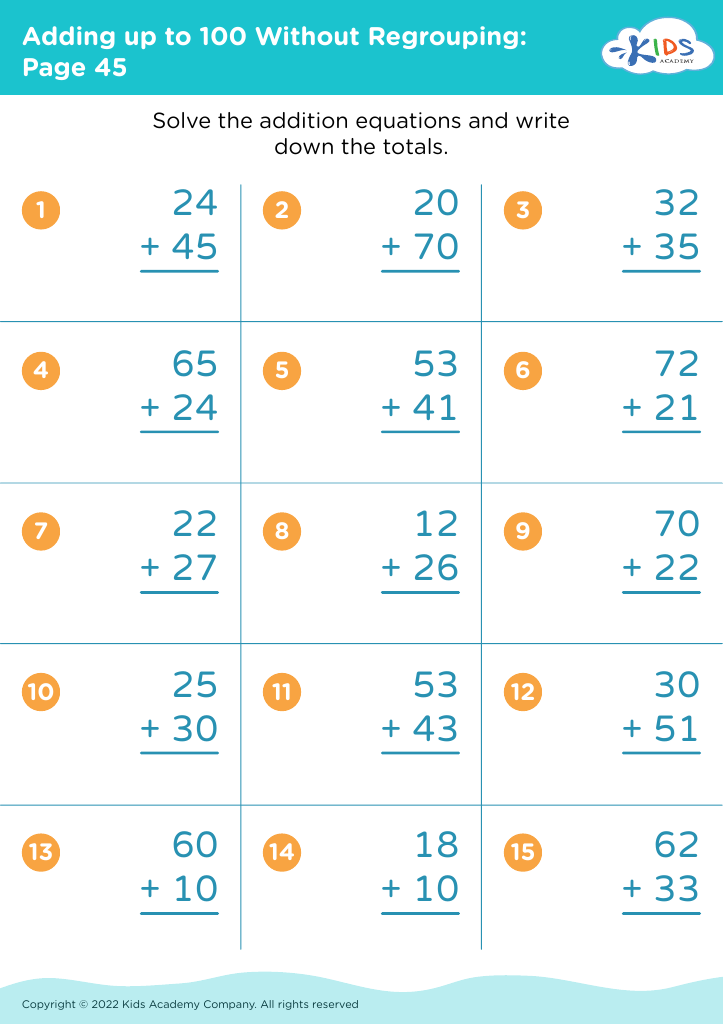
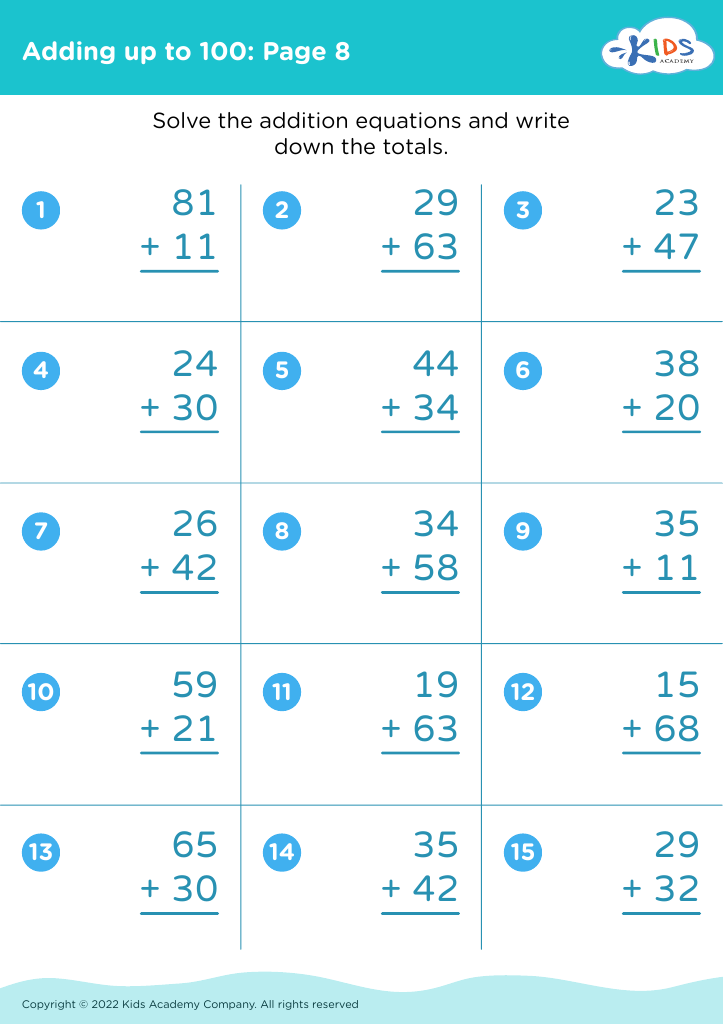
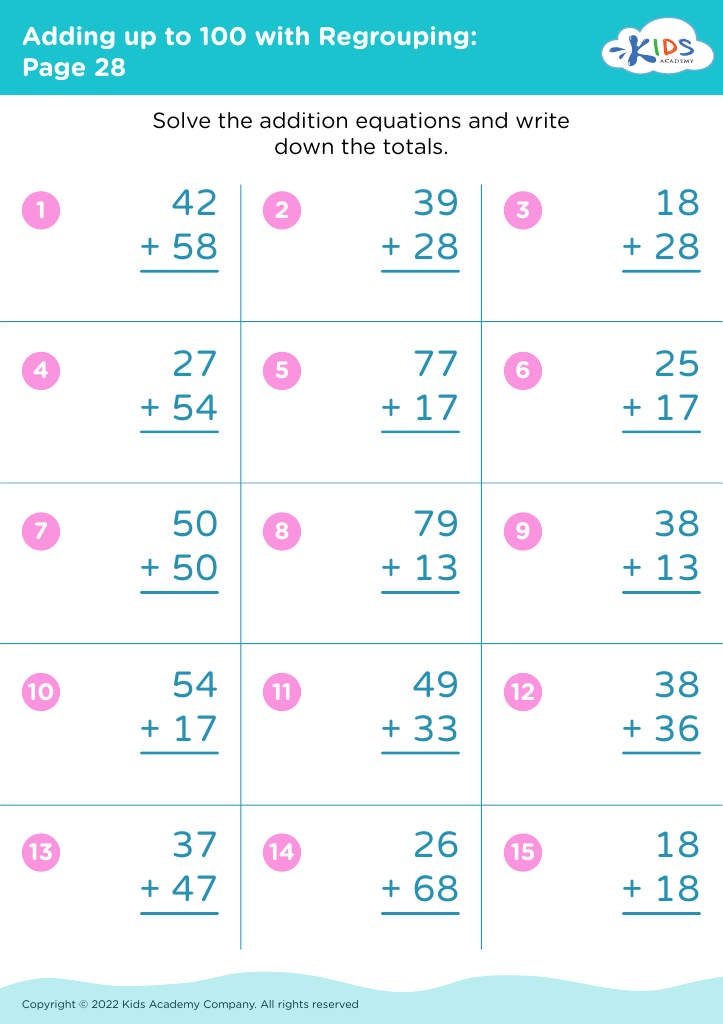
Discover our engaging "Basic Arithmetic Skills: Adding Up to 100 Worksheets" designed for children aged 7-8. These worksheets provide an effective and fun way for young learners to master addition skills, with exercises built to reinforce their understanding of numbers up to 100. Each worksheet offers a variety of challenges, from simple addition problems to more complex scenarios, ensuring a comprehensive learning experience. Perfect for both classroom and at-home practice, these resources aim to boost confidence and boost mathematical fluency. Equip your child with the essential skills needed for higher-level math concepts. Start their arithmetic journey today!



%20(1).jpg)



Basic arithmetic skills, especially the ability to add up to 100, are essential for children aged 7-8 as they form the foundation for future mathematical learning and everyday problem-solving. Developing these skills helps children understand concepts such as number sense, place value, and mental math strategies. When children can confidently add two-digit numbers, they become better equipped for more complex topics in mathematics, like subtraction, multiplication, and division.
Furthermore, strong addition skills foster academic achievement. Research shows that proficiency in basic arithmetic leads to improved performance in standardized tests and math-related subjects. Aside from academic benefits, these skills also aid in real-life situations, such as budgeting, shopping, or measuring, helping children make informed decisions as they grow.
Moreover, parent and teacher involvement in nurturing these skills can enhance a child’s self-esteem and motivation to learn. Engaging activities, games, and practical exercises can make learning enjoyable and effective. Furthermore, basic arithmetic promotes critical thinking and logical reasoning, skills crucial for problem-solving in and outside of the classroom. By prioritizing addition up to 100, parents and teachers lay a strong mathematical foundation that supports lifelong learning and success in various aspects of life.








