Color recognition Adding up to 100 Worksheets for Ages 7-8
4 filtered results
-
From - To
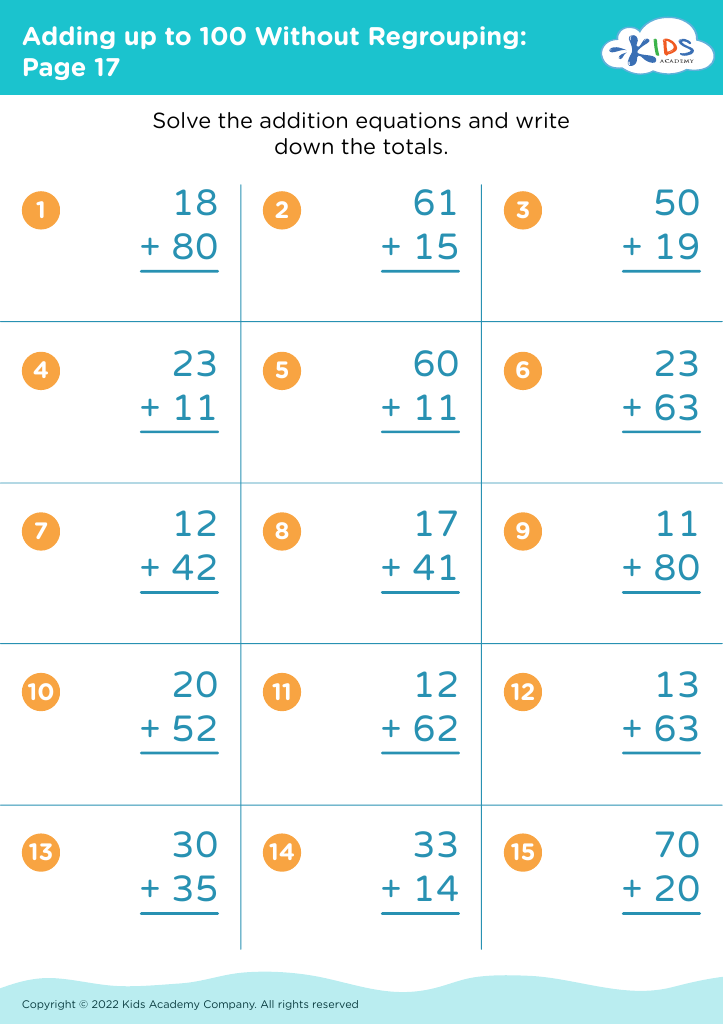
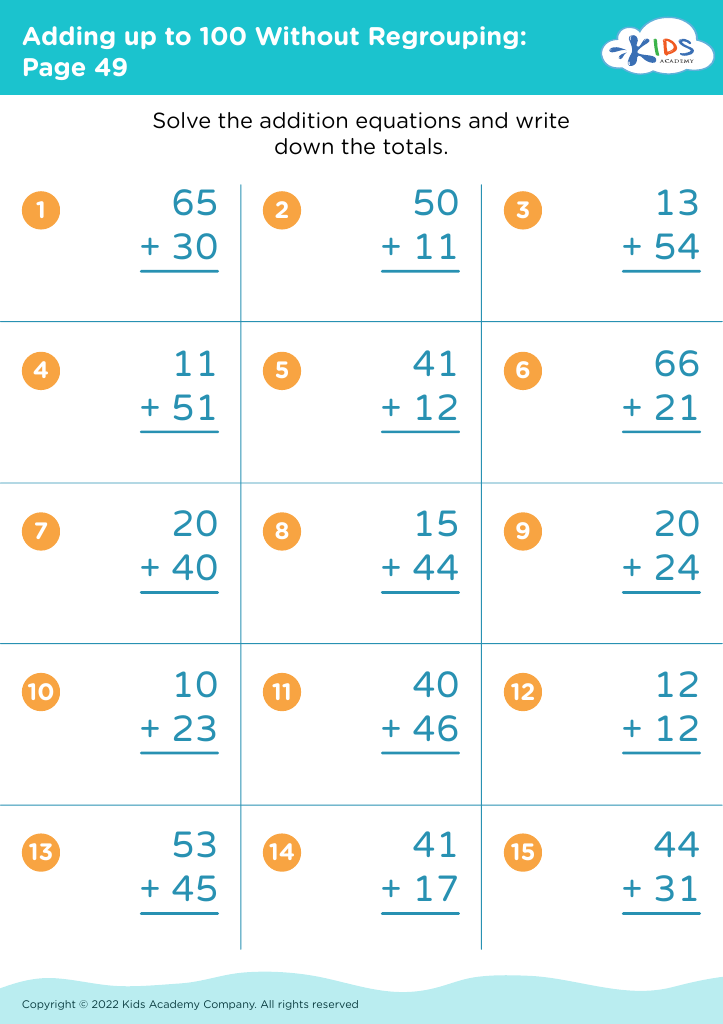
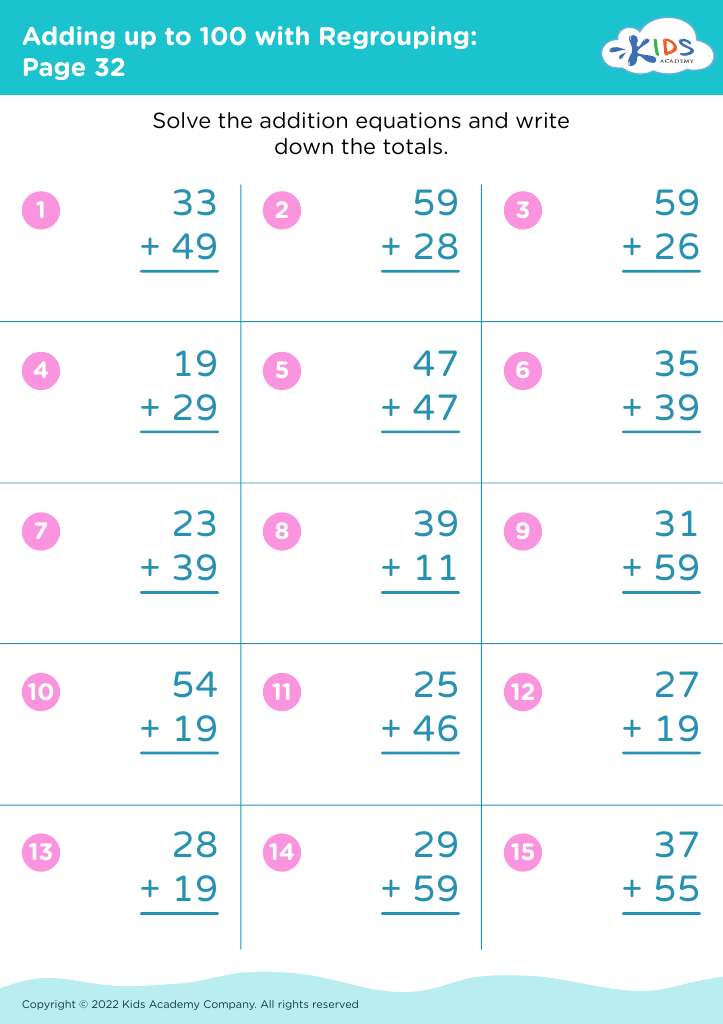
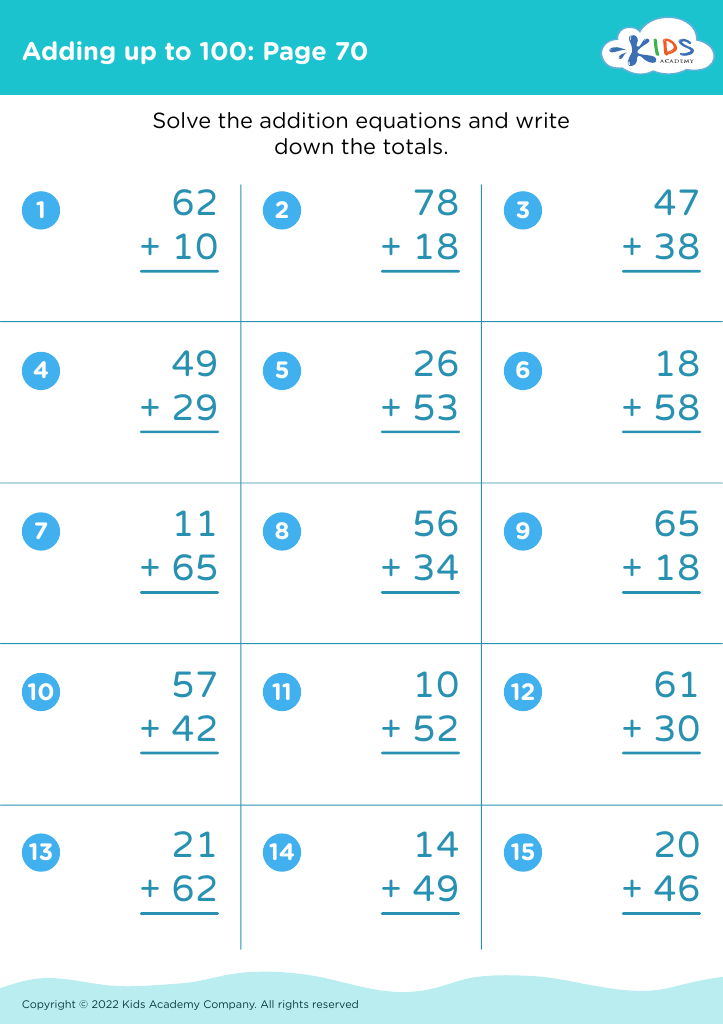
Enhance your child’s math skills with our engaging "Color Recognition Adding up to 100 Worksheets for Ages 7-8". These printable resources make learning fun by combining color recognition with essential addition practice. Designed to help kids master adding numbers up to 100, each worksheet incorporates vibrant colors to keep young learners motivated and attentive. Ideal for use at home or in the classroom, these worksheets provide a dynamic approach to reinforcing math concepts. With visually appealing exercises, children build foundational math skills while enjoying the process of discovering colors and numbers. Give your child the advantage they deserve with our expertly crafted worksheets.






%20(1).jpg)
Color recognition and basic arithmetic skills, such as adding numbers up to 100, are fundamental elements of a child’s early education, particularly for ages 7-8.
Parents and teachers should care about color recognition because it lays the foundation for broader cognitive development and learning. Identifying and naming colors enriches a child's vocabulary and language skills. It also plays a critical role in tasks ranging from learning to read (by distinguishing colors in letters) to understanding daily routines and instructions that utilize color codes. Additionally, color recognition aids in aesthetic development and can boost a child's ability to express themselves creatively through art.
Adding up to 100 is another essential skill for this age group. Mastery of basic arithmetic is crucial as it forms the backbone of future, more complex mathematical concepts. At ages 7-8, children transition from counting and simple addition to grasping the core ideas of number relationships and arithmetic operations. This competency bolsters logical reasoning and problem-solving skills, which are invaluable in both academic and real-life contexts.
Additionally, developing these skills promotes confidence and creates a positive association with learning, which can enhance a child's overall educational journey. Educators and parents need to actively support and encourage practices that solidify these foundational abilities to facilitate lifelong learning and success.








