Critical Thinking Adding up to 100 Worksheets for Ages 7-8
5 filtered results
-
From - To
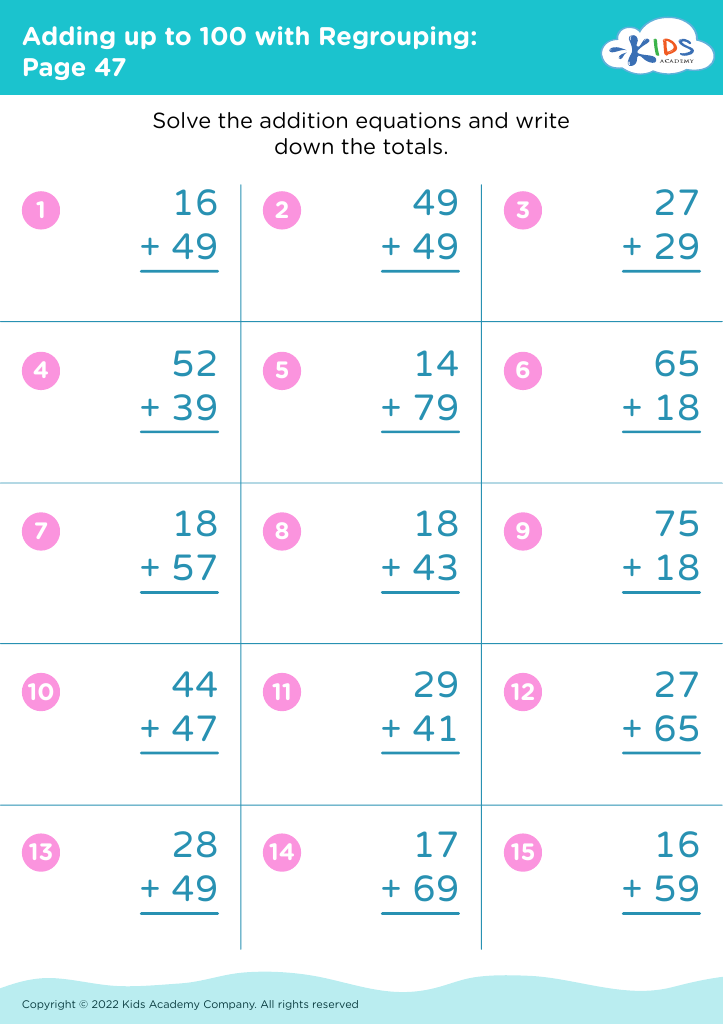
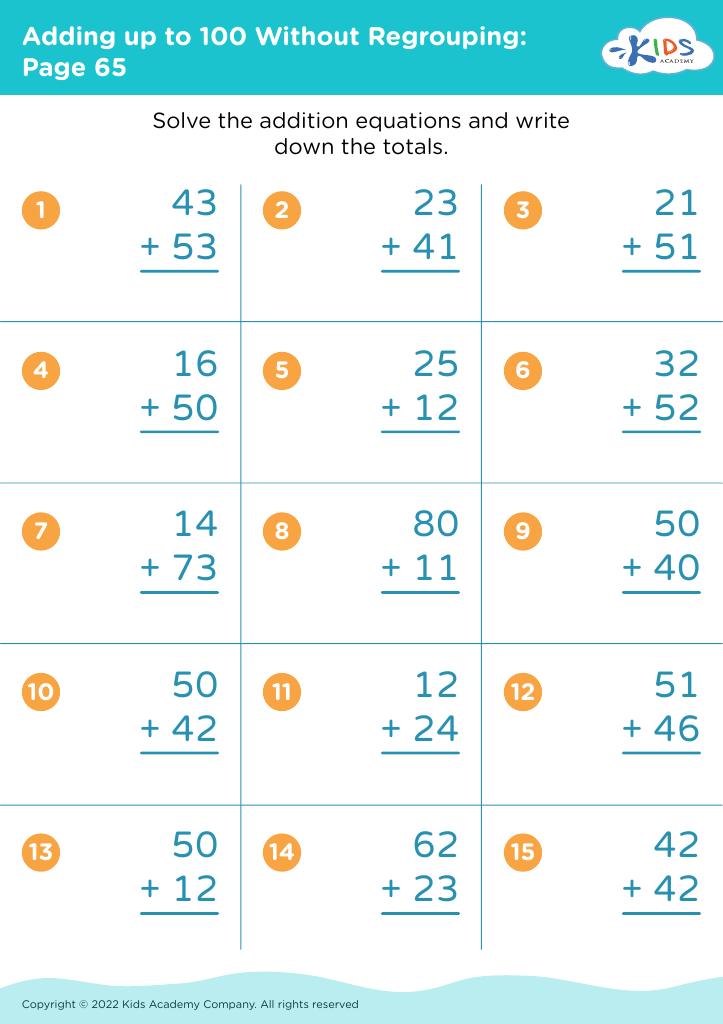
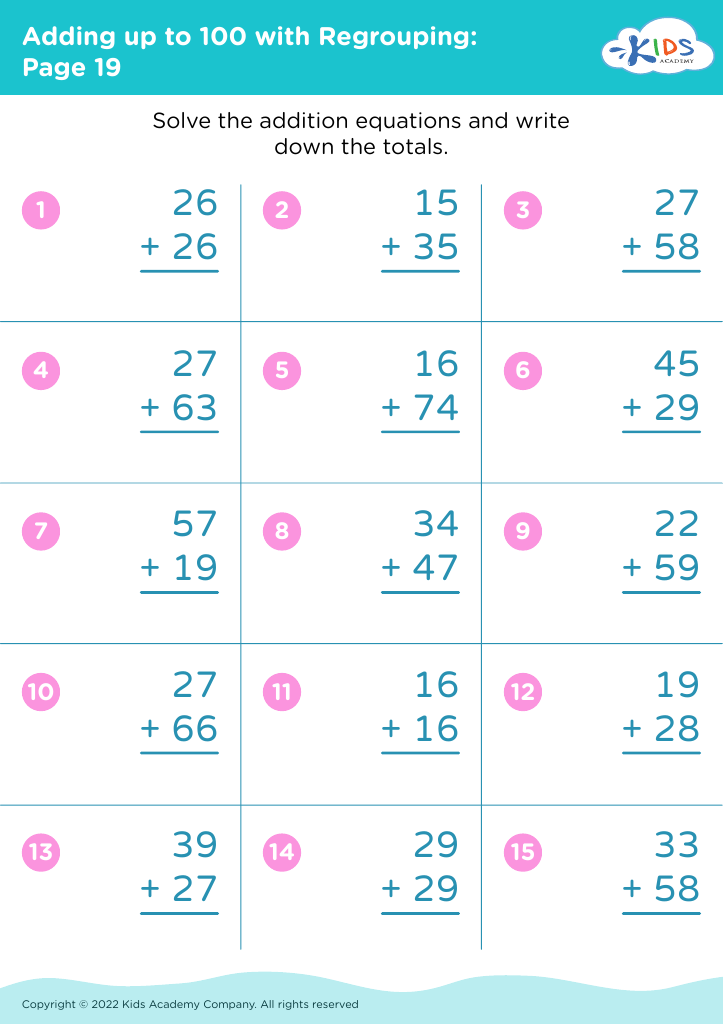
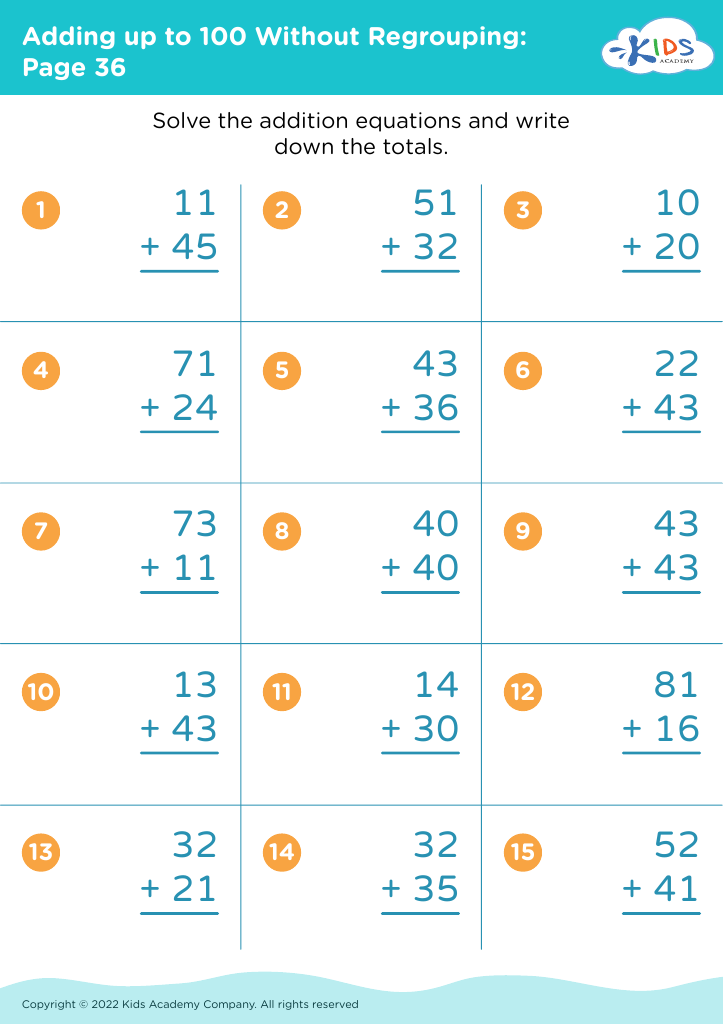
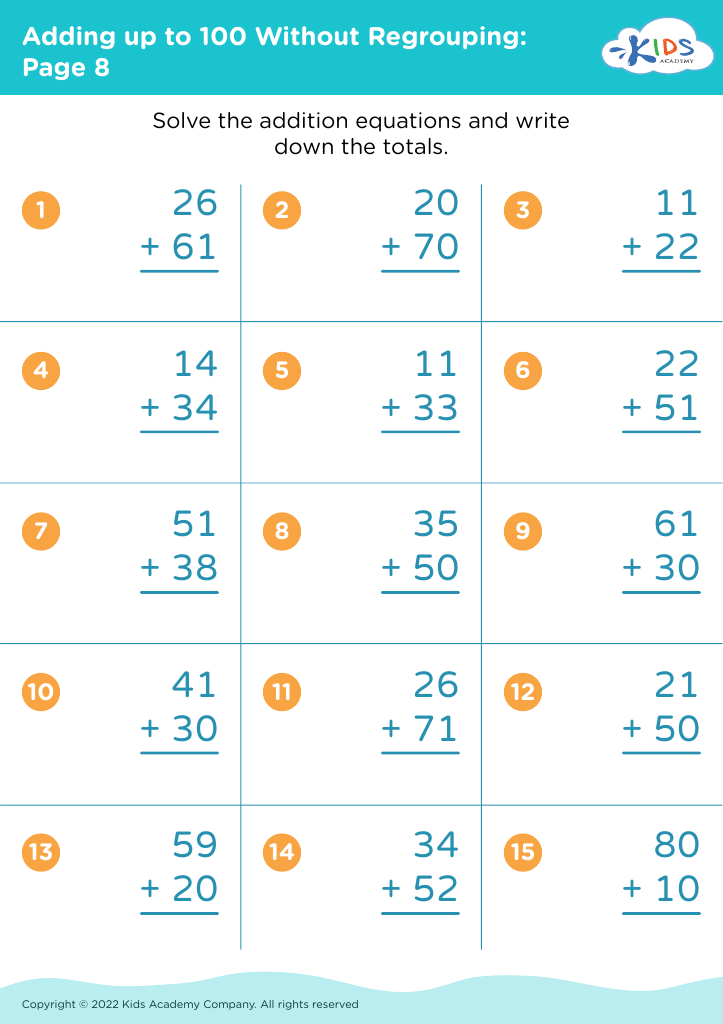
Enhance your child's critical thinking skills with our "Adding Up to 100 Worksheets," specifically designed for ages 7-8. These engaging worksheets foster problem-solving abilities, encouraging young learners to explore various mathematical concepts while building a strong foundation in addition. With diverse problem types, such as word problems and puzzles, children will learn to think critically and creatively when tackling each task. Ideal for classroom use or at-home practice, these worksheets challenge students to reach 100 through fun, interactive methods. Unlock your child's potential in mathematics and critical thinking—download our worksheets today and watch their confidence and skills grow!


%20(1).jpg)




Critical thinking is essential for children aged 7-8 as it forms the foundation for their academic and personal development. At this age, kids are naturally curious and eager to understand the world around them. Encouraging critical thinking helps them analyze problems, evaluate information, and make reasoned decisions.
Parents and teachers should care about fostering these skills because they equip children with the ability to navigate challenges and face future complexities. When children learn to think critically, they develop problem-solving abilities that enhance their learning in all subjects, from math to reading. For example, teaching kids how to break down numbers and combine them effectively helps them understand how to "add up to 100" and promotes mathematical fluency.
Moreover, critical thinking cultivates confident communicators who can articulate their thoughts and ideas. In a world filled with information, children need the skills to assess the validity of what they encounter. This empowerment not only supports academic success but also prepares them for real-life situations, facilitating better decision-making as they grow. Ultimately, emphasizing critical thinking ensures that children become independent, engaged learners who can actively contribute to society.








