Develop critical thinking Adding up to 100 Worksheets for Ages 7-8
5 filtered results
-
From - To
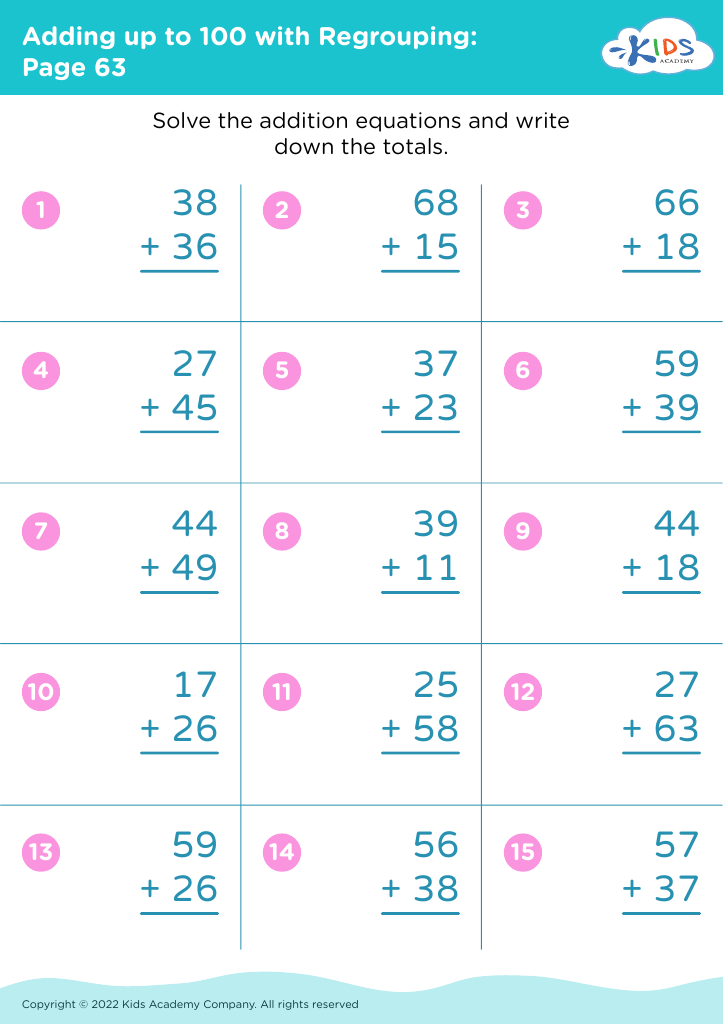
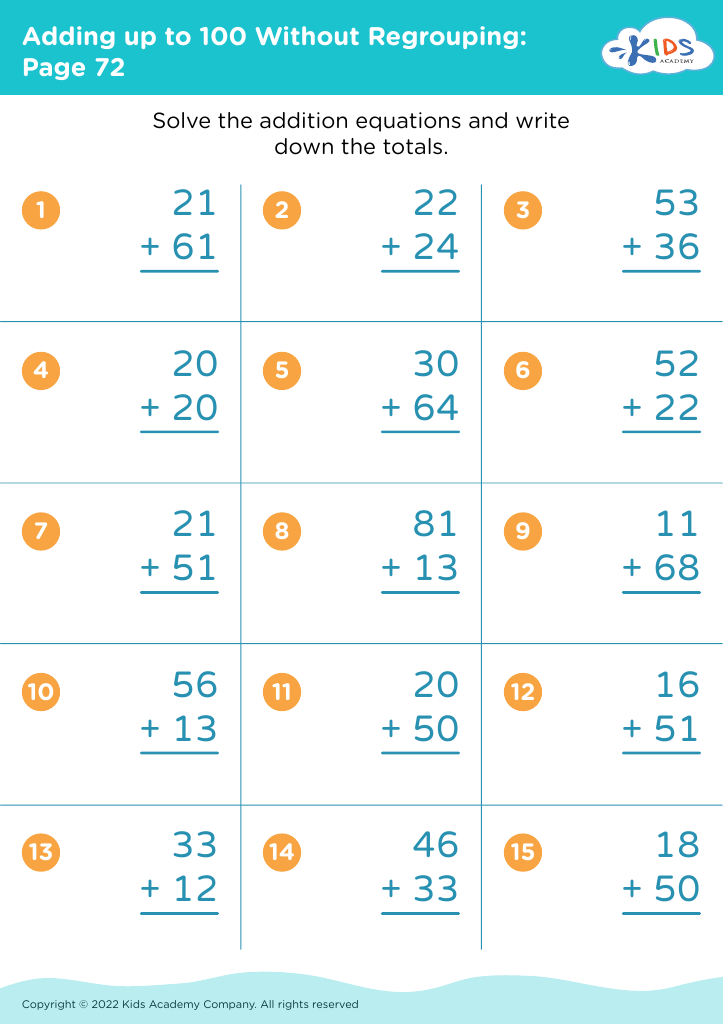
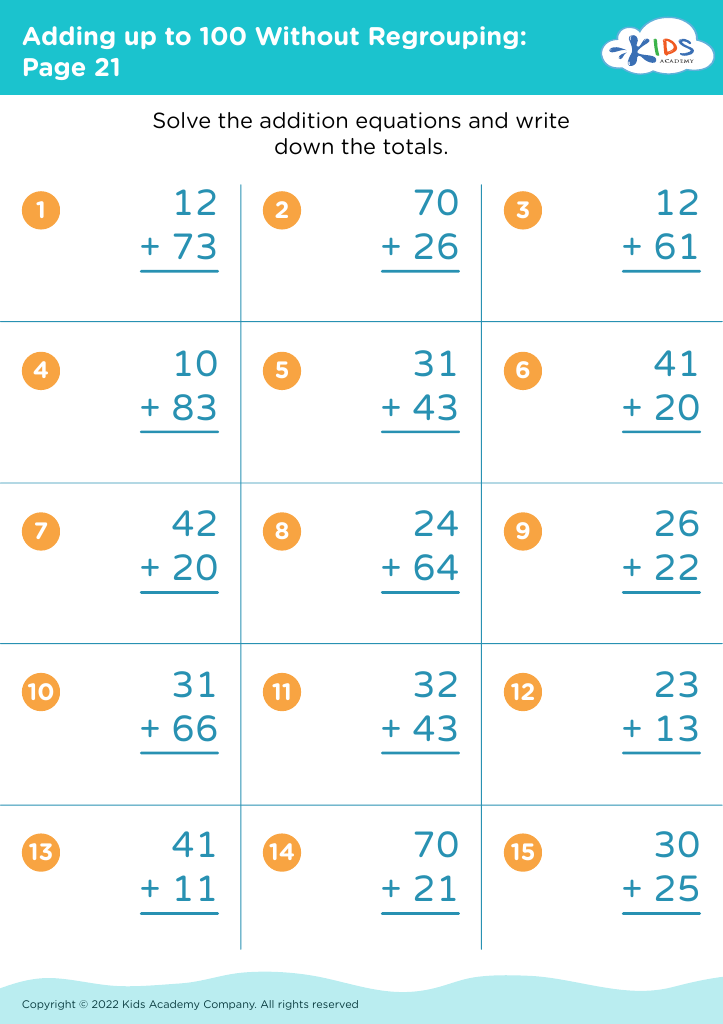
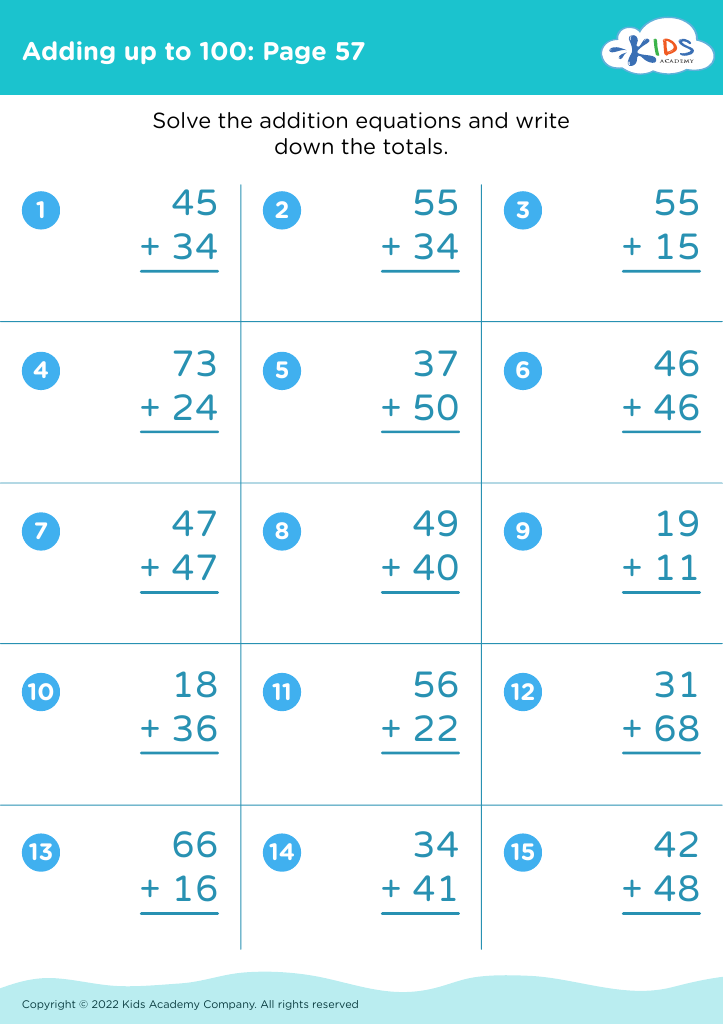
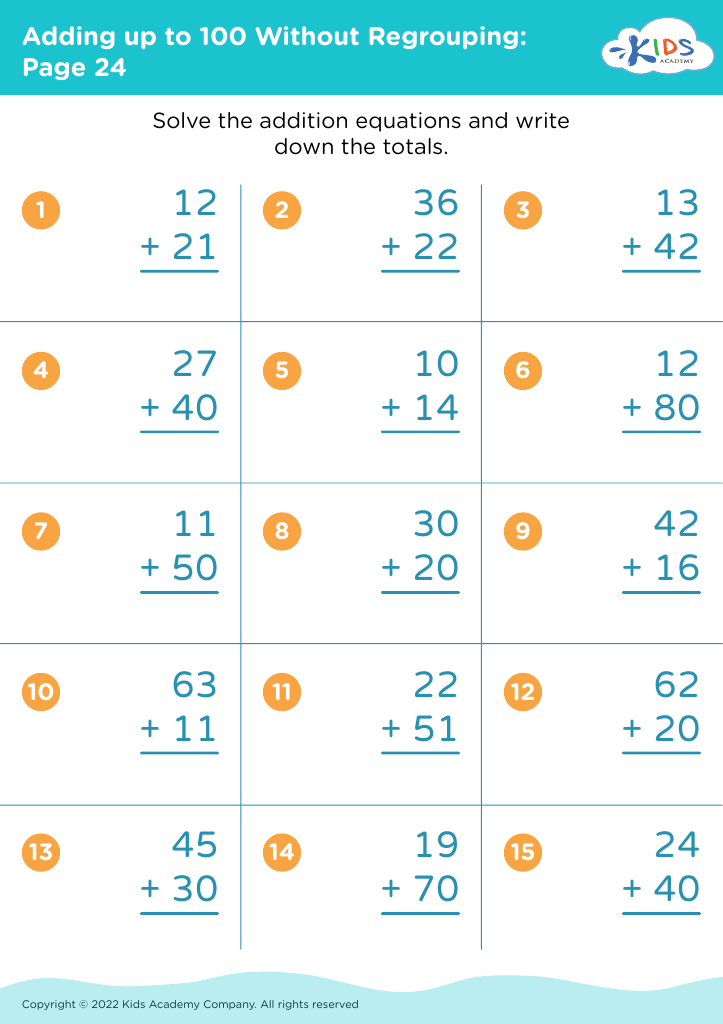
Boost your child’s critical thinking skills with our "Adding Up to 100 Worksheets" designed for ages 7-8! These engaging worksheets, part of a comprehensive math curriculum, encourage children to explore addition concepts and tackle challenging problems. By working through thoughtfully crafted exercises, kids will develop essential problem-solving abilities, enhancing their analytical thinking. Each worksheet promotes logical reasoning and mathematical confidence in a fun, interactive way. Ideal for homeschoolers or classroom settings, these resources make mastering addition to 100 enjoyable. Watch your child's critical thinking flourish as they navigate through these stimulating challenges and gain a deeper understanding of math fundamentals!




%20(1).jpg)


Developing critical thinking skills in children, especially those aged 7-8, is crucial as it lays the foundation for future learning and problem-solving abilities. At this age, children are naturally curious and eager to explore the world around them. By encouraging critical thinking, parents and teachers can enhance this curiosity, guiding children to analyze situations, ask questions, and seek multiple solutions.
Learning to think critically helps children make educated decisions, enabling them to evaluate information and distinguish between fact and opinion. This skill is vital in today's information-rich environment, where children are exposed to a plethora of ideas and perspectives.
Moreover, fostering critical thinking promotes creativity and independence. Children learn to express their thoughts confidently, leading to better collaboration with peers and teachers. Engaging them in debates, problem-solving activities, and open discussions nurtures their analytical skills, preparing them for academic challenges ahead.
Incorporating fun and engaging activities that require critical thinking facilitates deeper learning and retention of information. Overall, caring about the development of critical thinking in early childhood education is essential, creating a generation of thoughtful, well-informed individuals capable of tackling complex problems.








