Developing math skills Adding up to 100 Worksheets for Ages 7-8
3 filtered results
-
From - To
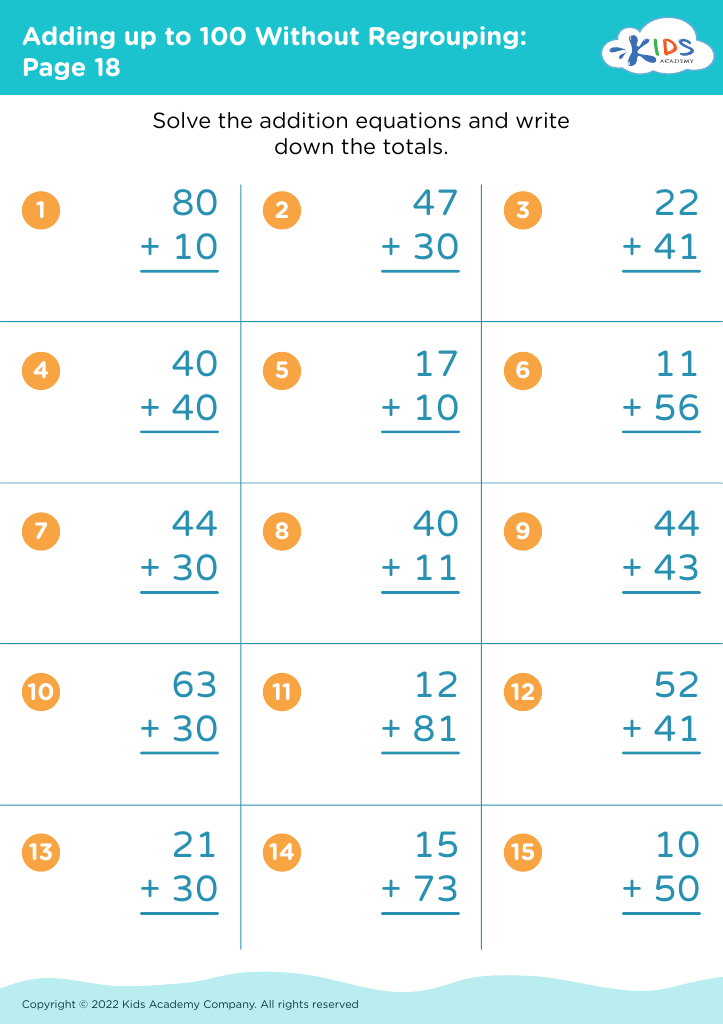
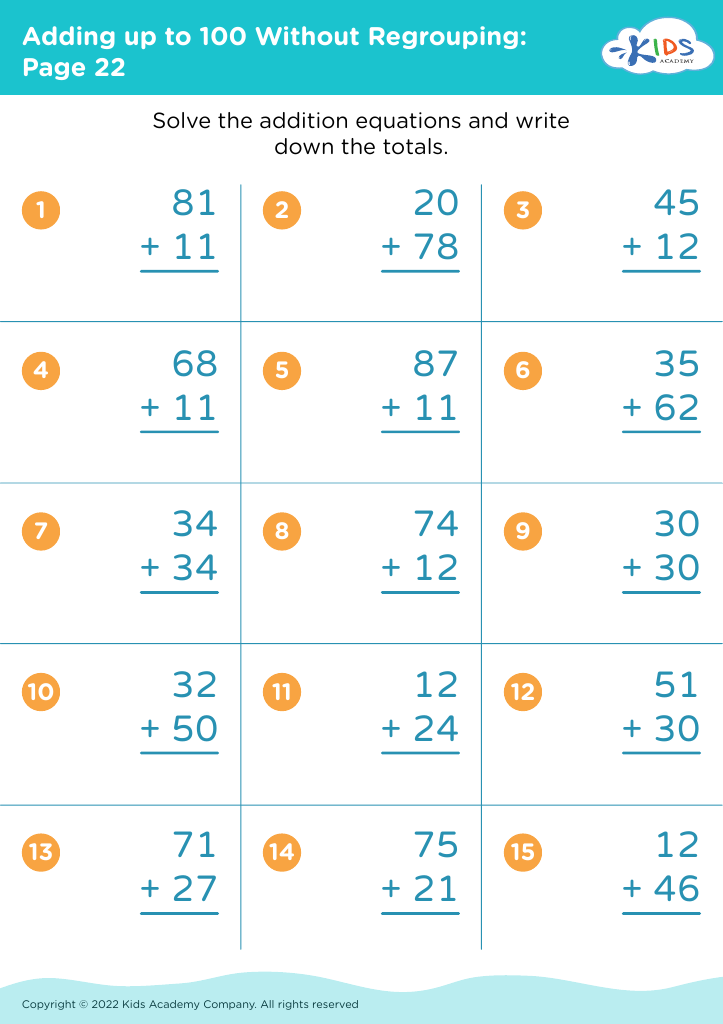
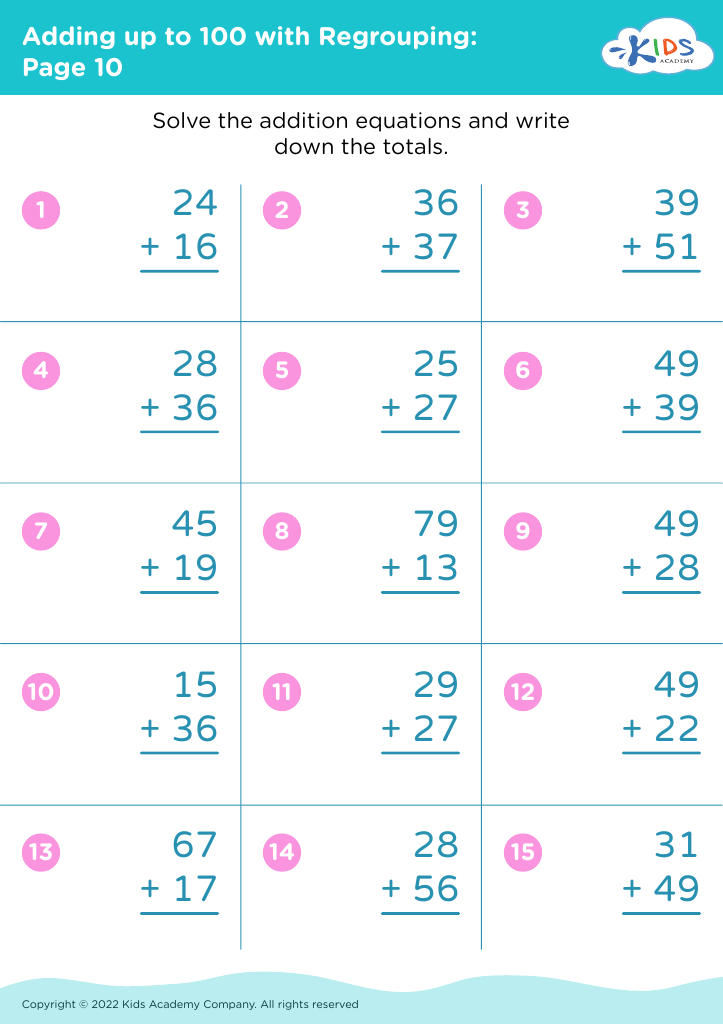
Boost your child’s confidence in mathematics with our "Developing Math Skills: Adding up to 100 Worksheets" designed for ages 7-8. These engaging and interactive worksheets help students master addition concepts by practicing their skills in a fun and supportive environment. Each worksheet is designed to reinforce understanding as children add numbers up to 100, building a strong foundation necessary for future math success. With intuitive exercises, your child will learn to tackle addition challenges effectively, enhancing their problem-solving abilities. Perfect for classroom or home use, our worksheets promote essential math skills while making learning enjoyable and interactive. Empower your child's math journey today!


%20(1).jpg)




Developing math skills, particularly the ability to add up to 100, is crucial for children aged 7-8 as it serves as a foundational building block for more complex mathematical concepts. This age group is typically transitioning from basic arithmetic to more advanced problem-solving, and having a solid grasp of addition helps foster confidence and proficiency in mathematics.
Parents and teachers should care about this development for several reasons. Firstly, strong addition skills can boost children's overall mathematical understanding, which is vital for future topics such as multiplication and division. When students are comfortable manipulating numbers up to 100, they can approach math challenges with a positive mindset, enhancing their academic performance.
Additionally, these skills encourage critical thinking and problem-solving abilities. Working with larger numbers teaches children to synthesize information, develop strategies, and recognize patterns—the keys to developing a mathematically literate mind. Furthermore, proficiency in math can impact various aspects of a child's life beyond the classroom, influencing their decision-making skills, analytical thinking, and even everyday tasks, like budgeting. Ultimately, nurturing these skills in this formative stage aids in creating a solid mathematical foundation that will benefit students throughout their educational journey and beyond.








