Enhance number recognition Adding up to 100 Worksheets for Ages 7-8
8 filtered results
-
From - To
Experience engaging learning with our "Enhance Number Recognition: Adding Up to 100 Worksheets" designed specifically for ages 7-8. These interactive worksheets not only promote number recognition but also reinforce essential math skills through fun, hands-on activities. As children practice adding to 100, they will develop confidence and proficiency in identifying and manipulating numbers. Ideal for use in the classroom or at home, these worksheets cater to diverse learning styles and help foster a love for math. Enhance your child's learning journey today, unlocking their potential and setting a strong foundation for future mathematical success. Download your worksheets now!
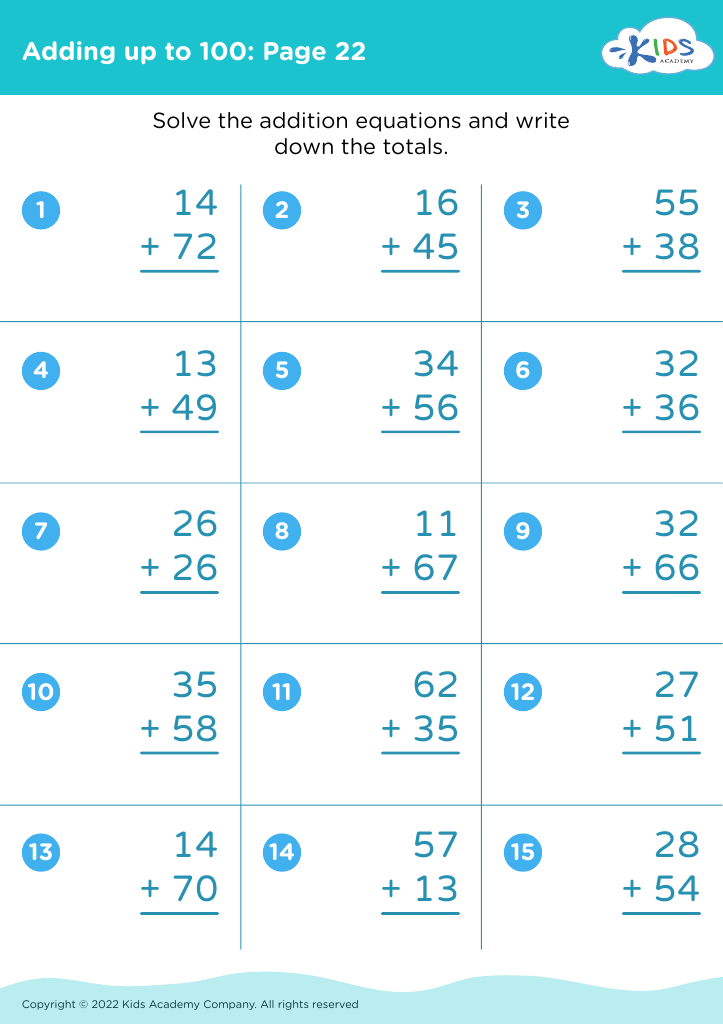
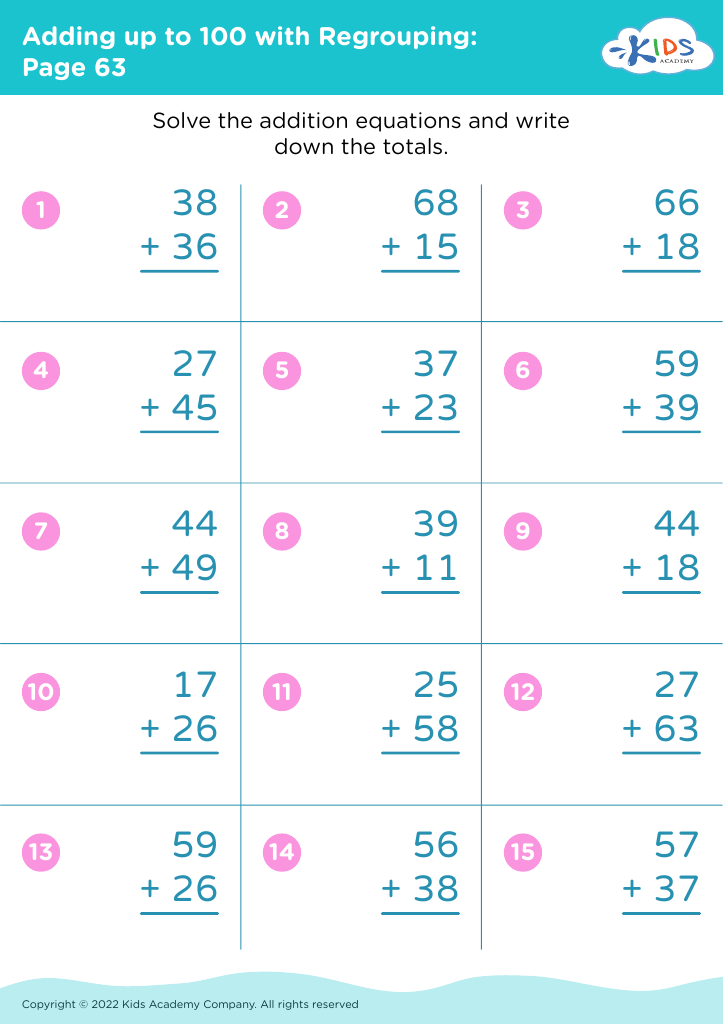
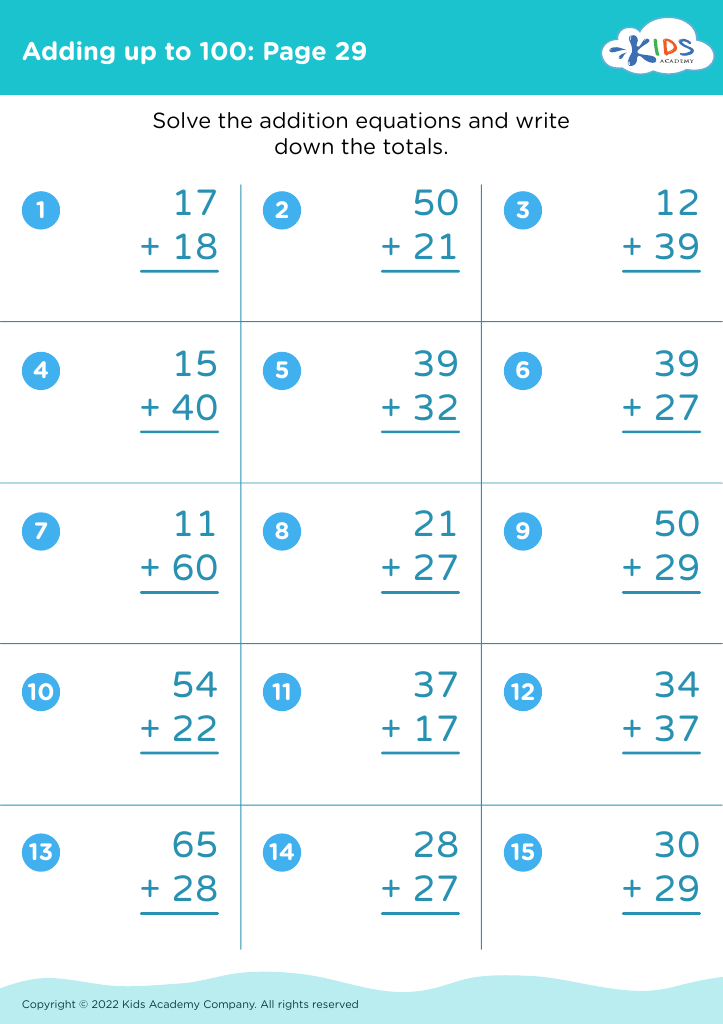
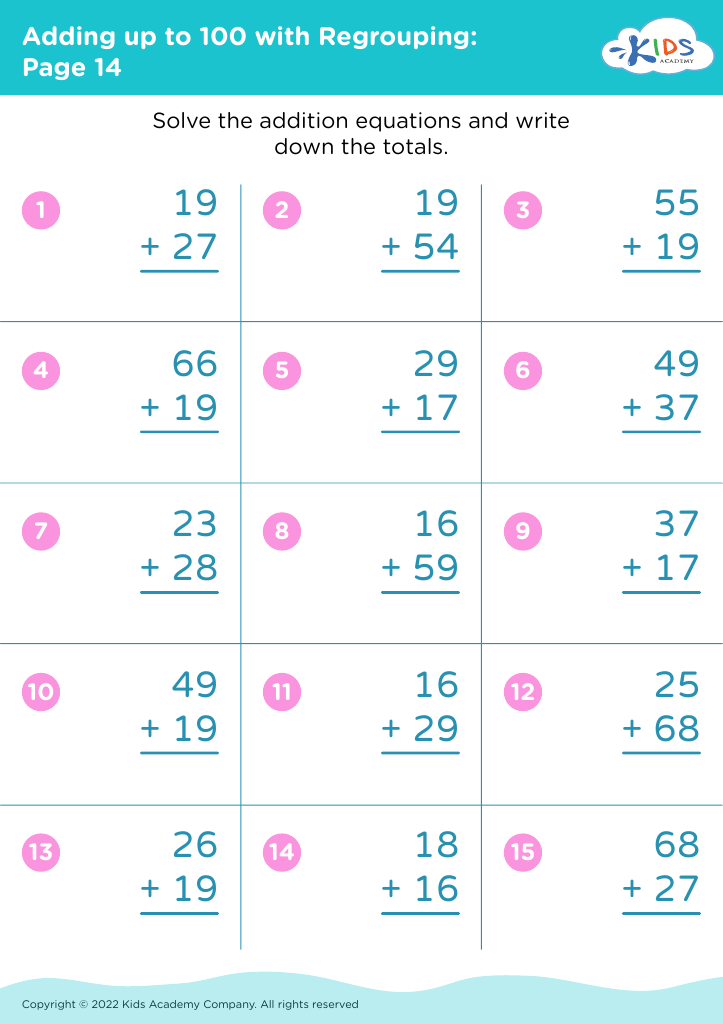
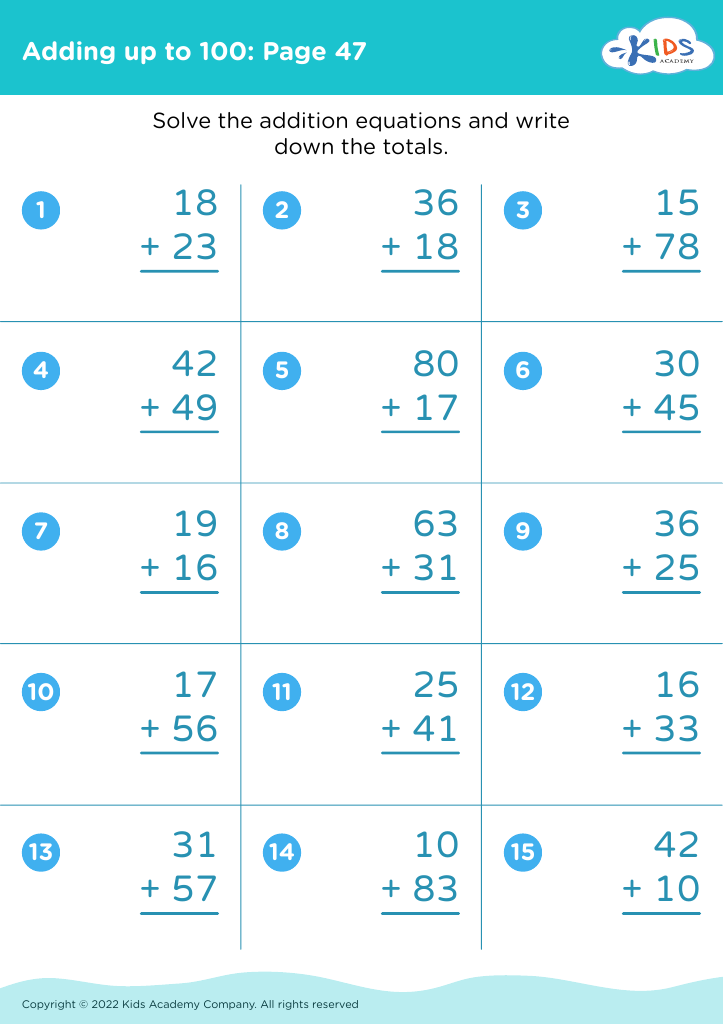
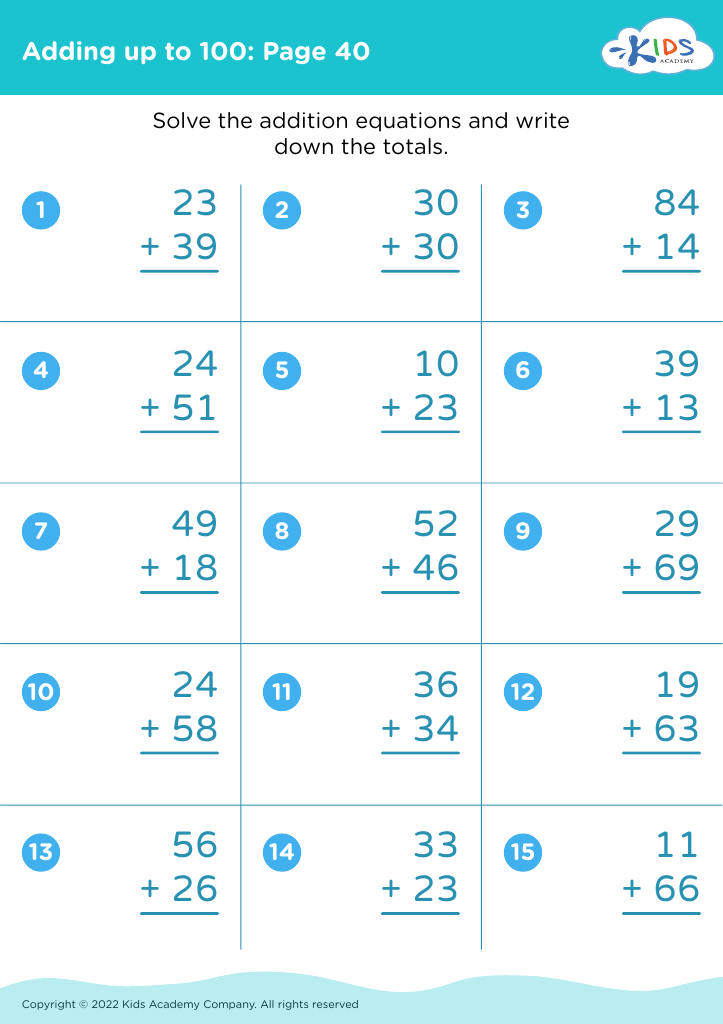
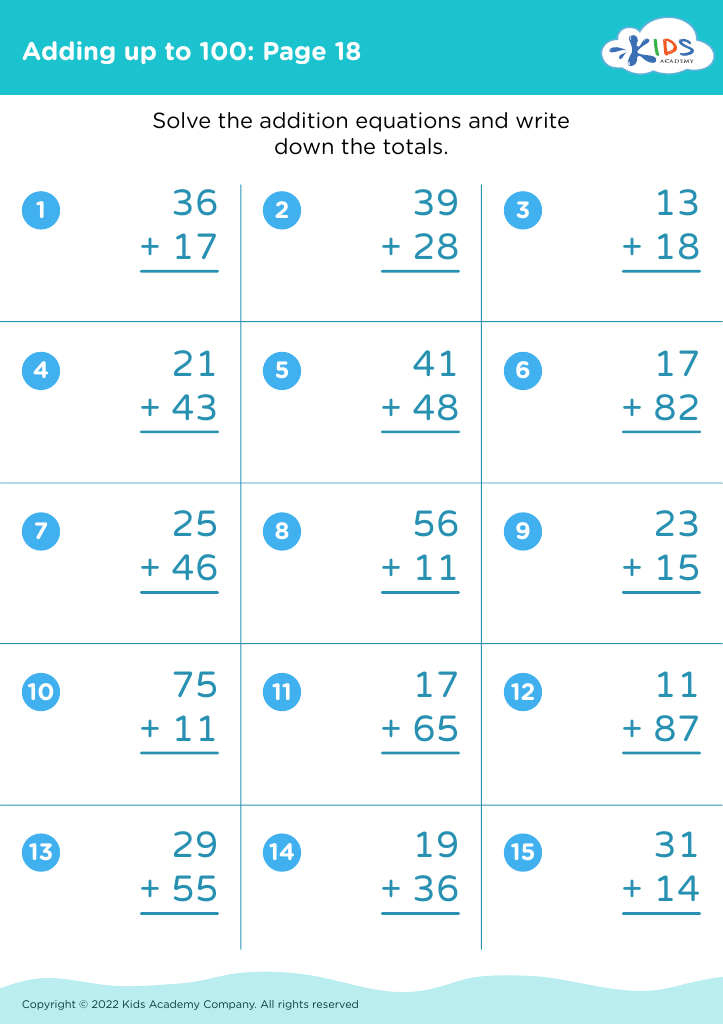
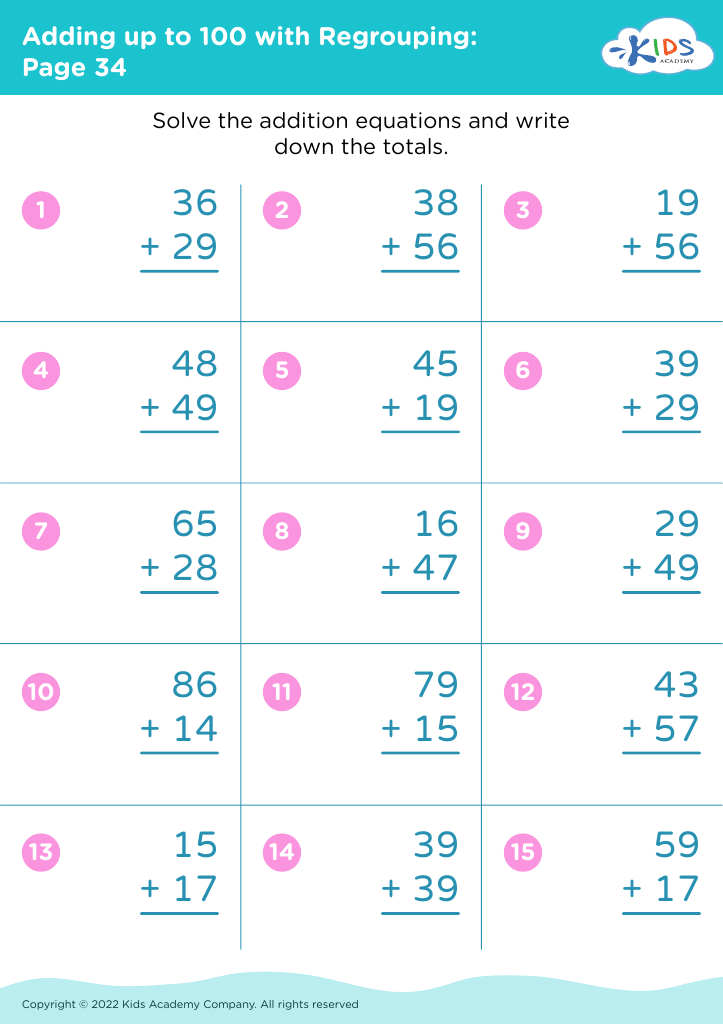




%20(1).jpg)


Enhancing number recognition, particularly the ability to add up to 100, is crucial for children aged 7-8, as it lays the foundation for their mathematical understanding. At this age, students transition from basic arithmetic to more complex concepts, making strong number recognition skills essential. Recognizing numbers helps them engage meaningfully with operations like addition and subtraction, fostering a sense of confidence and competence in their abilities.
For teachers and parents, promoting number recognition and addition skills contributes to broader cognitive development. These skills encourage logical thinking, problem-solving, and spatial awareness, which are vital not just for math, but also for everyday life challenges. When children grasp the concept of counting up to 100, they are better prepared for advanced topics in math, such as multiplication and division, later on.
Moreover, number recognition supports social-emotional learning by encouraging persistence and resilience. As children learn to overcome challenges related to numbers, they develop a growth mindset. Engaging learners through games and hands-on activities can make this process enjoyable. Teachers and parents should prioritize number recognition to foster not just academic proficiency, but also a lifelong enthusiasm for learning.








