Enhance problem-solving skills Adding up to 100 Worksheets for Ages 7-8
3 filtered results
-
From - To
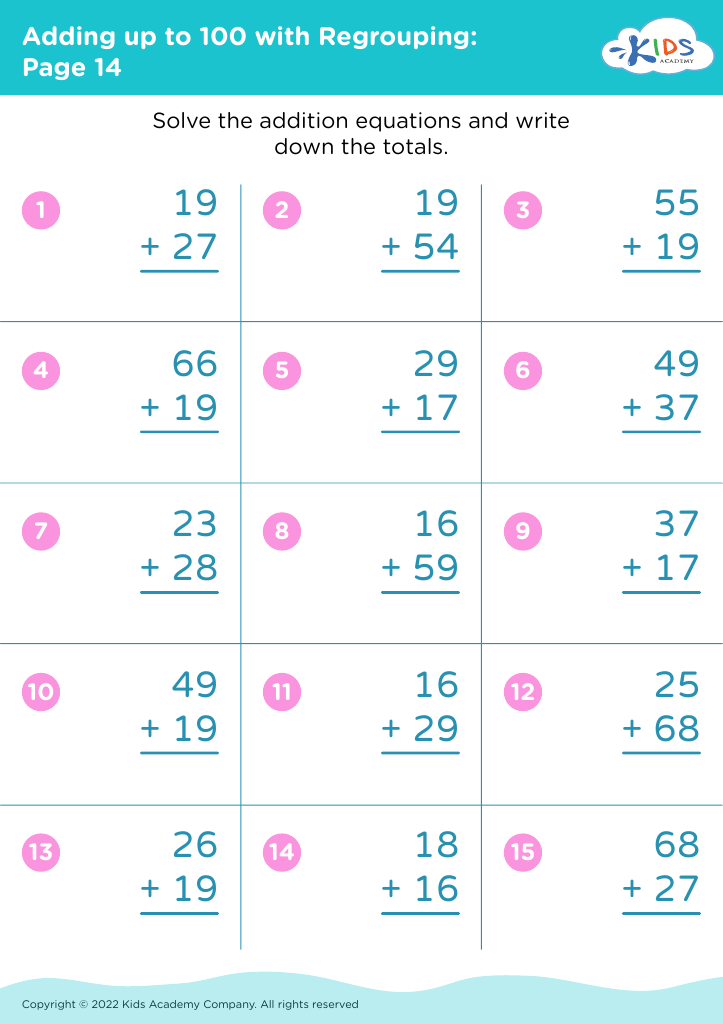
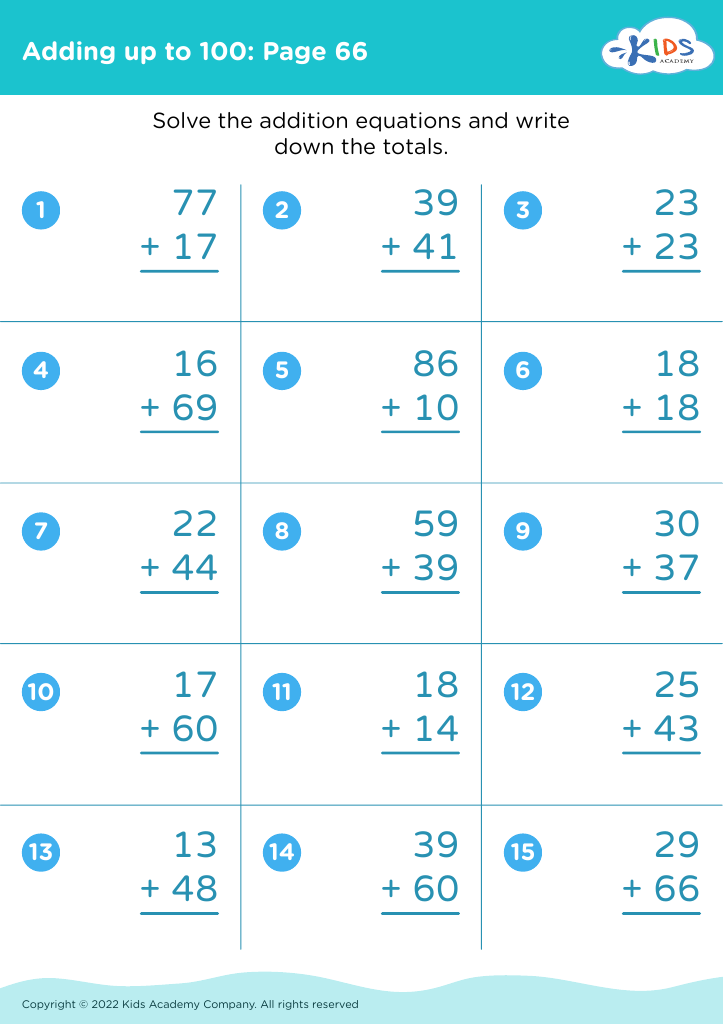
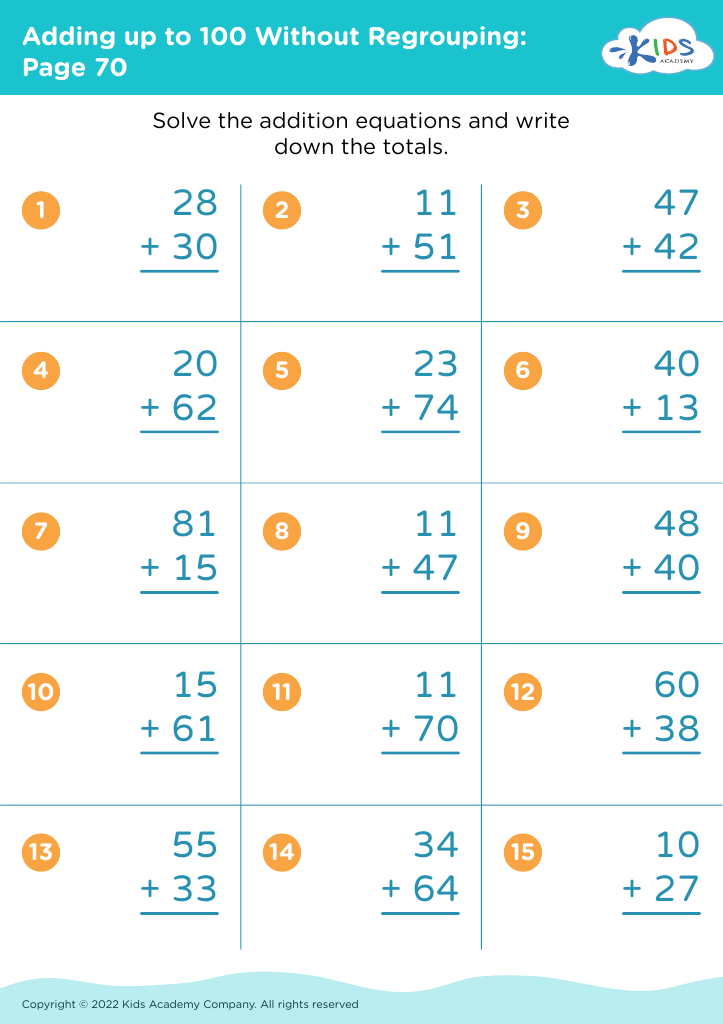
Unlock your child’s potential with our “Enhance Problem-Solving Skills: Adding Up to 100” worksheets designed for ages 7-8. This comprehensive collection features 100 engaging and interactive worksheets that help young learners develop critical math problem-solving abilities. Each worksheet encourages students to tackle addition problems, fostering essential skills like logical reasoning and number sense. Aligned with educational standards, these resources provide the perfect blend of challenge and fun, ensuring kids not only enjoy learning but also succeed in mastering their math concepts. Help your child build confidence and a strong foundation in mathematics with our carefully curated worksheets today!



%20(1).jpg)



Enhancing problem-solving skills, particularly for tasks like adding up to 100, is crucial for children aged 7-8. At this developmental stage, children are not only building foundational math skills but also critical thinking abilities that serve them in various aspects of life.
First, mastering addition contributes to their overall mathematical competence. Understanding how to efficiently combine numbers to reach a total of 100 reinforces their grasp of concepts like number sense and estimation. These skills are key for more advanced math topics encountered in later grades.
Second, problem-solving fosters resilience. When children engage in tackling challenges related to math, they learn to persevere through difficulties. This mindset not only boosts their confidence in math but also prepares them for obstacles in academics and beyond.
Third, enhancing these skills encourages creativity. Solving math problems often requires thinking outside the box—it invites inventive approaches to reach a solution. This cognitive flexibility is invaluable in many life situations.
Lastly, parents and teachers nurturing these abilities instill a love of learning and curiosity in children, equipping them with tools necessary for lifelong success. Prioritizing problem-solving is thus essential not just for academic achievement, but for holistic personal development.








