
Fraction Addition Adding up to 100 Worksheets for Ages 7-8
3 filtered results
Difficulty Level
Grade
Age
-
From - To
Subject
Activity
Standards
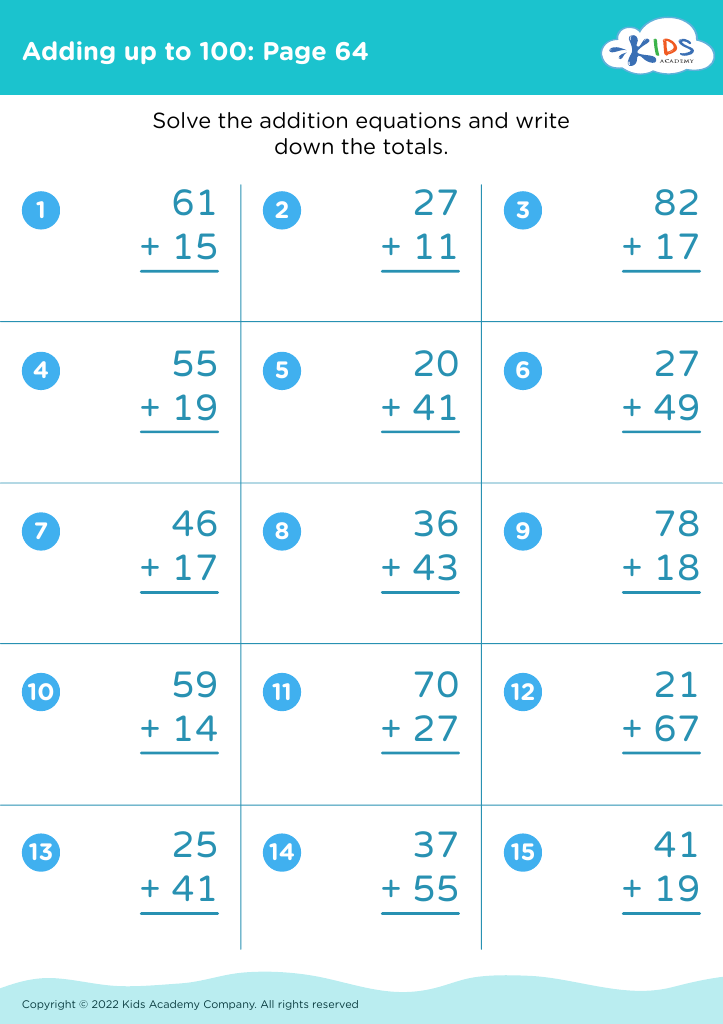
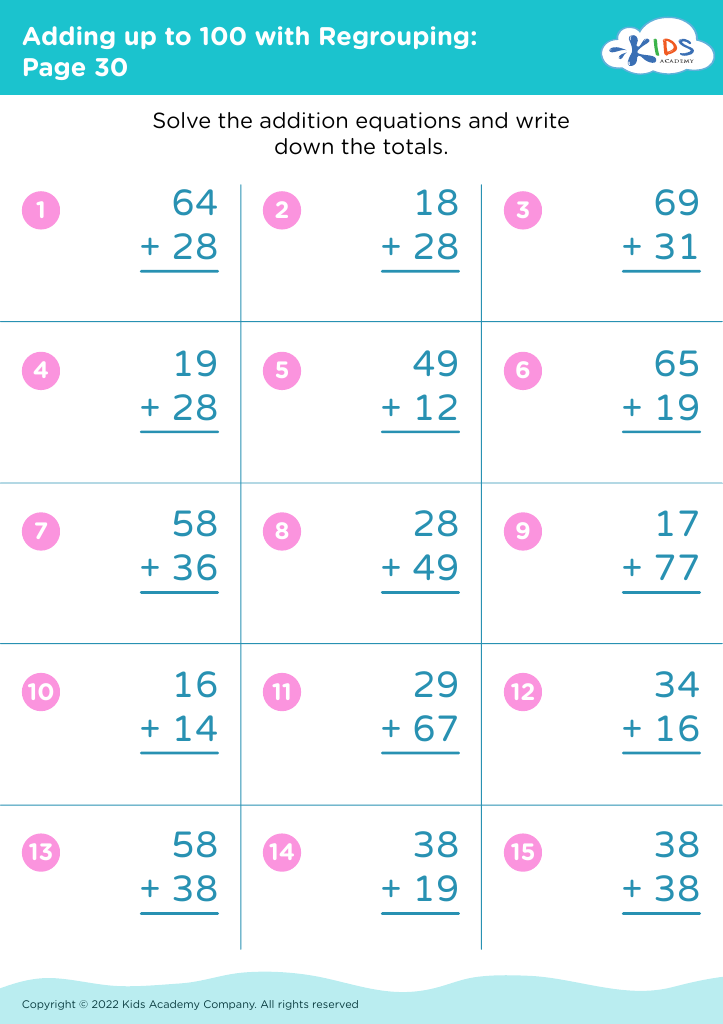
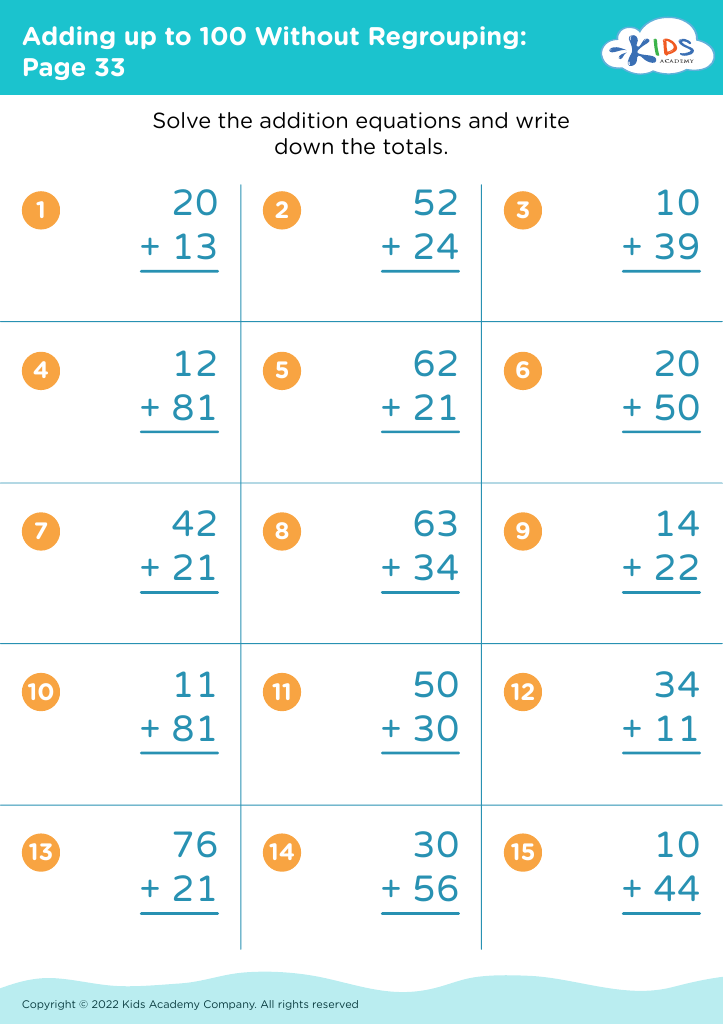
Welcome to our "Fraction Addition Adding Up to 100 Worksheets" specifically designed for children ages 7-8! These engaging and interactive worksheets help young learners master the concept of adding fractions while building their mathematical skills. Tailored to fit the curriculum, the activities offer a fun and effective way to practice fraction addition with colorful visuals and relatable scenarios. Children will explore various problems that challenge their critical thinking and enhance their understanding of fractions. By completing these worksheets, kids will gain confidence in their abilities and be well-prepared for more advanced mathematics learning. Perfect for home or classroom use!
Favorites
With answer key
Interactive
Join Kids Academy for Free
Who is primarily going to use this learning content?




%20(1).jpg)


Parents and teachers should care about teaching fraction addition, particularly with a focus on sums that total 100, for children aged 7-8 because it lays a foundational understanding of mathematics that is crucial for future learning. At this age, children are developing their number sense and begin to explore more complex concepts. Understanding how to add fractions helps them grasp the idea of parts of a whole, which is essential not only in math but also in real-life situations, such as cooking or sharing.
Adding up to 100 can simplify the learning process for young learners. It provides a familiar benchmark, making it easier for them to visualize and manipulate fractions. This skill promotes critical thinking, problem-solving, and enhances their confidence in math.
Moreover, mastering fraction addition at an early age prepares them for more advanced topics like percentage calculations and algebraic thinking in future grades. Engaging with fraction addition in interactive and relatable ways enables a deeper connection to the material. Involving parents in this process through fun activities, games, or discussions can reinforce learning and create a supportive environment that emphasizes the value of math in everyday life. Ultimately, this contributes to building a strong mathematical foundation for lifelong learning.








