Fraction comparison Adding up to 100 Worksheets for Ages 7-8
6 filtered results
-
From - To
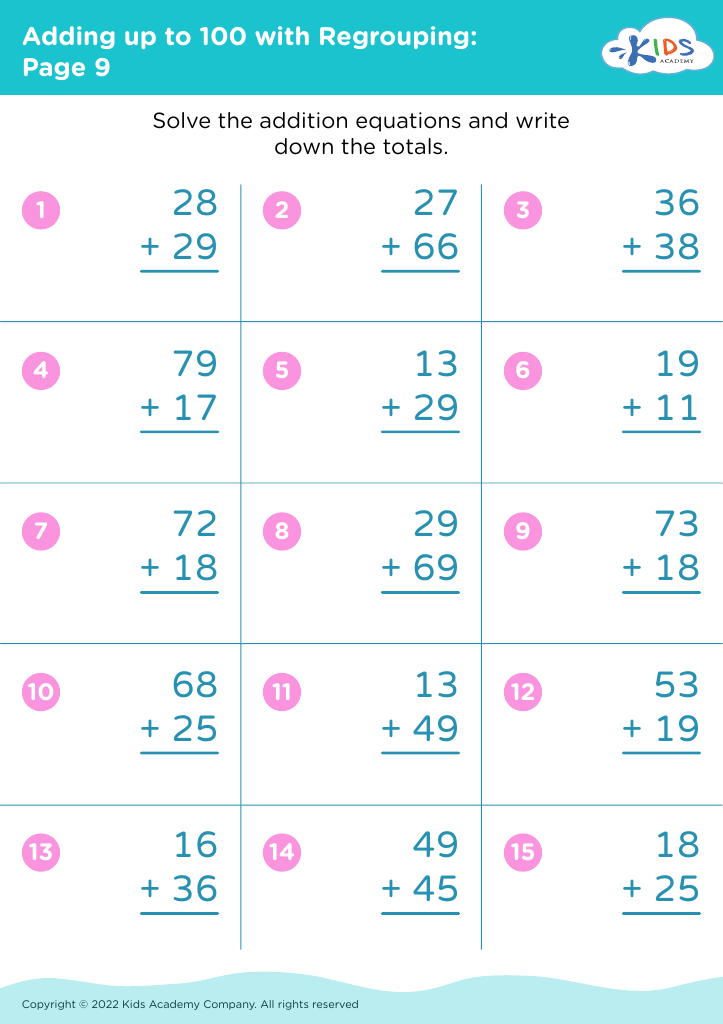
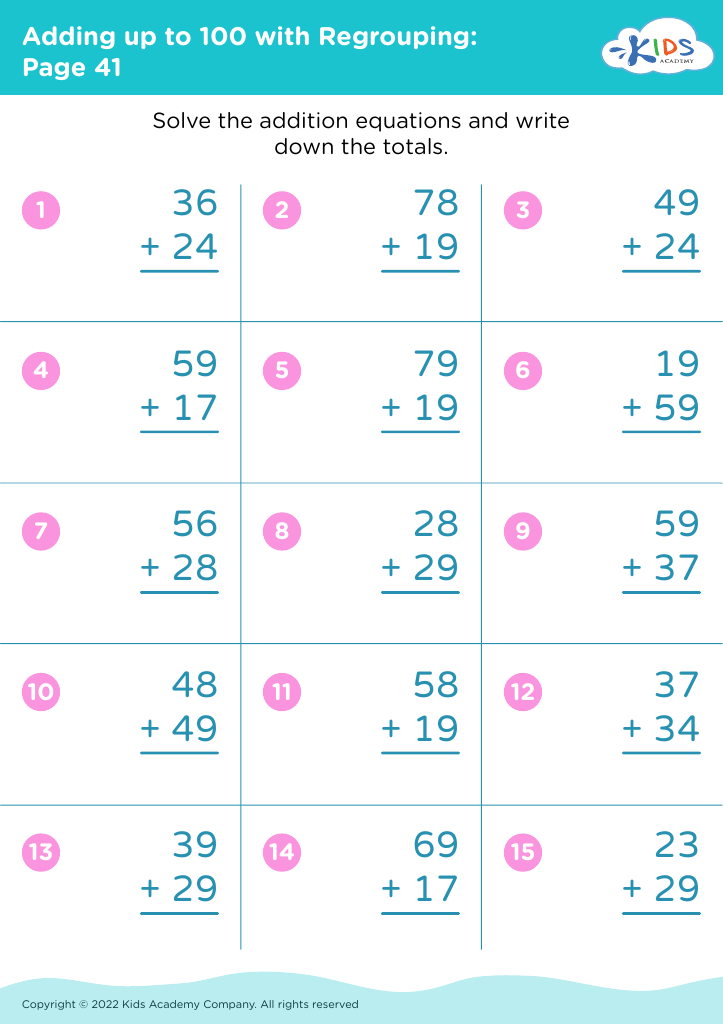
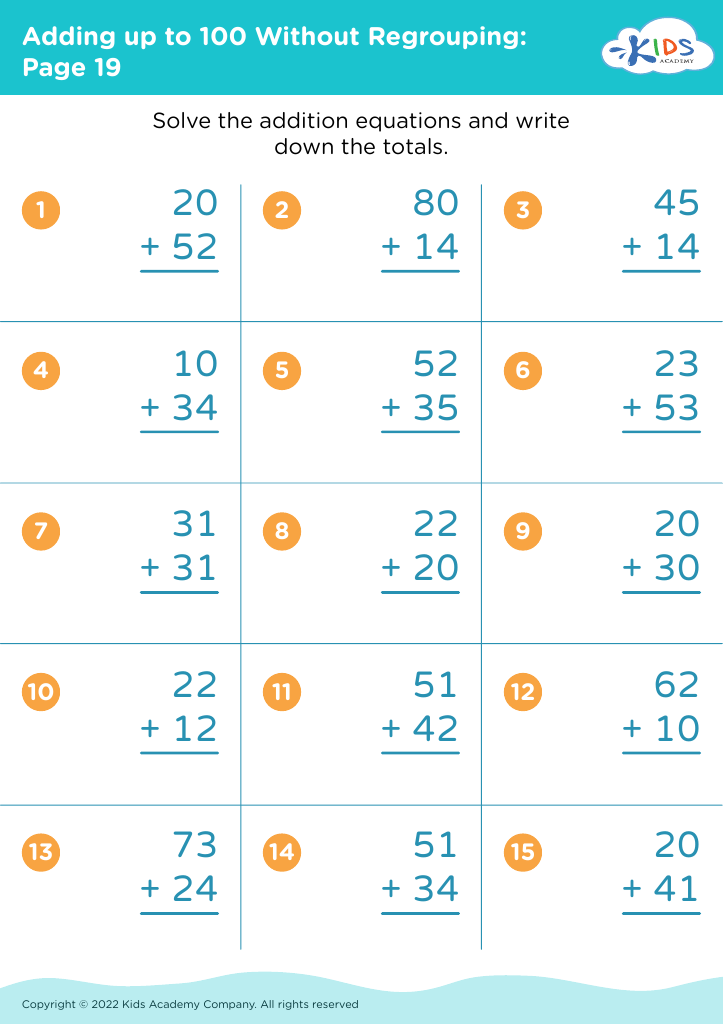
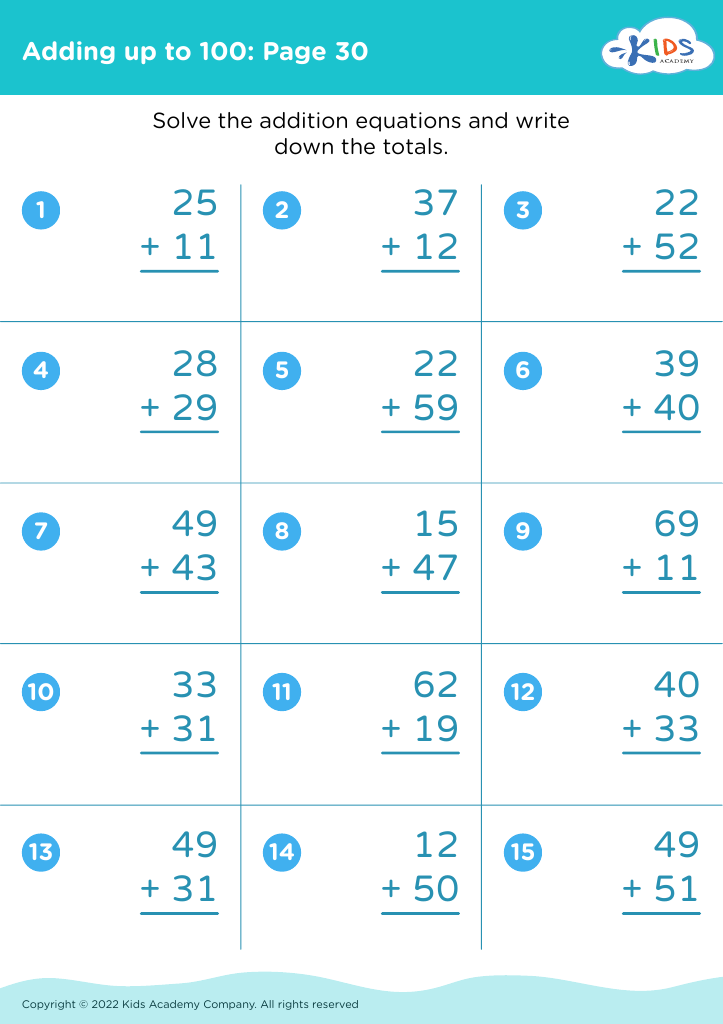
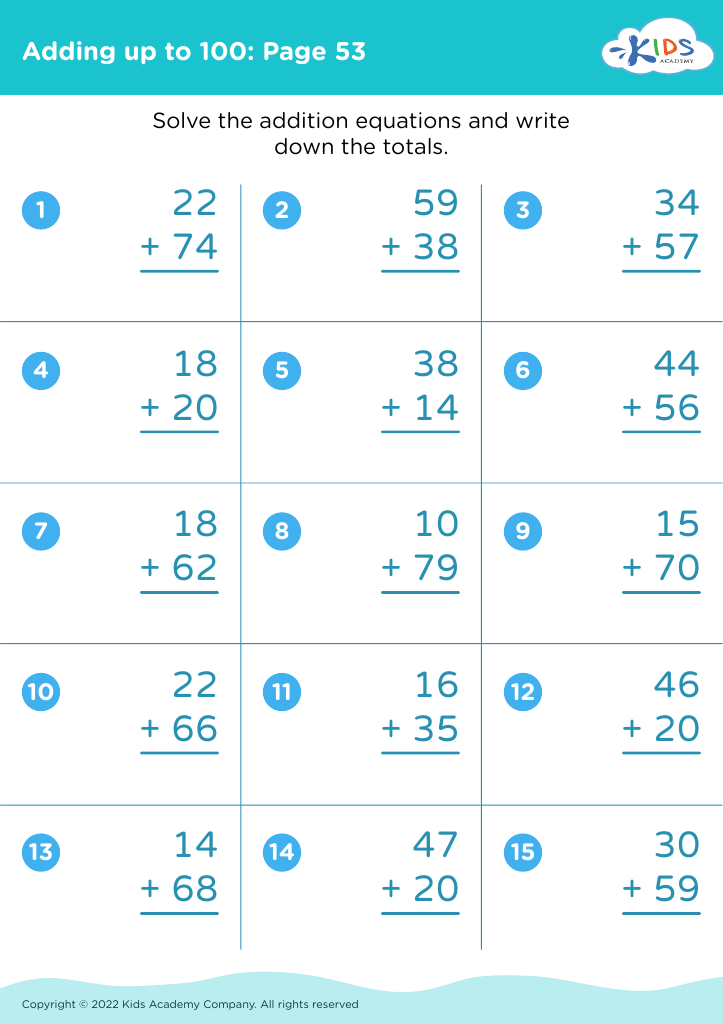
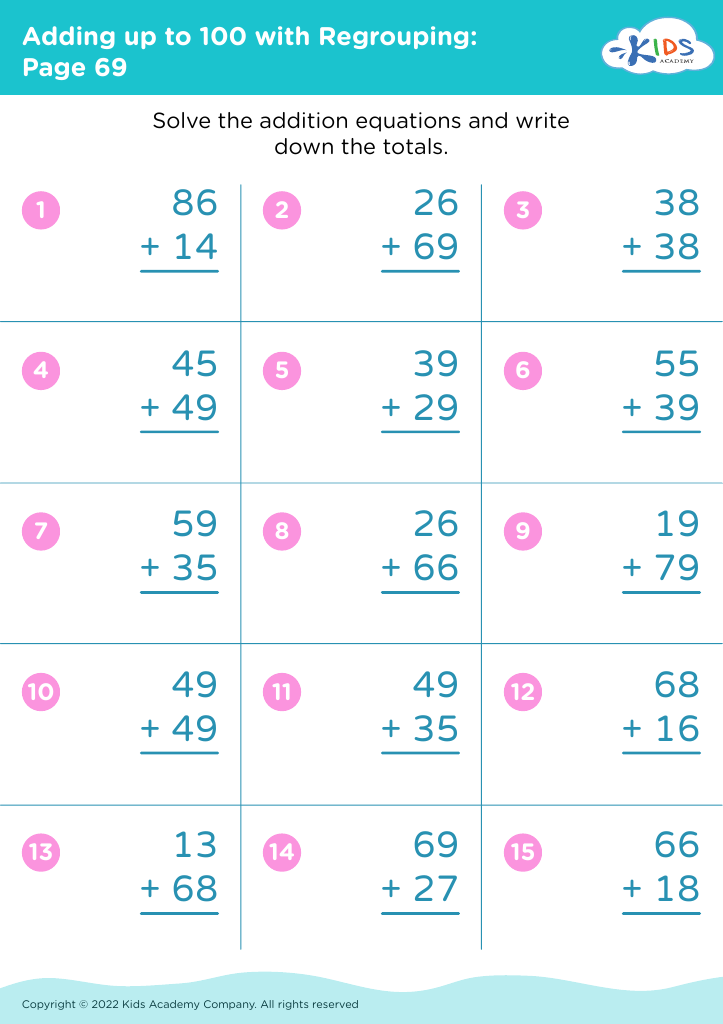
Explore our engaging worksheets for ages 7-8 focused on fraction comparison and adding up to 100. Designed to boost your child’s math skills, these fun and educational activities teach young learners to compare and understand fractions while mastering addition within 100. Each worksheet is crafted to enhance numerical confidence and problem-solving abilities. Perfect for both classroom and at-home practice, these resources support developing a strong math foundation. Equip your child with the tools needed for future success in mathematics through our expertly designed, easy-to-follow fraction comparison and addition worksheets. Join us at Kids Academy for an enjoyable learning journey!






%20(1).jpg)
Understanding fractions and being able to add numbers up to 100 are fundamental skills for children aged 7-8, and parents or teachers should prioritize these areas for several important reasons:
Firstly, grasping fractional concepts and comparison helps children develop a sense of numerical relationships and proportions. This understanding is critical as it forms the foundation for more advanced mathematical concepts like ratios, percentages, and algebra, which they will encounter in their later years of schooling.
Secondly, learning to add numbers up to 100 enhances mental arithmetic, which is essential for everyday decision-making and problem-solving. These skills boost children’s confidence in handling everyday activities, such as shopping and cooking, where they need to manage and calculate quantities and costs.
Additionally, mastering these mathematical principles early on helps boost a child’s cognitive development. It fosters logical thinking, pattern recognition, and analytical skills, which are crucial not just in math, but in science, technology, and other domains.
Moreover, caring about these skills shows children the importance of discipline and persistence in learning. When parents and teachers emphasize these foundational skills, they send a message that they are valuable, which fosters an encouraging and supportive learning environment. By focusing on these areas, we set children on a path to academic success and a lifelong love of learning.








