Filters

22 filtered results

Clear all filters
Favorites
With answer key
Interactive

22 filtered results

Difficulty Level

Grade


Boost your child's math skills with our engaging "Fraction Simplification Adding Up to 100 Worksheets" designed for ages 7-8. These worksheets help young learners simplify fractions while practicing addition up to 100, fostering a solid understanding of key math concepts. Each activity combines fun and learning, making math accessible and enjoyable. Tailored to meet educational standards, our worksheets enhance problem-solving abilities and build confidence in handling fractions. Perfect for both classroom and home learning environments, these resources ensure your child excels in math. Download now and watch their skills soar!
Check out this FREE Trial Lesson on Adding up to 100 for age 7-8!

D

Favorites
With answer key
Interactive
  • 7-8
  • Fraction simplification
  • Adding up to 100
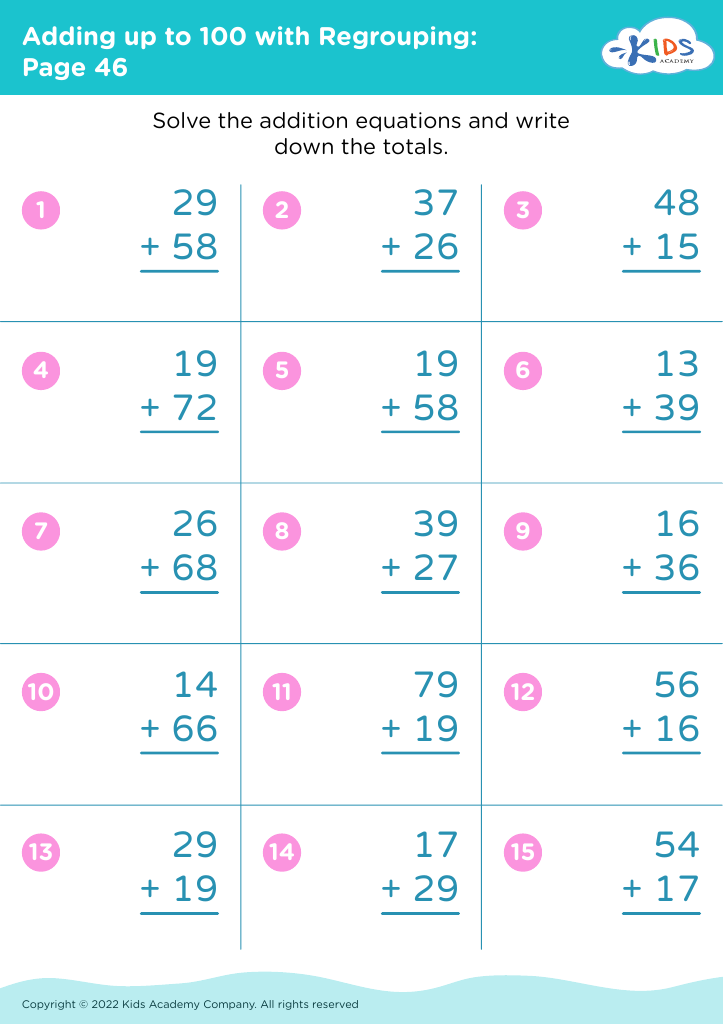
Adding up to 100 with Regrouping: Page 46
Worksheet
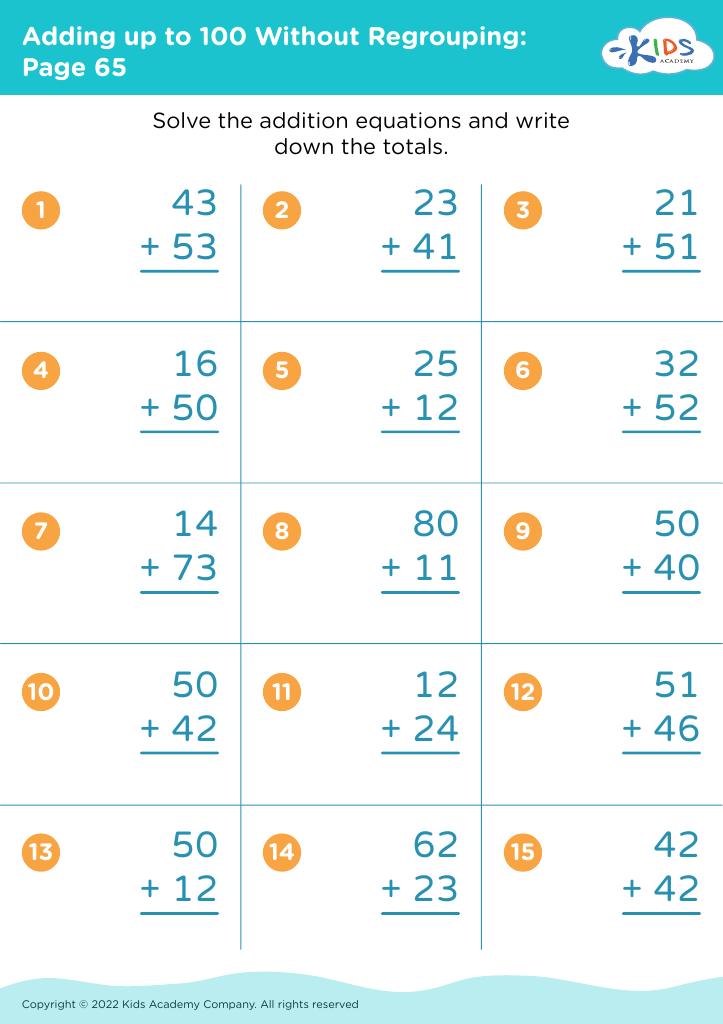
Adding up to 100 Without Regrouping: Page 65
Worksheet
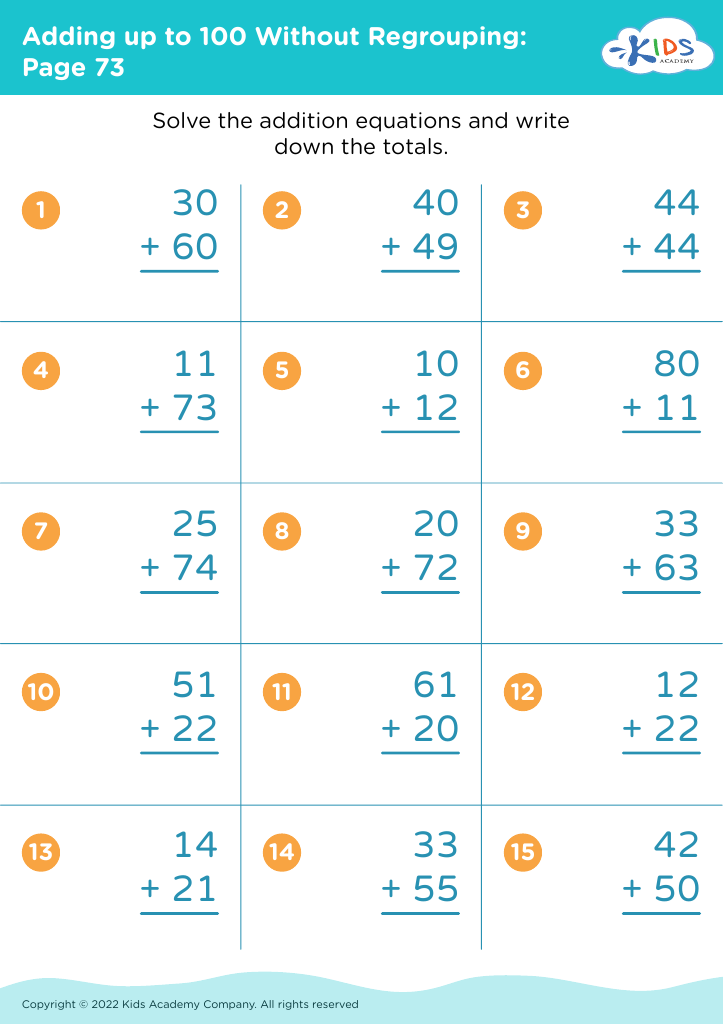
Adding up to 100 Without Regrouping: Page 73
Worksheet
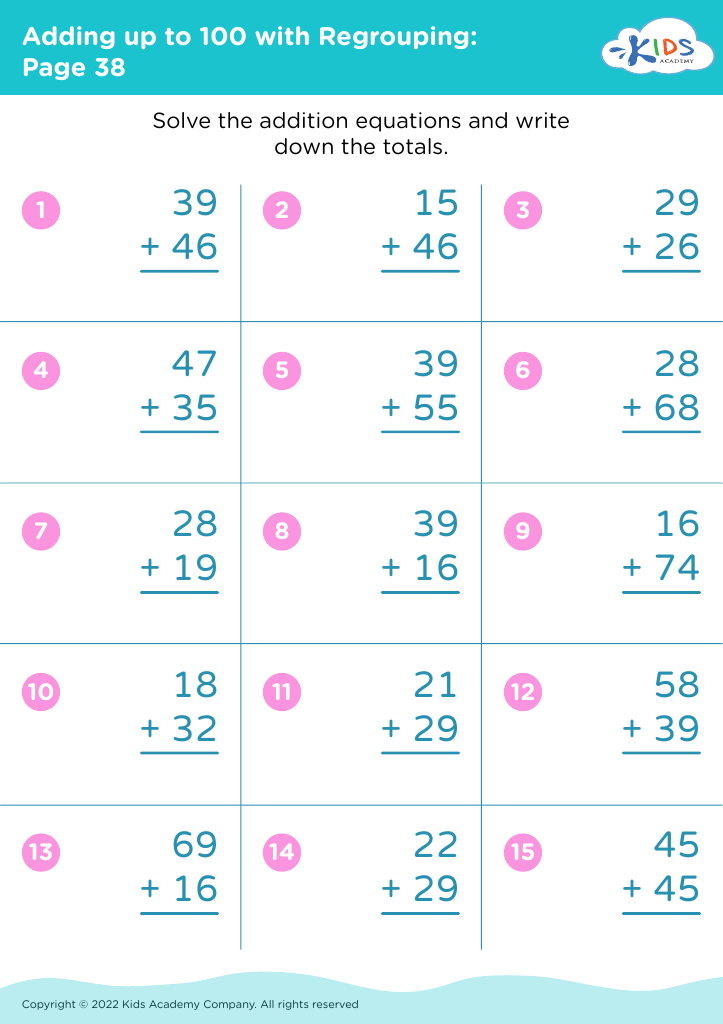
Adding up to 100 with Regrouping: Page 38
Worksheet
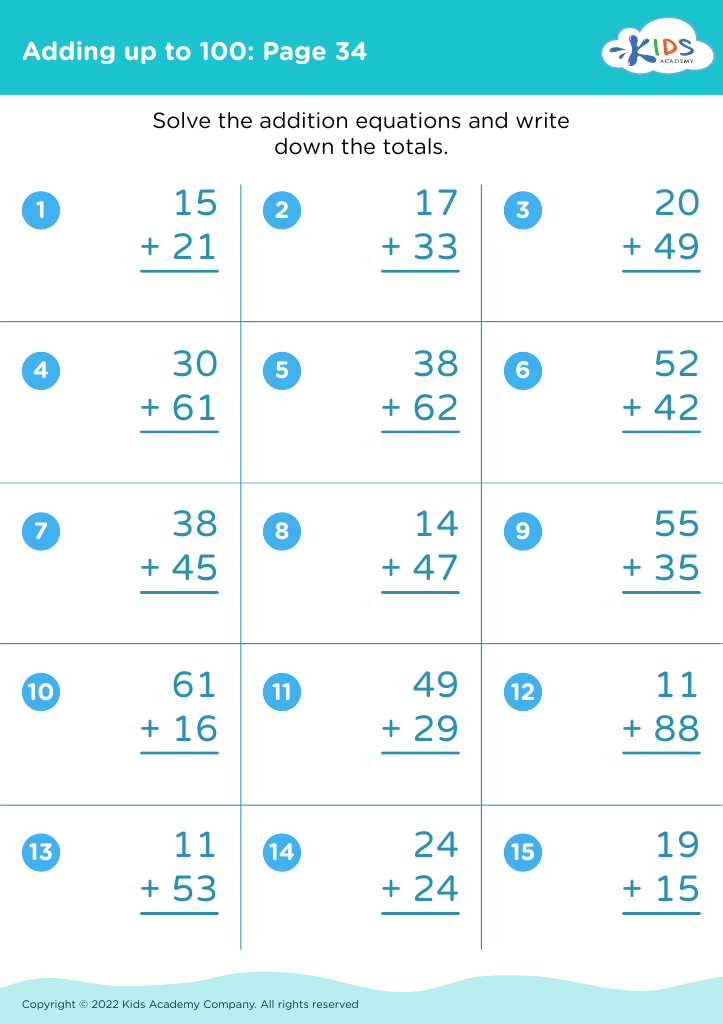
Adding up to 100: Page 34

Adding up to 100: Page 34

Adding up to 100: Page 34
Worksheet
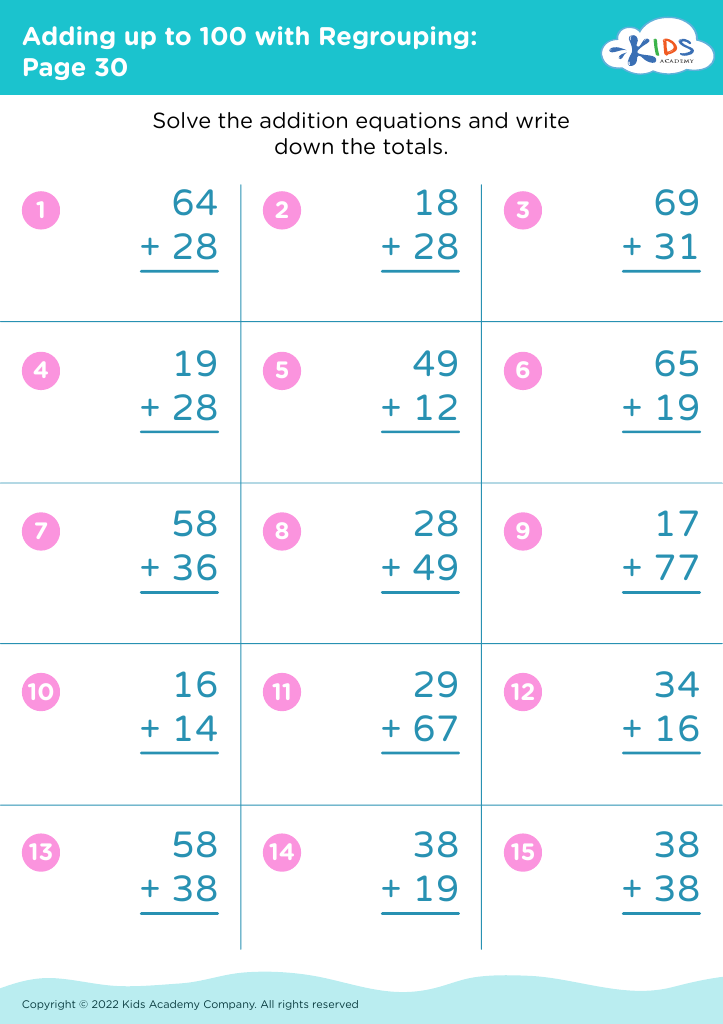
Adding up to 100 with Regrouping: Page 30
Worksheet
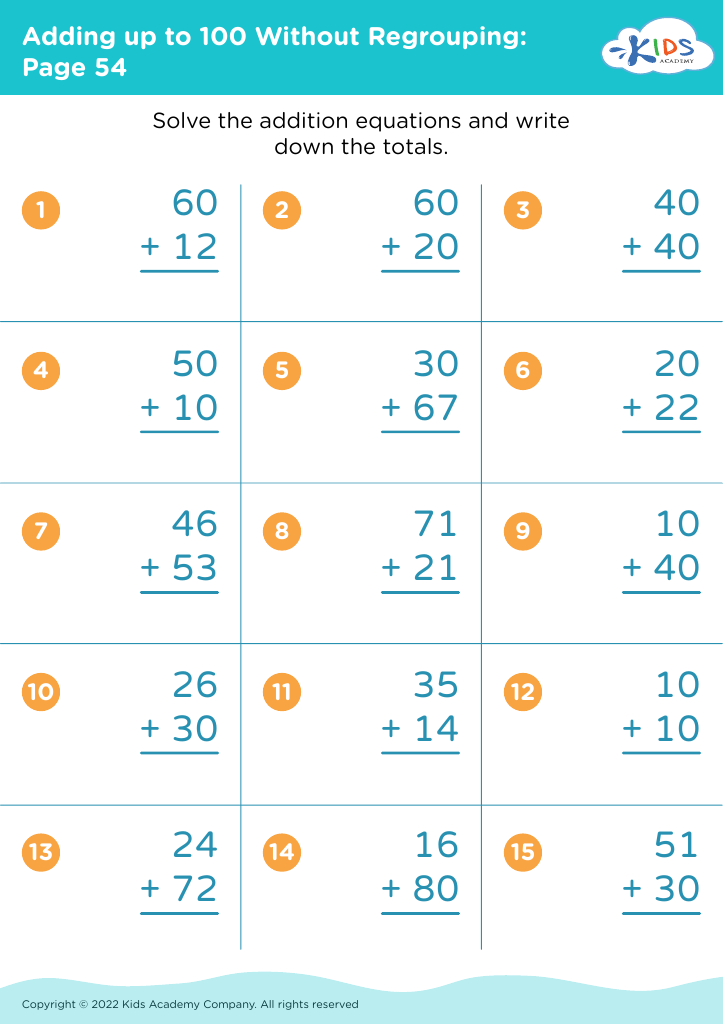
Adding up to 100 Without Regrouping: Page 54
Worksheet
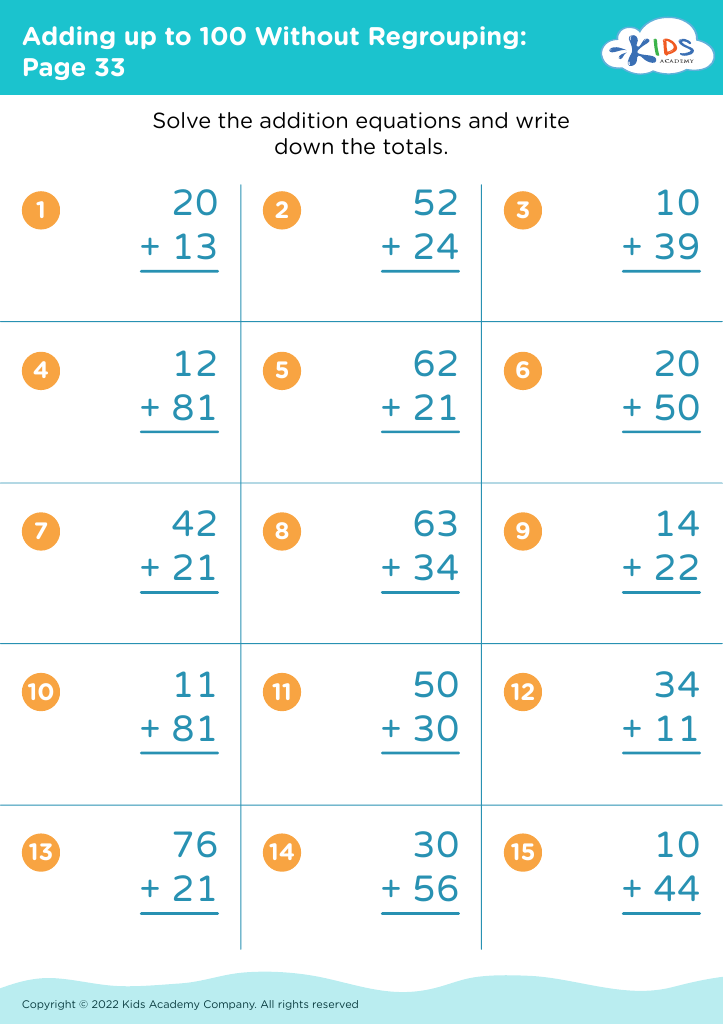
Adding up to 100 Without Regrouping: Page 33
Worksheet
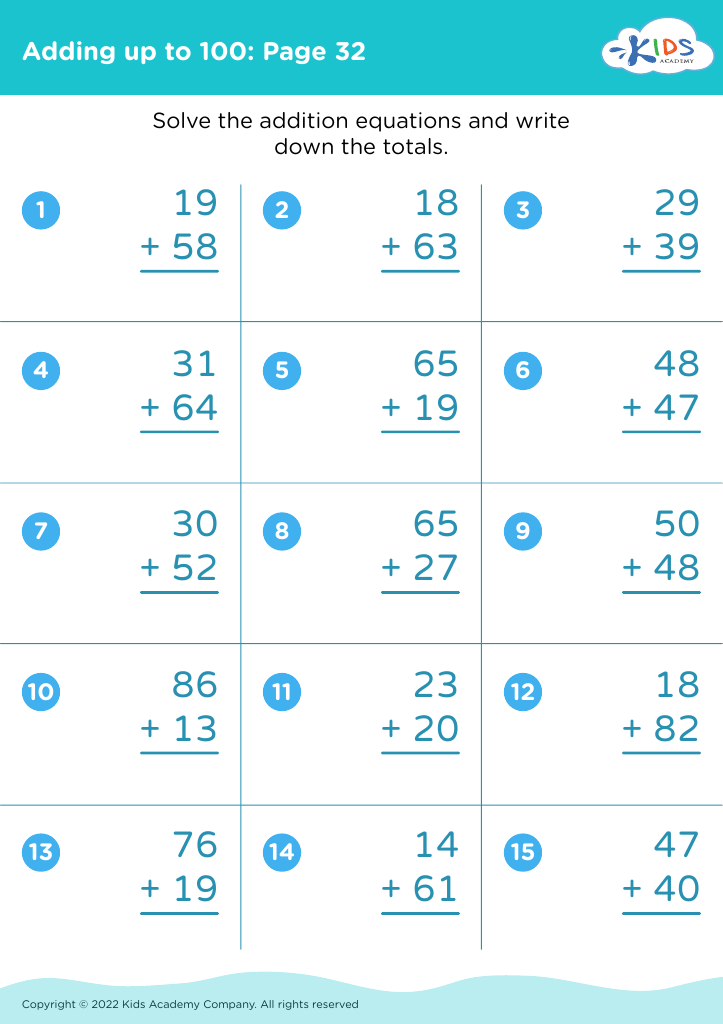
Adding up to 100: Page 32

Adding up to 100: Page 32

Adding up to 100: Page 32
Worksheet
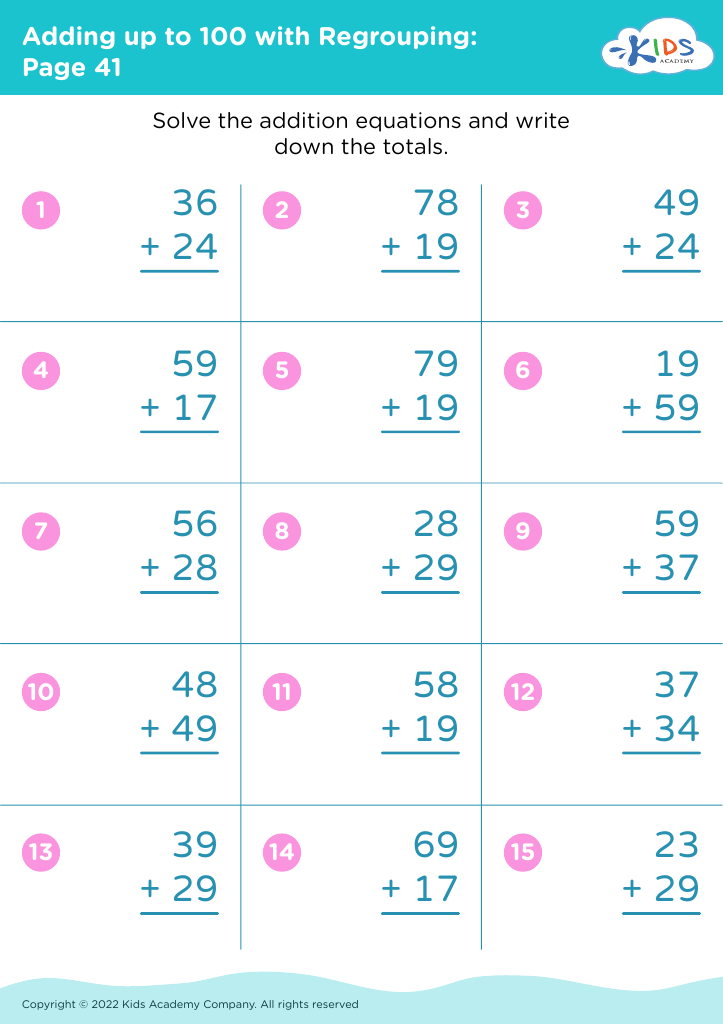
Adding up to 100 with Regrouping: Page 41
Worksheet
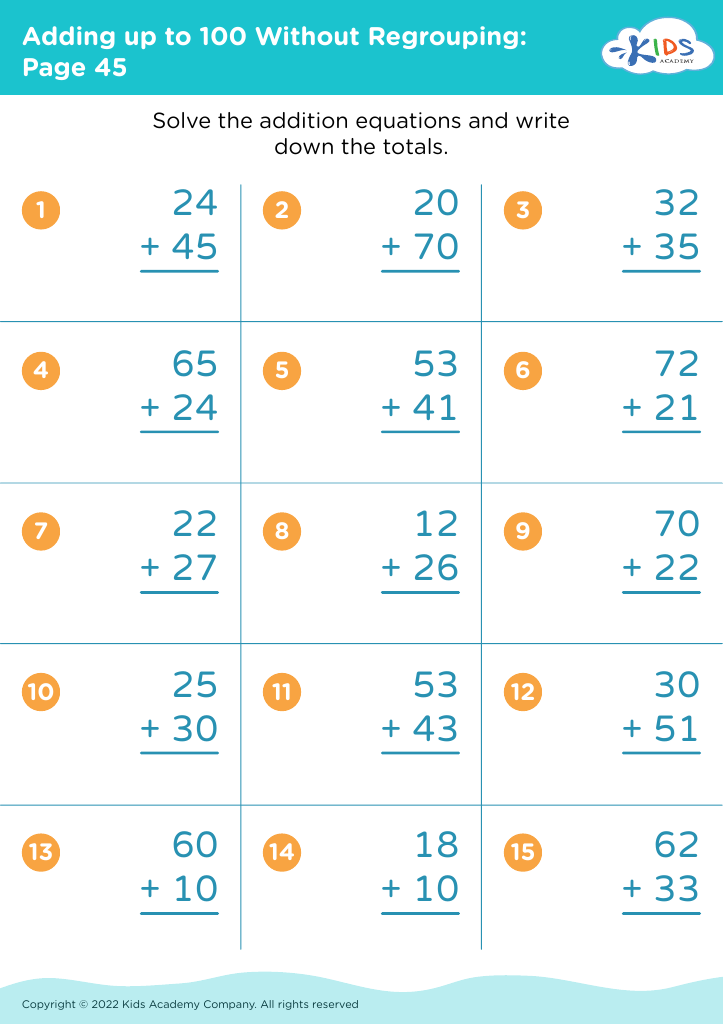
Adding up to 100 Without Regrouping: Page 45
Worksheet
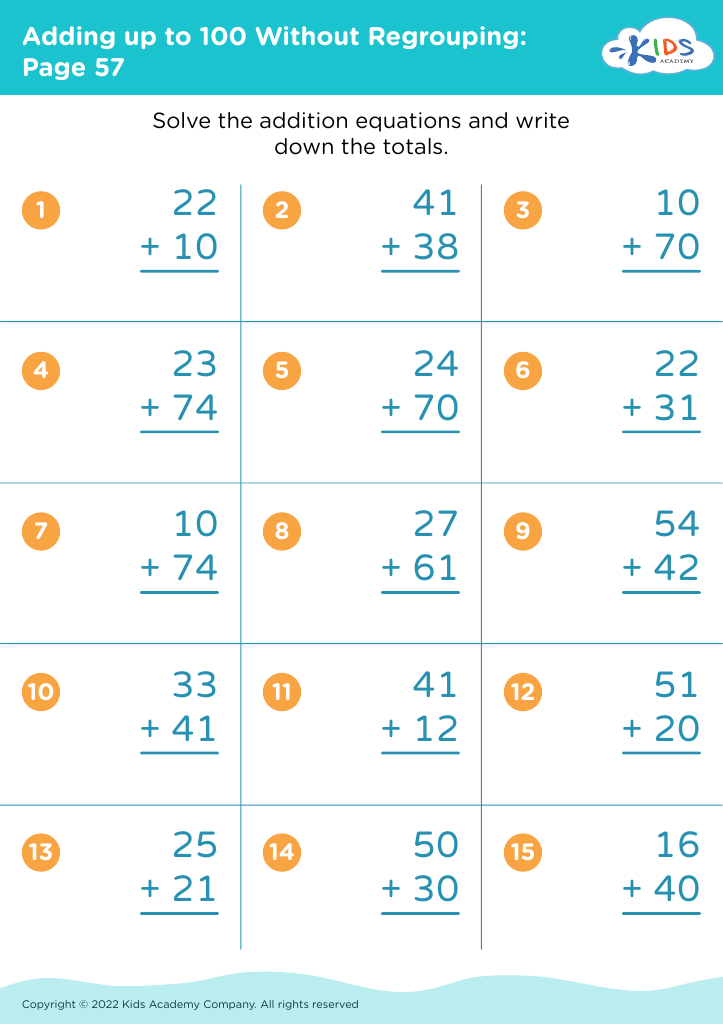
Adding up to 100 Without Regrouping: Page 57
Worksheet
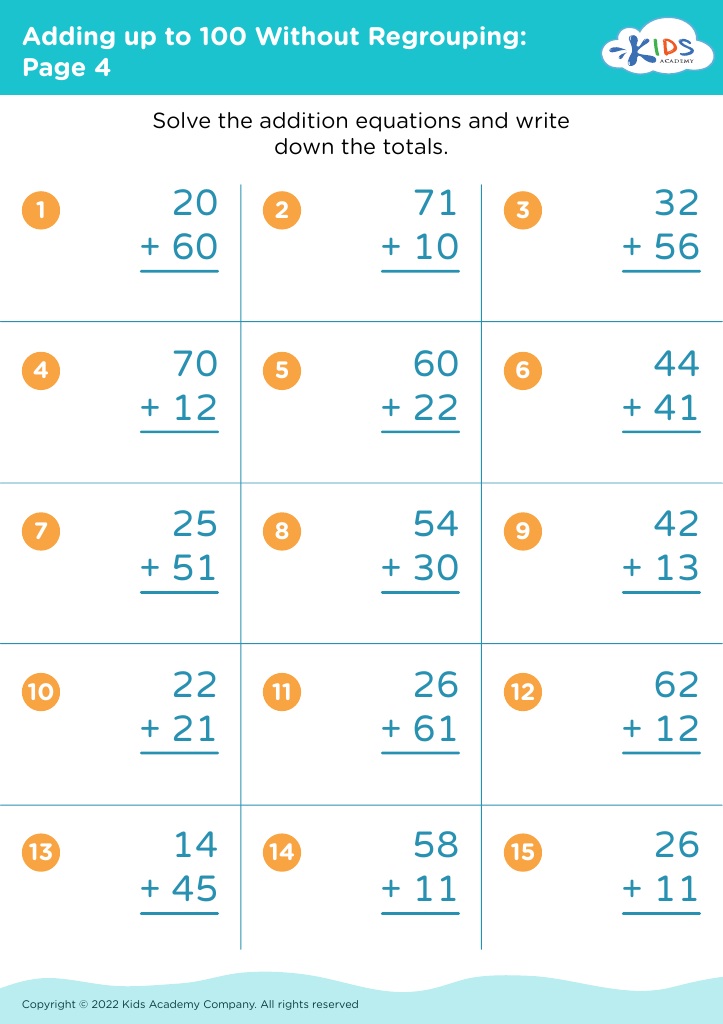
Adding up to 100 Without Regrouping: Page 4
Worksheet
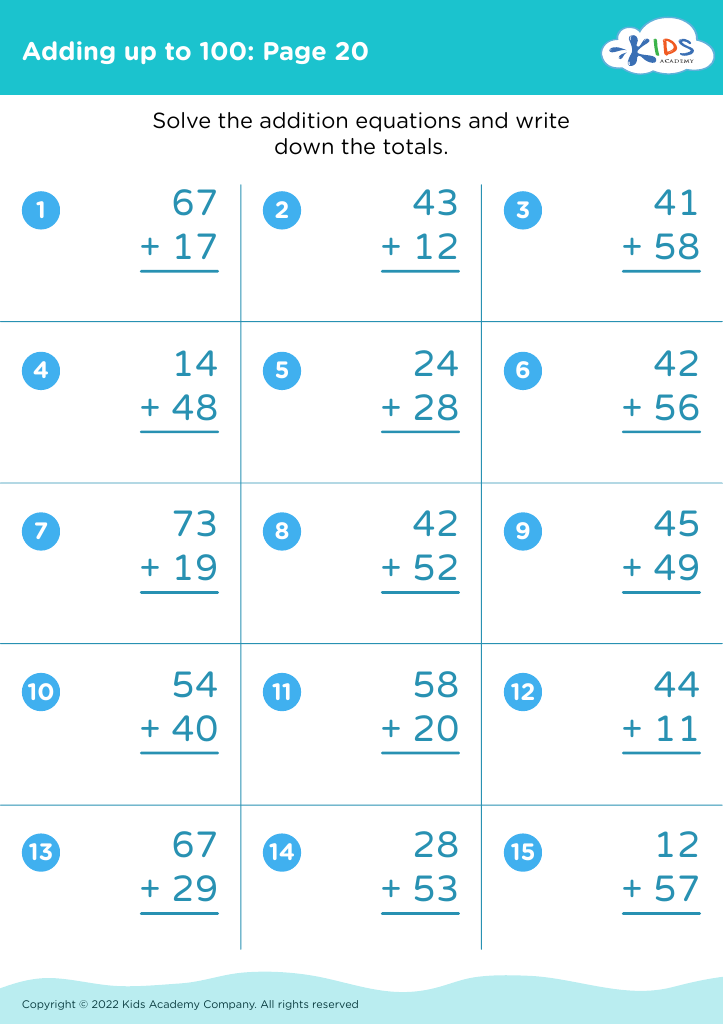
Adding up to 100: Page 20

Adding up to 100: Page 20

Adding up to 100: Page 20
Worksheet
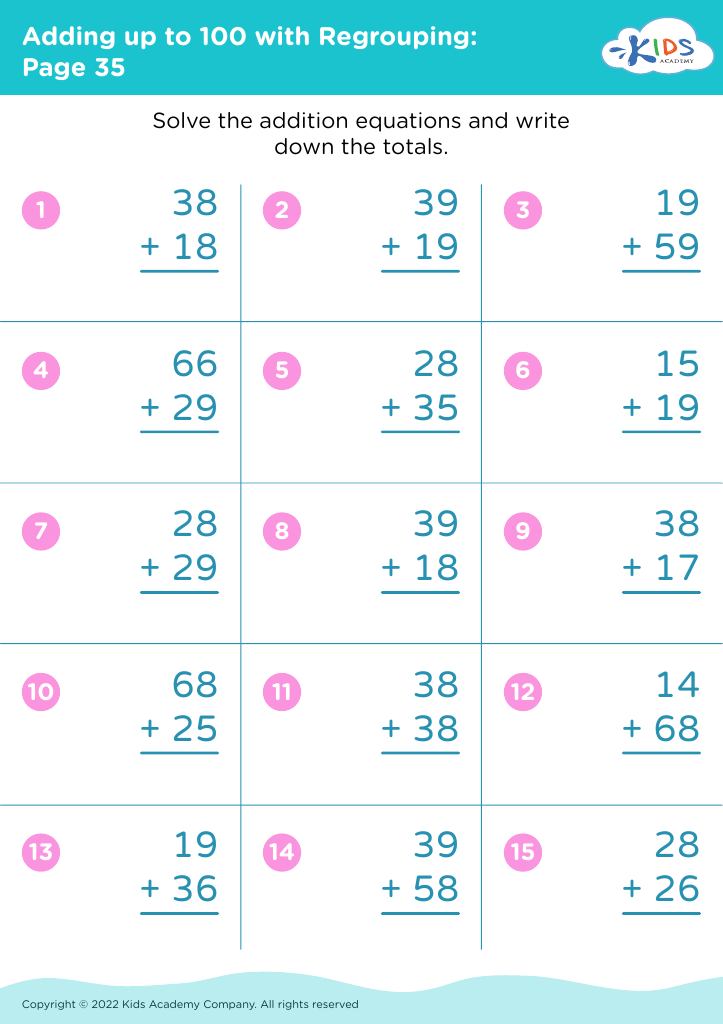
Adding up to 100 with Regrouping: Page 35
Worksheet
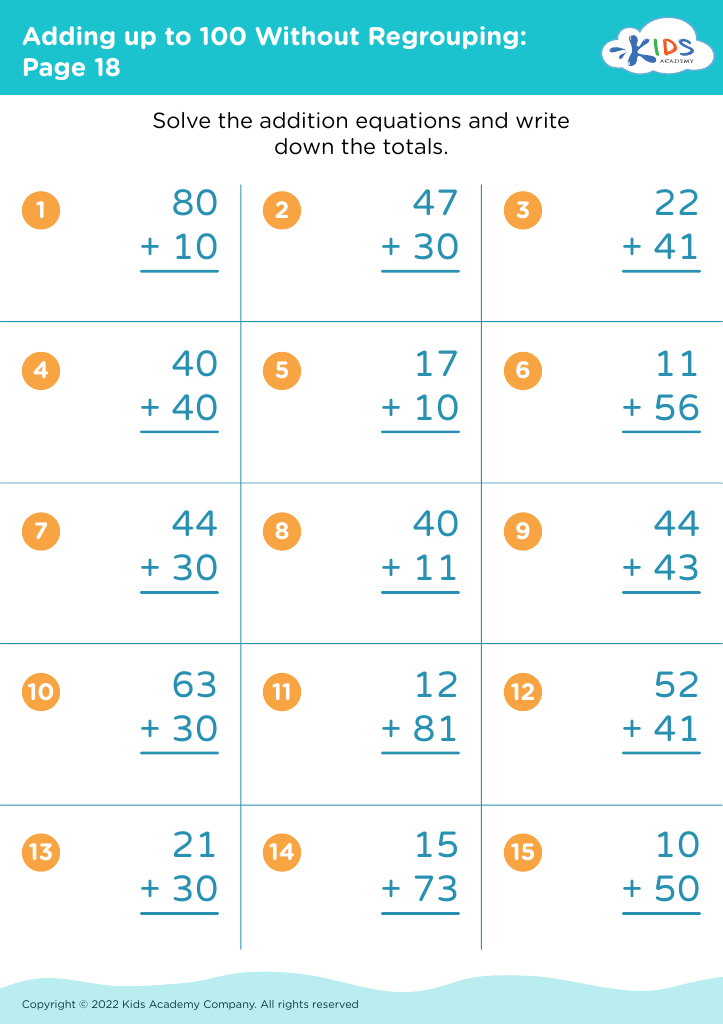
Adding up to 100 Without Regrouping: Page 18
Worksheet
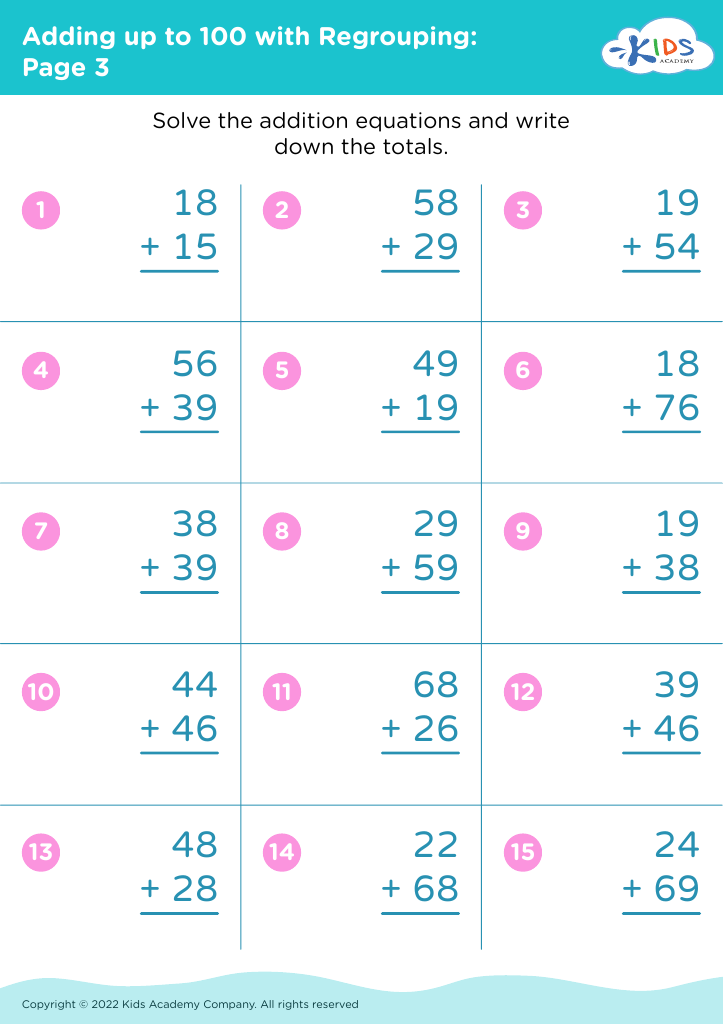
Adding up to 100 with Regrouping: Page 3
Worksheet
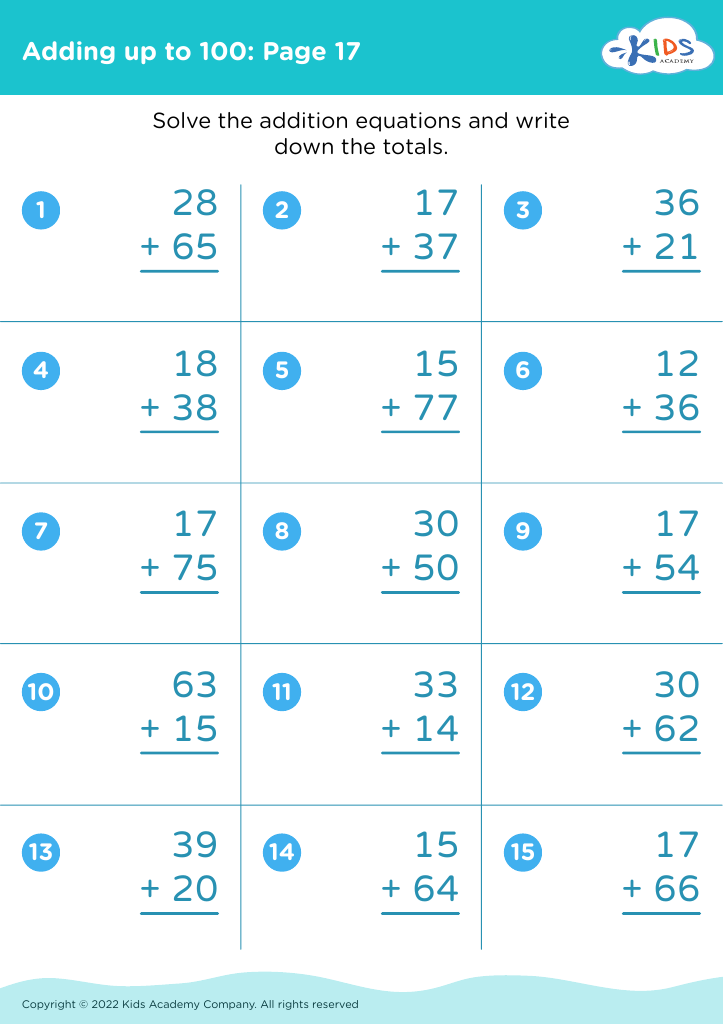
Adding up to 100: Page 17

Adding up to 100: Page 17

Adding up to 100: Page 17
Worksheet
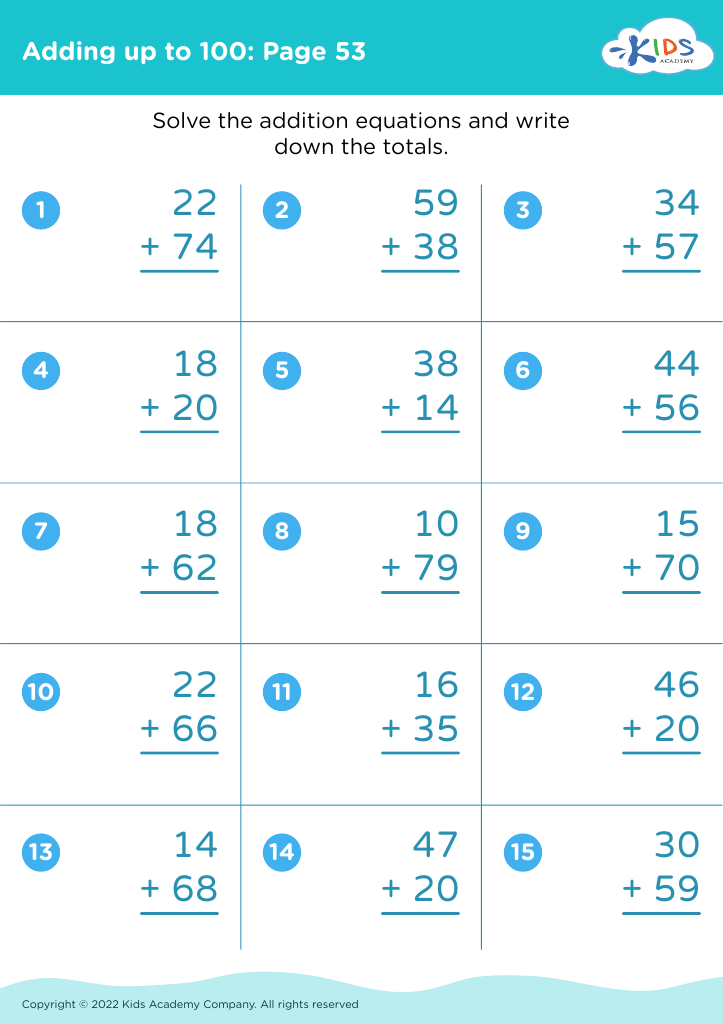
Adding up to 100: Page 53

Adding up to 100: Page 53

Adding up to 100: Page 53
Worksheet
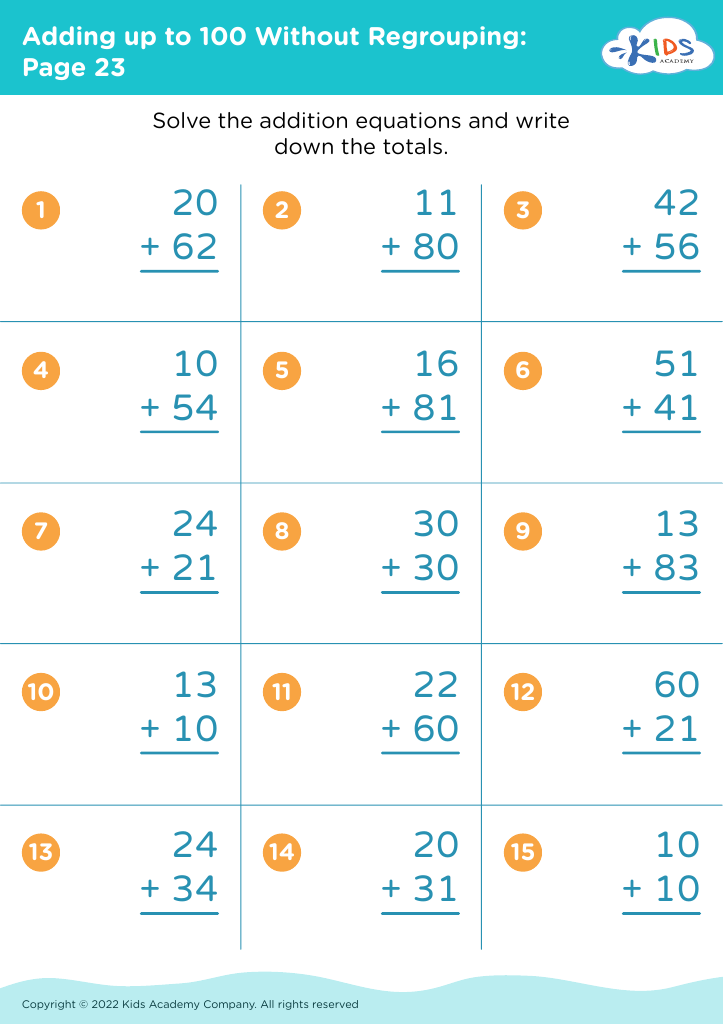
Adding up to 100 Without Regrouping: Page 23
Worksheet
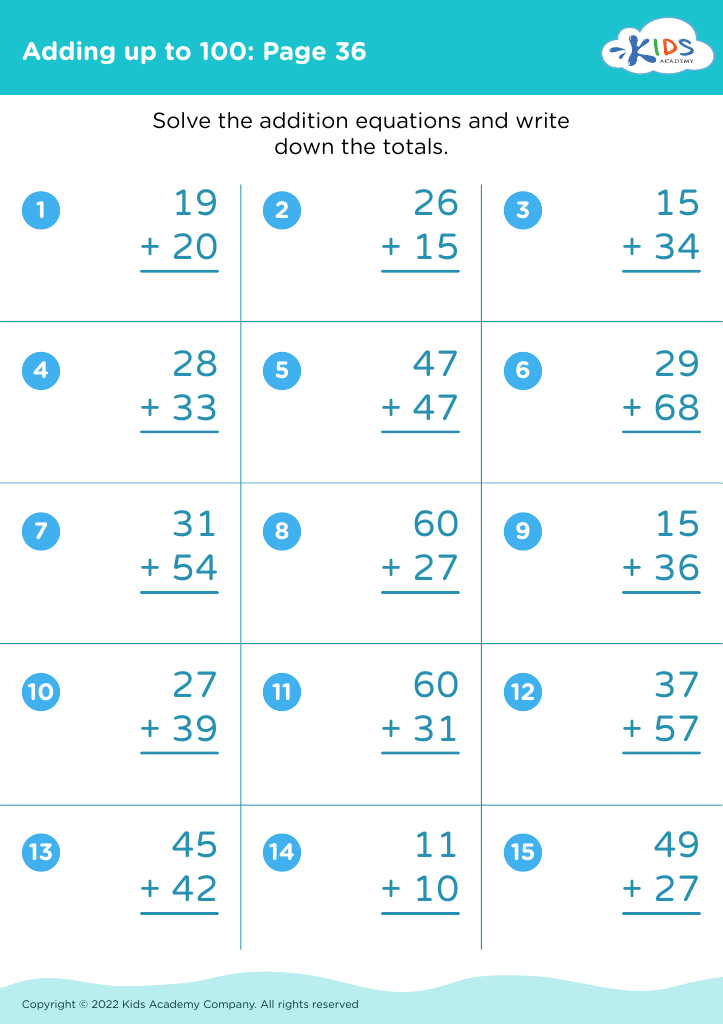
Adding up to 100: Page 36

Adding up to 100: Page 36

Adding up to 100: Page 36
Worksheet
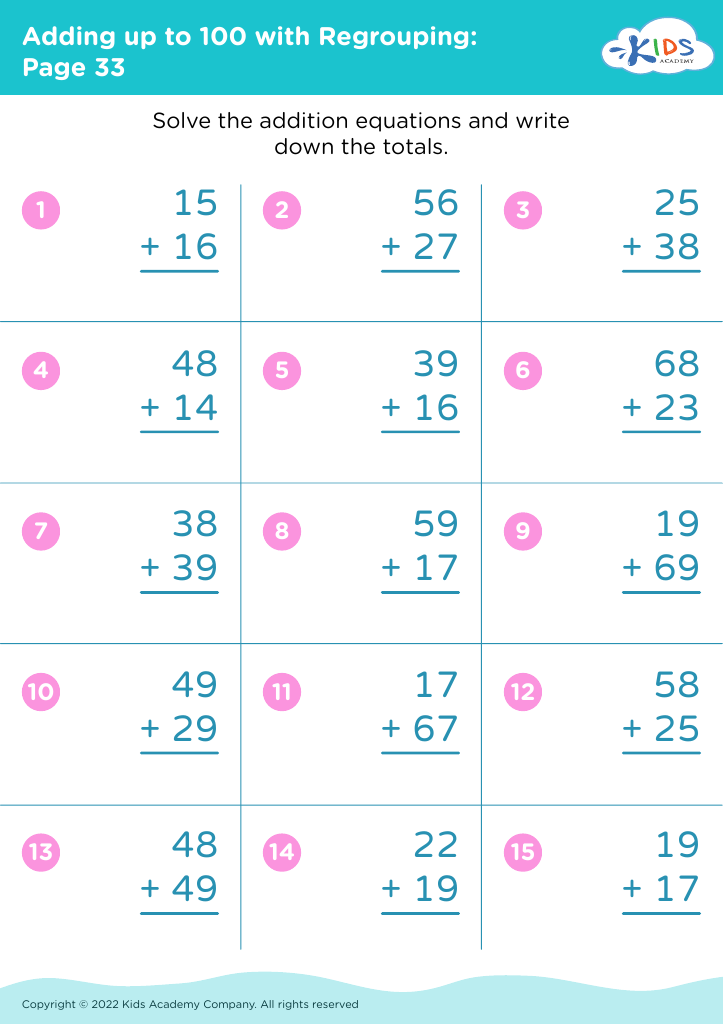
Adding up to 100 with Regrouping: Page 33
Worksheet


Parents and teachers should care about fraction simplification and adding up to 100 for children aged 7-8 because these skills lay essential groundwork for future mathematical learning and practical life applications. At this formative age, children’s brains are highly receptive to understanding core concepts that will be built upon in more complex mathematical computations later in their education.

Simplifying fractions helps children grasp the idea of equivalence—knowing that fractions like 2/4 and 1/2 represent the same quantity but in different forms fosters number sense and visual learning. It teaches them about ratios and proportions as well, which are foundational for higher-level math concepts.

Adding numbers up to 100 further reinforces their number sense, arithmetic fluency, and mental calculation skills. These are crucial for more advanced topics such as multi-digit addition and subtraction, multiplication, and even more complicated fractions. It also serves to boost their confidence when working with numbers, making mathematical tasks feel manageable and logical rather than daunting.

Moreover, practical applications such as dividing snacks equally or understanding portions during cooking make these skills not merely abstract concepts but valuable everyday tools. A strong grip on these fundamentals makes children feel more competent and eager to tackle more challenging mathematical problems as they advance in their education.