Hand-eye Coordination Adding up to 100 Worksheets for Ages 7-8
3 filtered results
-
From - To
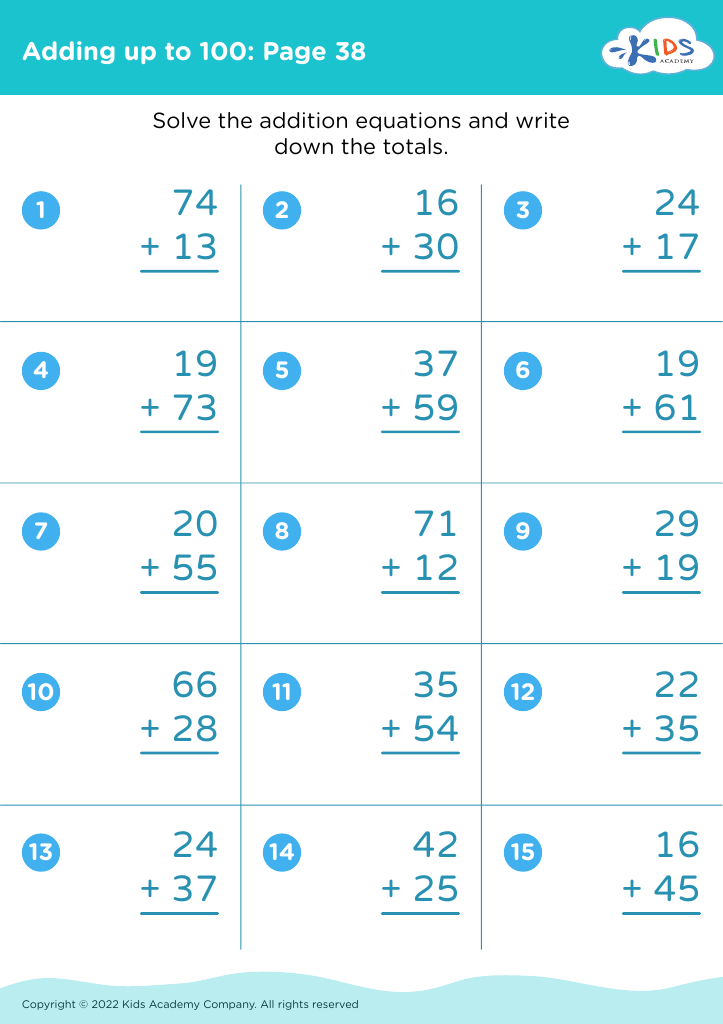
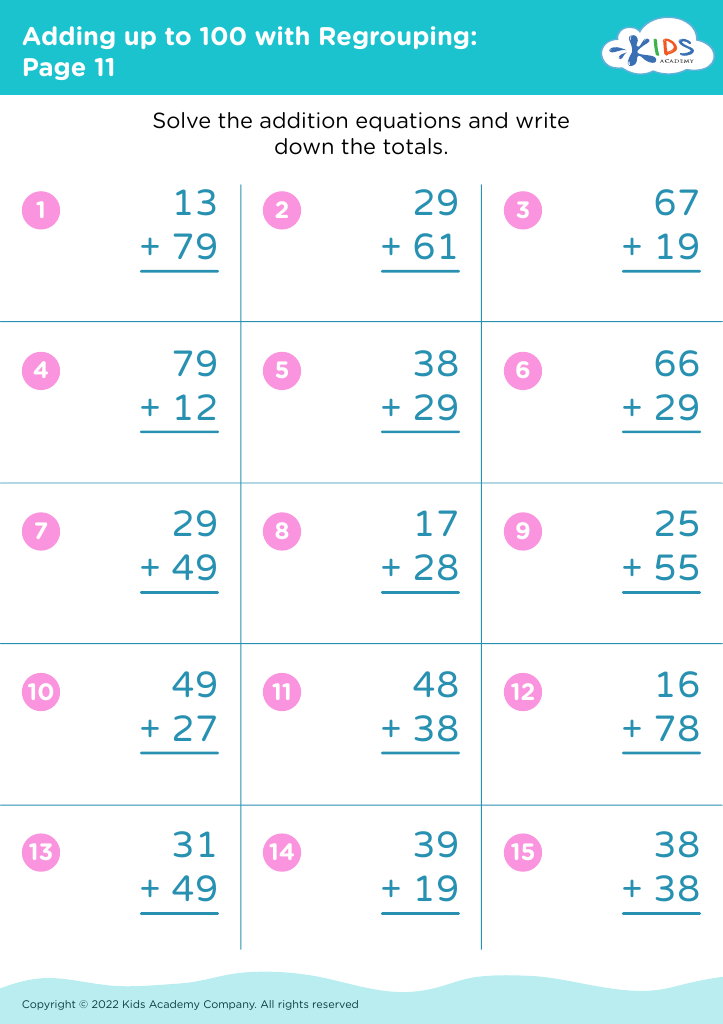
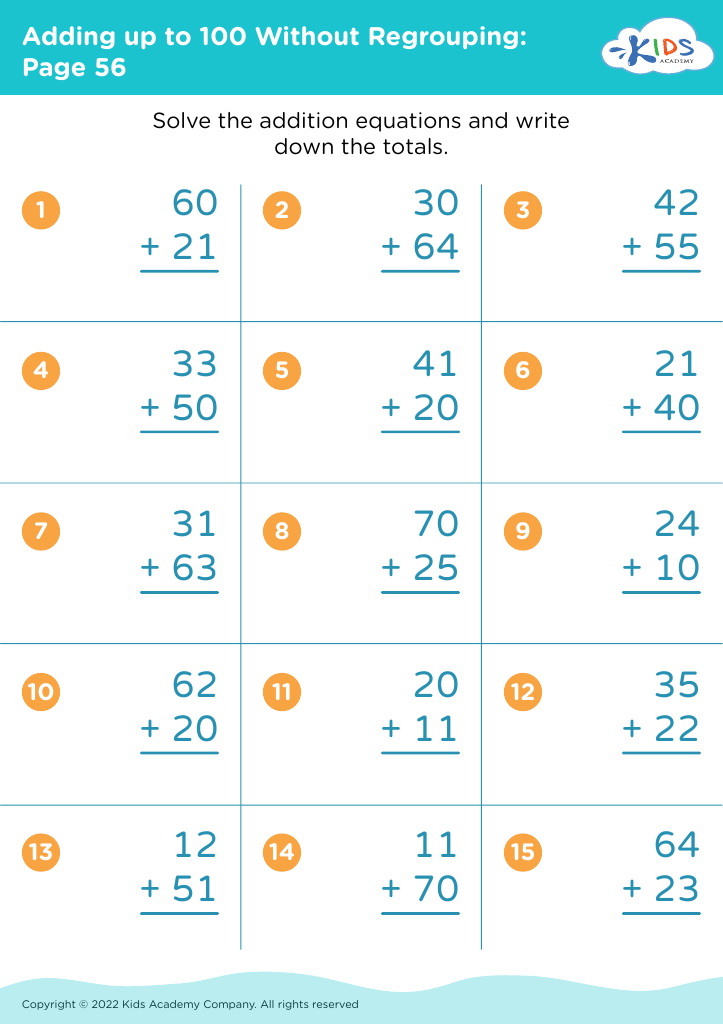
Enhance your child's learning experience with our Hand-eye Coordination Adding up to 100 worksheets, tailored specifically for ages 7-8. These engaging activities combine essential math skills with fun, interactive exercises designed to boost hand-eye coordination. As kids practice addition while controlling their hand movements, they develop vital cognitive and motor skills essential for their overall growth. Our user-friendly worksheets provide a variety of challenges, ensuring that learning is both enjoyable and educational. Perfect for classroom or home use, these resources will keep children motivated and excited about math. Explore our collection today to support your child's journey in mastering addition!





%20(1).jpg)

Hand-eye coordination is crucial for children aged 7-8 as it plays a vital role in their overall development. At this age, children are increasingly engaged in activities that require precision, such as writing, drawing, and participating in sports. By enhancing their hand-eye coordination, they improve their ability to perform these tasks effectively, fostering confidence and independence.
Moreover, incorporating activities that focus on achieving goals like adding up to 100 through tactile games can elevate a child's engagement and interest in math. Hands-on activities that promote hand-eye coordination, such as counting games with manipulatives, can help reinforce mathematical concepts, making learning both fun and effective.
Additionally, strong hand-eye coordination directly impacts a child's motor skills, leading to better physical performance. This can encourage teamwork and social interaction in sports, contributing to their emotional well-being. With parents and teachers actively involved in promoting these skills, children can develop critical cognitive functions and problem-solving abilities. Ultimately, nurturing hand-eye coordination not only improves academic performance but also supports overall growth, making it essential for parents and teachers to prioritize these skills in their educational approach.








