Identifying equivalent fractions Adding up to 100 Worksheets for Ages 7-8
5 filtered results
-
From - To
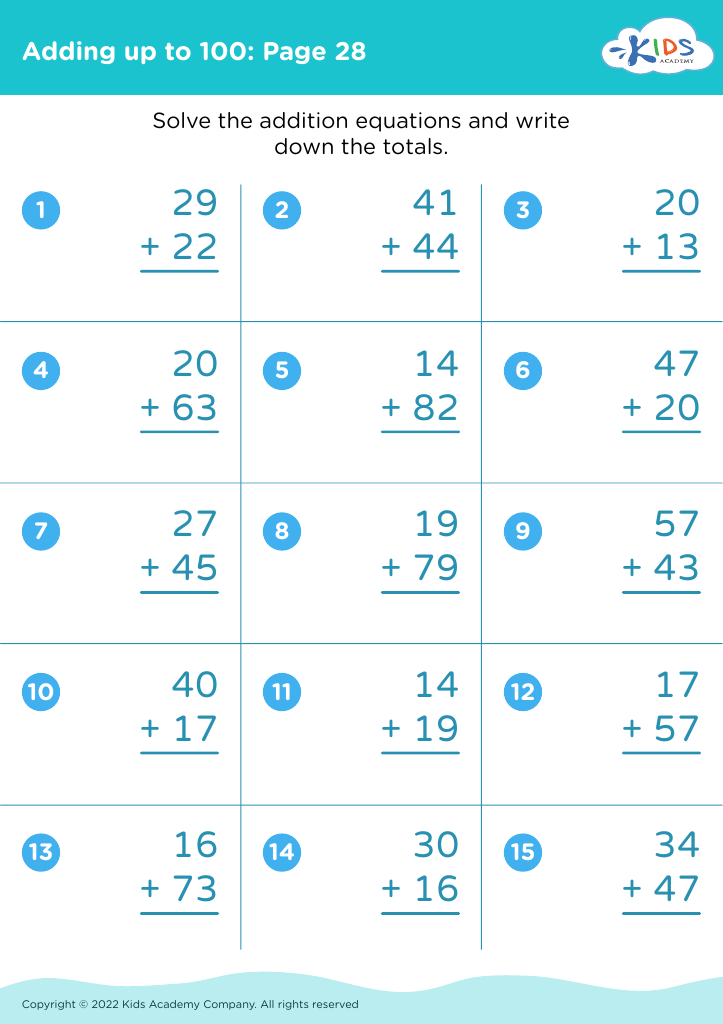
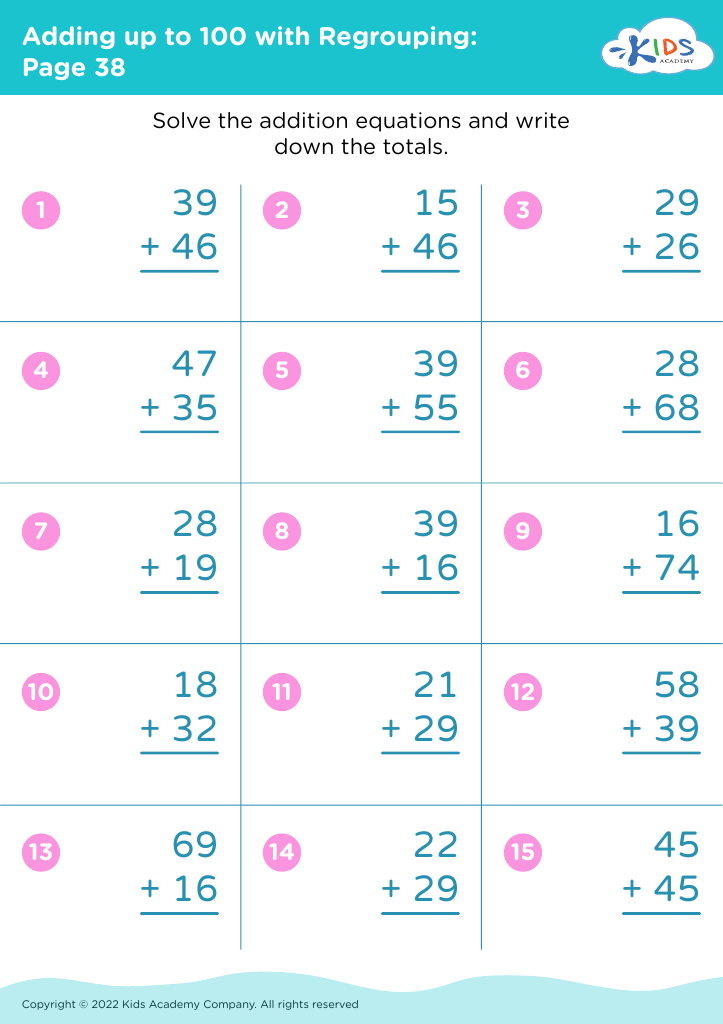
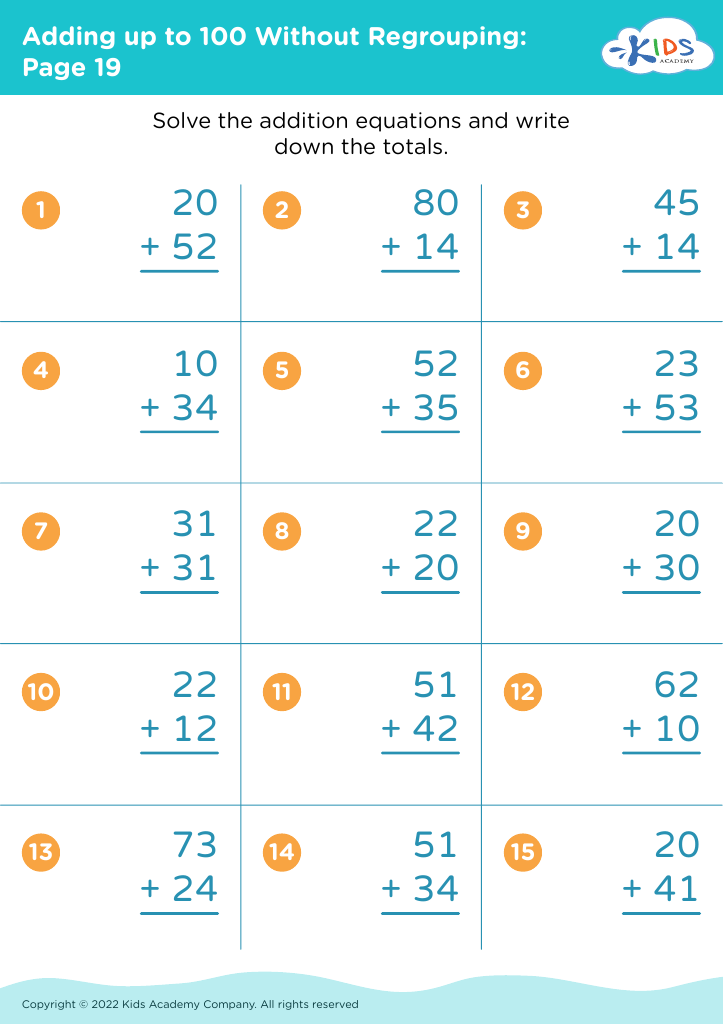
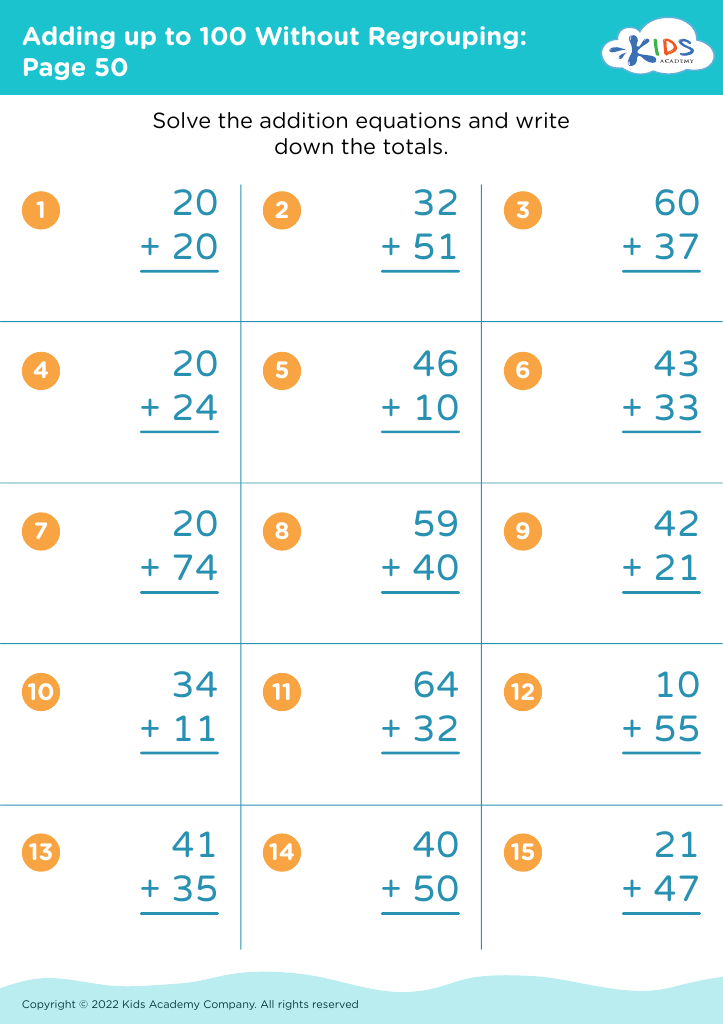
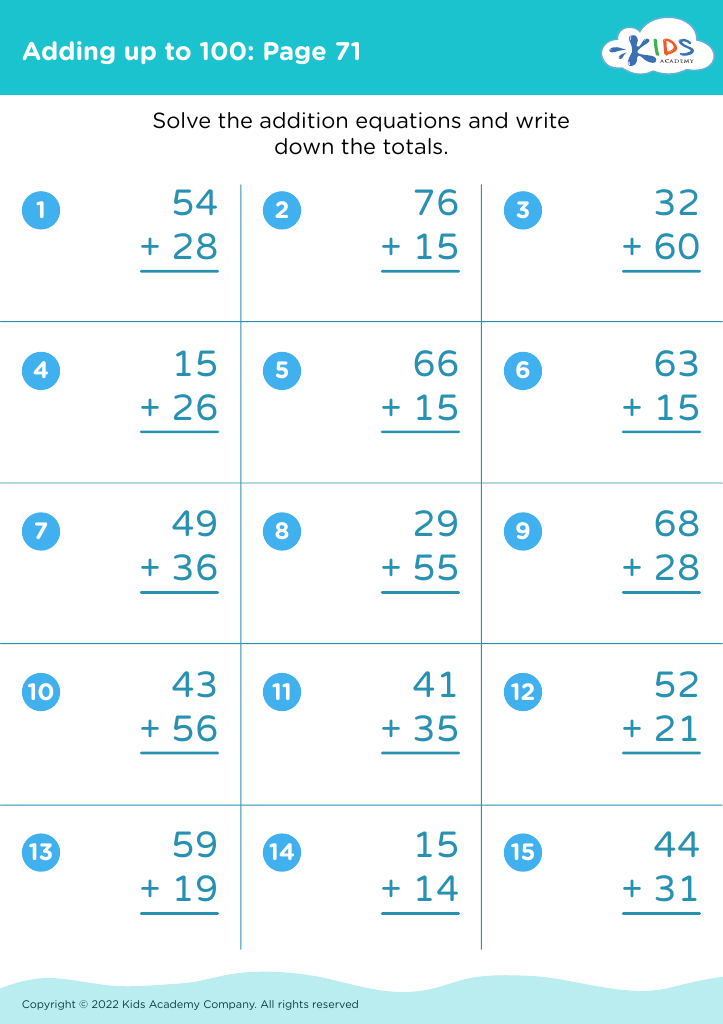
Our "Identifying Equivalent Fractions Adding up to 100 Worksheets for Ages 7-8" are designed to strengthen your child's understanding of fractions while mastering addition up to 100. These fun, engaging worksheets help young learners identify equivalent fractions, enhancing problem-solving skills and mathematical precision. Perfect for children aged 7 to 8, each activity promotes critical thinking through a blend of visual prompts and practice questions. By offering a variety of challenging exercises, our worksheets support continuous learning and build a strong foundation in essential math concepts. Download now to give your child a head start in math!






%20(1).jpg)
Identifying equivalent fractions and adding up to 100 are fundamental concepts that parents and teachers should emphasize for children aged 7-8 as they play a crucial role in the development of mathematical reasoning. Equivalent fractions help kids understand that different fractions can represent the same part of a whole, building a strong foundation for more advanced mathematical concepts such as simplification, comparison, and operations with fractions. This understanding is pivotal before they move on to more sophisticated topics like algebra and geometry.
Moreover, the skill of adding up to 100 reinforces basic arithmetic proficiency, offering children a concrete goal to achieve mastery in addition and subtraction. It also cultivates number sense, allowing children to recognize numerical patterns and relationships. Being able to work comfortably with sums up to 100 is an essential building block for more complex computations and problem-solving scenarios children will encounter later.
Generating confidence in these fundamental areas at an early age sets the stage for sustained academic success. It also fosters a positive attitude toward math, reducing anxiety and hesitancy in future learning. By prioritizing these skills, parents and educators not only promote immediate academic achievements but also reinforce lifelong problem-solving abilities and critical thinking.








