Identifying shapes Adding up to 100 Worksheets for Ages 7-8
8 filtered results
-
From - To
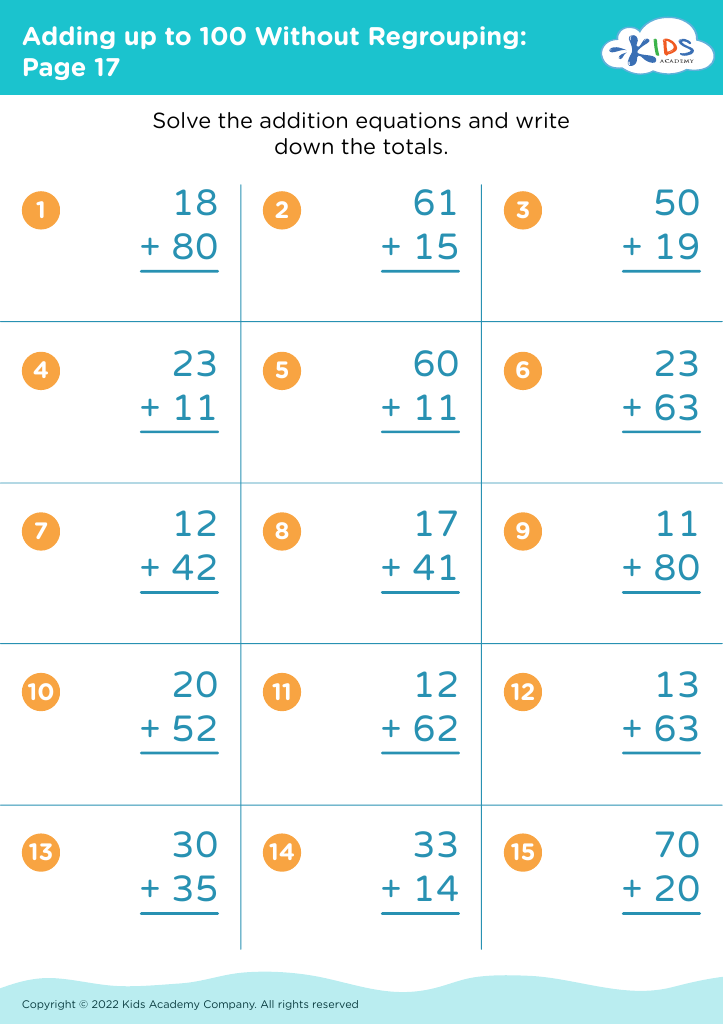
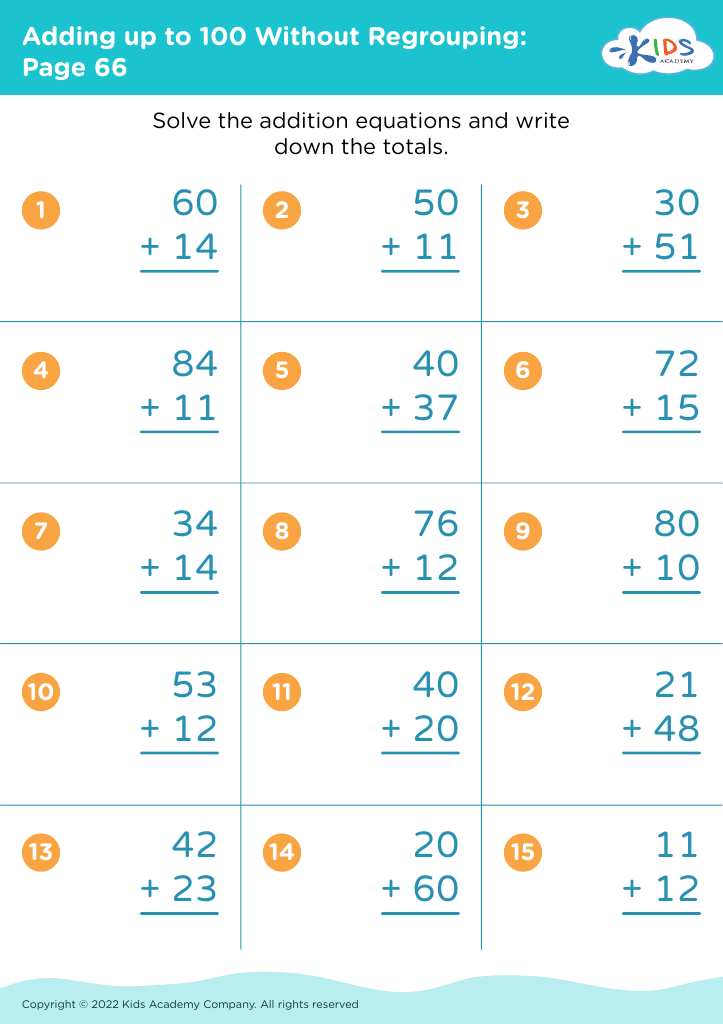
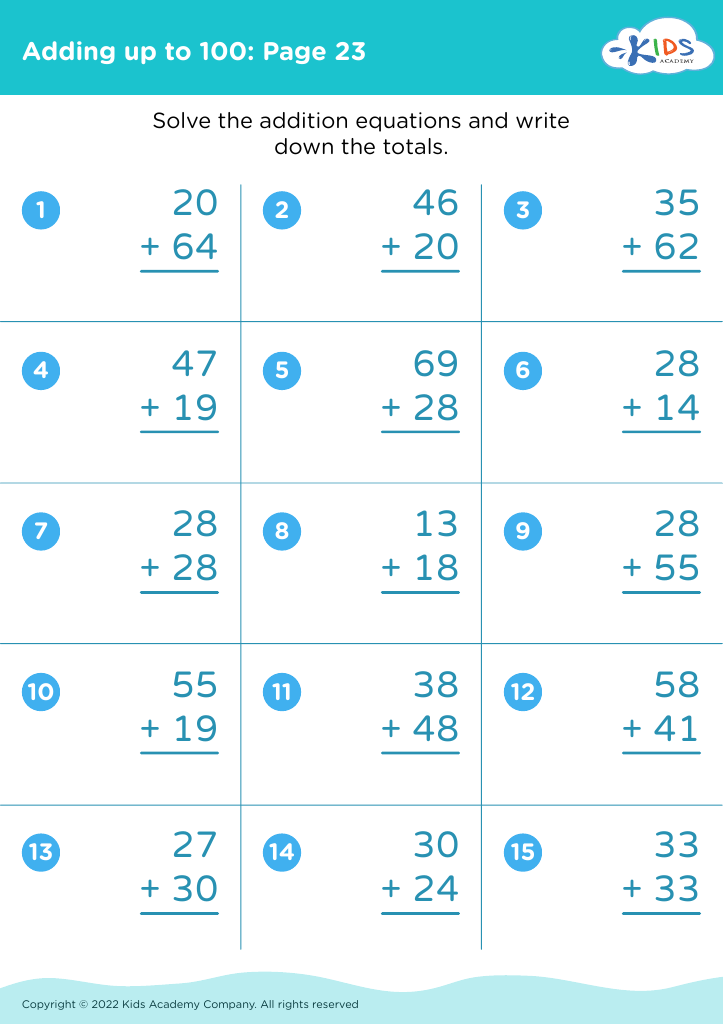
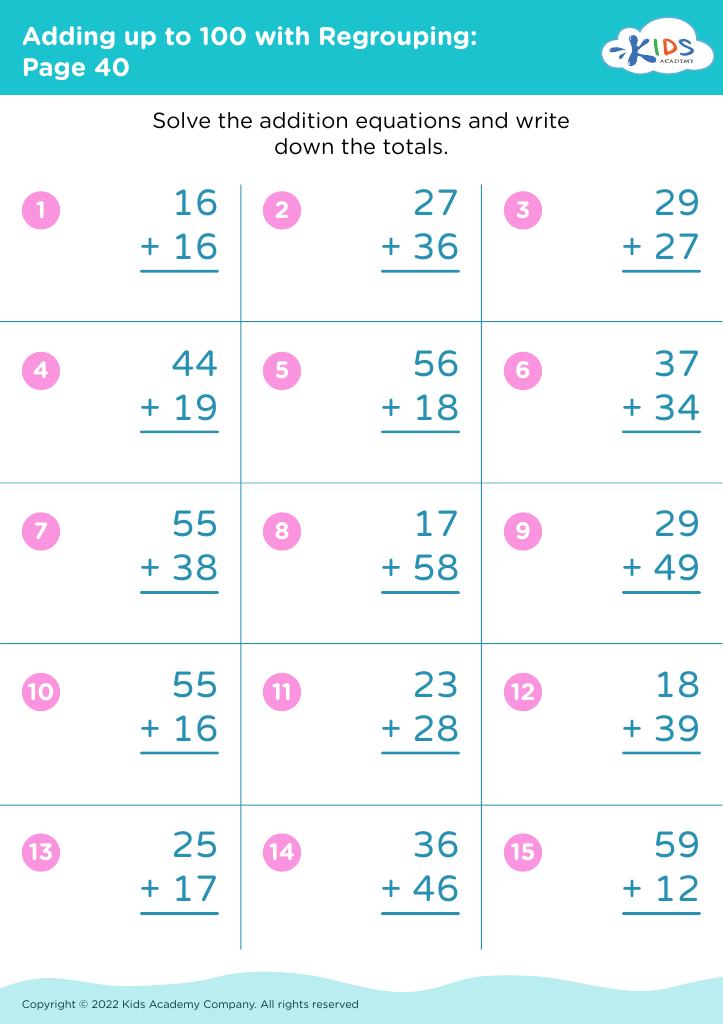
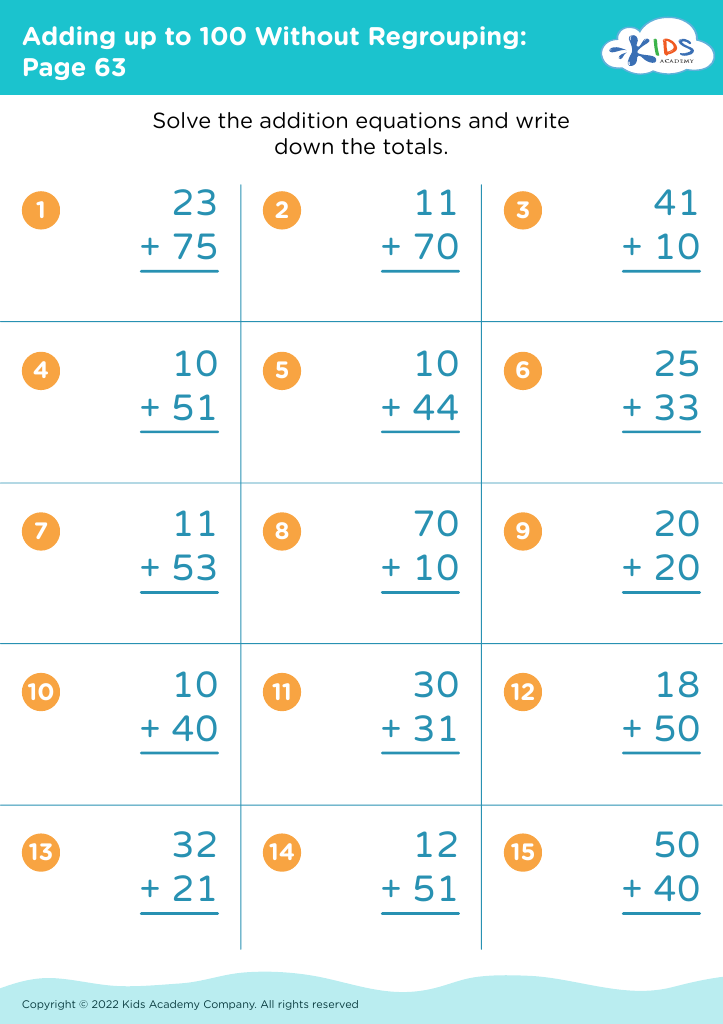
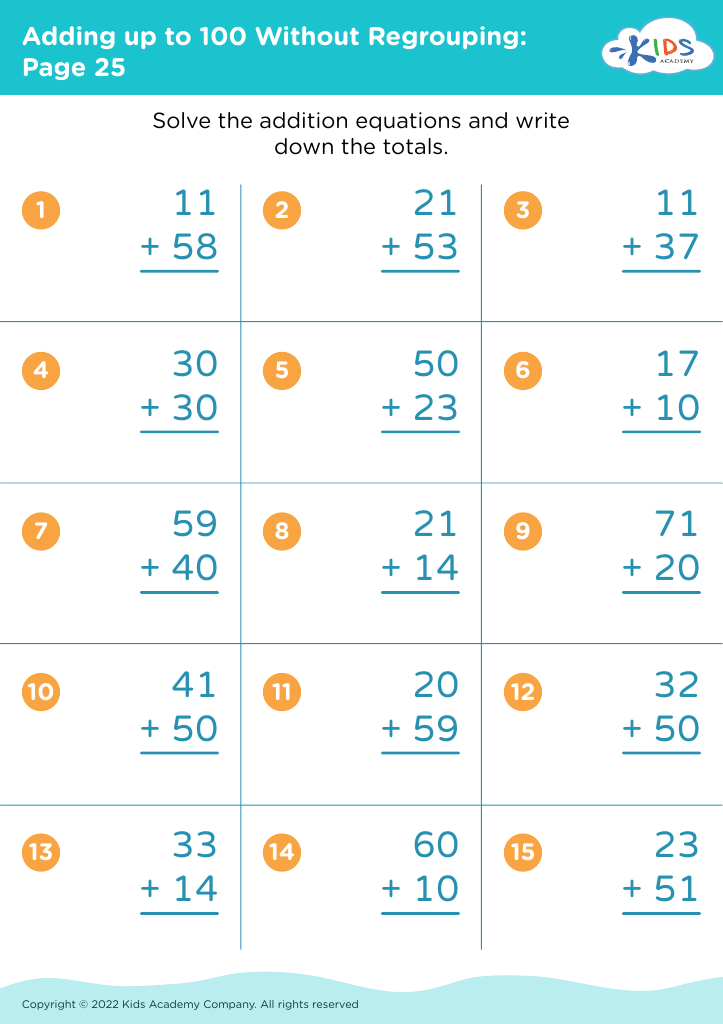
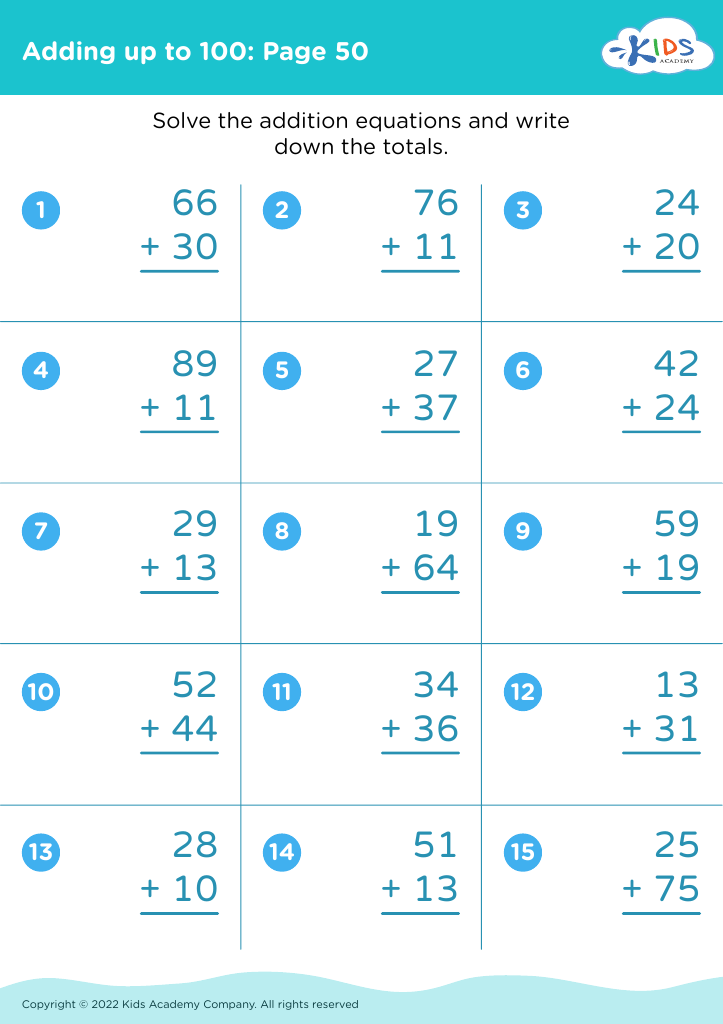
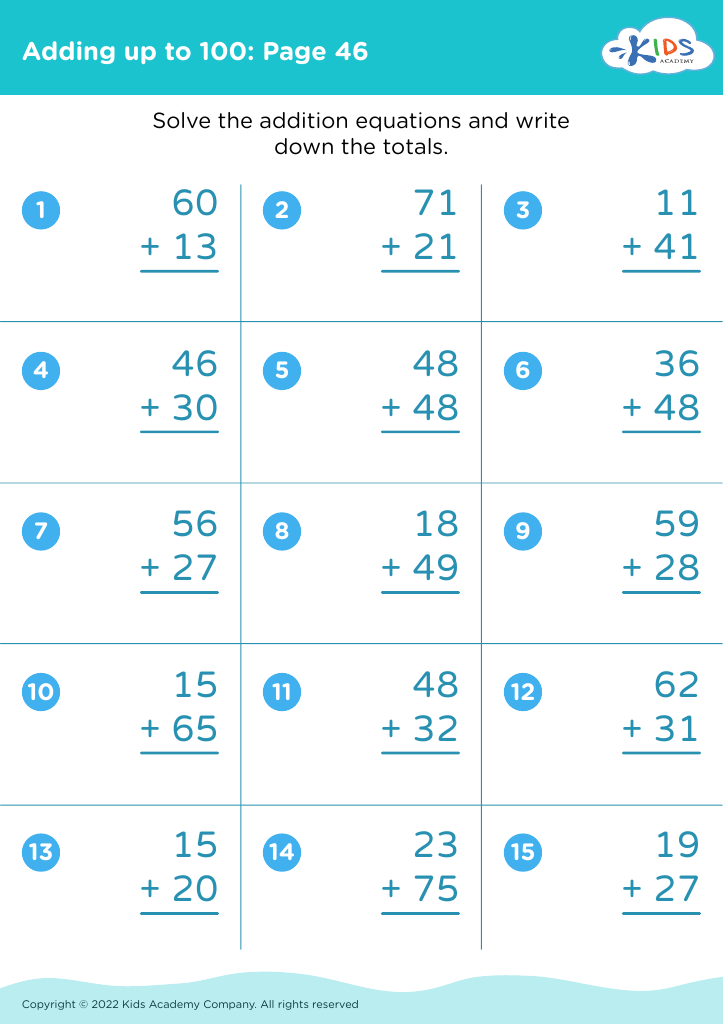
Our "Identifying Shapes Adding Up to 100 Worksheets for Ages 7-8" combine fun and education to enhance your child's math skills. Designed to foster a love for learning, these engaging worksheets help young learners master identifying shapes while practicing addition. Tailored for 7-8-year-olds, each activity challenges students to sum numbers up to 100 and sharpen their geometric understanding. Perfect for home or classroom use, these worksheets promote critical thinking and build foundational math skills. Ideal for reinforcing lessons or extra practice, our worksheets make learning math exciting and accessible for your child. Discover the joy of learning with us!






%20(1).jpg)
Parents and teachers should prioritize helping children ages 7-8 identify shapes and do math that adds up to 100 because these skills lay the foundation for crucial cognitive development. Learning to recognize and name shapes not only enhances a child's spatial awareness but also helps in the understanding of geometry, which is essential for more complex math in later years. Recognizing and comparing shapes encourages problem-solving abilities and attention to detail, important skills in both academic and everyday settings.
Similarly, understanding addition up to 100 builds a child's mental arithmetic and number sense. Mastery of this fundamental math concept leads to greater confidence in tackling more challenging topics. It also helps children understand the principle of place value, fostering the ability to perform multi-digit addition and subtraction, critical for future math success. Both these skills — shape recognition and arithmetic within 100 — also influence performance in subjects such as science and technology.
In essence, these foundational skills promote logical thinking, problem-solving capabilities, and academic readiness, equipping children with the tools they need for not just advanced schooling but also real-life scenarios. Investing time and effort in these areas supports a child's all-around intellectual growth and sets the stage for long-term academic achievement.








