Improve math skills Adding up to 100 Worksheets for Ages 7-8
6 filtered results
-
From - To
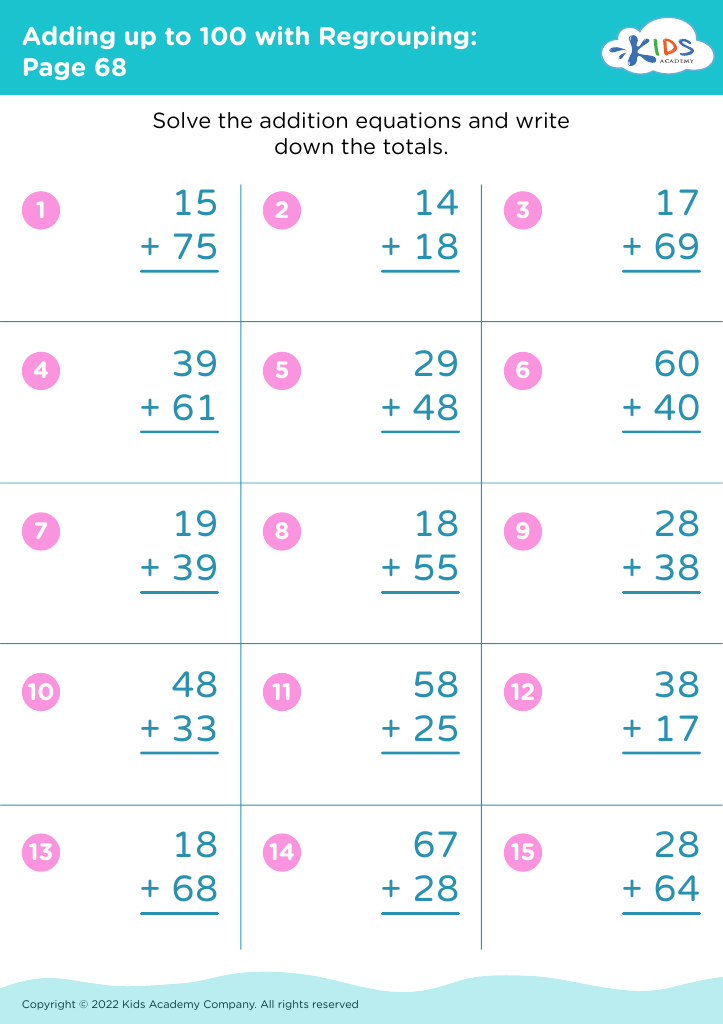
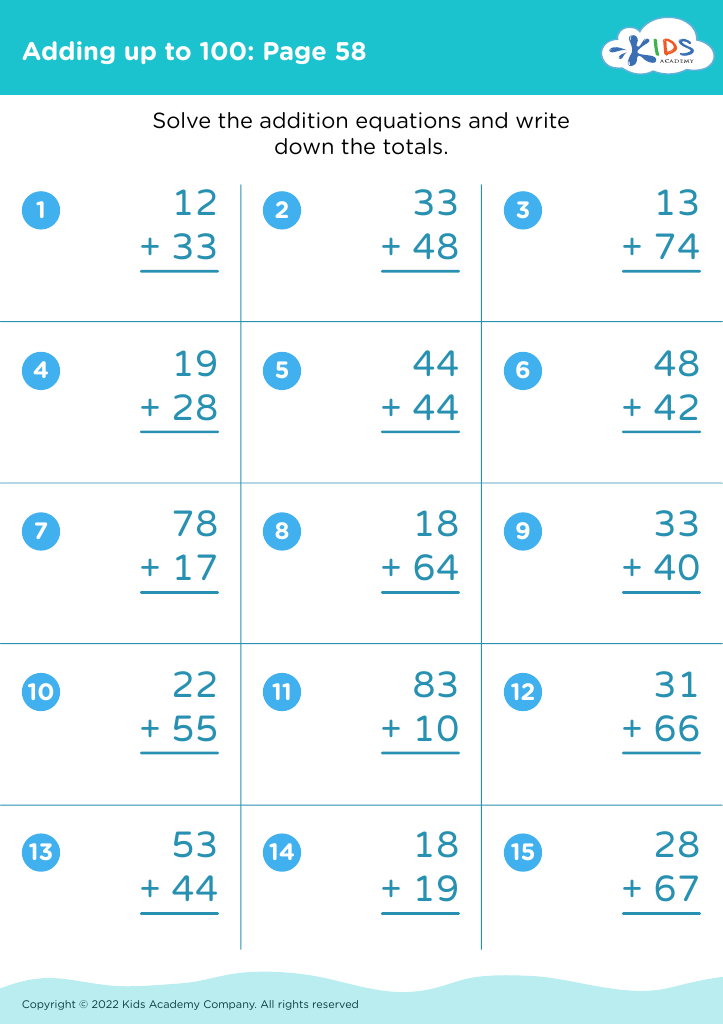
Boost your child's math proficiency with our "Adding Up to 100" worksheets, designed specifically for ages 7-8. These engaging printables focus on enhancing addition skills through a variety of interactive and fun activities. Children will encounter problems that challenge their understanding while providing opportunities for practice and mastery. Ideal for home or classroom use, these worksheets support foundational math concepts, preparing young learners for more complex operations. Each worksheet encourages critical thinking and fun, ensuring that kids develop confidence in their math abilities. Discover a hands-on approach to learning that motivates children to improve their math skills today!
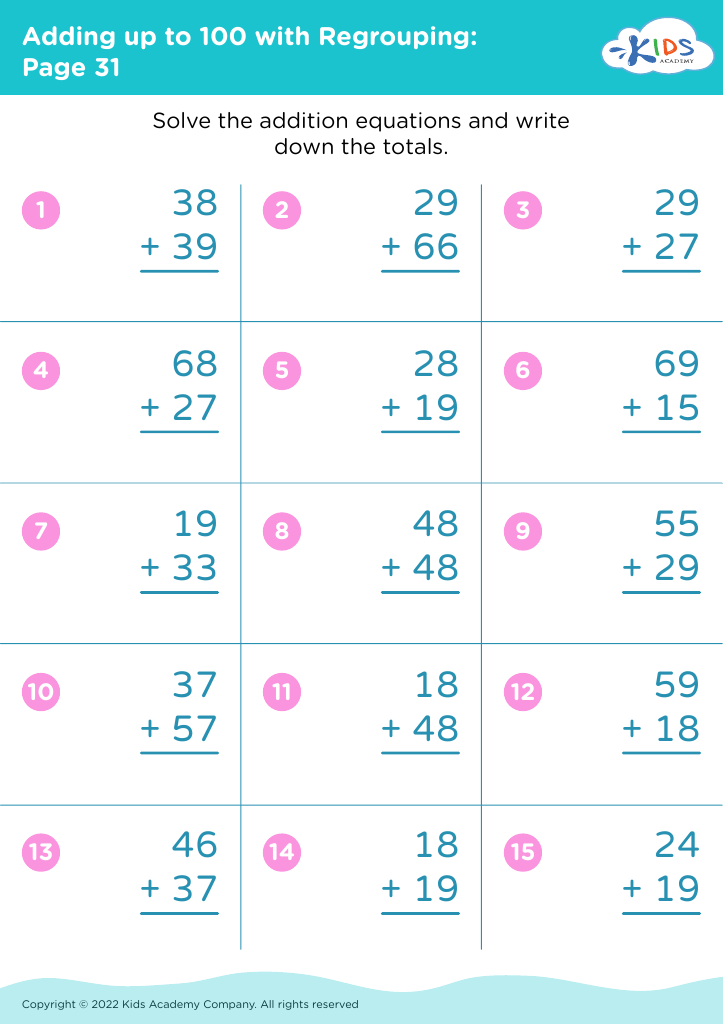
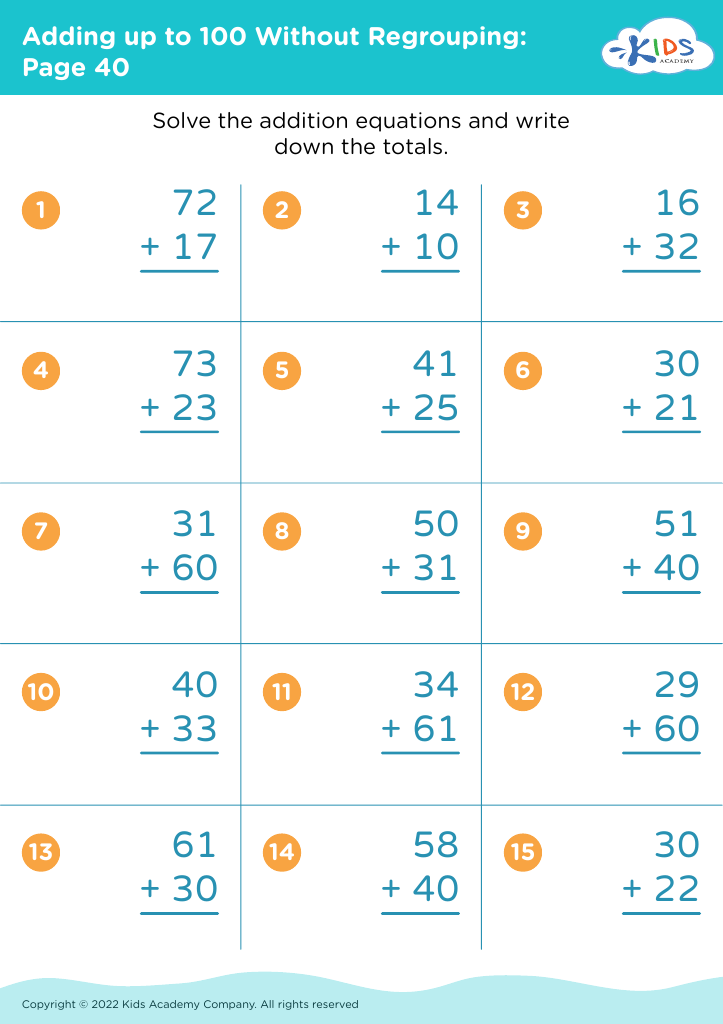
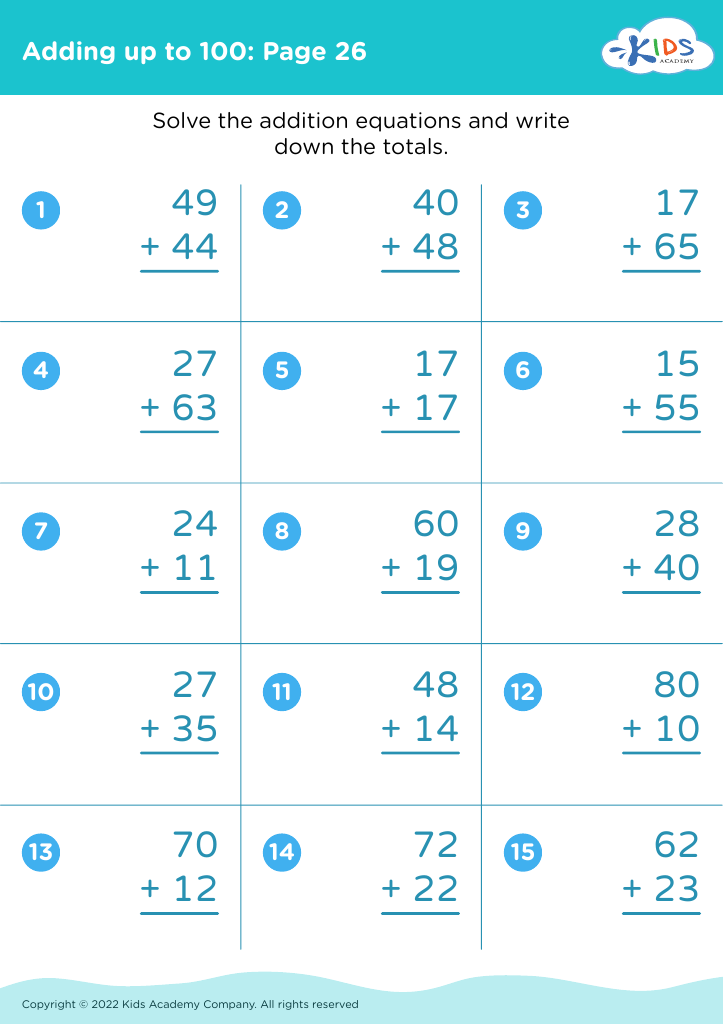
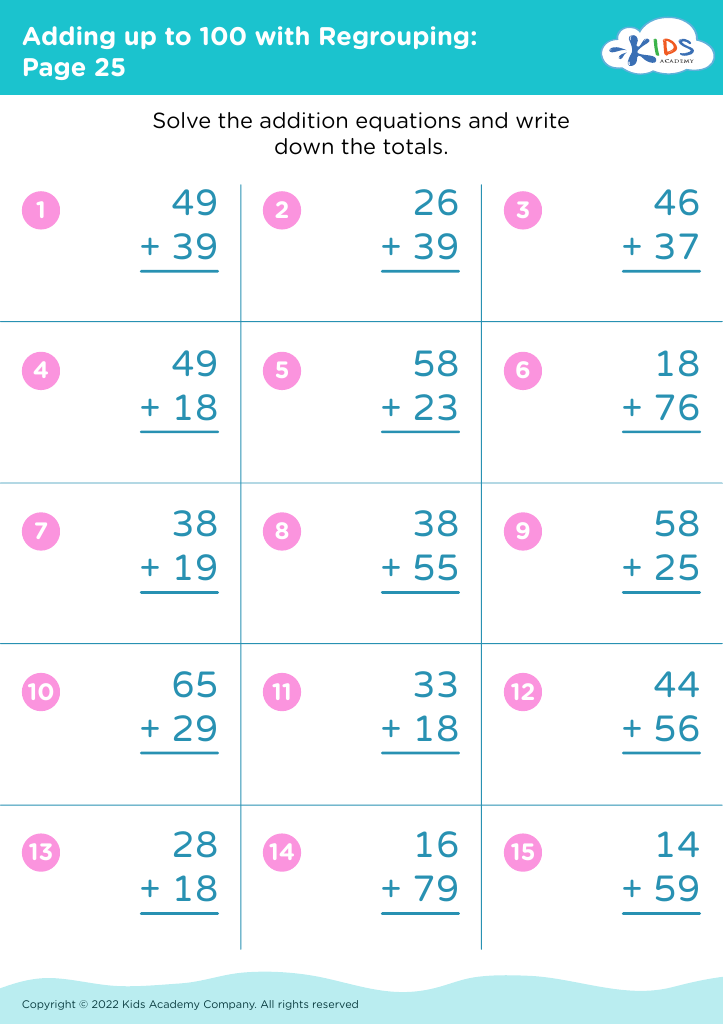


%20(1).jpg)




Improving math skills, particularly the ability to add up to 100, is crucial for children aged 7-8 for several reasons. First, mastering basic addition lays the foundation for more advanced mathematical concepts. At this age, students transition from simple arithmetic to problem-solving and critical thinking, making strong addition skills essential for their future academic success.
Parents and teachers should also recognize that proficiency in math fosters confidence. When children can successfully add numbers up to 100, they build a sense of accomplishment that encourages a positive attitude towards math. This confidence can lead to greater participation in class discussions and a willingness to tackle more challenging problems.
Additionally, math skills are relevant in everyday life. From managing allowances to measuring ingredients for baking, the ability to add effectively is practical. By supporting children in developing these skills, parents and teachers equip them with essential tools for independent living.
Finally, strong math skills promote STEM (Science, Technology, Engineering, and Mathematics) interests, which are vital in our increasingly digital world. Encouraging kids to excel in math now may ignite a passion that leads to future educational and career opportunities. Therefore, prioritizing math skills at this early age is a necessary investment in a child's future.








