Mathematical reasoning Adding up to 100 Worksheets for Ages 7-8
3 filtered results
-
From - To
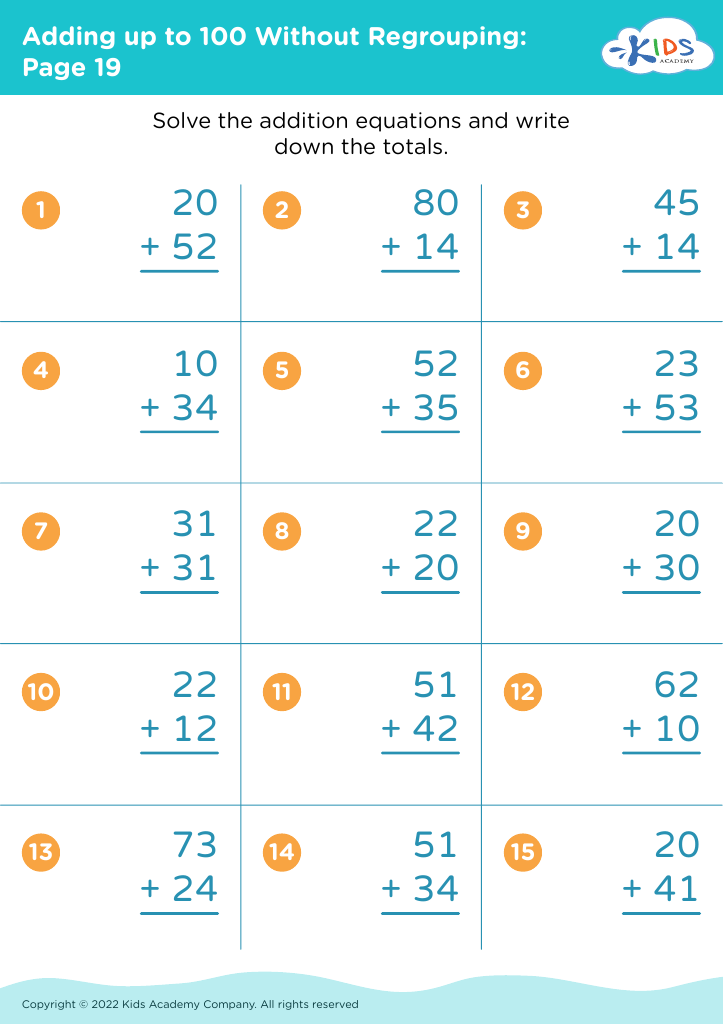
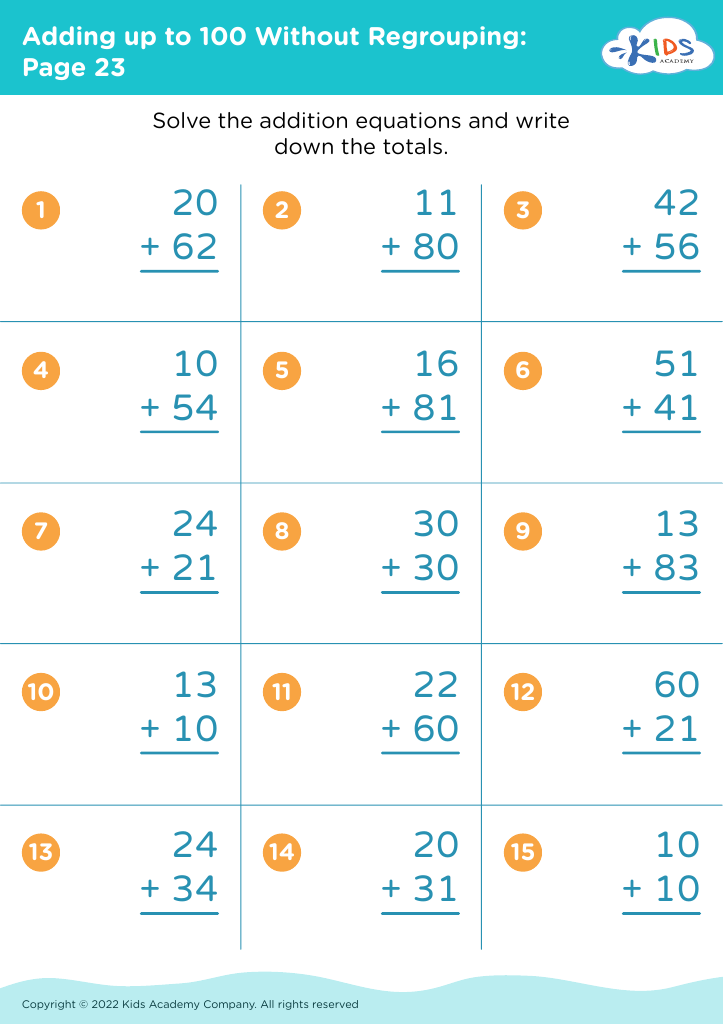
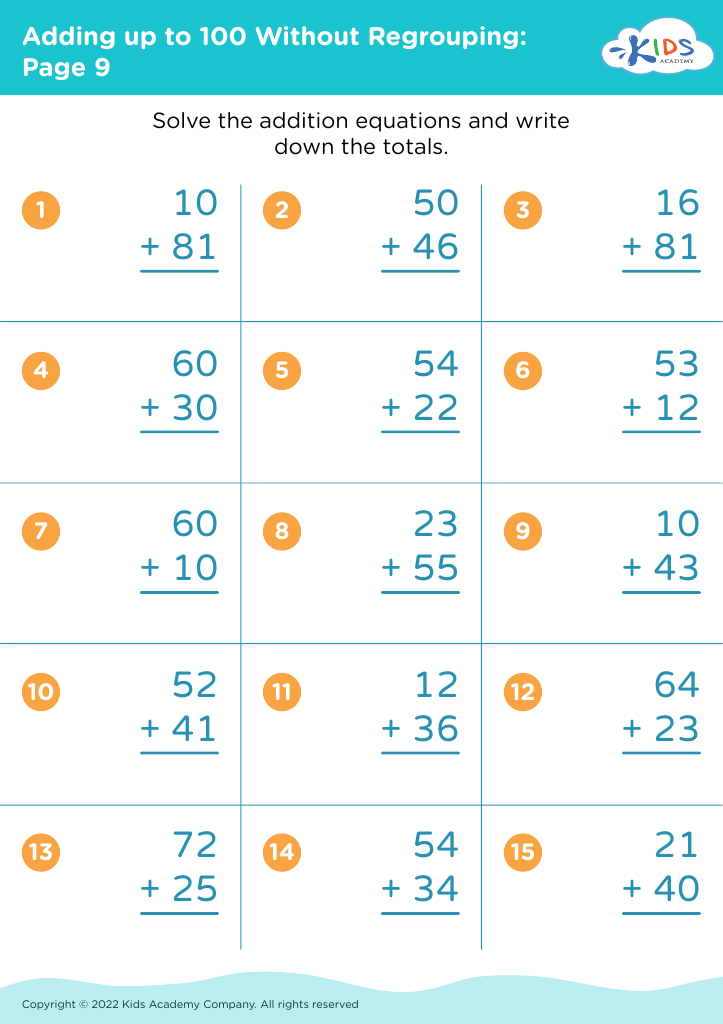
Explore our engaging "Adding Up to 100 Worksheets" designed specifically for children aged 7-8 to enhance their mathematical reasoning skills! These printable worksheets provide fun and interactive exercises that challenge young learners to practice addition in various contexts, helping to solidify their understanding of numbers. With a focus on problem-solving and critical thinking, students will boost their confidence while mastering essential math concepts. Perfect for classroom use or at-home learning, our worksheets foster a love for math and encourage independent thinking. Download today to support your child's journey toward math proficiency and watch them add up to 100 with ease!






%20(1).jpg)
Mathematical reasoning, particularly the concept of adding up to 100, is crucial for children aged 7-8 as it lays the foundation for future mathematical understanding and critical thinking skills. At this age, students are developing number sense and learning to manipulate numbers in increasingly complex ways. Understanding how to reach a total of 100 through various combinations fosters their ability to think flexibly about numbers and enhances their problem-solving skills.
By mastering this concept, children develop a strong grasp of addition, reinforce their knowledge of place value, and begin to understand the relationship between different numbers. This foundational skill builds confidence and encourages curiosity, prompting them to explore more advanced mathematical concepts such as subtraction, multiplication, and division.
Moreover, engaging with addition up to 100 can be a collaborative and enjoyable experience for both parents and teachers, fostering a supportive learning environment. This encourages communication about math, making it more relatable and less intimidating. Ultimately, fostering mathematical reasoning at this critical stage not only prepares children for academic success but also cultivates a lifelong appreciation for math, aiding in their overall cognitive development.








