Recognizing Patterns Adding up to 100 Worksheets for Ages 7-8
5 filtered results
-
From - To
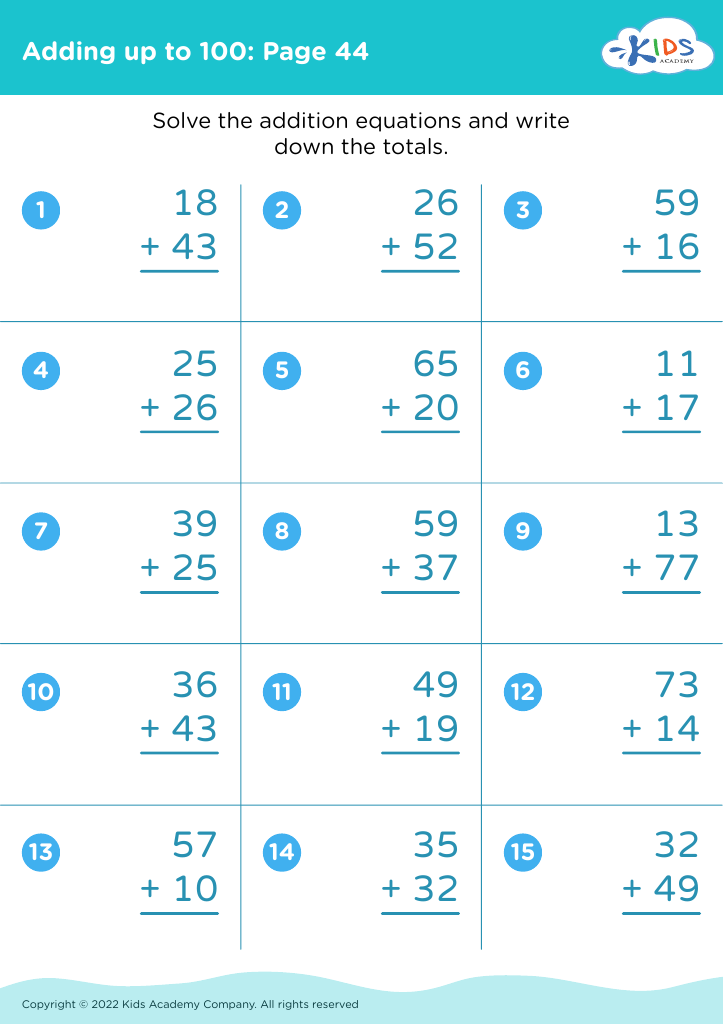
Unlock the power of pattern recognition with our "Recognizing Patterns Adding Up to 100 Worksheets" designed specifically for kids ages 7-8. These engaging worksheets provide a fun and interactive way for young learners to explore numerical patterns, enhancing their math skills while building confidence in addition. With a variety of exercises that encourage critical thinking, children will discover how recognizing patterns can streamline problem-solving and improve their understanding of numbers. Perfect for both classroom and home use, these worksheets make math exciting and accessible. Dive into a world of patterns and watch your child's math abilities soar!
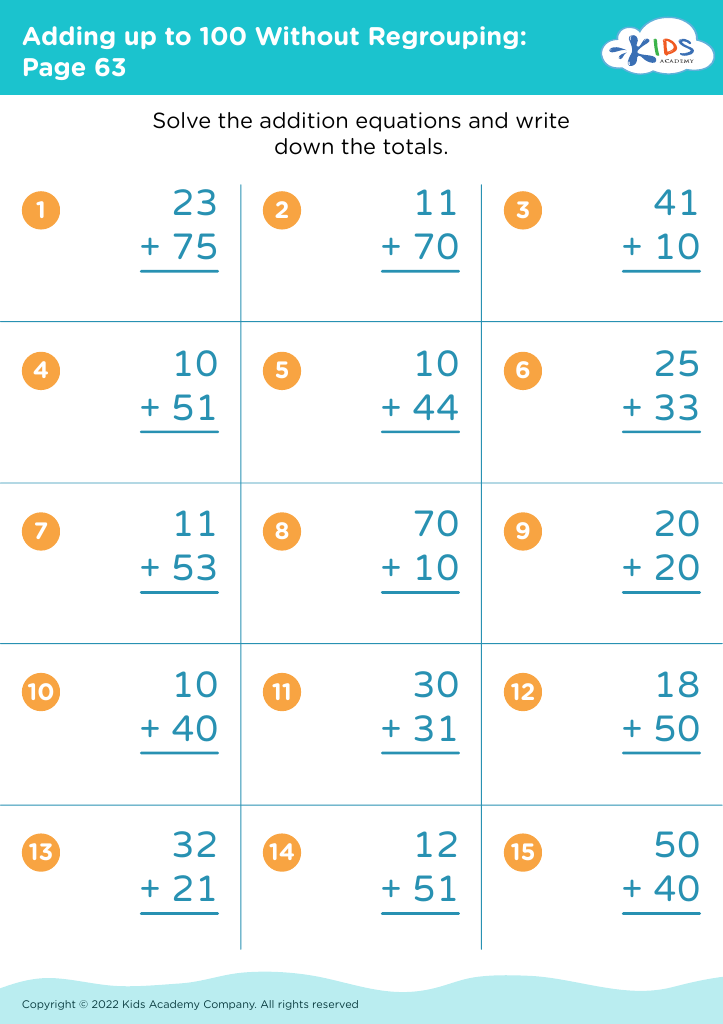
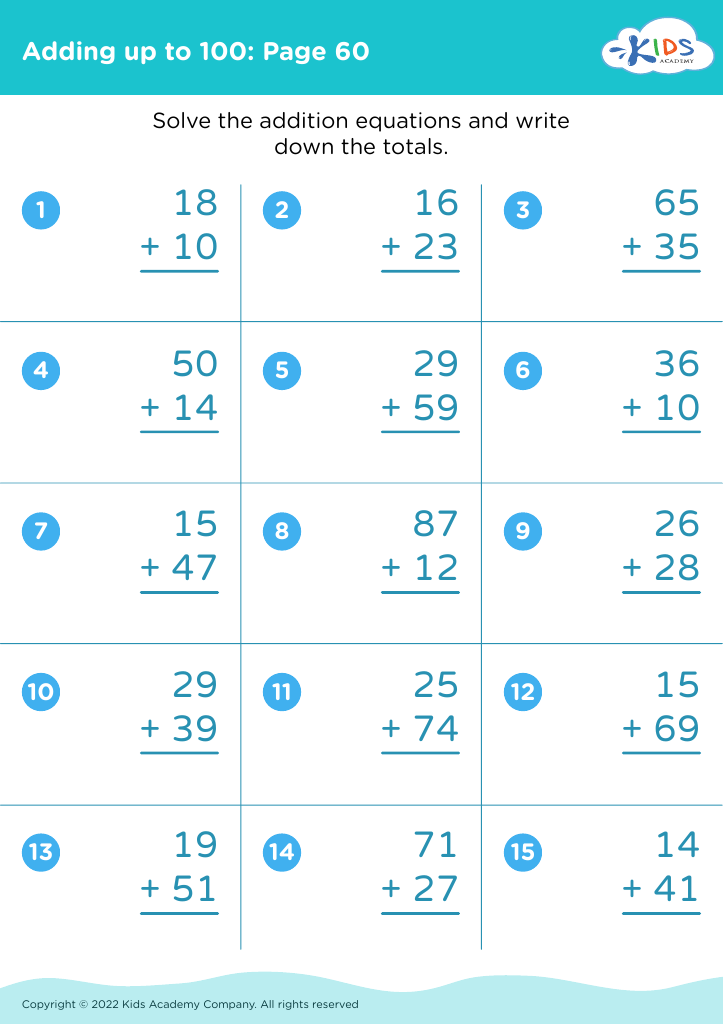
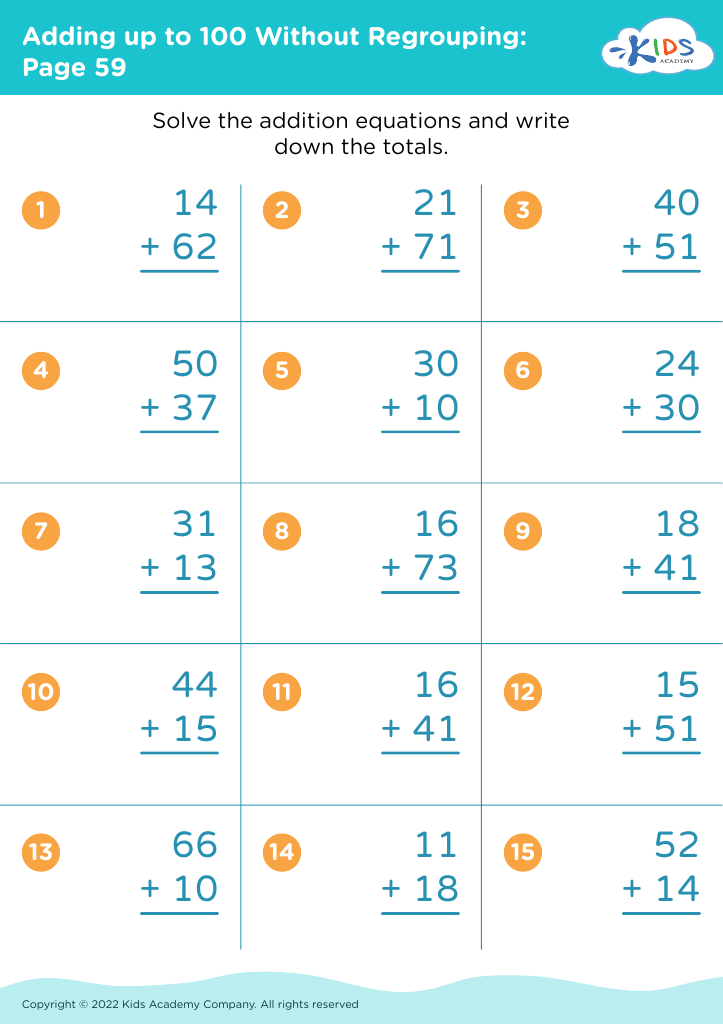
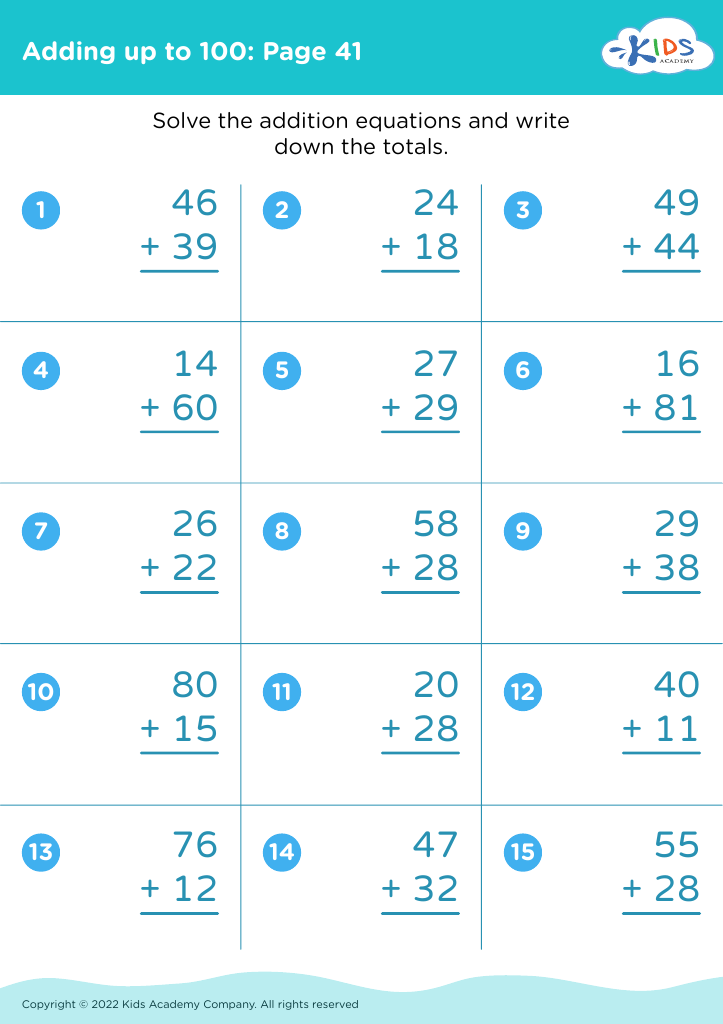





%20(1).jpg)

Recognizing patterns, particularly in numbers, is a foundational skill for children aged 7-8, especially when it comes to adding up to 100. At this developmental stage, children begin to grasp more abstract mathematical concepts, and understanding patterns helps them make connections between numbers. Patterns reinforce their ability to recognize sequences and relationships, forming a critical part of their mathematical reasoning.
Teaching children to recognize patterns related to the number 100 enhances problem-solving skills and builds confidence in their ability to tackle more complex math in the future. When students see how numbers relate to each other—as in noticing that 70 + 30 equals 100—they not only develop computational skills but also learn to approach problems methodically.
Moreover, this understanding cultivates number sense, which is vital for everyday math applications, from telling time to budgeting. For parents and teachers, fostering this skill pays dividends in the classroom and beyond, as children become more adept at identifying patterns in different contexts, including art, music, and science. Ultimately, recognizing patterns that add up to 100 inspires curiosity and lays a solid groundwork for lifelong learning in mathematics and problem-solving.








