Shape identification Adding up to 100 Worksheets for Ages 7-8
3 filtered results
-
From - To
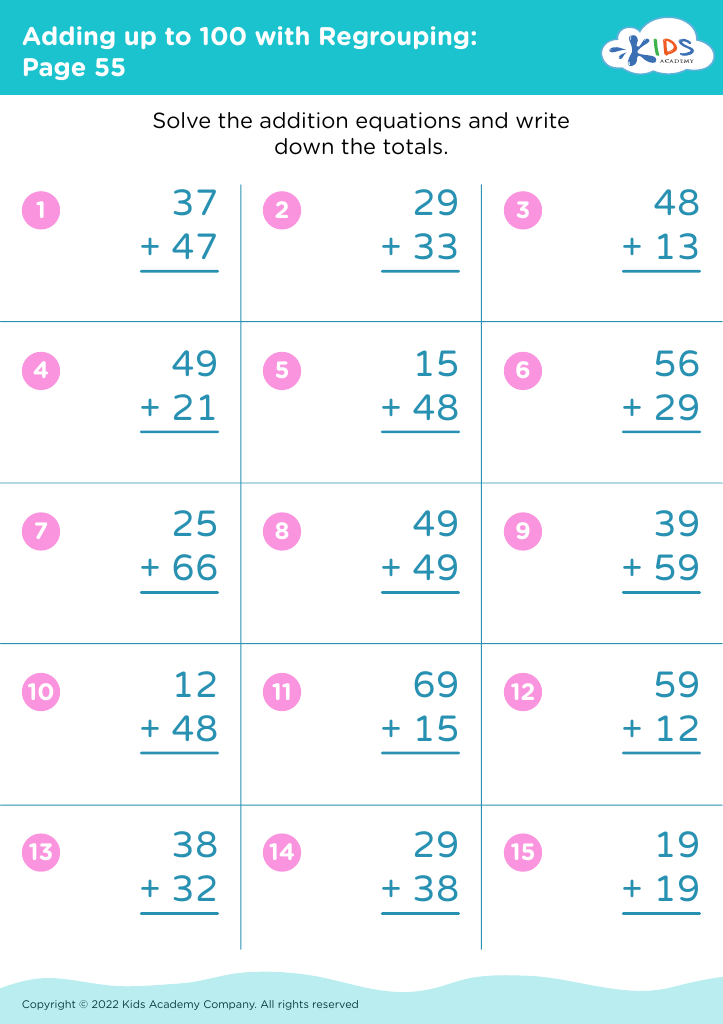
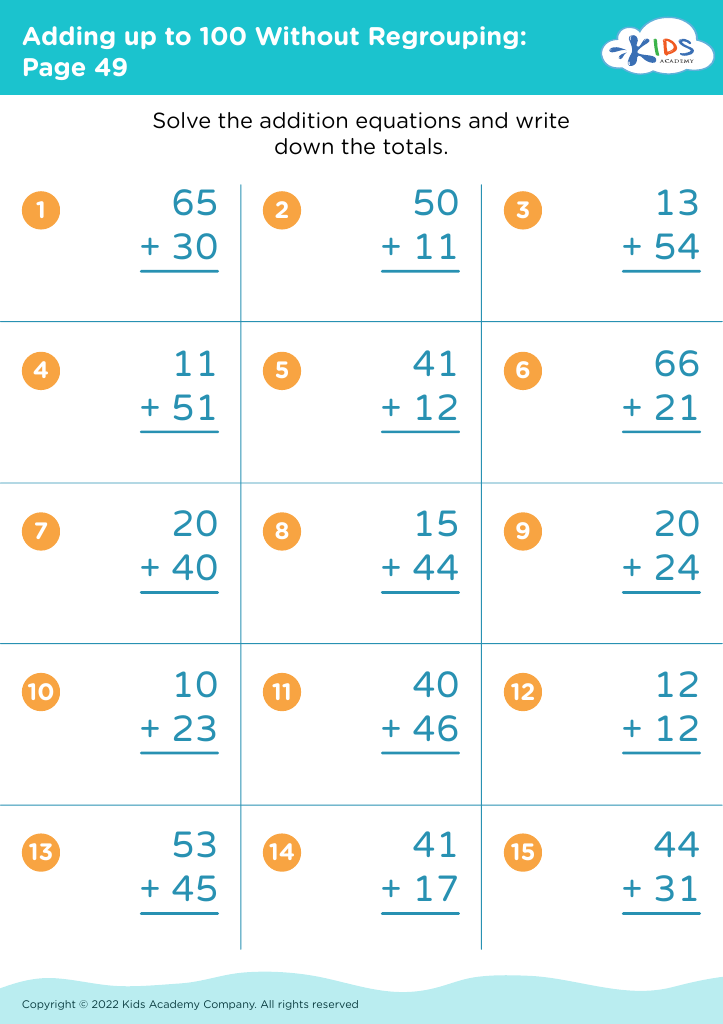
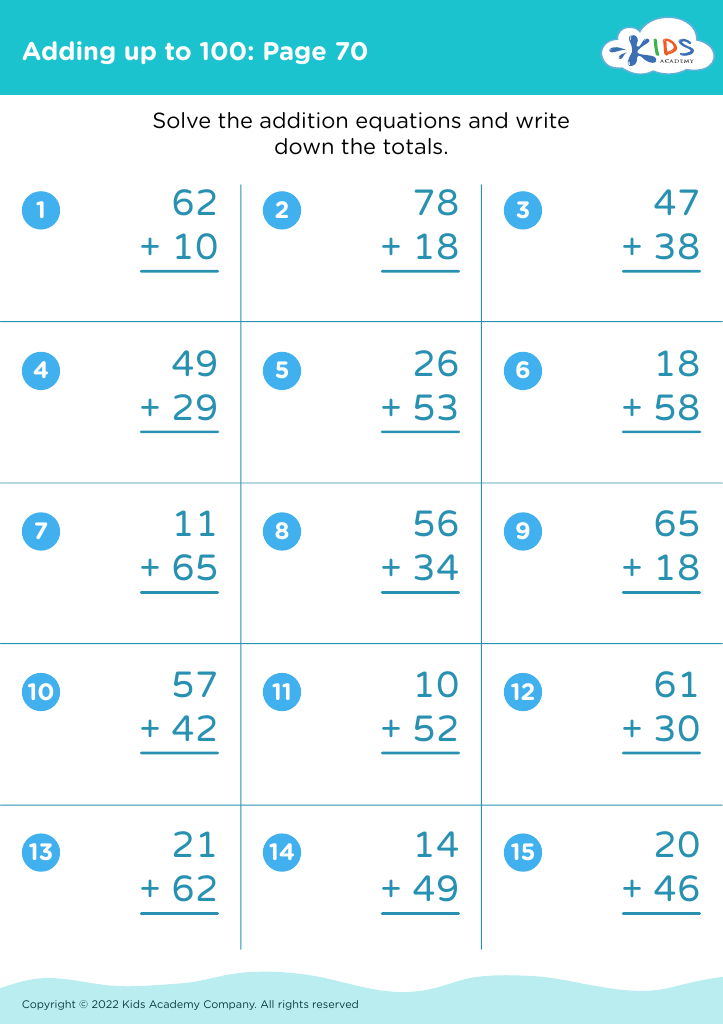
Enhance your child's shape identification skills with our "Shape Identification Adding up to 100 Worksheets" designed for ages 7-8! These engaging worksheets combine geometry and addition, helping young learners recognize various shapes while practicing their math skills. Perfect for reinforcing classroom lessons or as fun home activities, each worksheet provides clear visuals and step-by-step exercises that make learning interactive and enjoyable. With a focus on understanding shapes within the context of numbers, children will build their confidence in both math and geometry. Download now for hours of educational fun and watch your child excel in shape recognition and addition!



%20(1).jpg)



Parents and teachers should care about shape identification and adding up to 100 for children aged 7-8 because these skills are foundational to their cognitive and mathematical development. Shape identification enhances spatial reasoning, creativity, and critical thinking, which are essential for problem-solving in everyday life. Recognizing and categorizing shapes helps children understand the world around them, fostering their ability to identify patterns, make connections, and enhance their observational skills.
On the other hand, mastering addition up to 100 is crucial for building a solid mathematical foundation. This skill not only prepares children for more advanced arithmetic operations but also enhances their logical thinking and reasoning abilities. When children can confidently add numbers, they gain confidence and motivation to tackle more complex problems.
Moreover, these skills are interconnected; understanding shapes and geometry can enrich a child’s mathematical reasoning and vice versa. By prioritizing these areas, adults encourage a love for learning, boost self-esteem, and promote academic success. In fostering both shape identification and addition skills, parents and teachers facilitate holistic development that supports children's future in mathematics and beyond, laying the groundwork for lifelong learning.








