Understanding Sequences Adding up to 100 Worksheets for Ages 7-8
5 filtered results
-
From - To
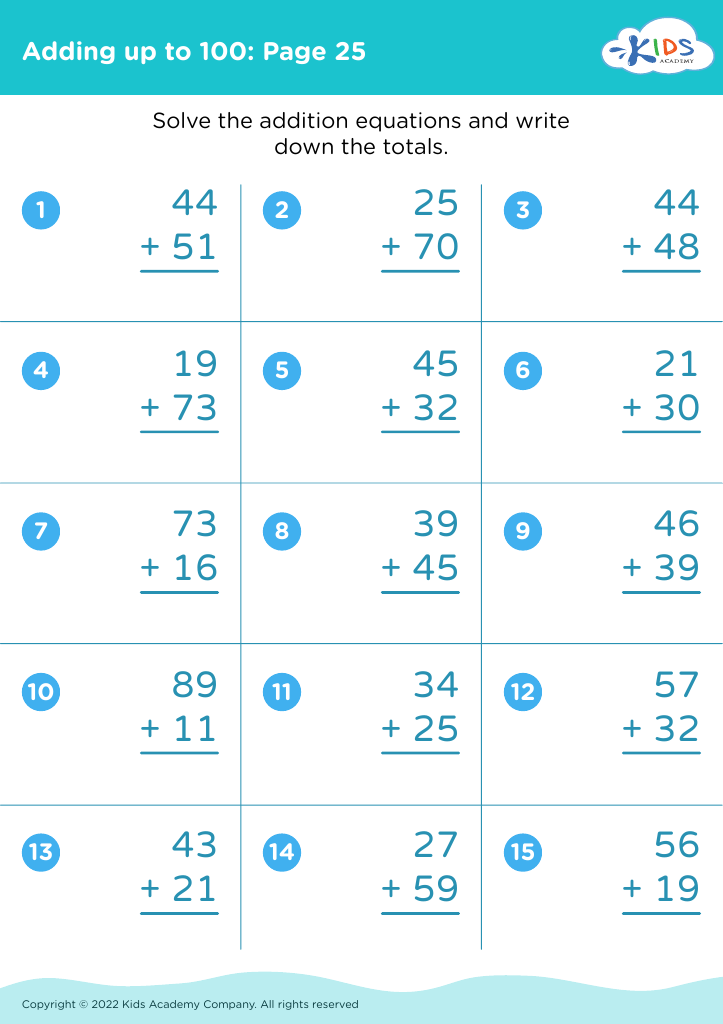
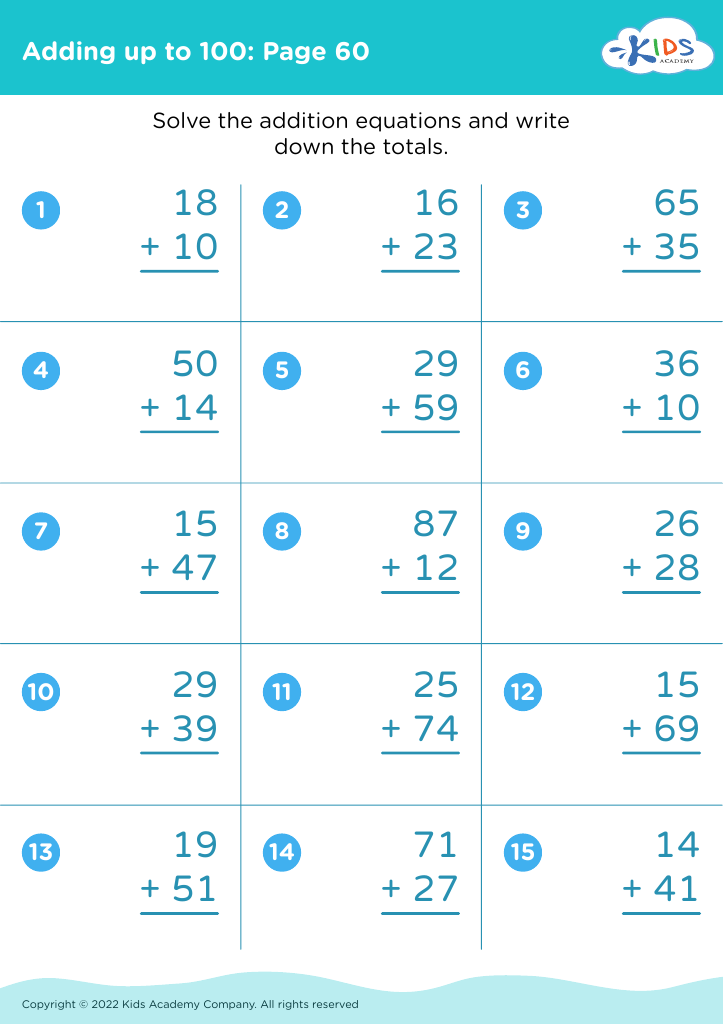
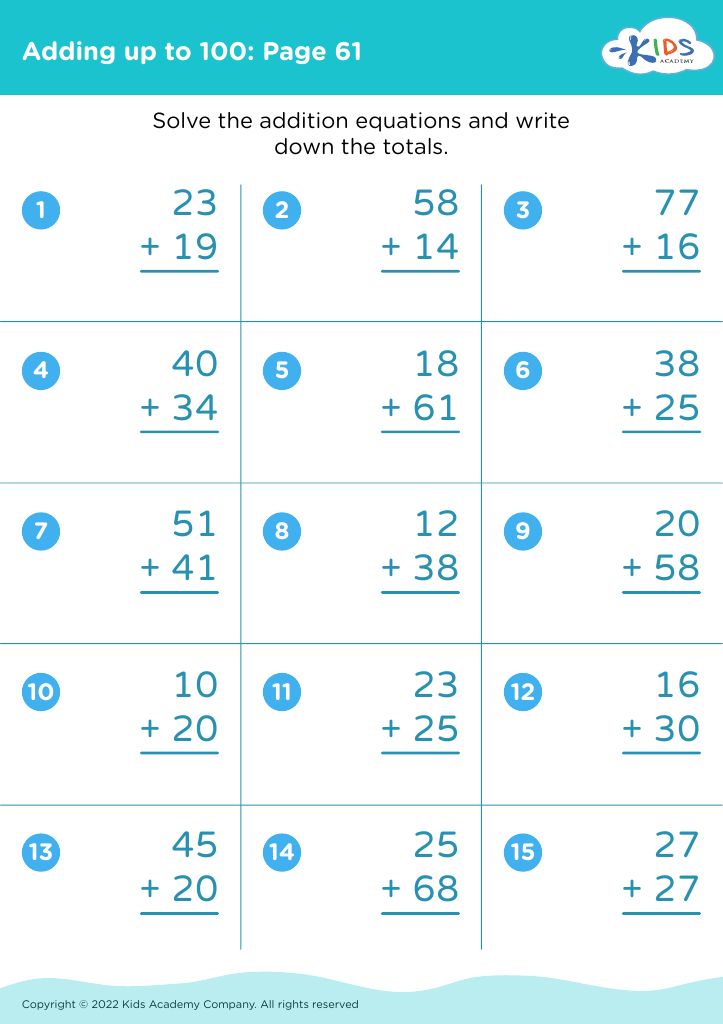
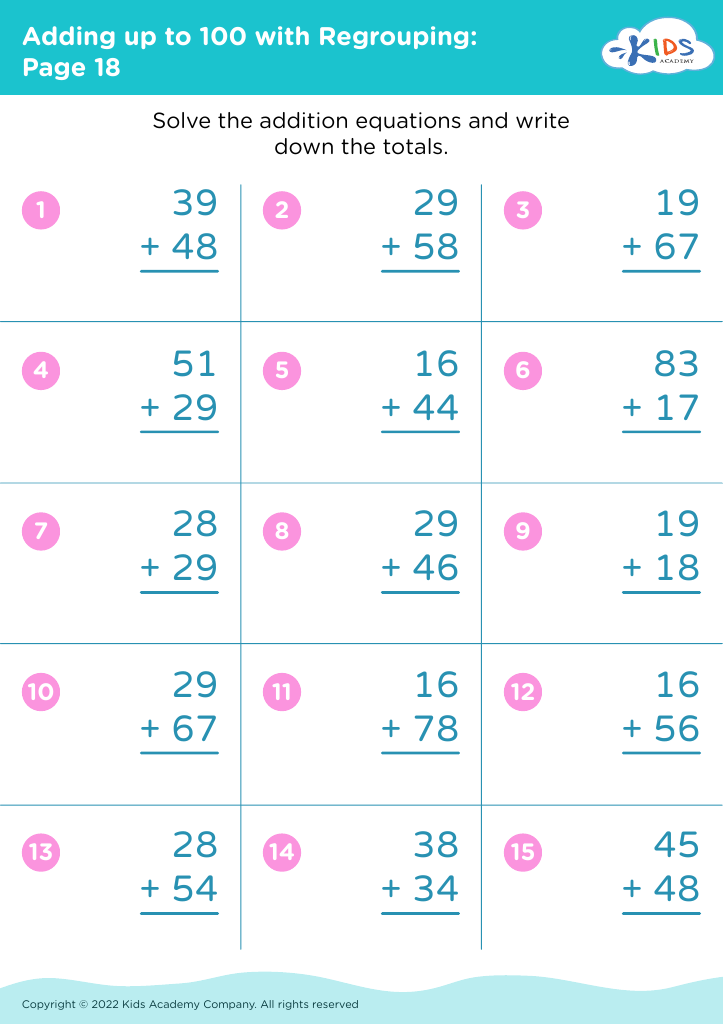
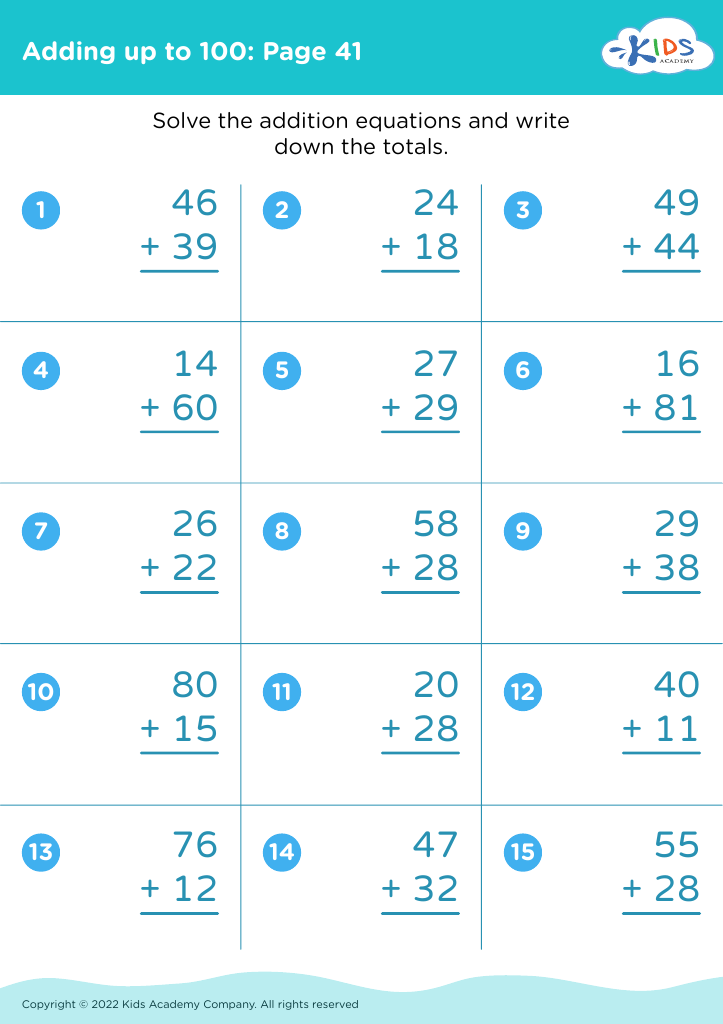
Enhance your child's math skills with our "Understanding Sequences Adding up to 100" worksheets designed for ages 7-8. Each worksheet focuses on building a strong foundation in addition by engaging young learners in fun and interactive exercises. These activities help students recognize patterns, understand number sequences, and improve their ability to perform arithmetic operations. Perfect for classroom environments or at-home practice, our worksheets boost confidence and proficiency in math. Visit Kids Academy for printable resources that make learning enjoyable and effective, paving the way for academic success in early grade education. Start exploring today!


%20(1).jpg)




Understanding sequences that add up to 100 is crucial for children aged 7-8 because it strengthens foundational math skills critical for their overall cognitive development. Firstly, working with sequences and sums aids in developing number sense, helping children understand the relationships between numbers and patterns. When children practice summing sequences to 100, they improve their ability to recognize mathematical structures, a skill beneficial across all areas of study.
Moreover, engagement with these problems develops problem-solving abilities and analytical thinking. As children determine which numbers and sequence combinations result in 100, they are encouraged to think methodically and logically. This habit of methodical thinking can extend into other academic subjects and everyday decision-making processes, promoting a robust intellectual foundation.
In addition, mastering such sequences assists in building confidence with larger numbers, a key milestone in early mathematics education. These practical experiences with addition and gradual introduction to algebra pave the way for more complex arithmetic operations and critical math concepts they will encounter later on.
For teachers, ensuring students can confidently handle sums leading to 100 aligns with curriculum standards and promotes a smoother progression into advanced topics. For parents, supporting their child’s grasp of these math skills can lead to improved academic performance and a stronger enthusiasm for learning.








