Understanding symmetry Adding up to 100 Worksheets for Ages 7-8
5 filtered results
-
From - To
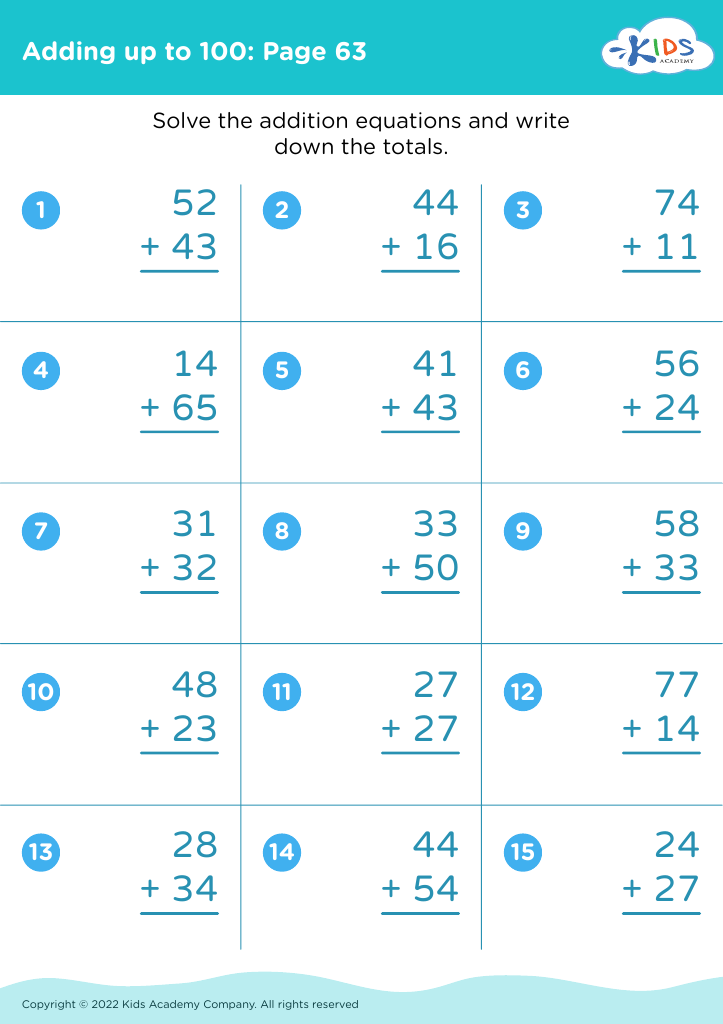
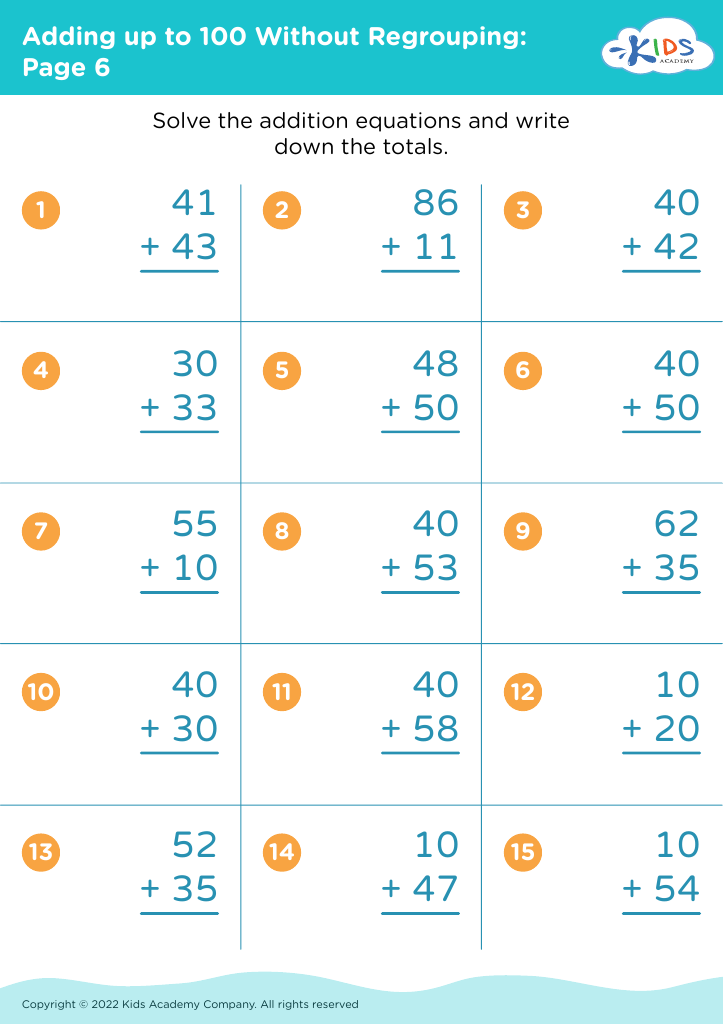
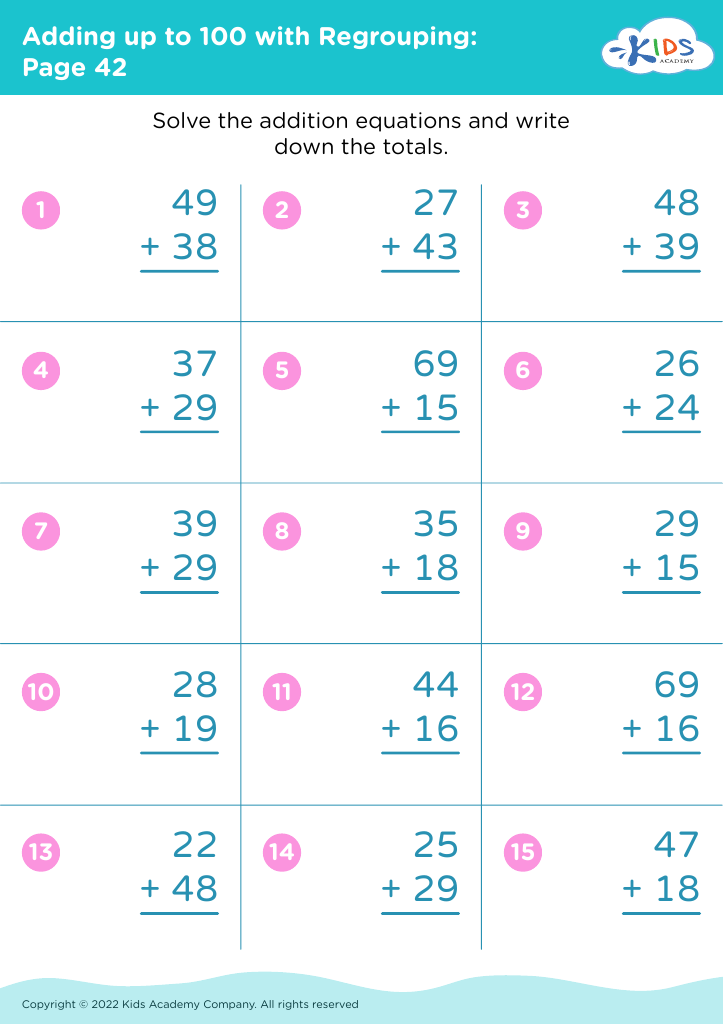
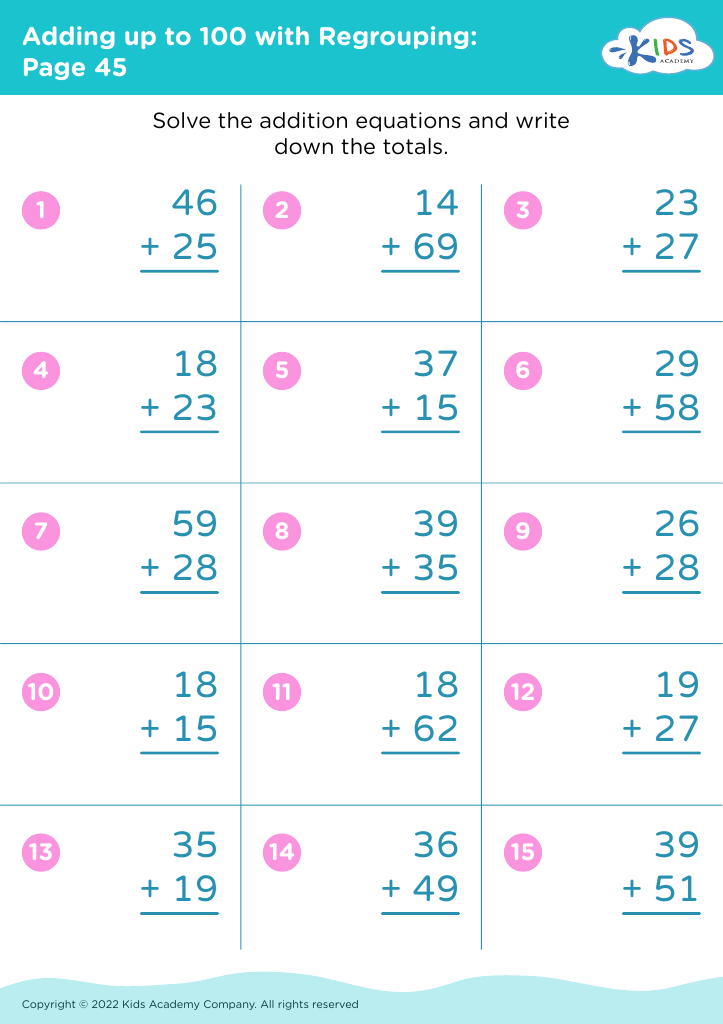
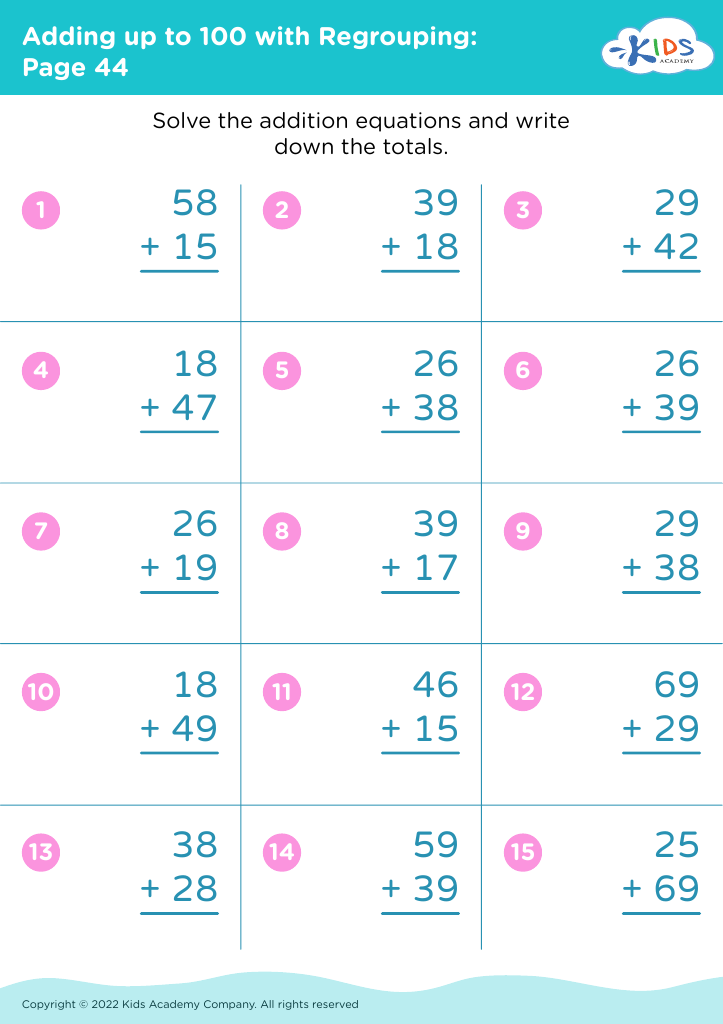
Explore our "Understanding Symmetry: Adding Up to 100 Worksheets" designed specifically for children aged 7-8! These engaging worksheets introduce young learners to the concept of symmetry while reinforcing their addition skills up to 100. Through fun activities and colorful illustrations, students will discover how symmetrical shapes and patterns exist all around them. Perfect for classroom or home learning, these worksheets encourage critical thinking and creativity as kids practice addition in a visually appealing context. Foster a love for math and art with these interactive resources that make learning about symmetry both enjoyable and educational! Download them today!






%20(1).jpg)
Understanding symmetry and the concept of adding up to 100 are essential mathematical skills for children aged 7-8, offering numerous benefits in both academic and daily life. First, symmetry helps children recognize patterns, promoting critical thinking and visual-spatial awareness. By identifying symmetrical shapes and figures, kids develop a foundation in geometry, which is crucial for higher-level math and art appreciation.
Additionally, mastering the concept of adding up to 100 reinforces arithmetic skills, aiding in the understanding of number sense, place value, and mental math strategies. This foundational skill is significant as it lays the groundwork for more complex mathematical operations, including multiplication and division, as children progress in their education.
Moreover, these concepts foster problem-solving abilities and enhance confidence in mathematical pursuits. Engaging in activities that center around symmetry and addition helps children relate math to real-world situations, making learning enjoyable and practical. By nurturing these skills, parents and teachers play a critical role in supporting children's development, ensuring they are well-prepared for future academic challenges. Ultimately, focusing on symmetry and addition promotes a positive attitude towards math as a whole, encouraging lifelong learning and curiosity.








