Number Recognition Adding up to 50 Without Regrouping Worksheets for Ages 7-8
15 filtered results
-
From - To
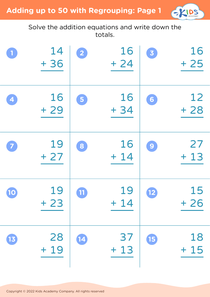
Enhance your child's math journey with our "Number Recognition: Adding Up to 50 Without Regrouping Worksheets" designed specifically for kids aged 7-8. These engaging worksheets focus on helping young learners master number recognition while practicing addition skills without regrouping. Each worksheet is thoughtfully crafted to make math fun and accessible, boosting confidence in handling numbers up to 50. Ideal for both classroom settings and at-home learning, our resources foster a solid foundation in mathematics. Let your child explore various exercises that enrich their understanding of addition concepts and promote number fluency. Discover the joy of math today!
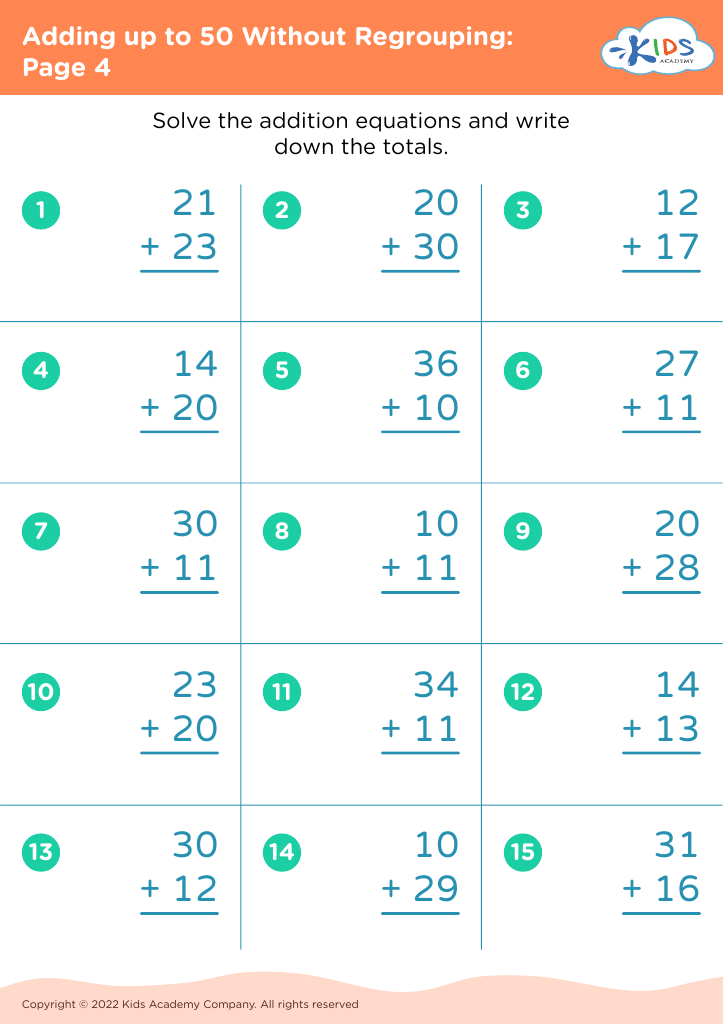
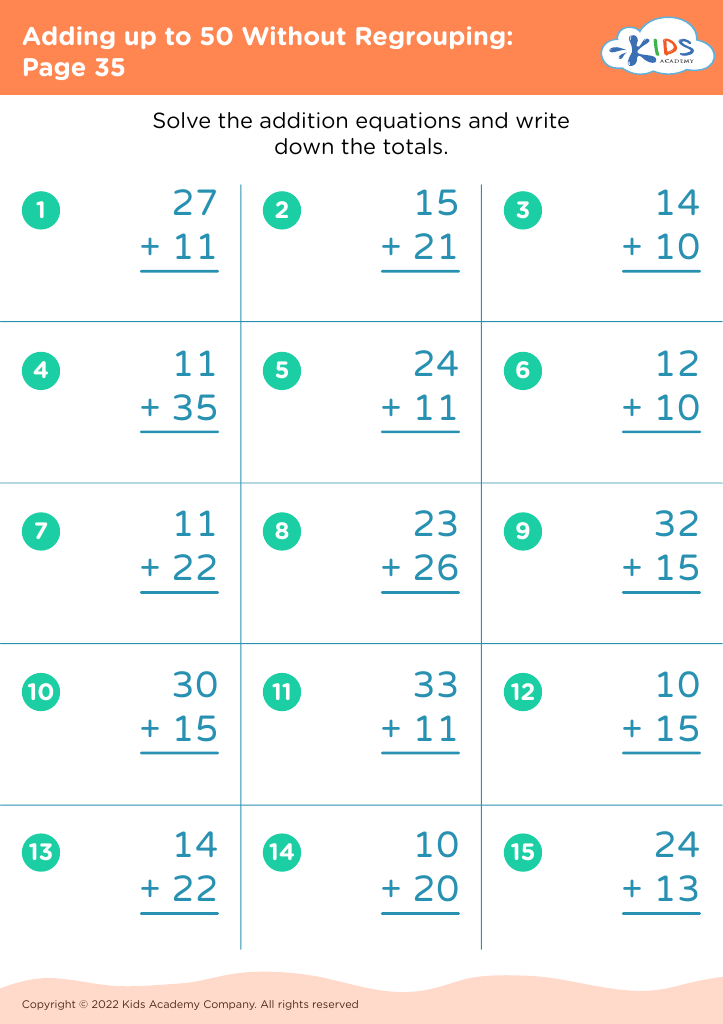
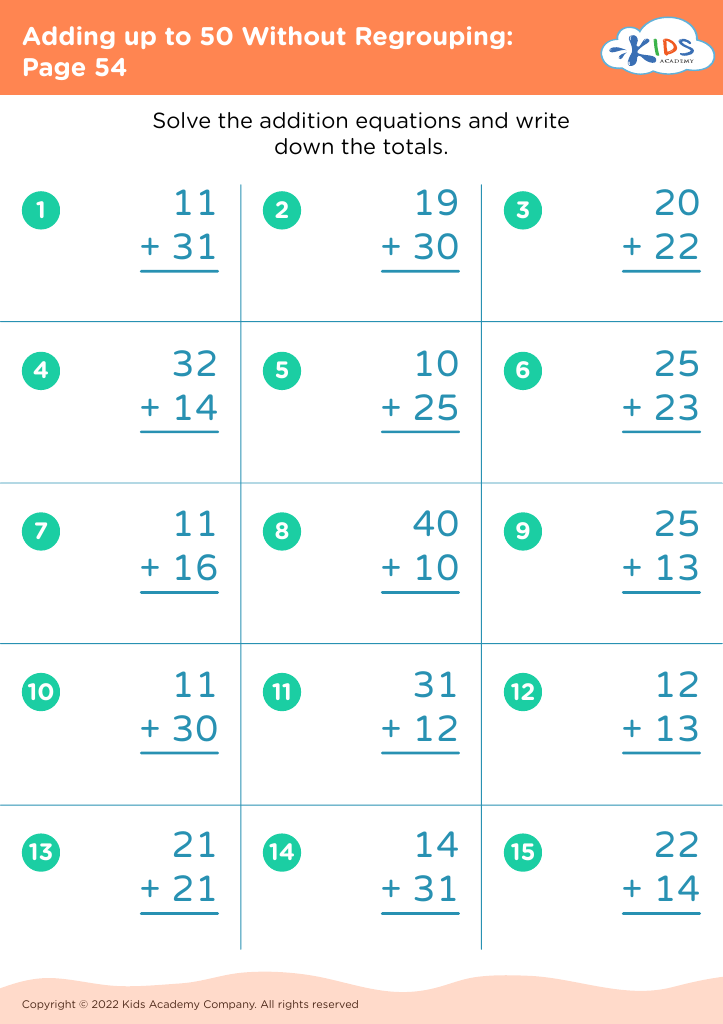
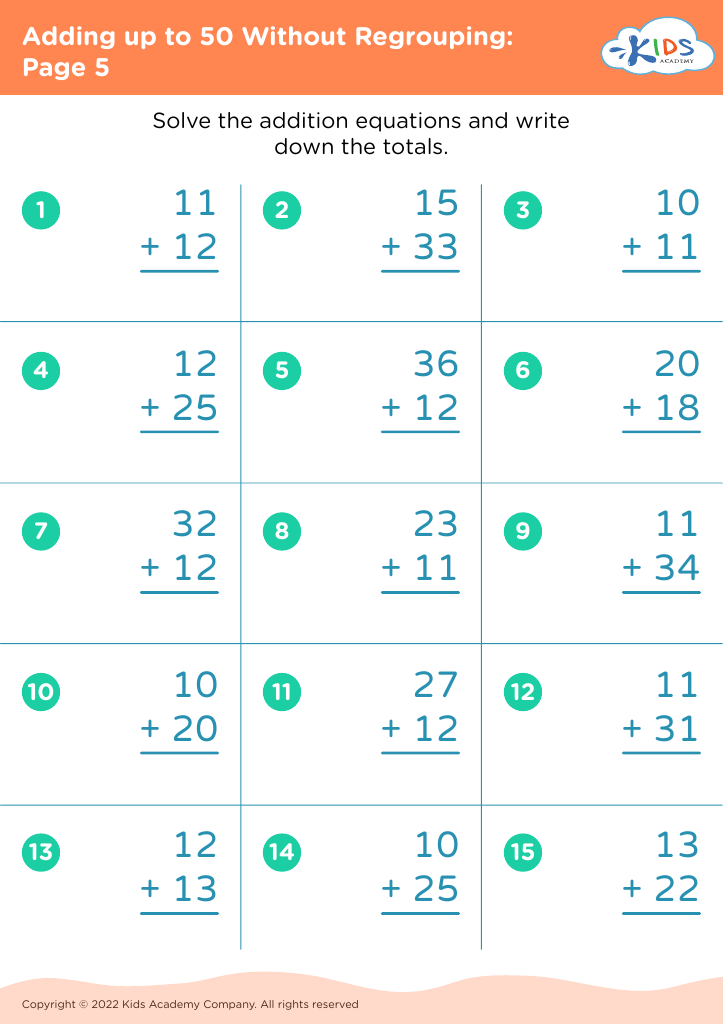
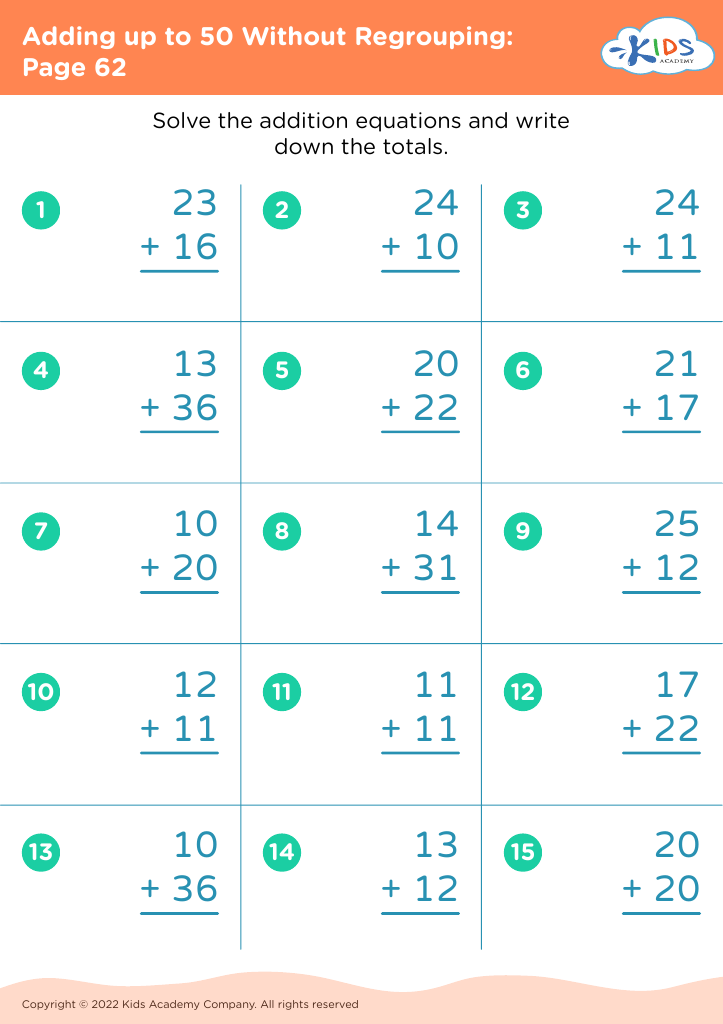
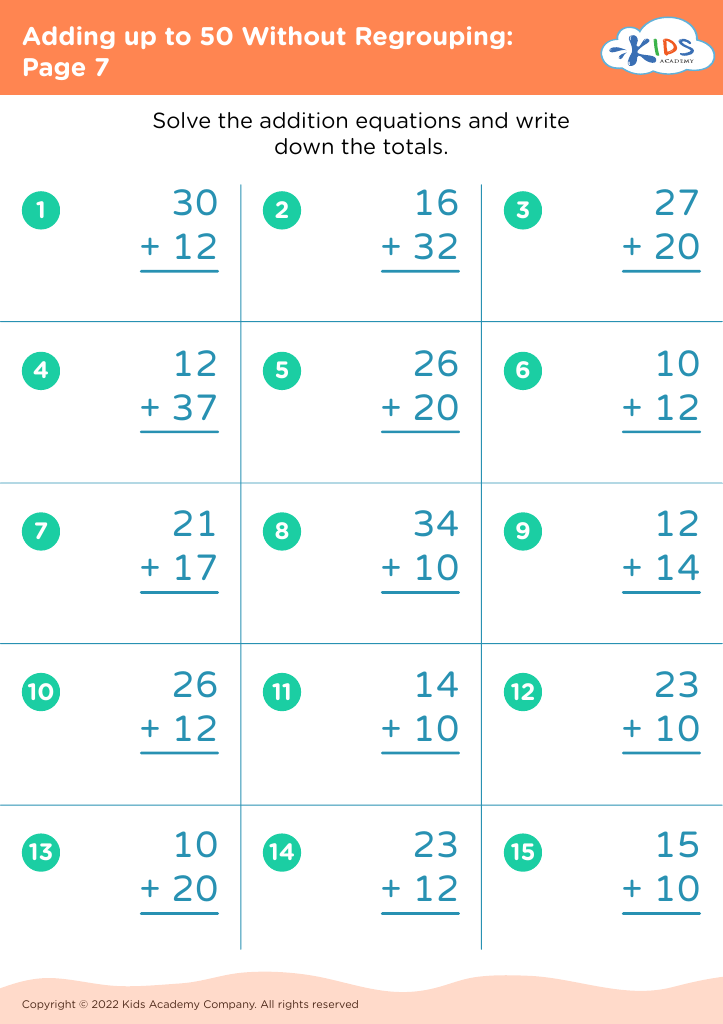
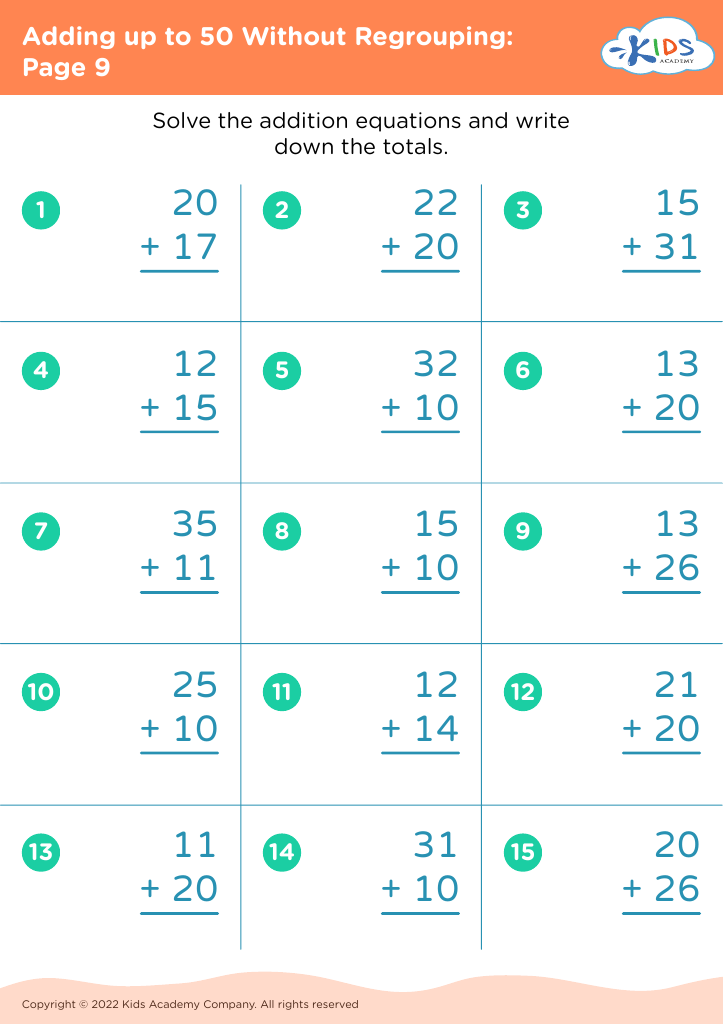
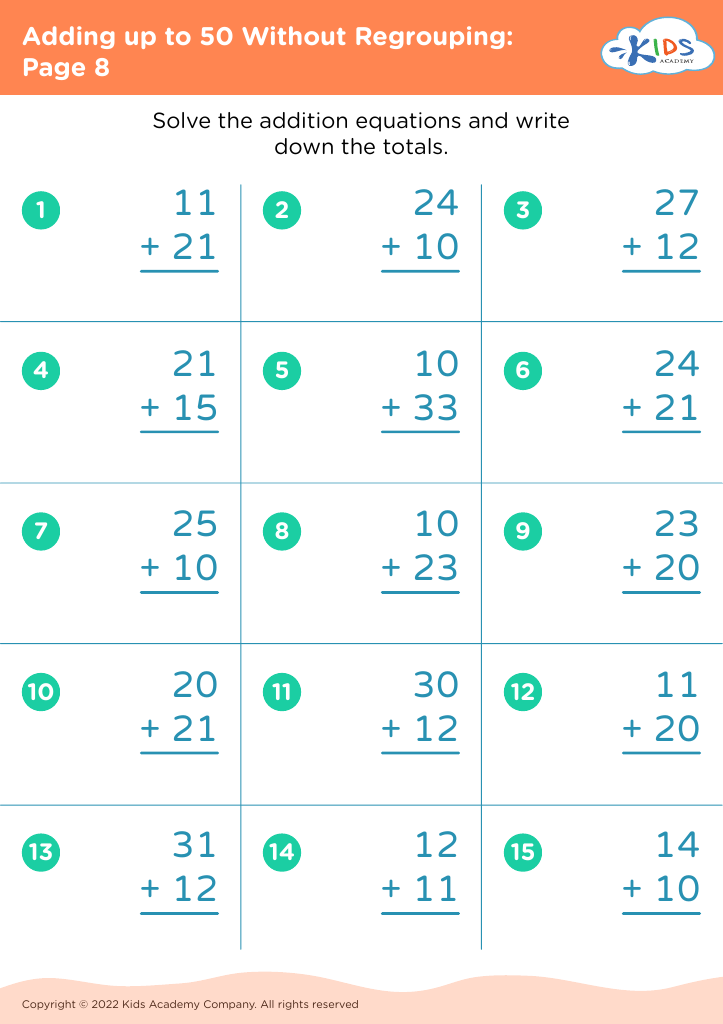
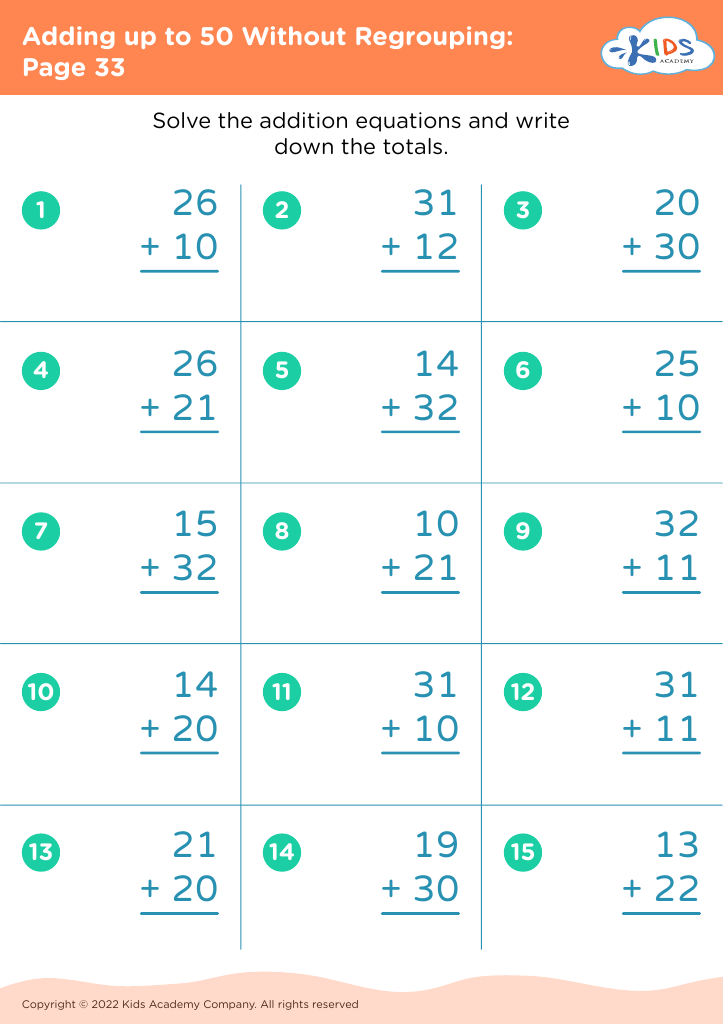
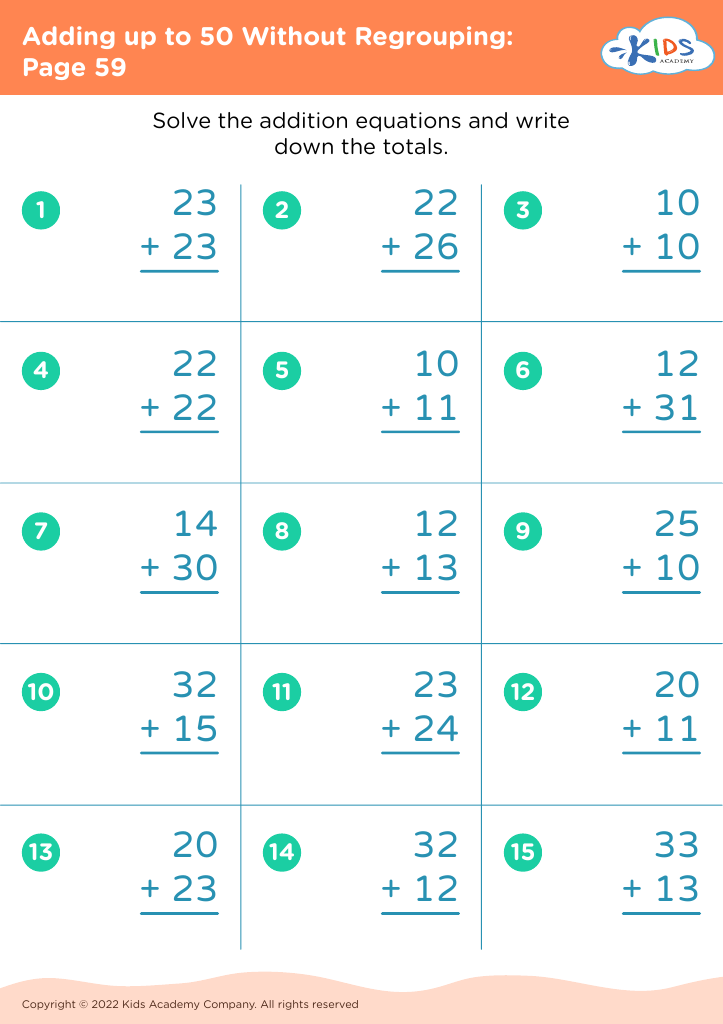
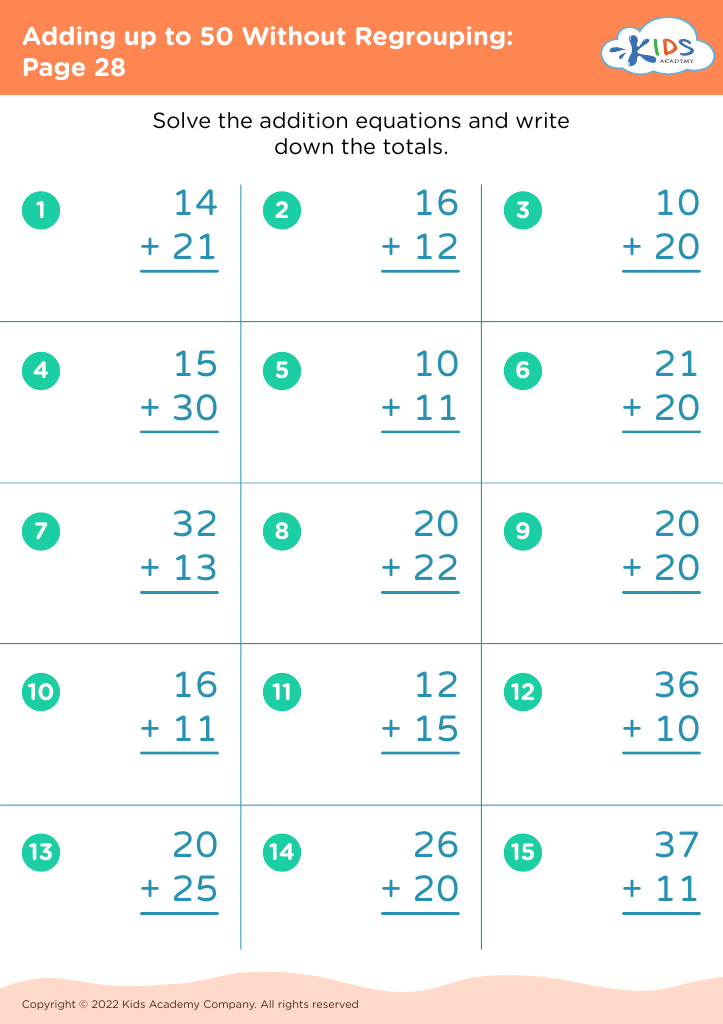
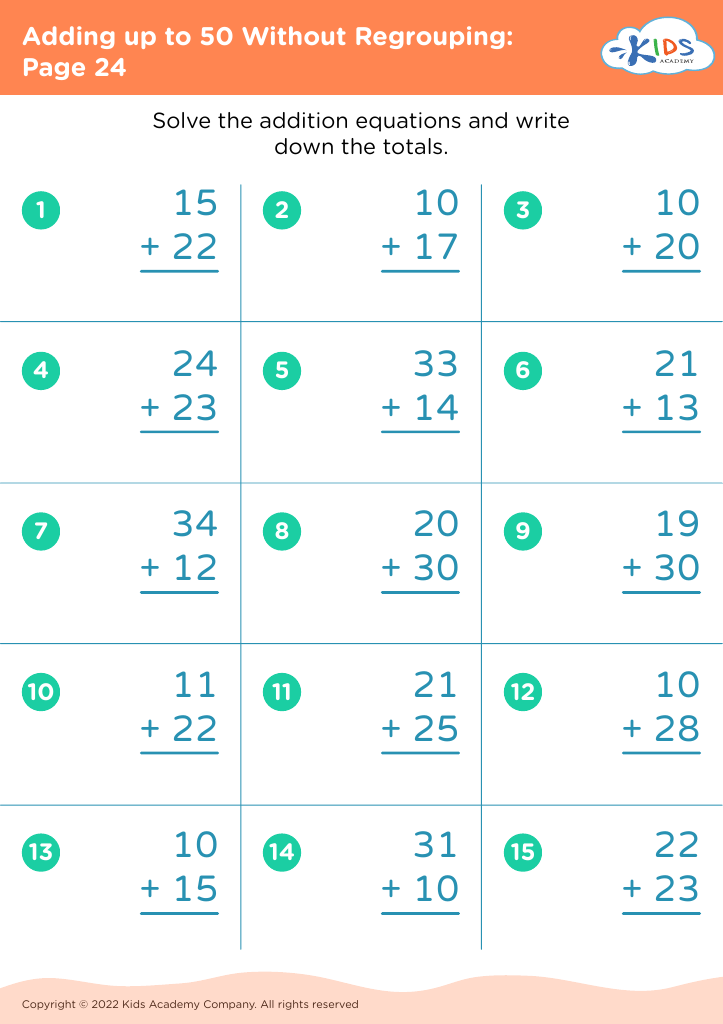
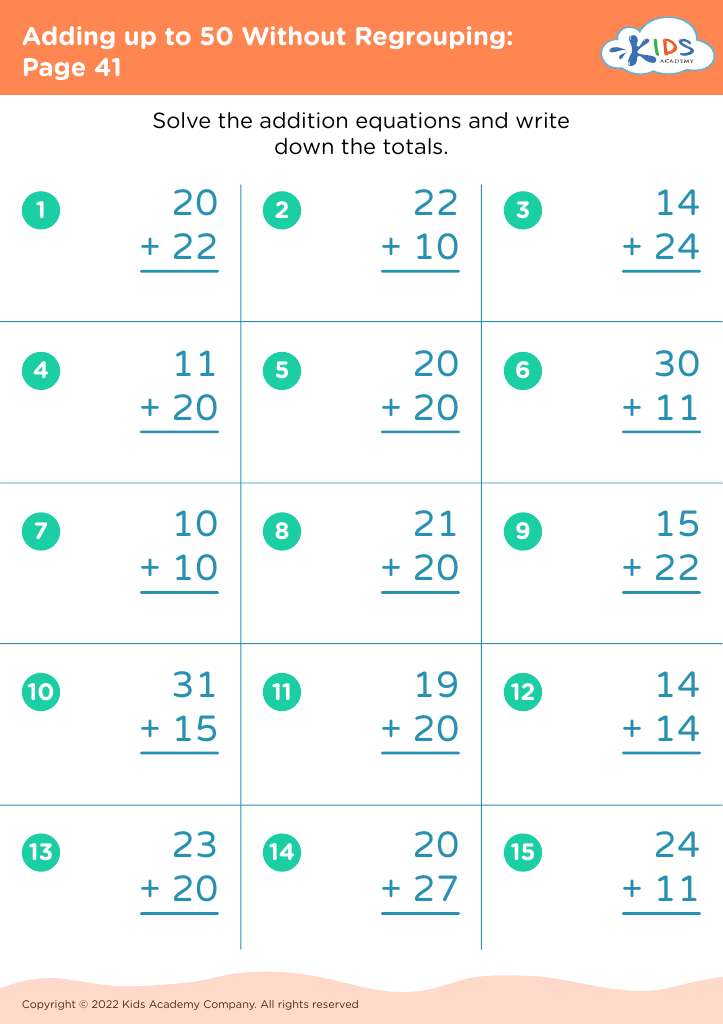
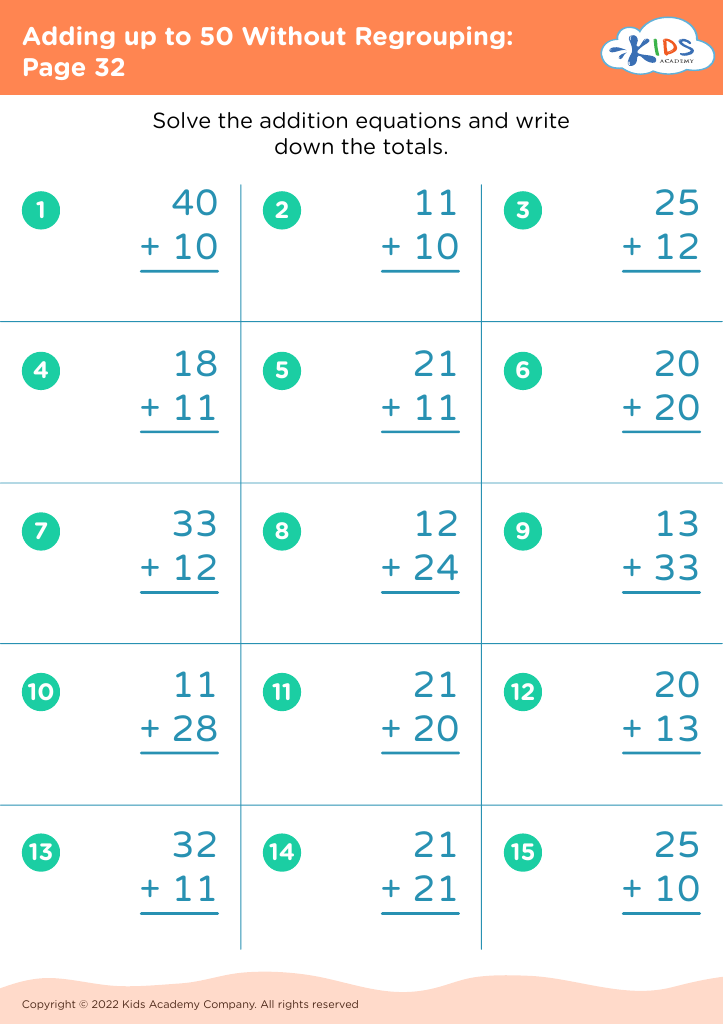
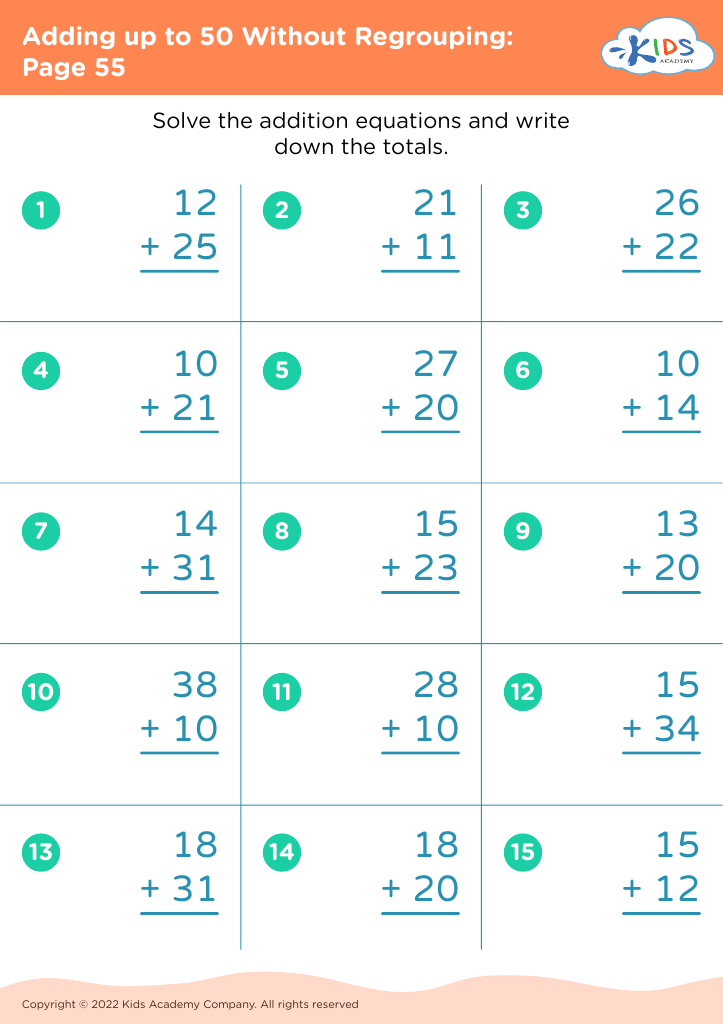


Number recognition and the ability to perform addition tasks are foundational skills in a child's educational development. For children aged 7-8, mastering number recognition and addition up to 50 without regrouping is crucial for several reasons.
Firstly, these skills form the basis for more complex mathematics in later grades. Strong abilities in recognizing numbers and performing straightforward addition contribute to essential problem-solving and analytical skills. Early success builds confidence and a positive attitude towards mathematics.
Secondly, understanding number recognition aids in everyday applications, allowing children to manage money, follow instructions involving numbers, and engage in activities requiring basic arithmetic. This competency is particularly important as students begin to tackle word problems and real-life scenarios.
Moreover, fostering these skills can enhance students’ cognitive development. Engaging in such exercises sharpens critical thinking and promotes an understanding of numerical relationships. This foundational proficiency not only supports their current academic progress but also equips them for future challenges.
Finally, support from parents and teachers in this area encourages a collaborative educational environment. Together, they can provide enriching experiences and cultivate a love for learning, ultimately leading to lifelong skills and improved academic outcomes. It’s essential to invest time and resources in developing these basic skills for a successful educational journey.