Filters

30 filtered results

Clear all filters
Favorites
With answer key
Interactive

30 filtered results

Difficulty Level

Grade


Explore our "Comparing Fractions Adding up to 50 Worksheets" designed for children aged 7-8! These engaging and interactive worksheets help young learners strengthen their understanding of fractions while honing their addition skills with sums up to 50. Each worksheet provides an array of exercises that challenge students to compare and analyze fractions, building essential math proficiency in a fun and approachable way. Ideal for classroom use or homeschooling, these resources promote critical thinking and logical reasoning. Download our worksheets today and support your child's mathematical journey with exciting activities that make learning fractions enjoyable! Perfect for all budding mathematicians!
Check out this FREE Trial Lesson on Adding up to 50 for age 7-8!

Short and Long Vowel Sort

Favorites
With answer key
Interactive
  • 7-8
  • Comparing Fractions
  • Adding up to 50
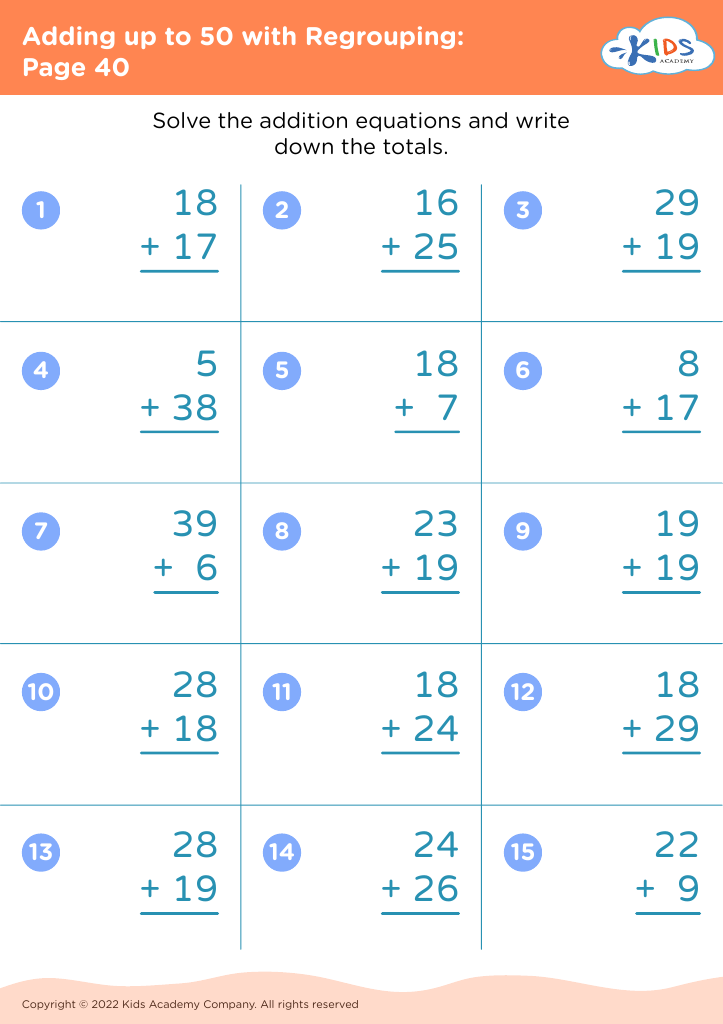
Adding up to 50 with Regrouping: Page 40
Worksheet
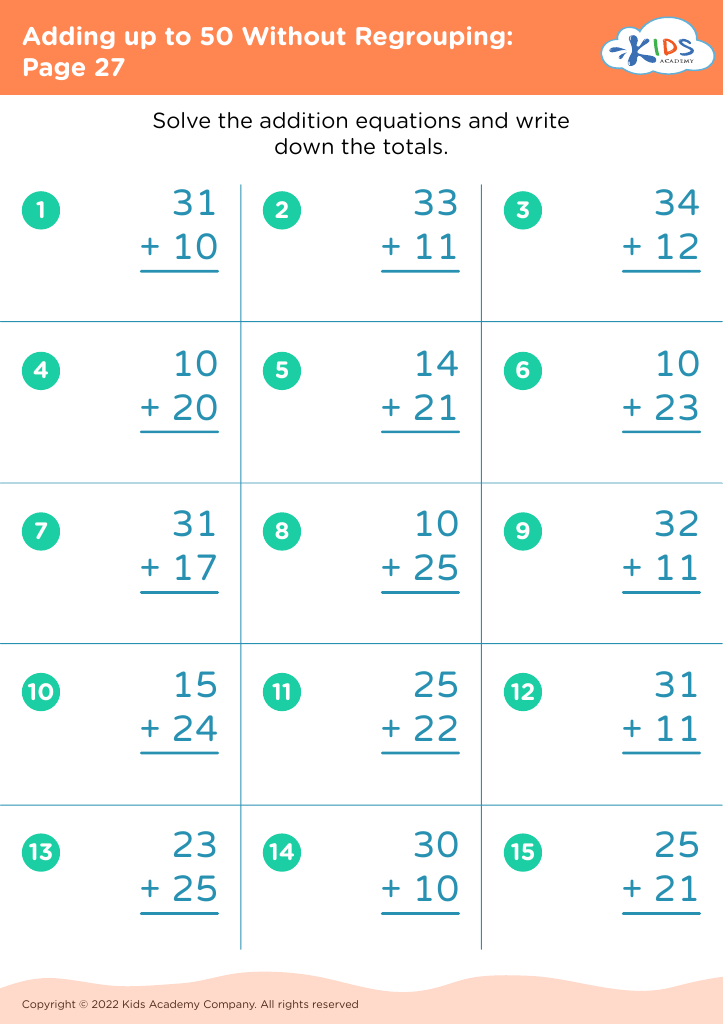
Adding up to 50 Without Regrouping: Page 27
Worksheet
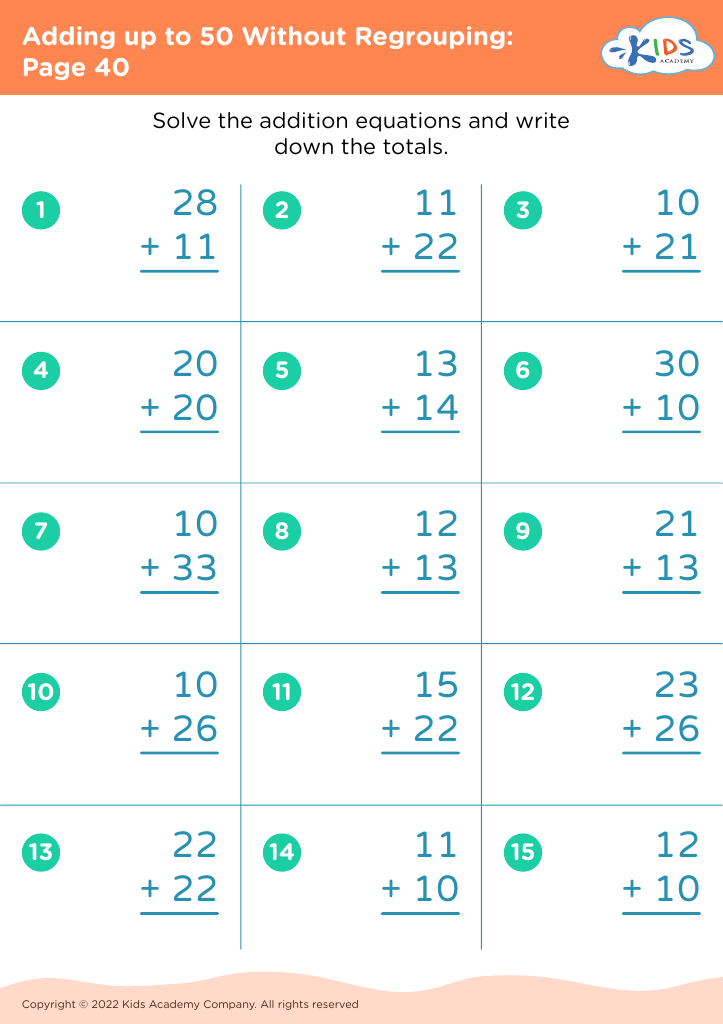
Adding up to 50 Without Regrouping: Page 40
Worksheet
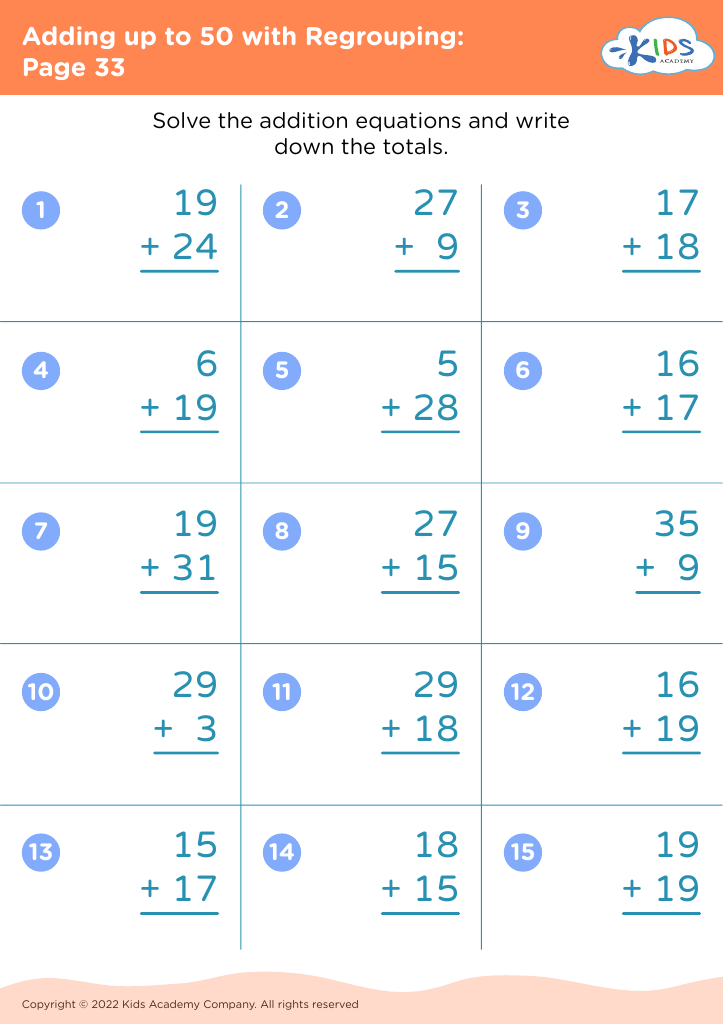
Adding up to 50 with Regrouping: Page 33
Worksheet
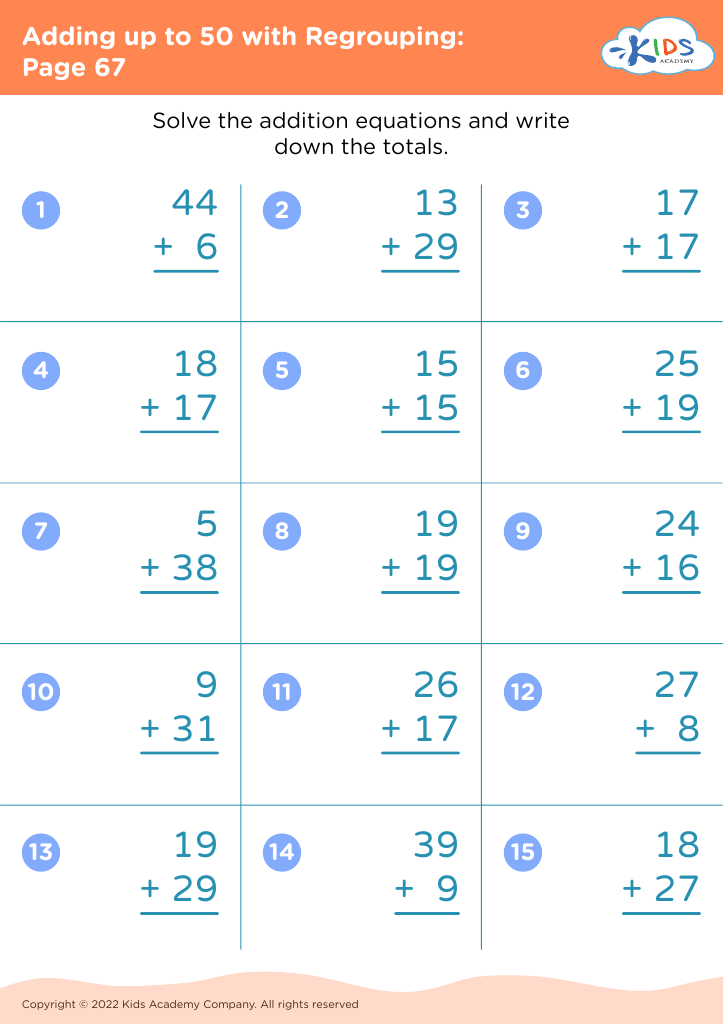
Adding up to 50 with Regrouping: Page 67
Worksheet
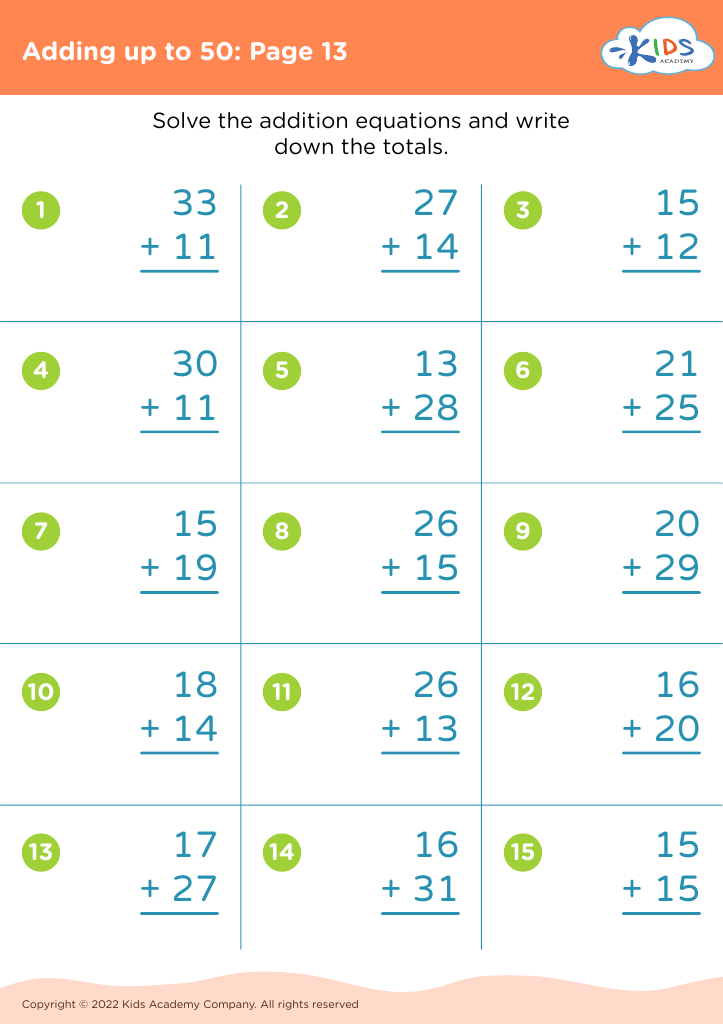
Adding up to 50: Page 13

Adding up to 50: Page 13

Adding up to 50: Page 13
Worksheet
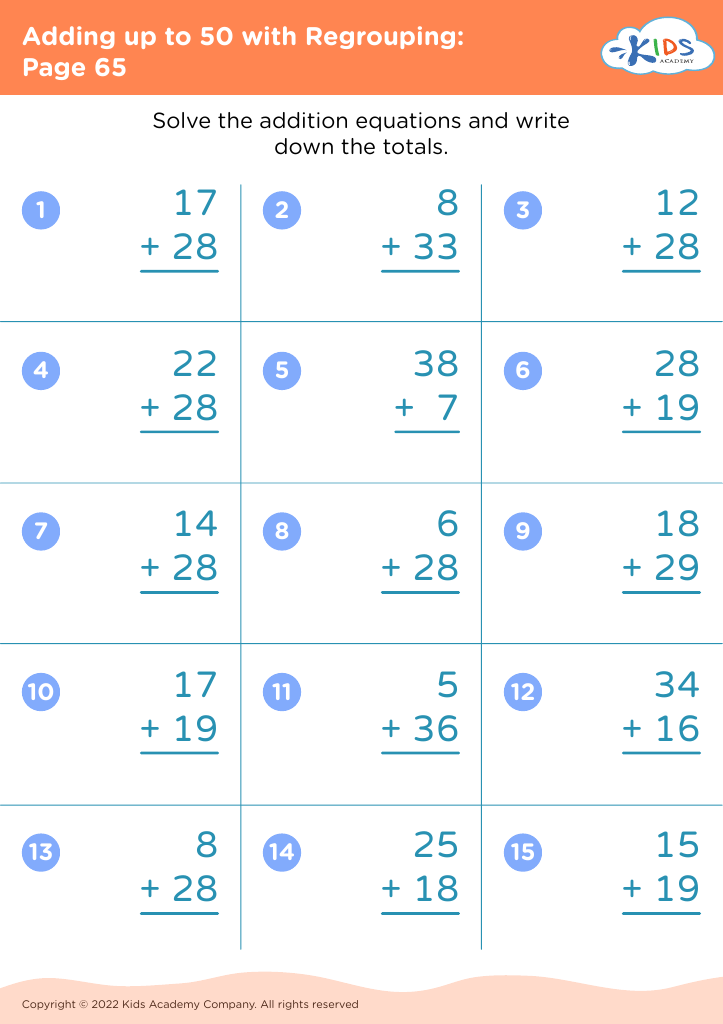
Adding up to 50 with Regrouping: Page 65
Worksheet
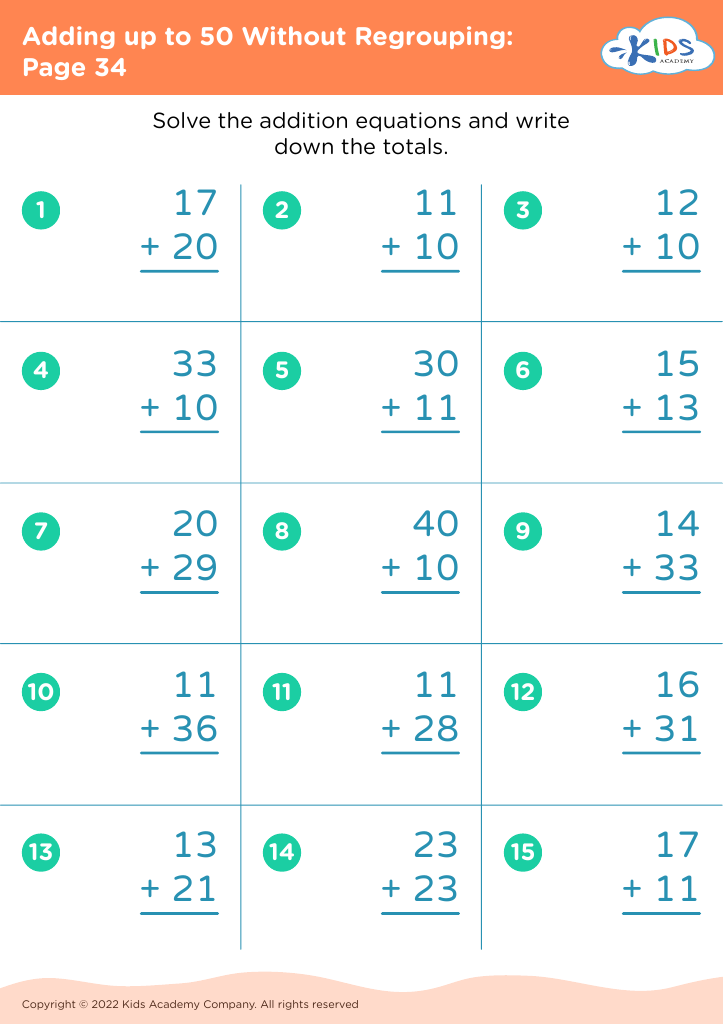
Adding up to 50 Without Regrouping: Page 34
Worksheet
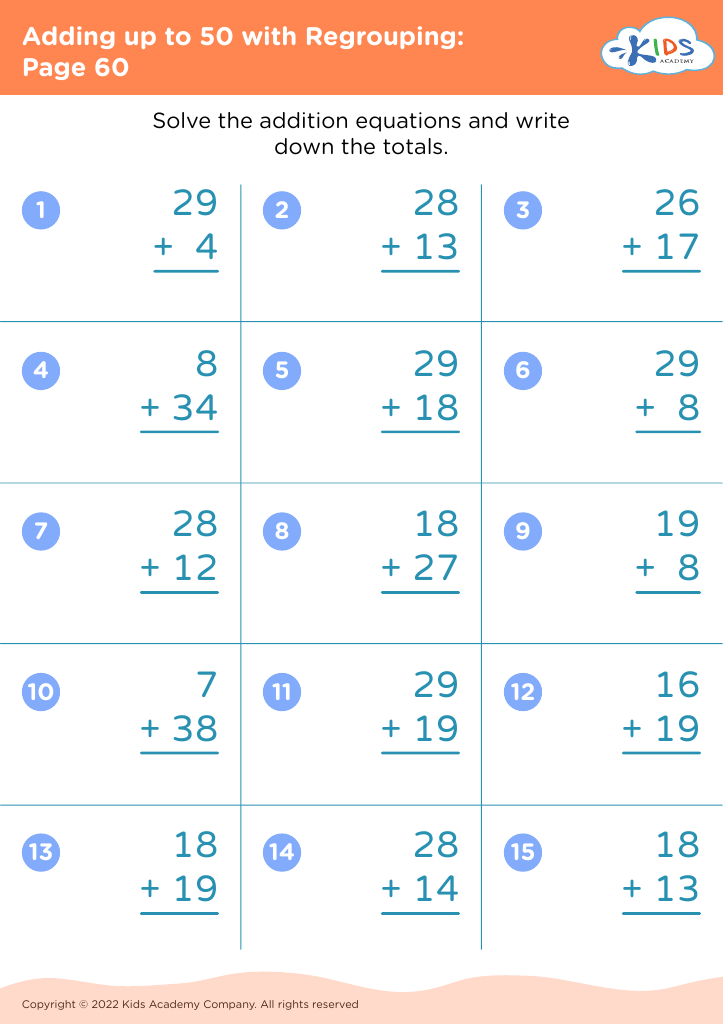
Adding up to 50 with Regrouping: Page 60
Worksheet
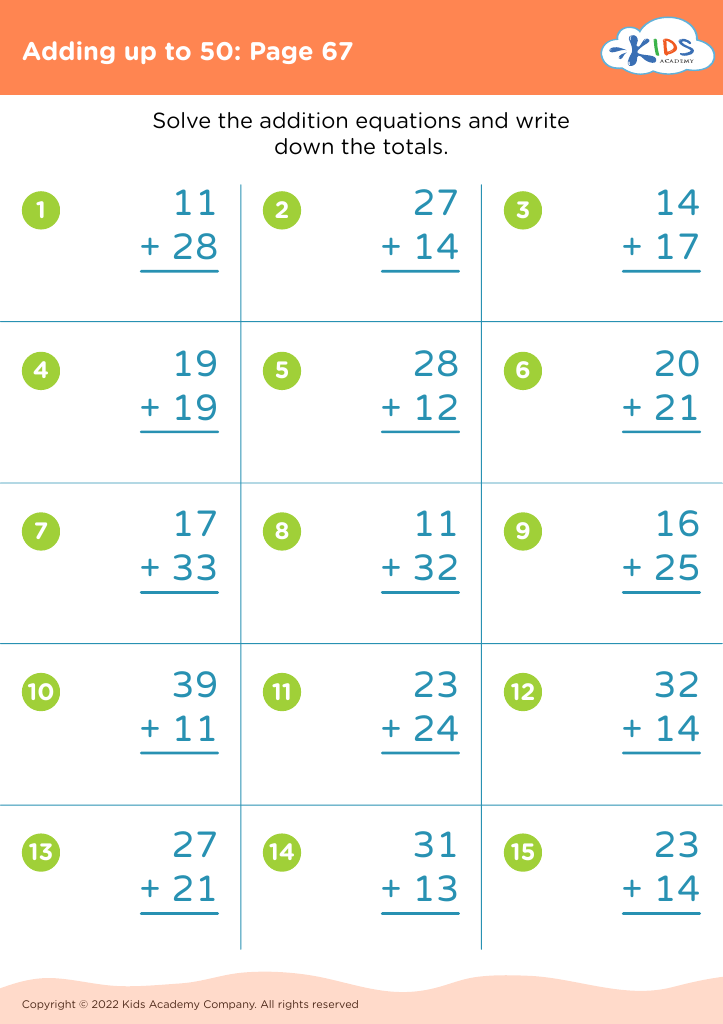
Adding up to 50: Page 67

Adding up to 50: Page 67

Adding up to 50: Page 67
Worksheet
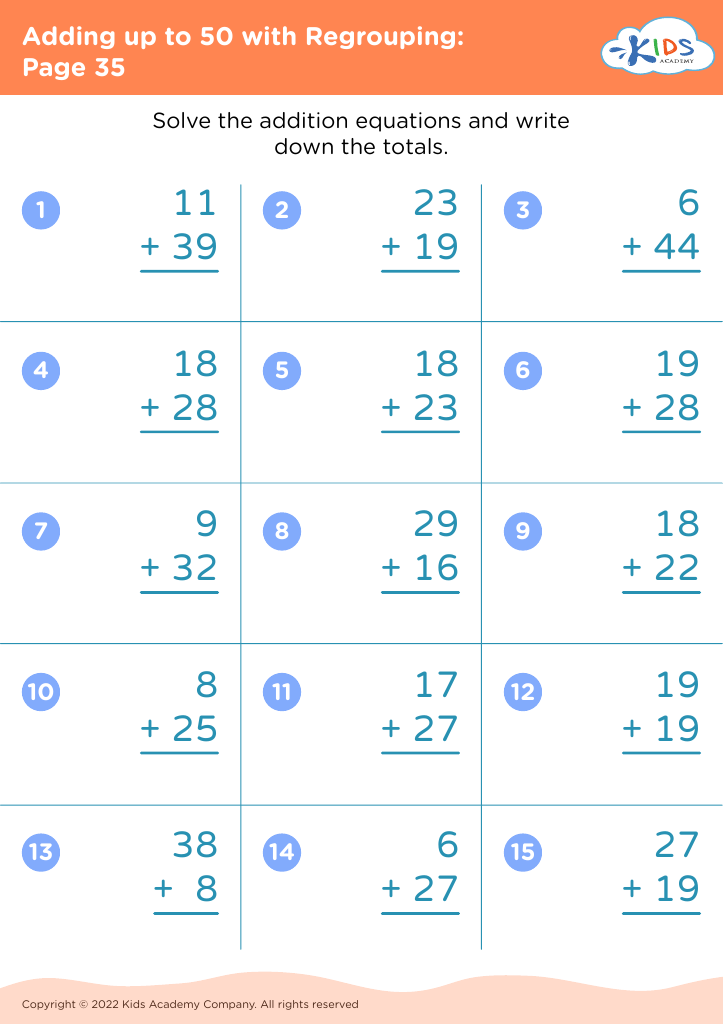
Adding up to 50 with Regrouping: Page 35
Worksheet
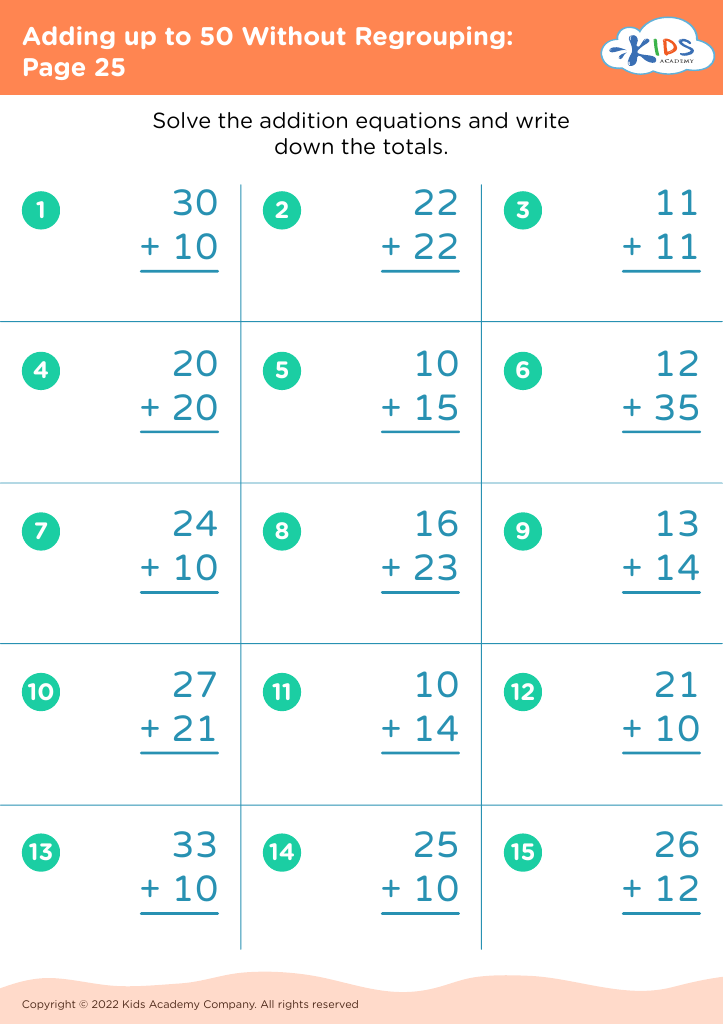
Adding up to 50 Without Regrouping: Page 25
Worksheet
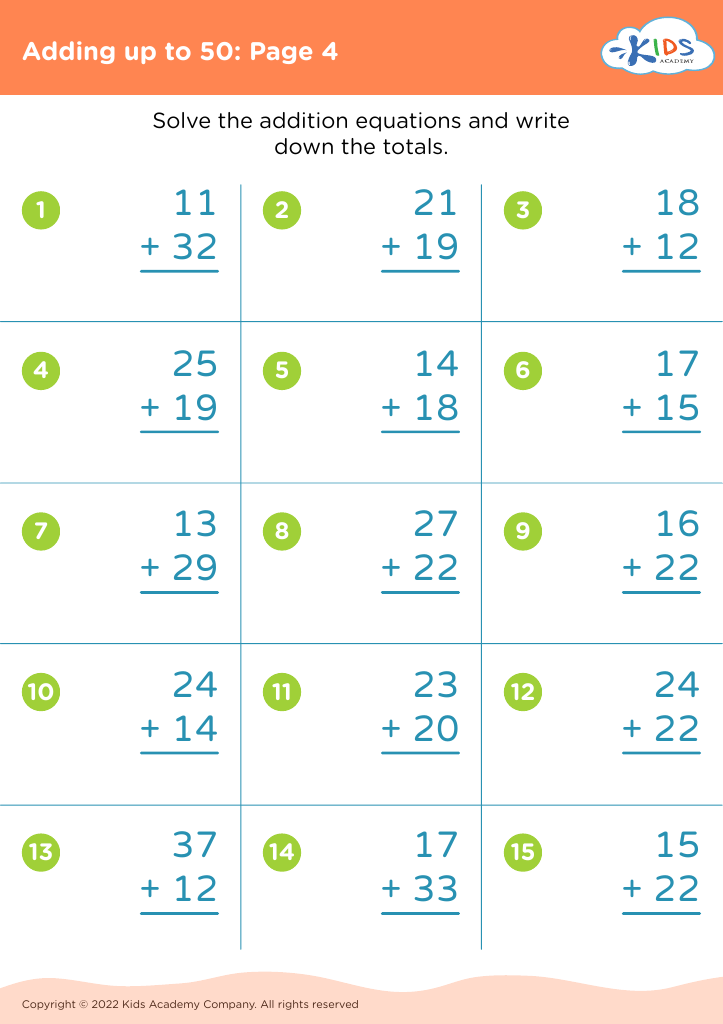
Adding up to 50: Page 4

Adding up to 50: Page 4

Adding up to 50: Page 4
Worksheet
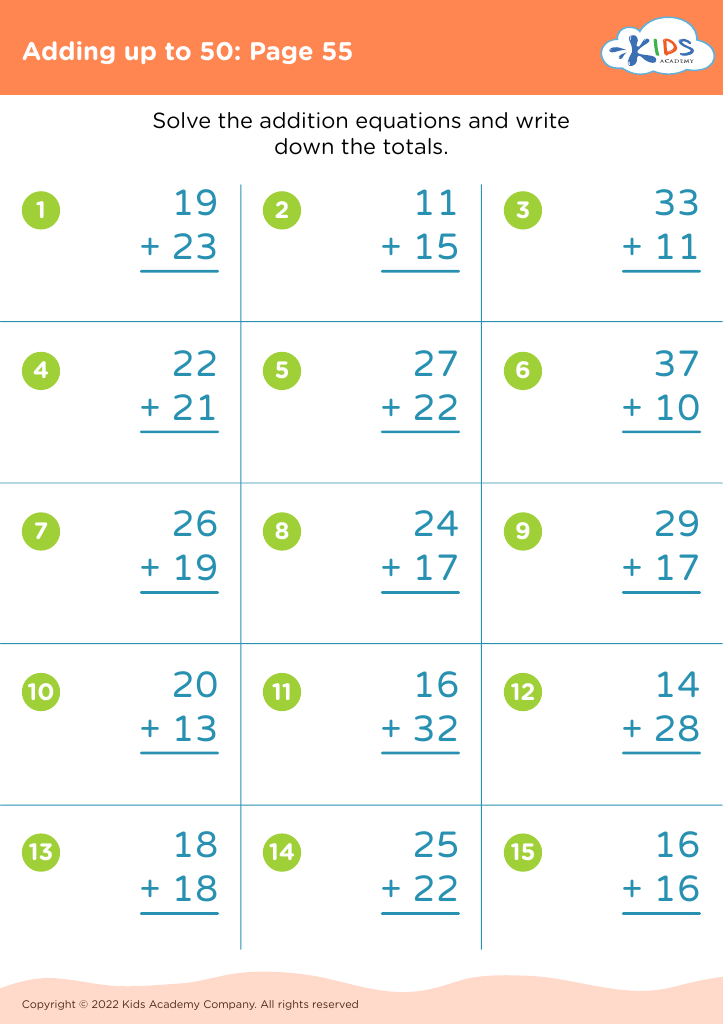
Adding up to 50: Page 55

Adding up to 50: Page 55

Adding up to 50: Page 55
Worksheet
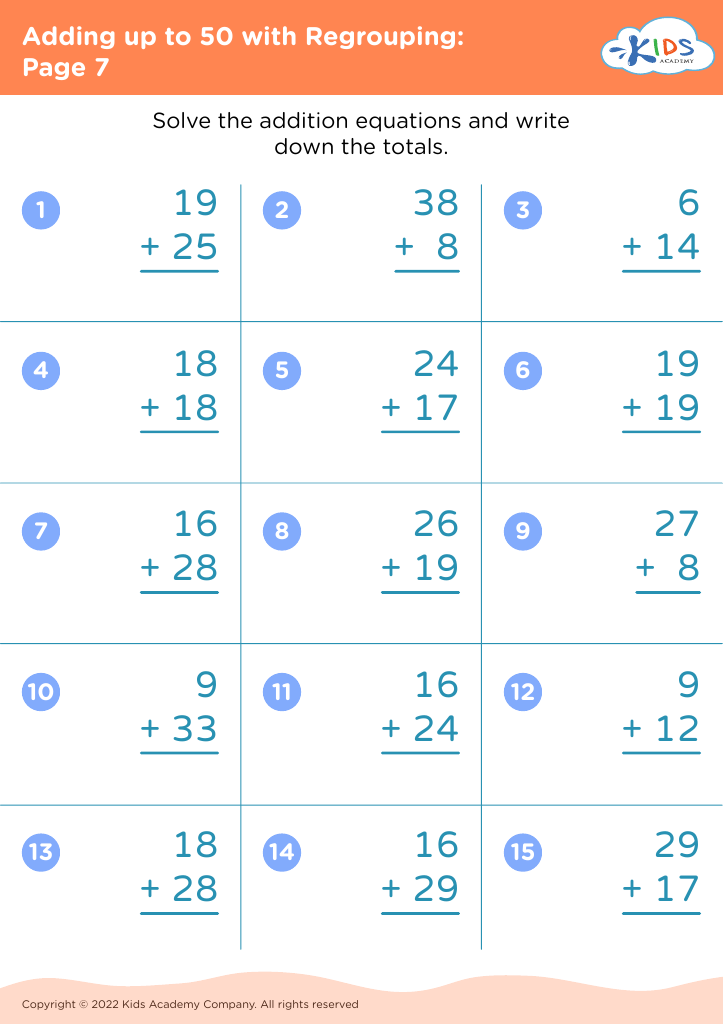
Adding up to 50 with Regrouping: Page 7
Worksheet
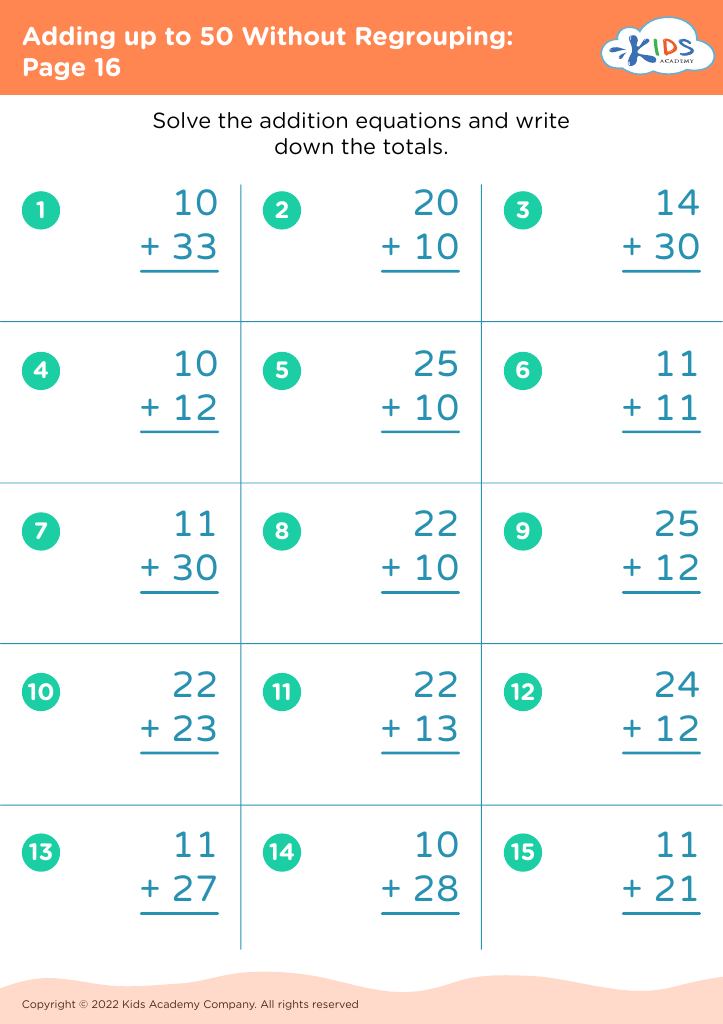
Adding up to 50 Without Regrouping: Page 16
Worksheet
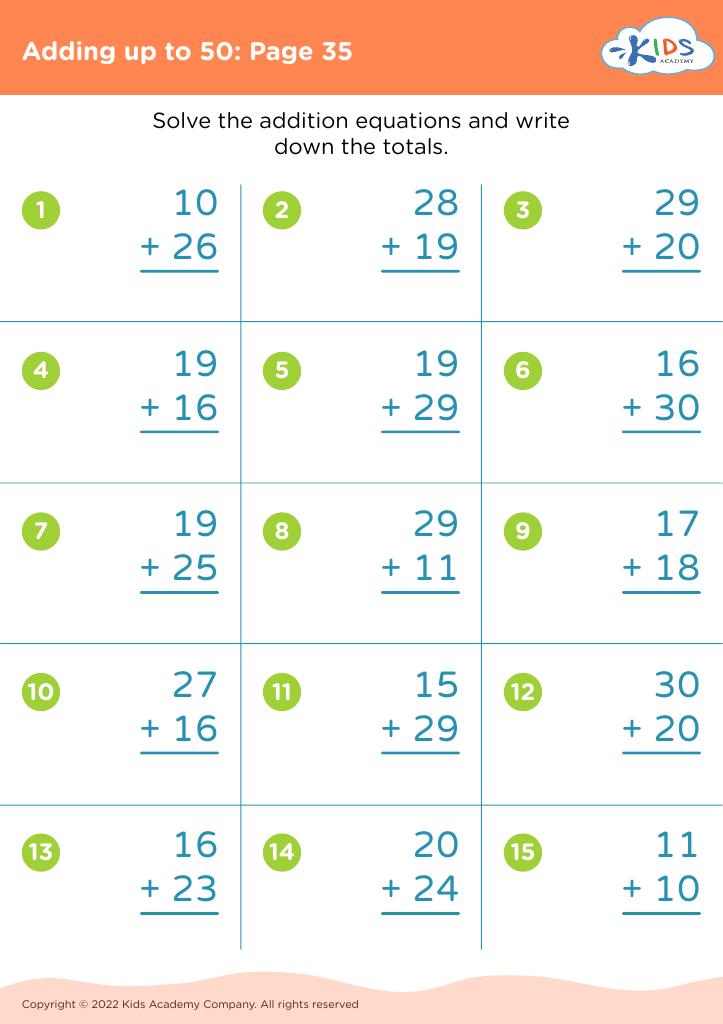
Adding up to 50: Page 35

Adding up to 50: Page 35

Adding up to 50: Page 35
Worksheet
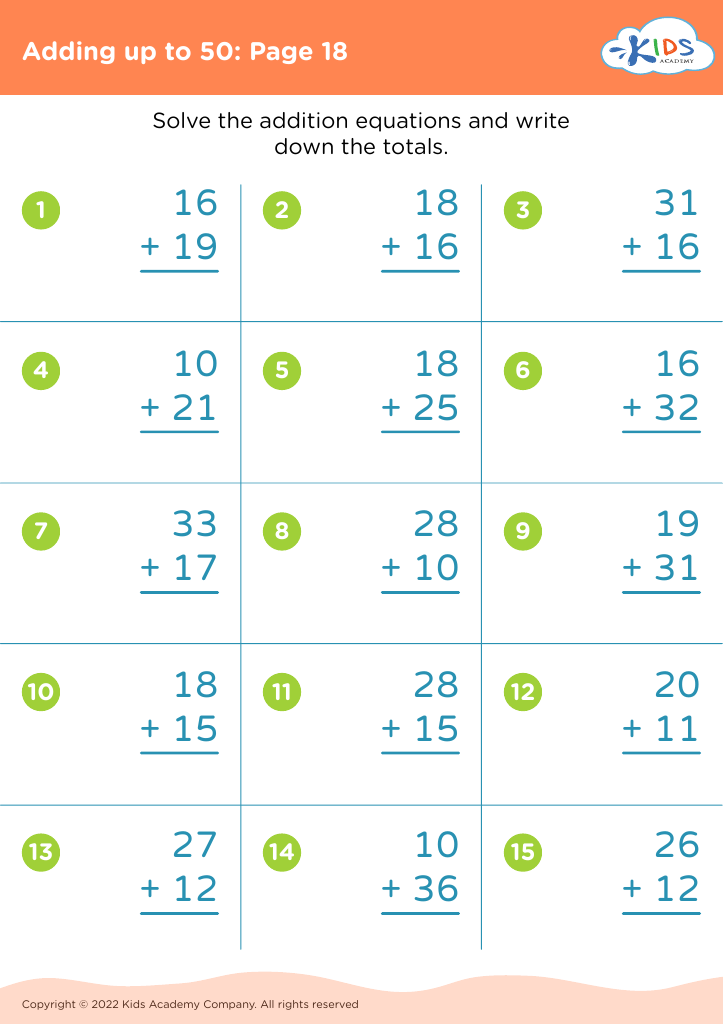
Adding up to 50: Page 18

Adding up to 50: Page 18

Adding up to 50: Page 18
Worksheet
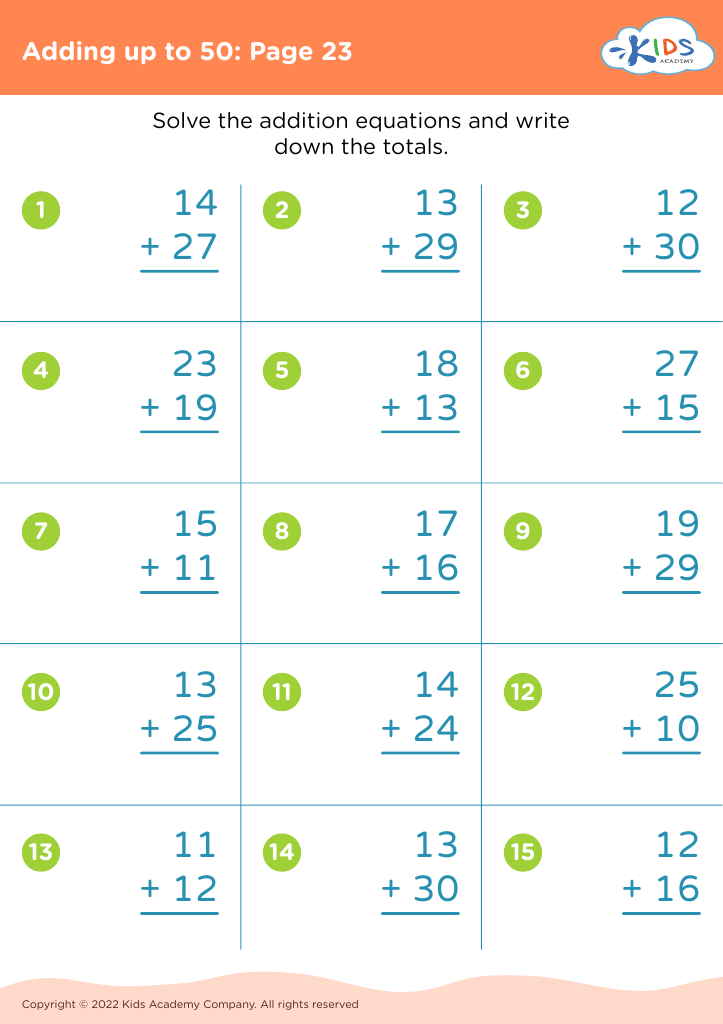
Adding up to 50: Page 23

Adding up to 50: Page 23

Adding up to 50: Page 23
Worksheet
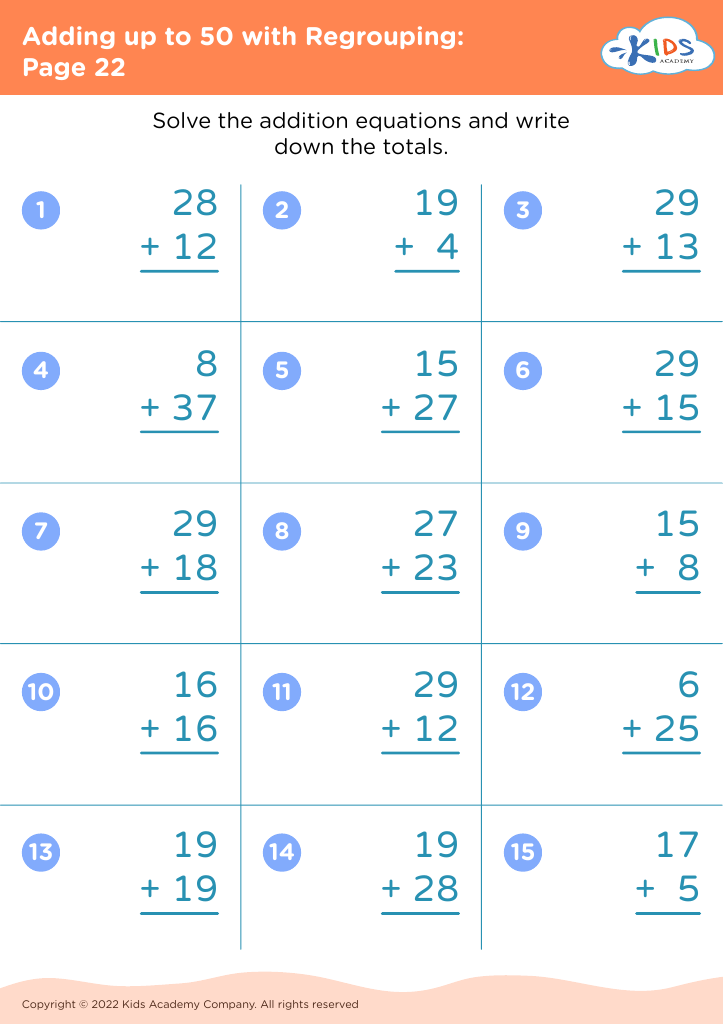
Adding up to 50 with Regrouping: Page 22
Worksheet
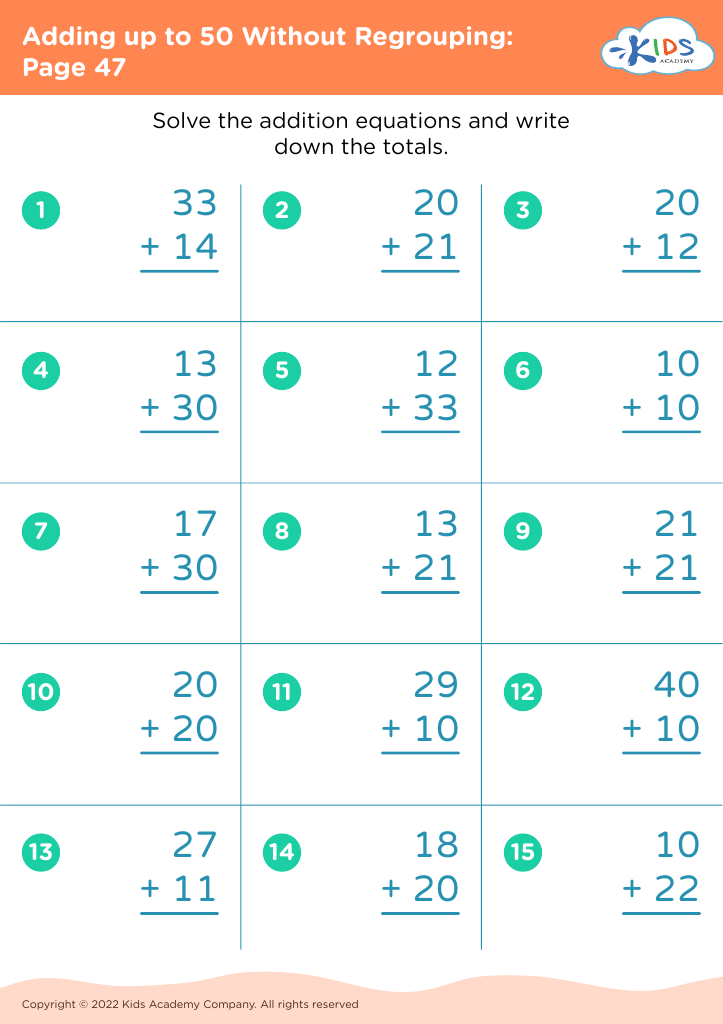
Adding up to 50 Without Regrouping: Page 47
Worksheet
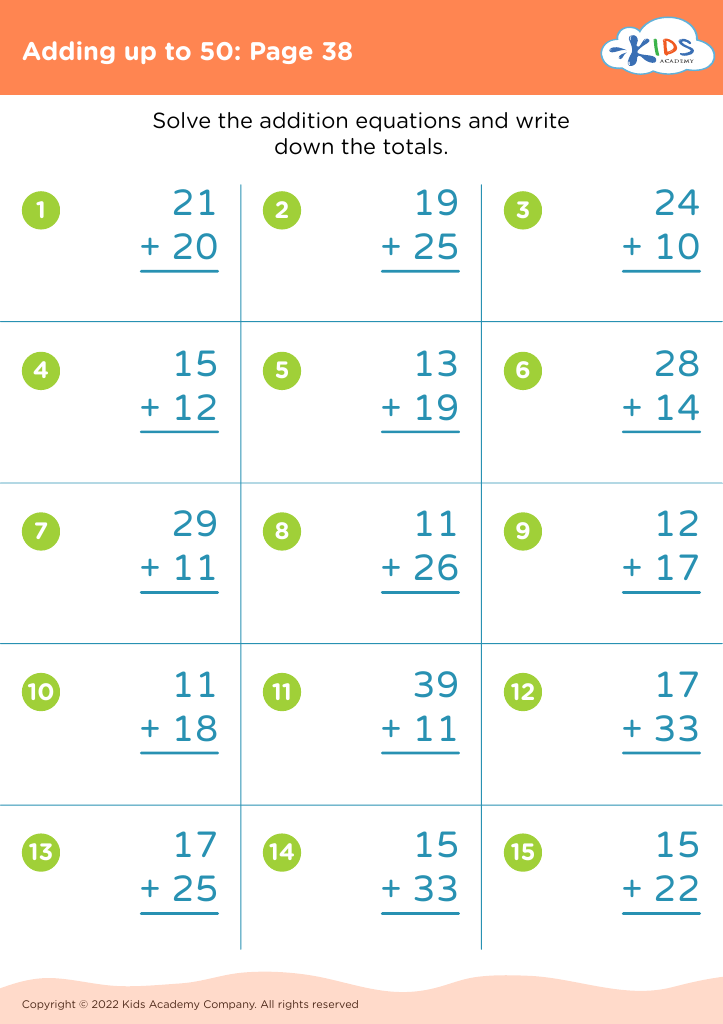
Adding up to 50: Page 38

Adding up to 50: Page 38

Adding up to 50: Page 38
Worksheet
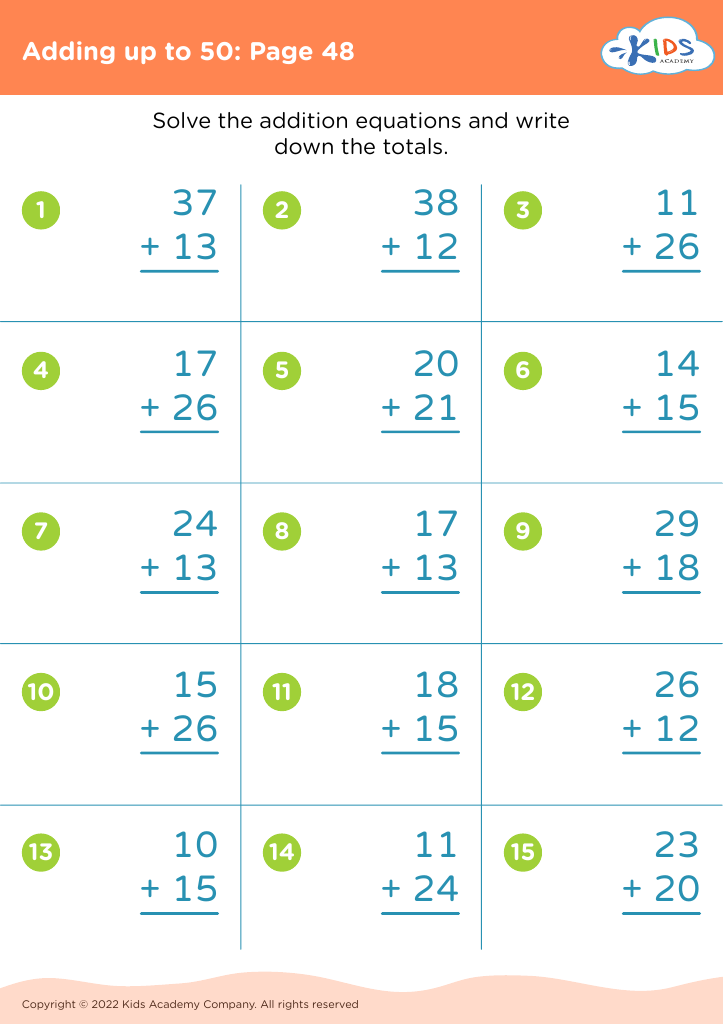
Adding up to 50: Page 48

Adding up to 50: Page 48

Adding up to 50: Page 48
Worksheet
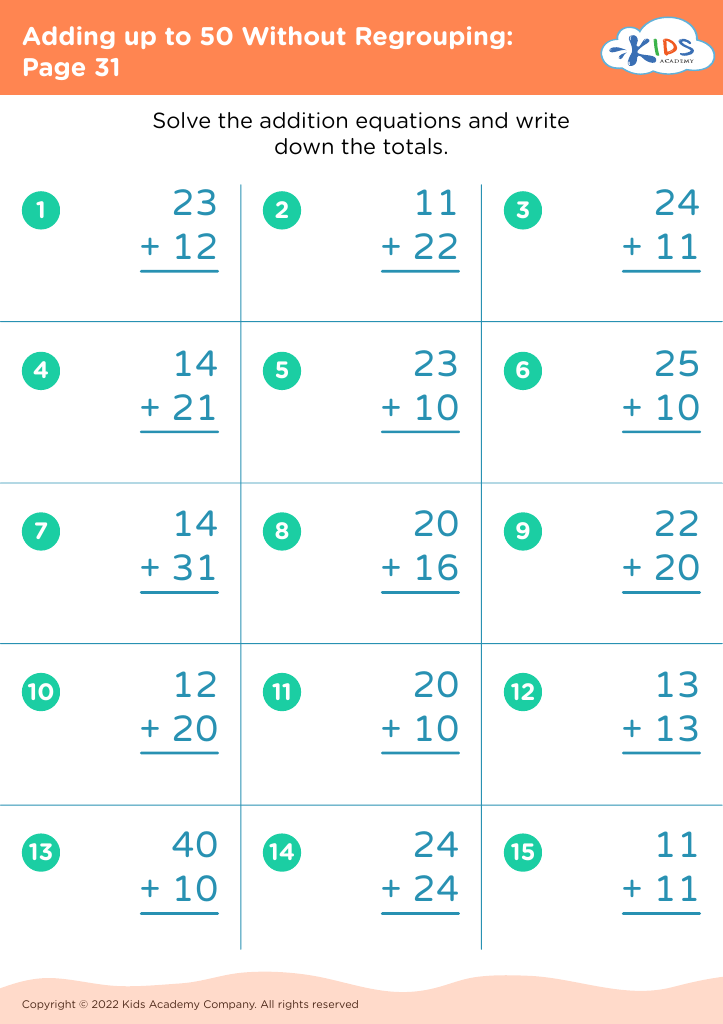
Adding up to 50 Without Regrouping: Page 31
Worksheet


Comparing fractions is a foundational mathematical skill that serves as a building block for more complex concepts. For children ages 7-8, understanding fractions and how to compare them is particularly important, as it strengthens number sense and lays the groundwork for future math learning.

First, comparing fractions helps children grasp the concept of part-to-whole relationships. Learning how to identify which fraction is greater or less enhances their ability to make sense of diverse situations in everyday life, such as measuring ingredients in cooking or sharing objects.

Moreover, when fractions are incorporated into activities adding up to 50, children develop their addition skills alongside fraction comprehension. This dual focus on fractions and whole numbers allows children to see connections between different areas of math, fostering a more comprehensive understanding.

Teachers and parents should also recognize that mastering these concepts boosts confidence. Children who can confidently compare and add fractions will be more resilient when faced with future challenges in math. Encouraging this skill not only prepares them for higher-level math but also emphasizes critical thinking, problem-solving, and the ability to communicate mathematical ideas effectively. In short, supporting fractional understanding at an early age is essential for academic success.