Filters

47 filtered results

Clear all filters
Favorites
With answer key
Interactive

47 filtered results

Difficulty Level

Grade


Check out this FREE Trial Lesson on Adding up to 50 for age 7-8!

H

Favorites
With answer key
Interactive
  • 7-8
  • Understanding fractions
  • Adding up to 50
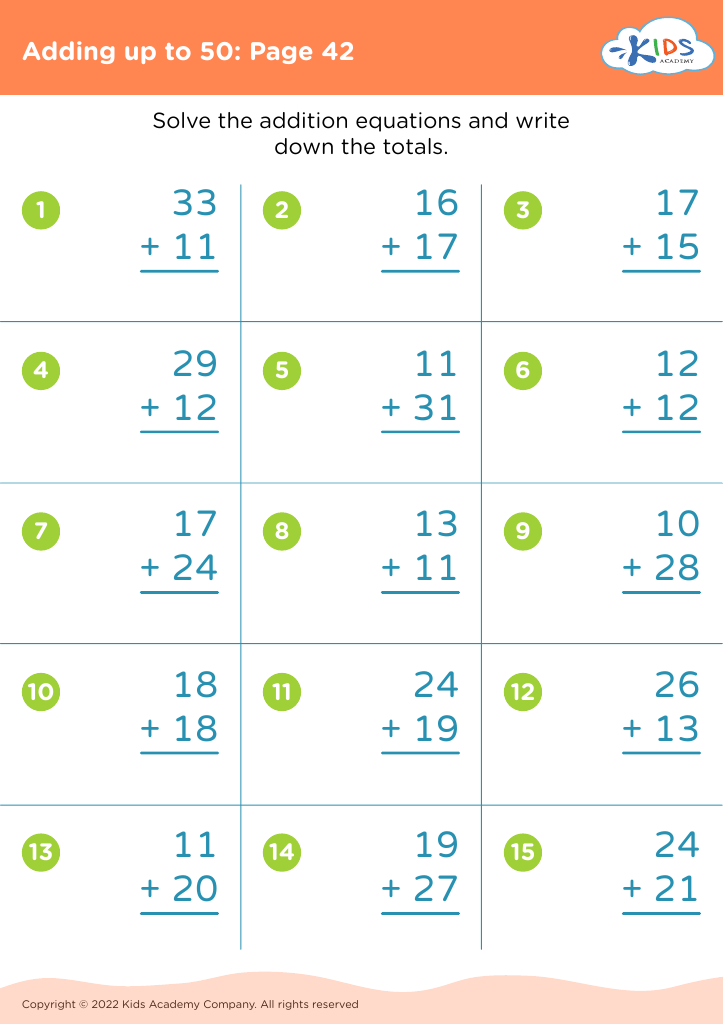
Adding up to 50: Page 42

Adding up to 50: Page 42

Adding up to 50: Page 42
Worksheet
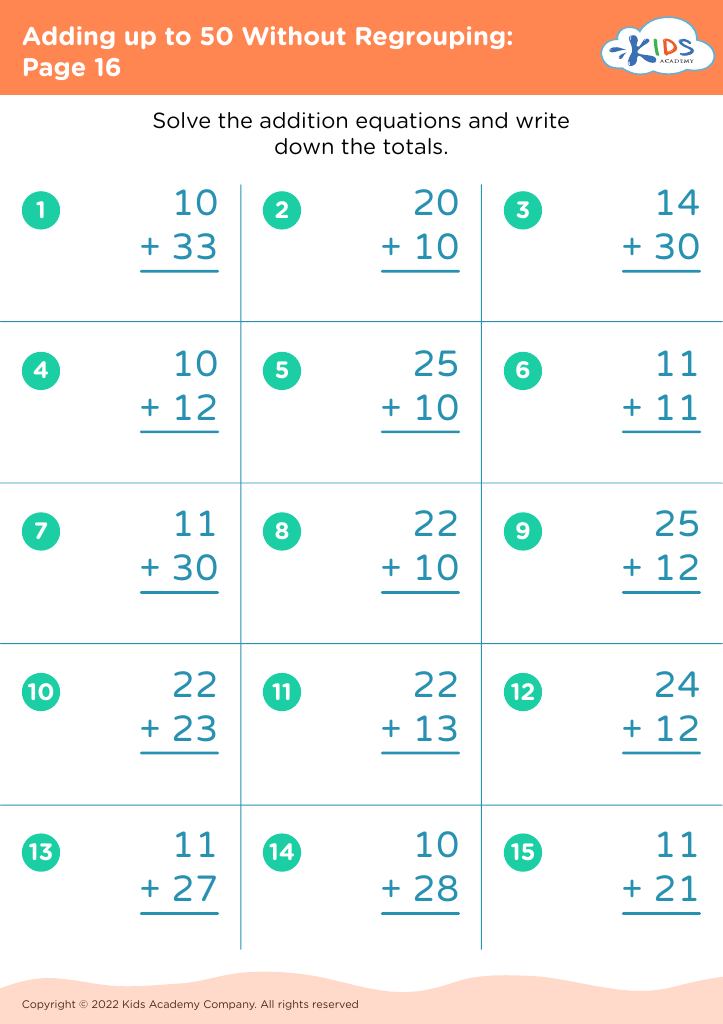
Adding up to 50 Without Regrouping: Page 16
Worksheet
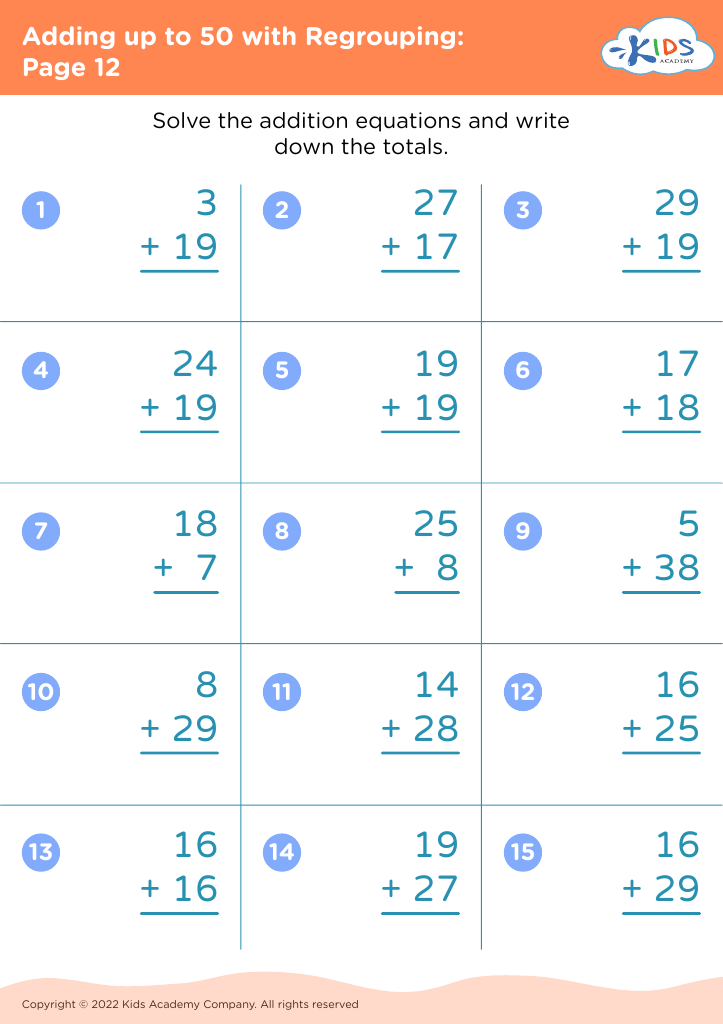
Adding up to 50 with Regrouping: Page 12
Worksheet
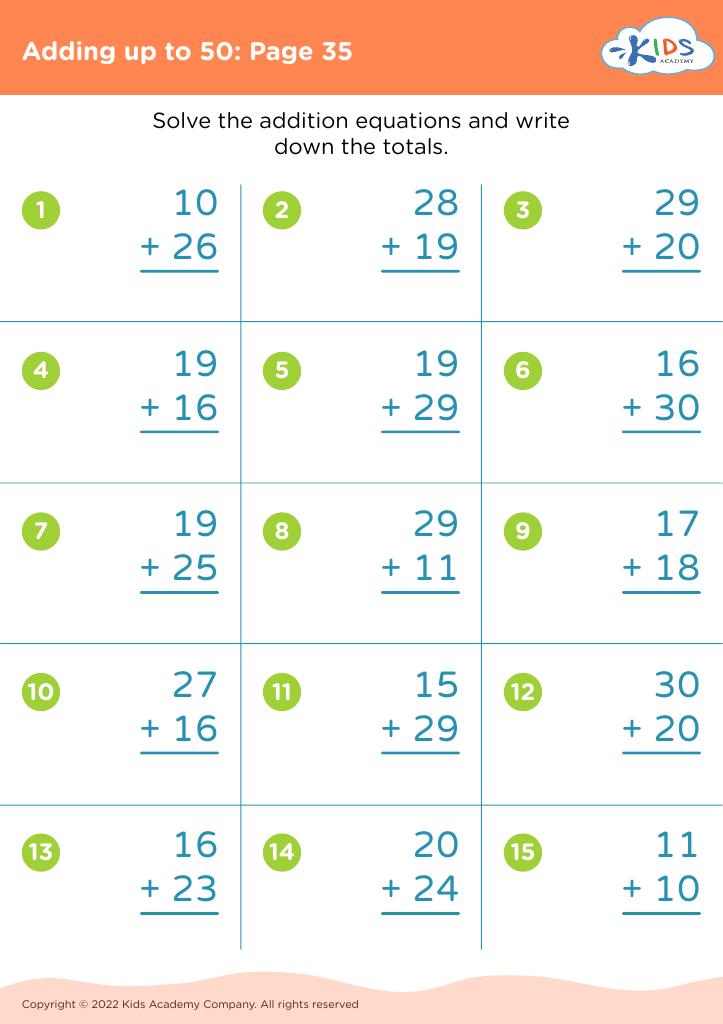
Adding up to 50: Page 35

Adding up to 50: Page 35

Adding up to 50: Page 35
Worksheet
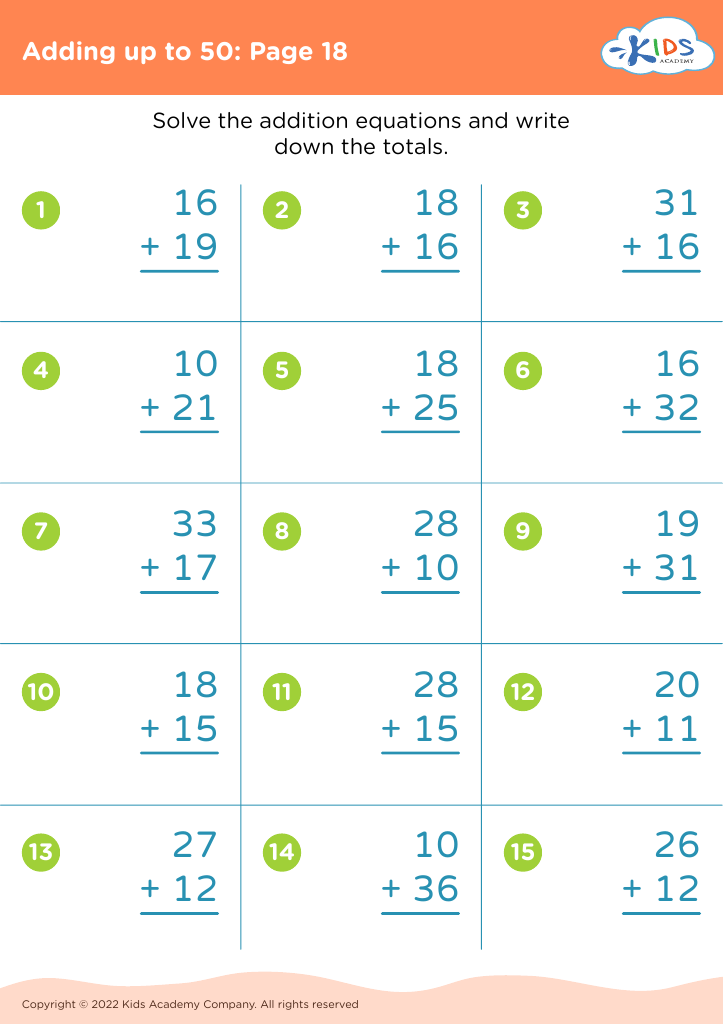
Adding up to 50: Page 18

Adding up to 50: Page 18

Adding up to 50: Page 18
Worksheet
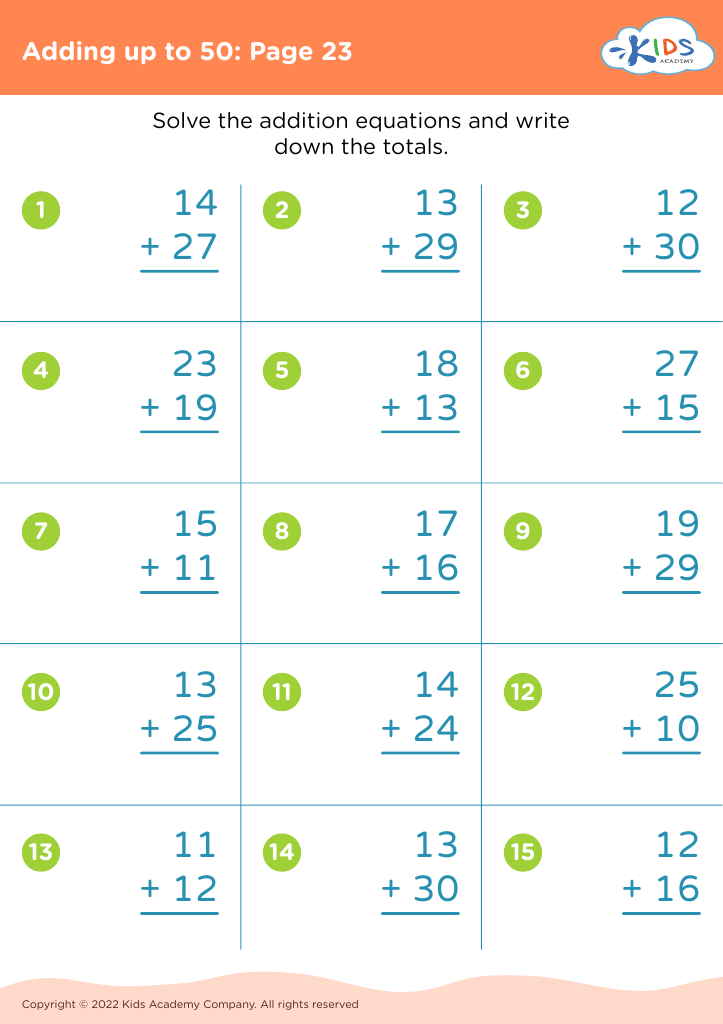
Adding up to 50: Page 23

Adding up to 50: Page 23

Adding up to 50: Page 23
Worksheet
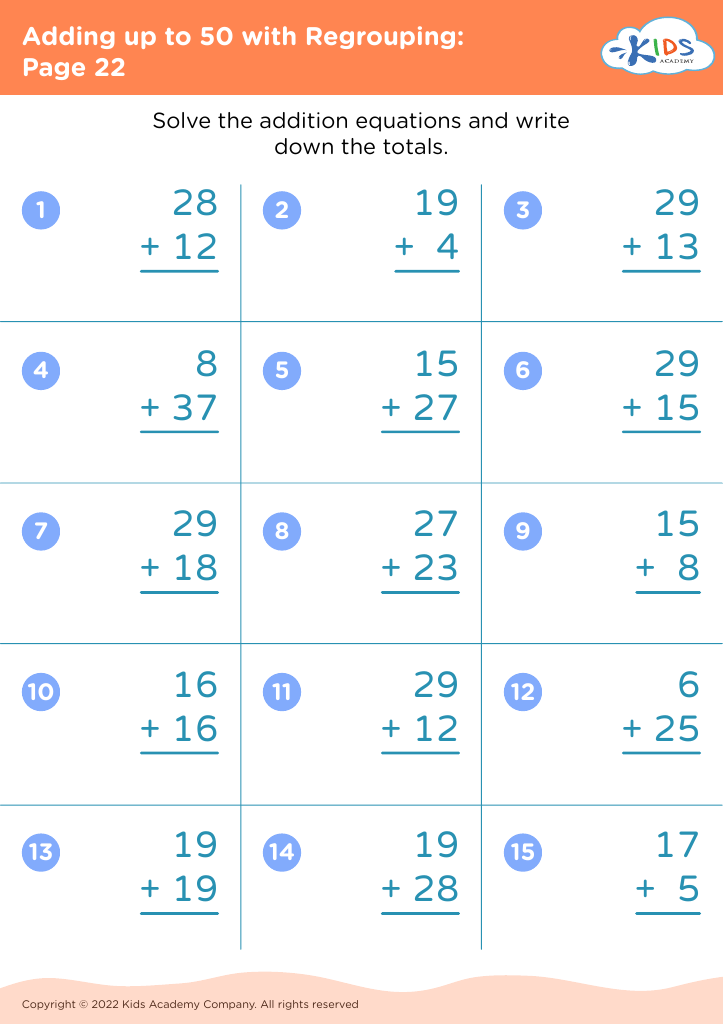
Adding up to 50 with Regrouping: Page 22
Worksheet
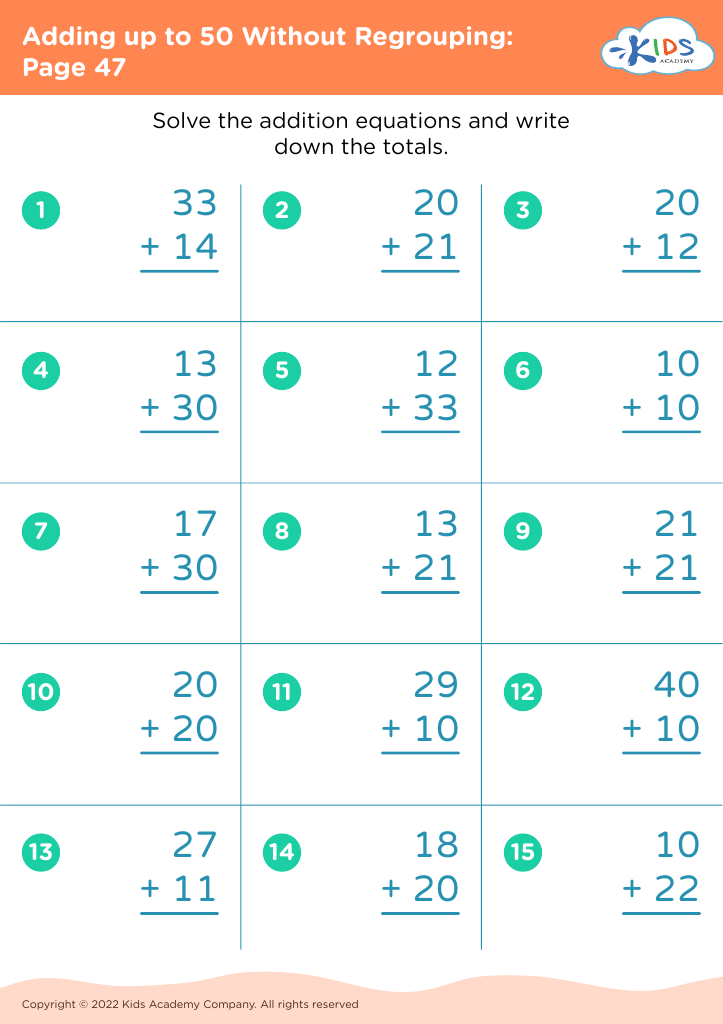
Adding up to 50 Without Regrouping: Page 47
Worksheet
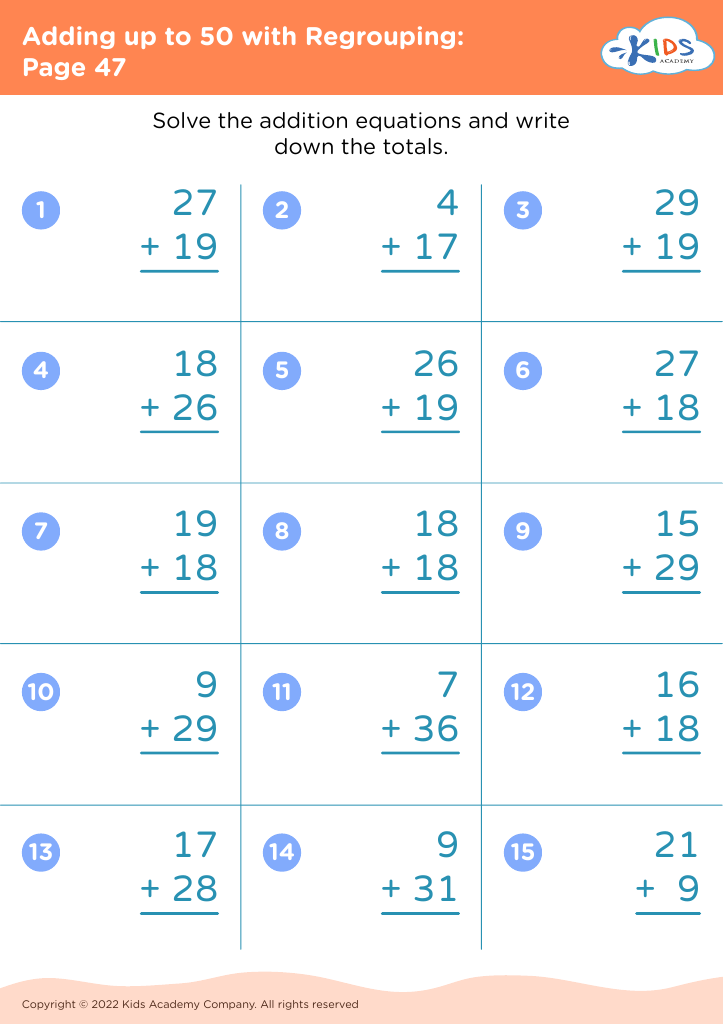
Adding up to 50 with Regrouping: Page 47
Worksheet
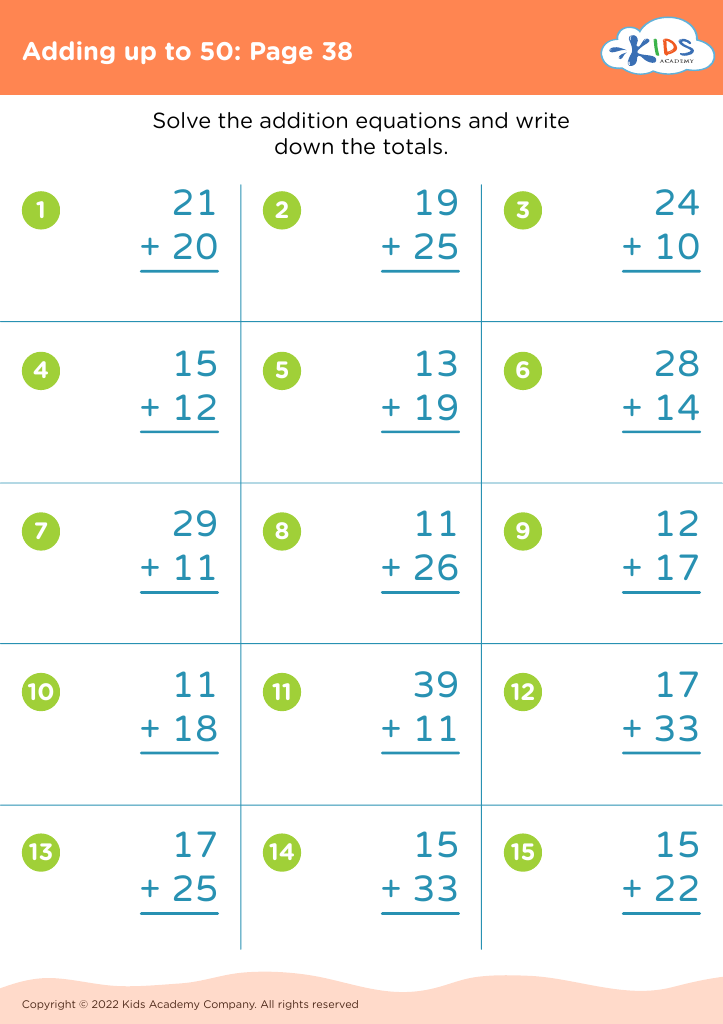
Adding up to 50: Page 38

Adding up to 50: Page 38

Adding up to 50: Page 38
Worksheet
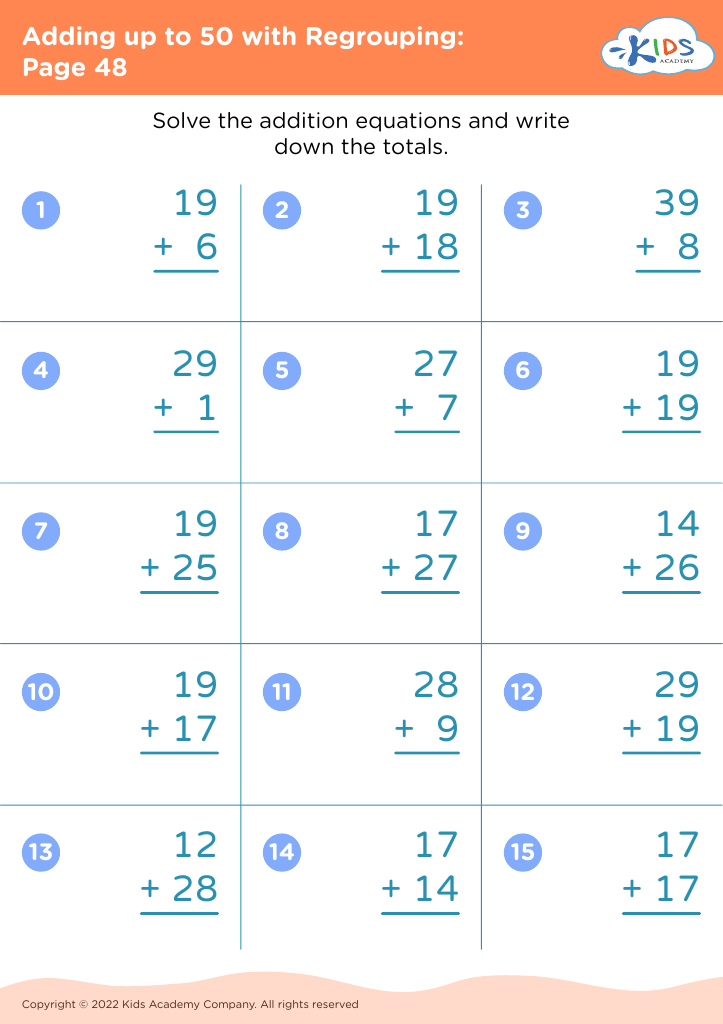
Adding up to 50 with Regrouping: Page 48
Worksheet
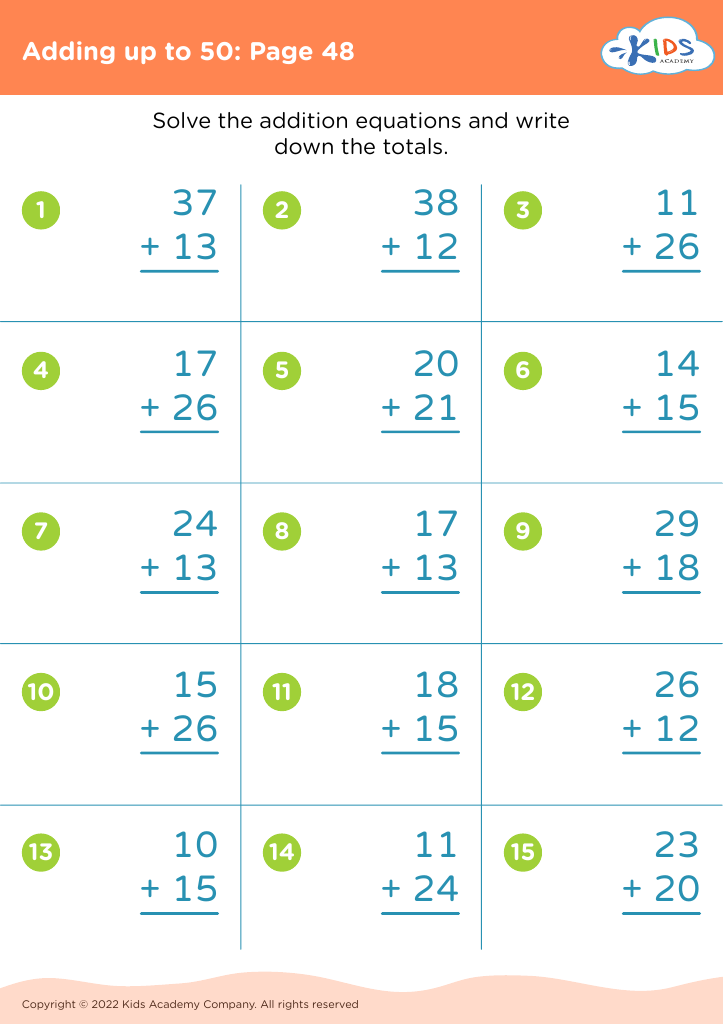
Adding up to 50: Page 48

Adding up to 50: Page 48

Adding up to 50: Page 48
Worksheet
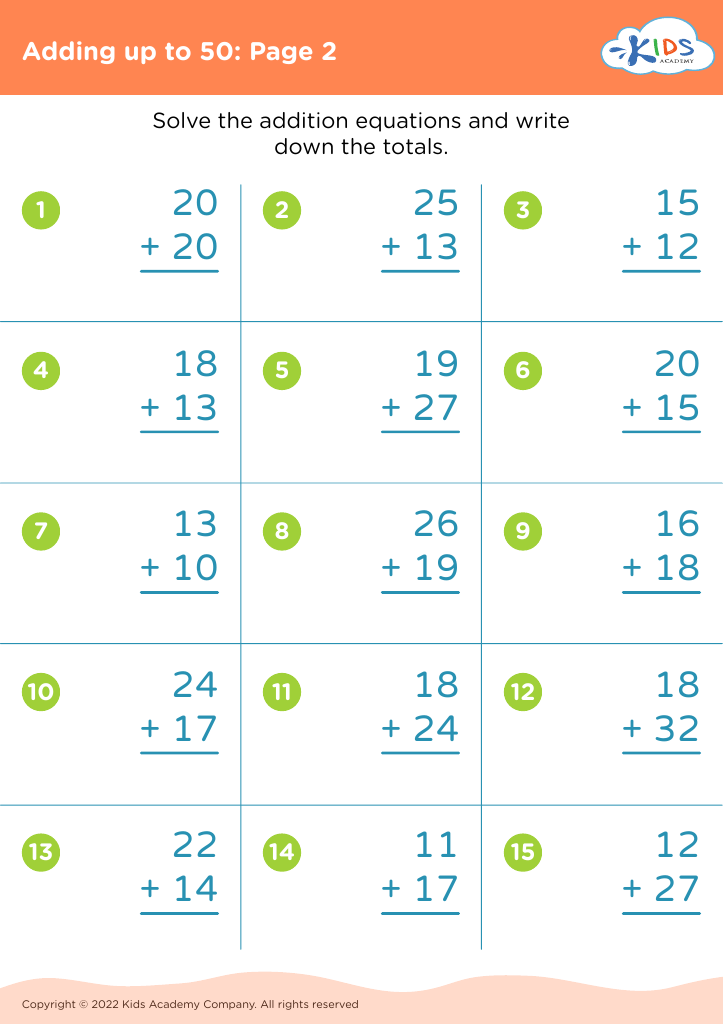
Adding up to 50: Page 2

Adding up to 50: Page 2

Adding up to 50: Page 2
Worksheet
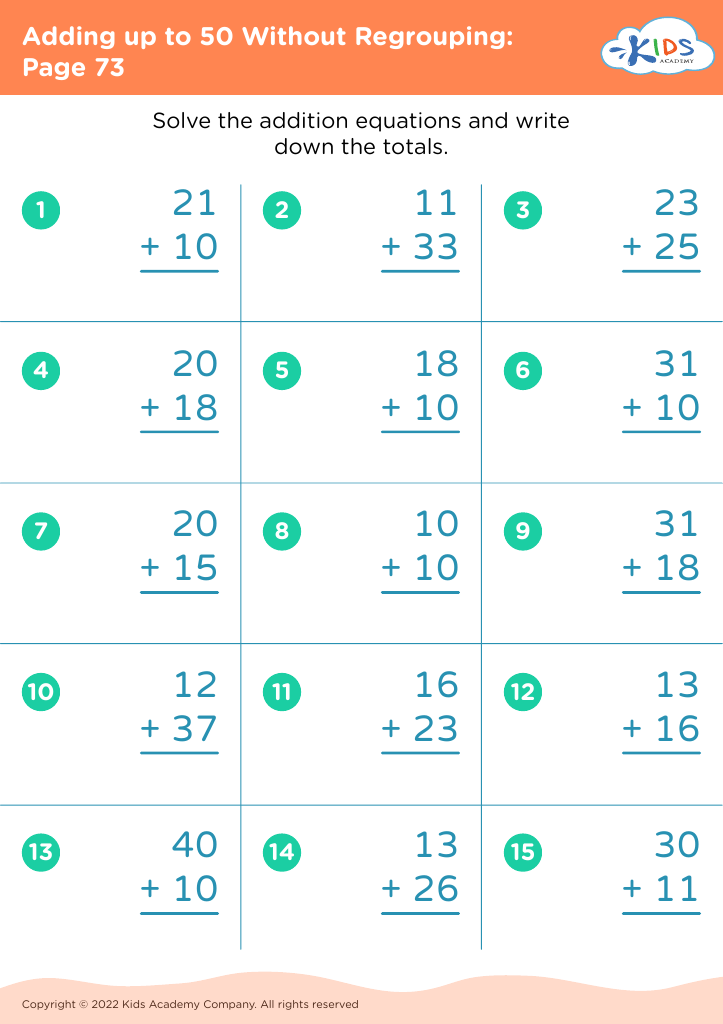
Adding up to 50 Without Regrouping: Page 73
Worksheet
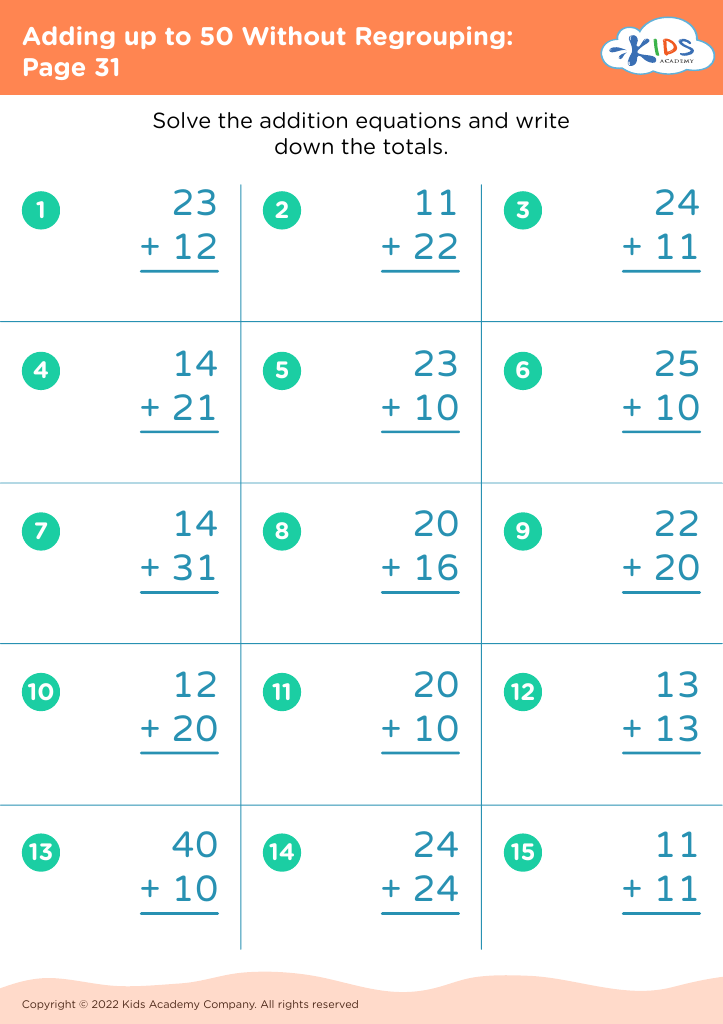
Adding up to 50 Without Regrouping: Page 31
Worksheet
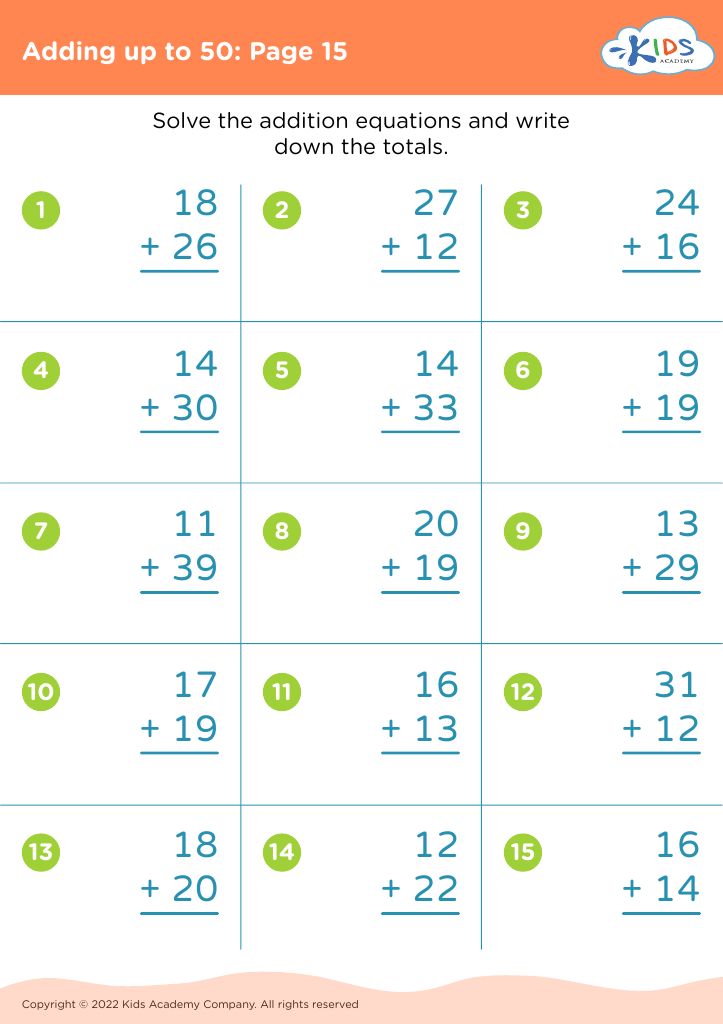
Adding up to 50: Page 15

Adding up to 50: Page 15

Adding up to 50: Page 15
Worksheet
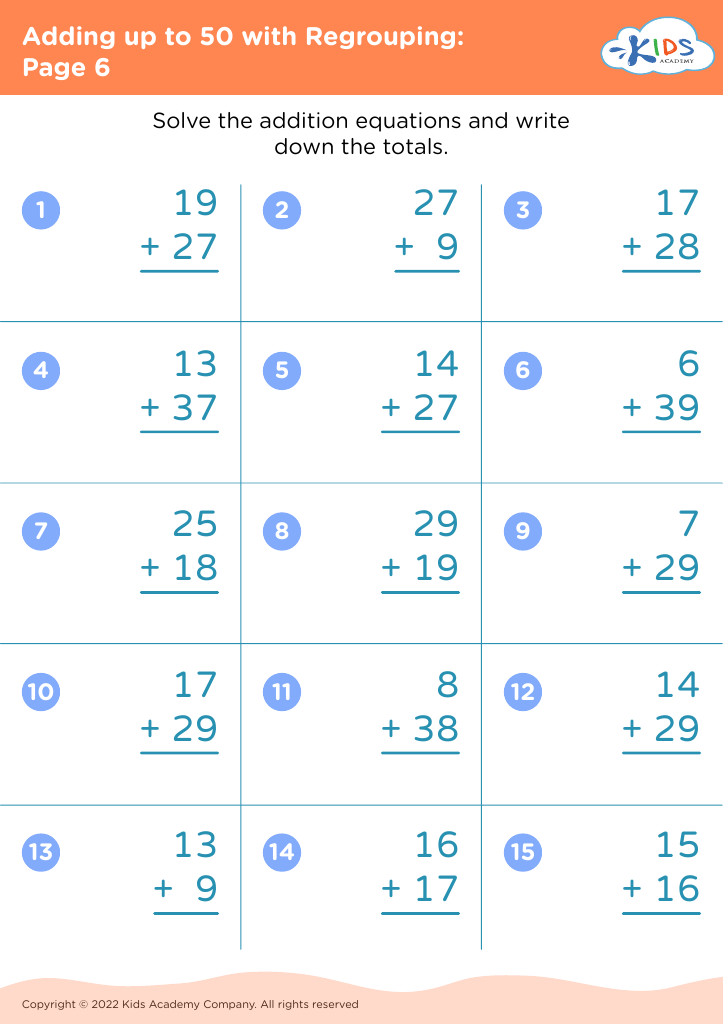
Adding up to 50 with Regrouping: Page 6
Worksheet
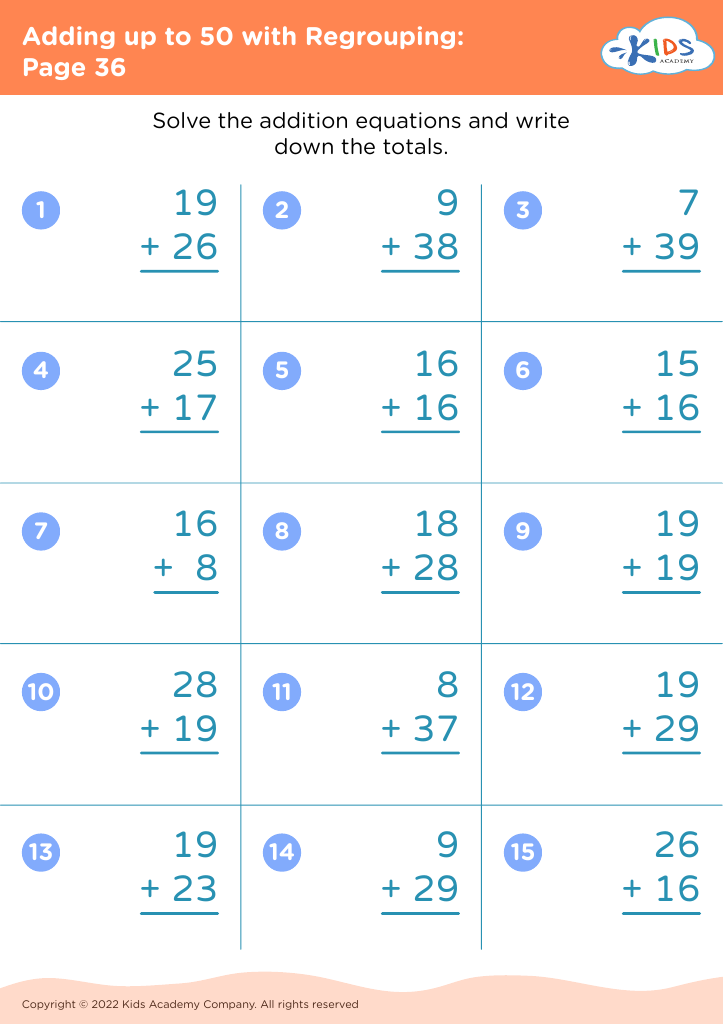
Adding up to 50 with Regrouping: Page 36
Worksheet
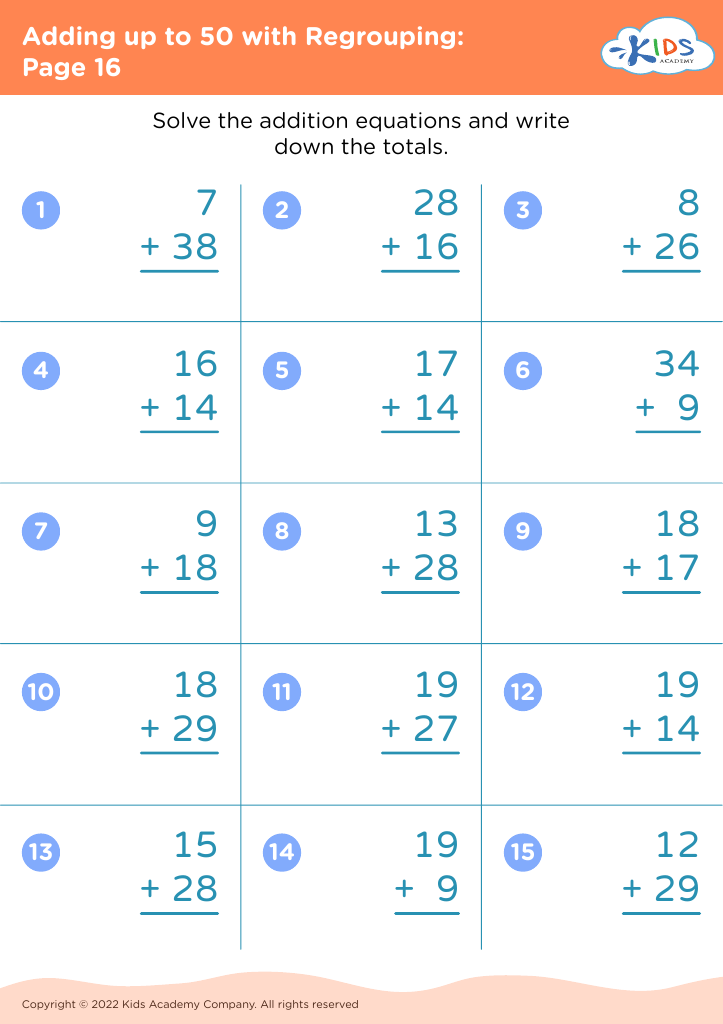
Adding up to 50 with Regrouping: Page 16
Worksheet
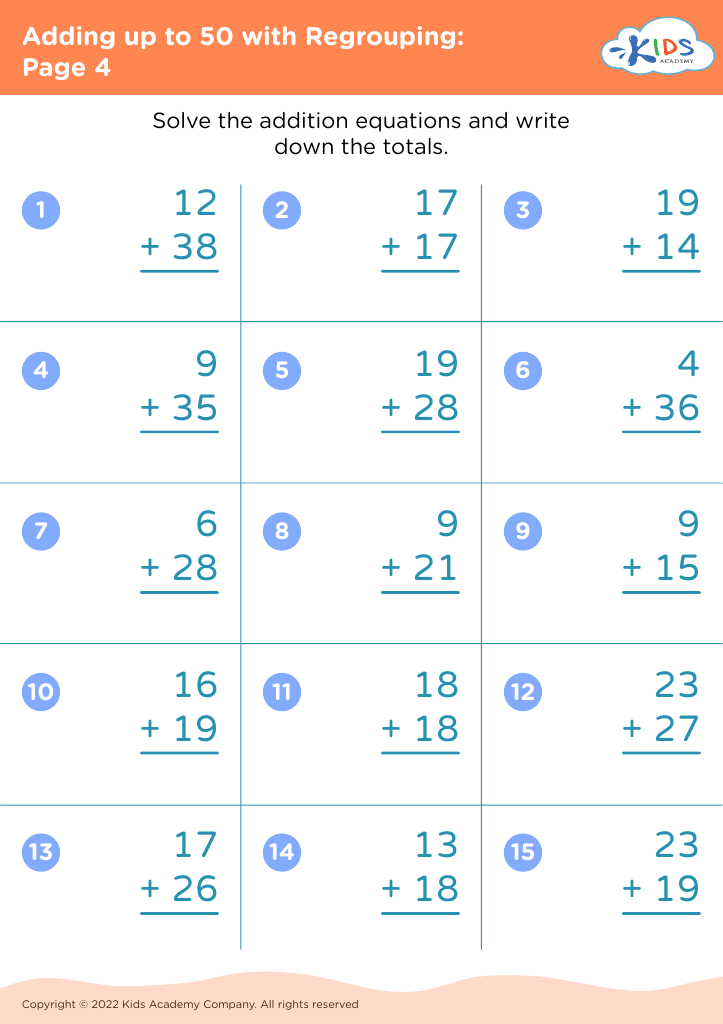
Adding up to 50 with Regrouping: Page 4
Worksheet
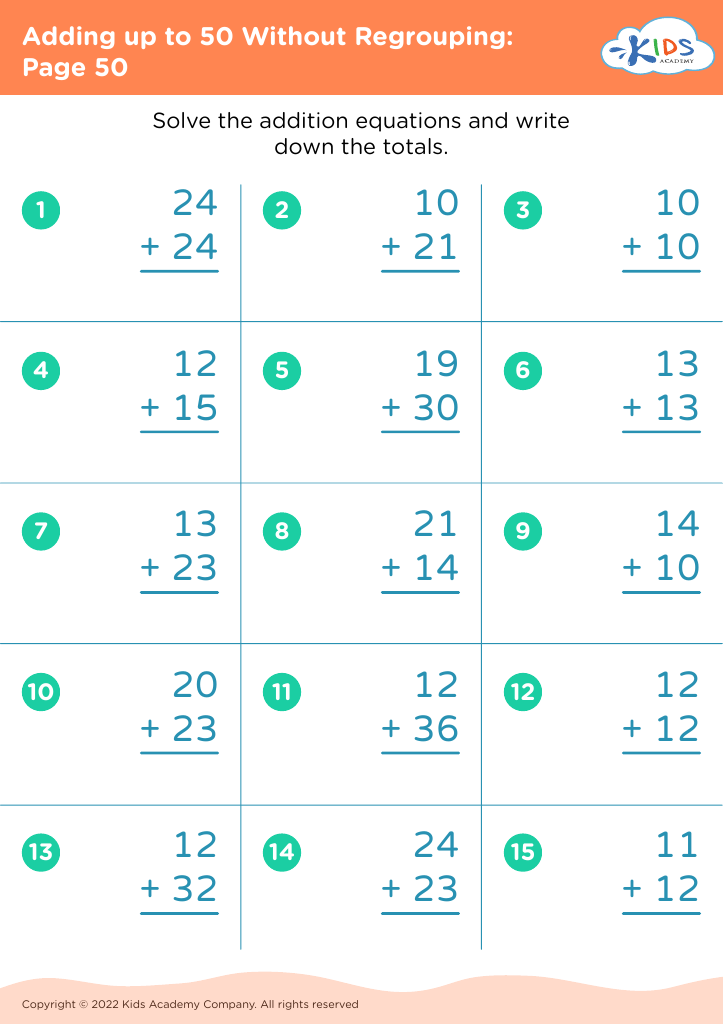
Adding up to 50 Without Regrouping: Page 50
Worksheet
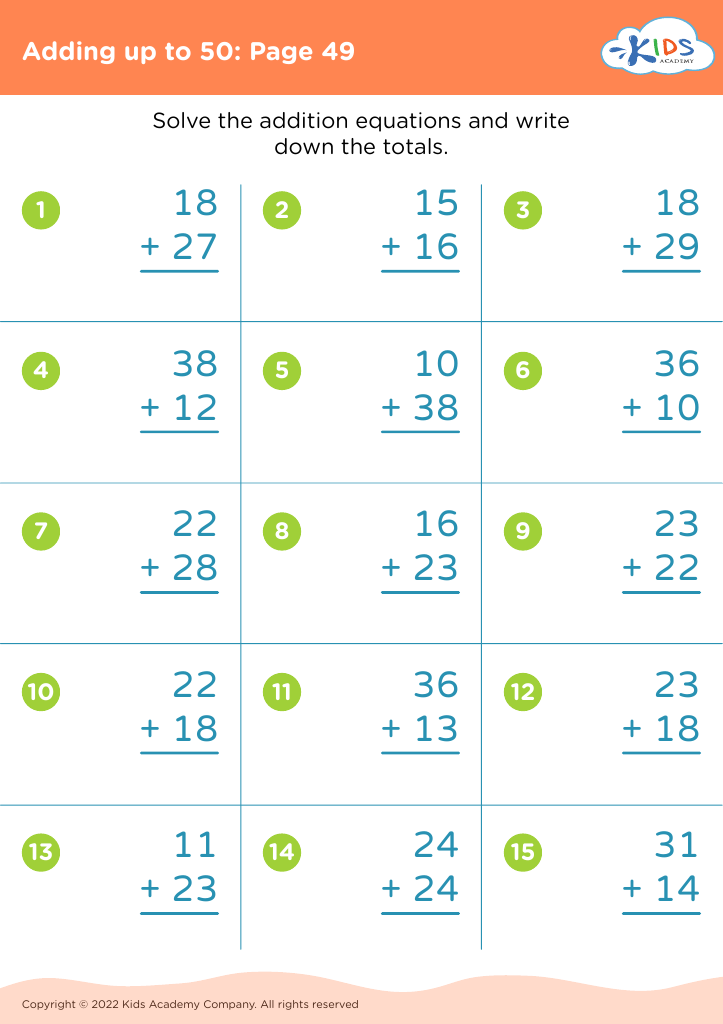
Adding up to 50: Page 49

Adding up to 50: Page 49

Adding up to 50: Page 49
Worksheet
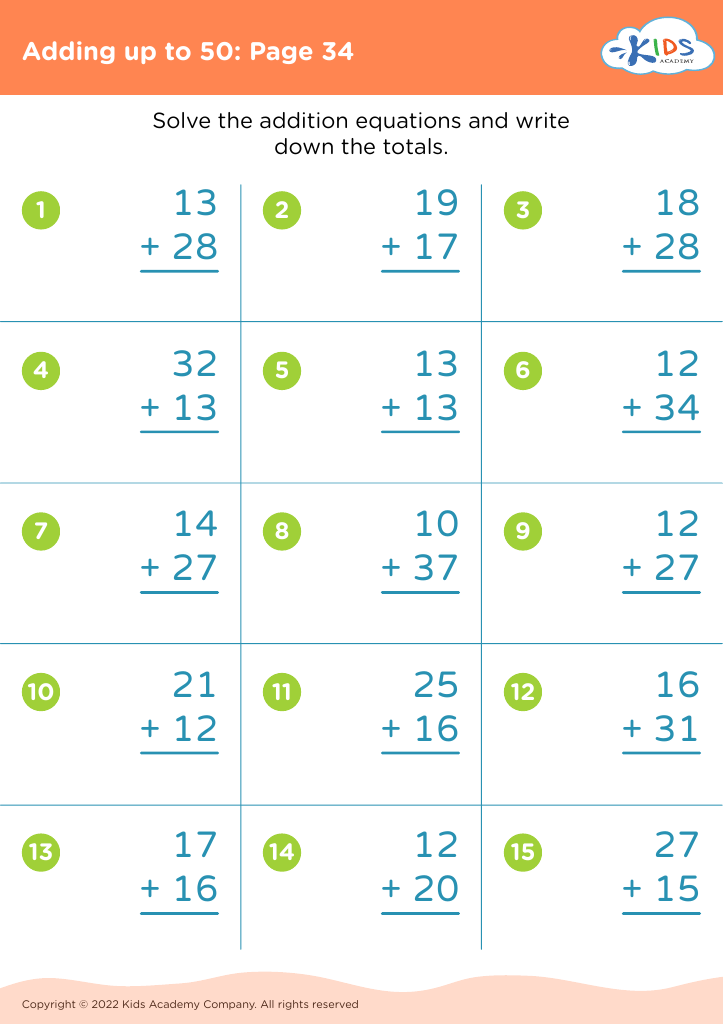
Adding up to 50: Page 34

Adding up to 50: Page 34

Adding up to 50: Page 34
Worksheet


Understanding fractions and their concepts is crucial for children ages 7-8, particularly when applying them to practical situations, like adding up to 50. At this age, children are developing critical thinking and problem-solving skills, and grasping fractions not only enhances their mathematical understanding but also builds a solid foundation for more advanced concepts in the future.

Fractions help children learn about parts of a whole, thereby improving their ability to make comparisons, understand ratios, and deal with percentages later on. When children learn to add fractions that equate to a sum like 50, they begin to understand the importance of equivalent fractions, which are essential in areas such as measurement and division.

Furthermore, engaging with fractions also promotes logical reasoning skills and encourages exploration. As teachers and parents present these concepts through everyday scenarios—like sharing food or measuring ingredients in cooking—it reinforces their relevance in life. This kind of hands-on practice deepens understanding and retention.

Ultimately, fostering strong foundational skills in fractions not only enhances mathematical confidence but also prepares children for real-world applications, helping them see math as an integral part of their lives. Parents and teachers play a key role in this educational journey, making it paramount to prioritize understanding fractions at this crucial age.