Visual Learning Addition and Subtraction Word Problems Worksheets for Ages 7-8
5 filtered results
-
From - To
Unlock the power of visual learning with our addition and subtraction word problems worksheets designed for ages 7-8. These engaging resources encourage young learners to visualize mathematical concepts, ensuring a deeper understanding of addition and subtraction. Each worksheet blends colorful, imaginative visuals with word problems to boost critical thinking and problem-solving skills. By combining visual aids with math problems, children will find learning both fun and effective. Tailored to cater to various learning styles, our worksheets are perfect for classrooms and home practice, helping your child master essential math skills with confidence and excitement. Explore now for joyful learning!
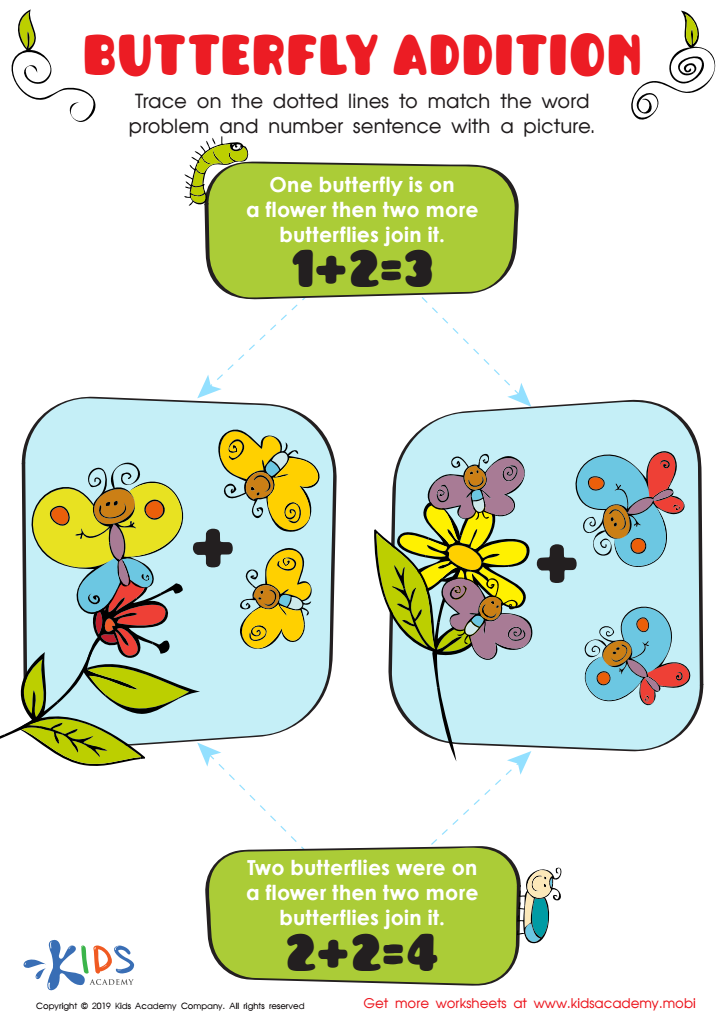
Butterfly Addition Worksheet
 Assign to My Students
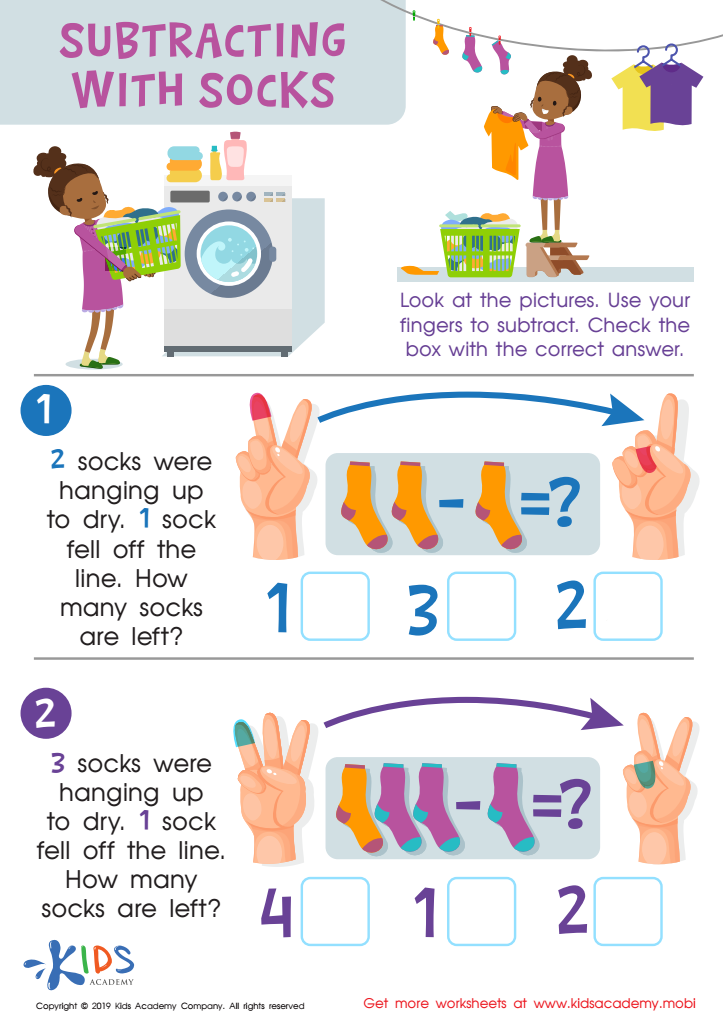
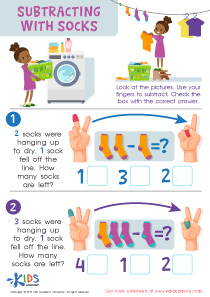
Subtracting Socks Worksheet
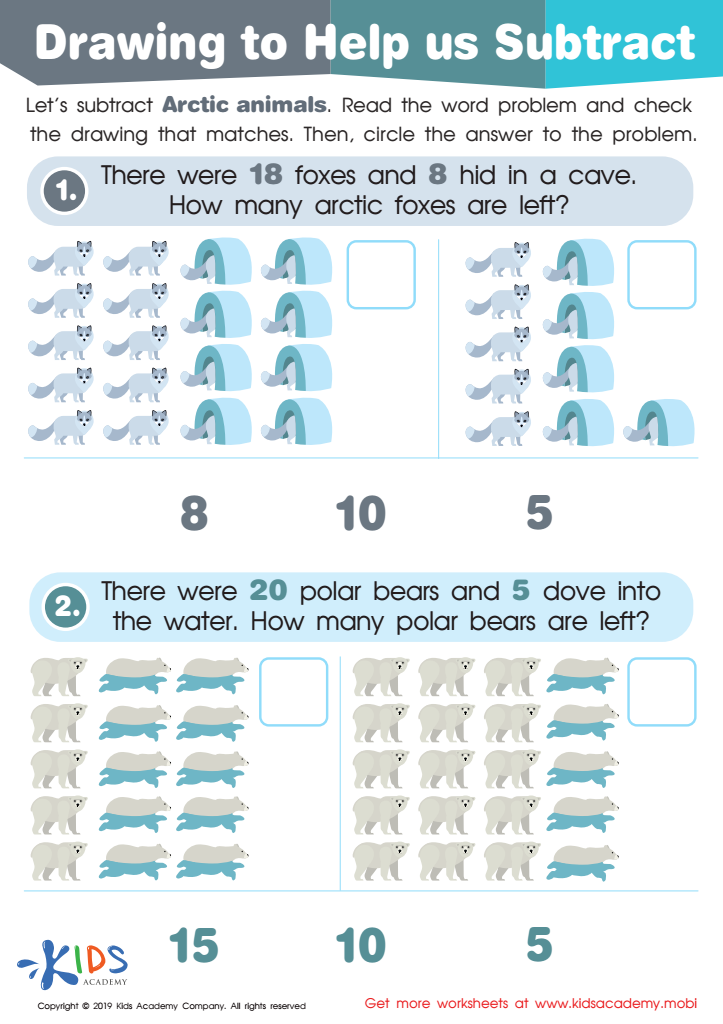
Drawing to Help Us Subtract Worksheet
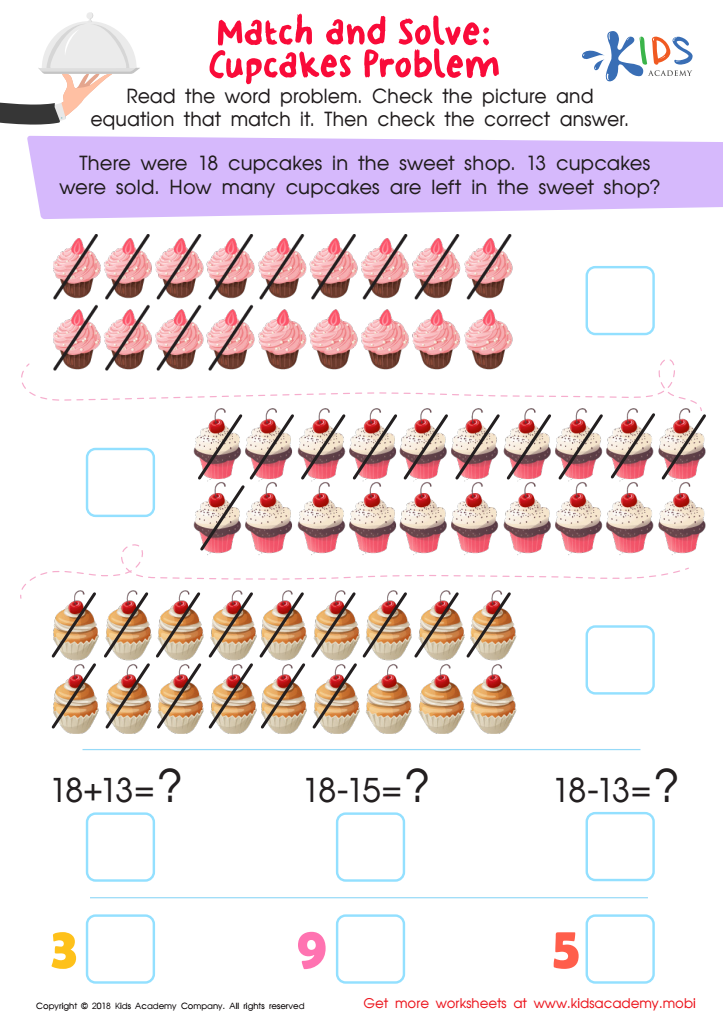
Match and Solve: Cupcakes Problem Worksheet
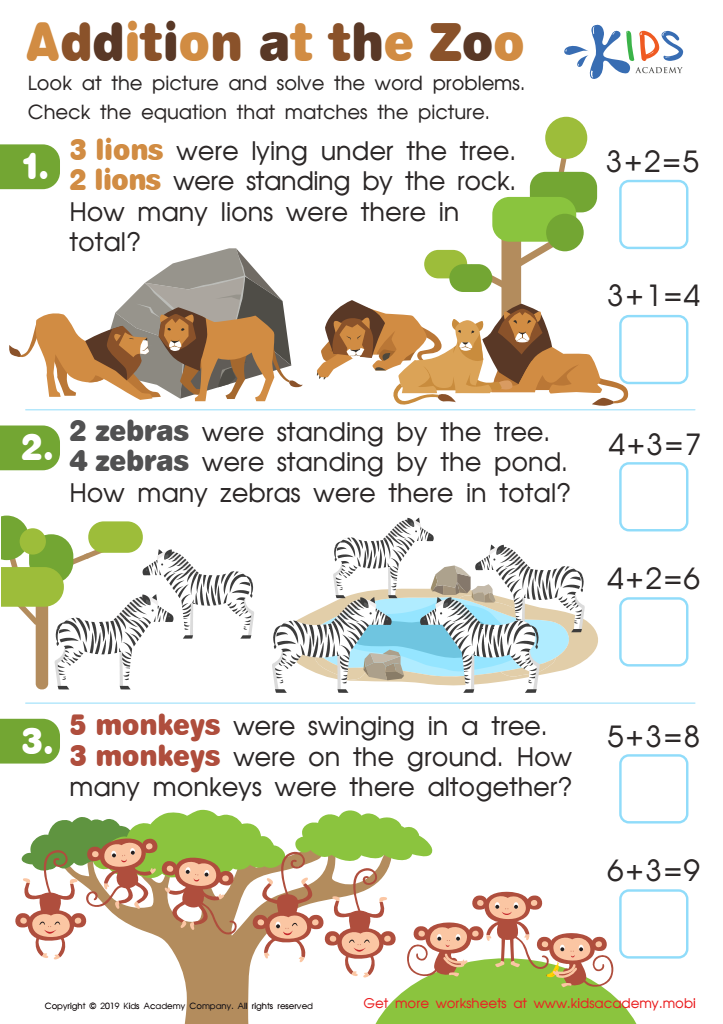
Addition at the Zoo Worksheet








Visual learning techniques for teaching addition and subtraction word problems to children aged 7-8 are crucial for several reasons. Firstly, young learners often grasp new concepts better when they can see them represented visually. By using objects, drawings, or graphical aids, children can better understand the abstract concepts of addition and subtraction, making these operations more concrete and relatable.
Moreover, visual learning helps in developing critical thinking and problem-solving skills. When students solve visual word problems, they don't just memorize arithmetic; they learn to approach problems from multiple angles. This method improves their ability to comprehend the relationships between numbers and enhances their overall mathematical reasoning.
Additionally, visual aids cater to diverse learning styles. Some children may struggle with textual or oral instructions but thrive when information is presented visually. This inclusive approach ensures that all students have the opportunity to succeed and build confidence in their mathematical abilities.
Lastly, incorporating visual learning techniques makes math engaging and fun. It transforms seemingly mundane arithmetic into interactive and stimulating activities. This positive experience can foster a lifelong love for learning and reduce math-related anxiety. Therefore, parents and teachers should prioritize visual learning strategies to support young learners' academic and emotional development.