Comparing numbers Addition & Subtraction Worksheets for Ages 7-8
4 filtered results
-
From - To
Discover our engaging "Comparing Numbers Addition & Subtraction Worksheets" designed specifically for children ages 7-8. These worksheets focus on enhancing essential math skills through the comparison of numbers, helping young learners grasp foundational concepts in addition and subtraction. Each worksheet features vibrant illustrations and age-appropriate exercises to make learning both enjoyable and effective. Perfect for reinforcing classroom lessons or providing valuable at-home practice, these resources enable children to confidently tackle number comparisons and simple arithmetic. Equip your 7-8 year olds with the skills they need to succeed in math while fostering a love for learning with our thoughtfully crafted worksheets!
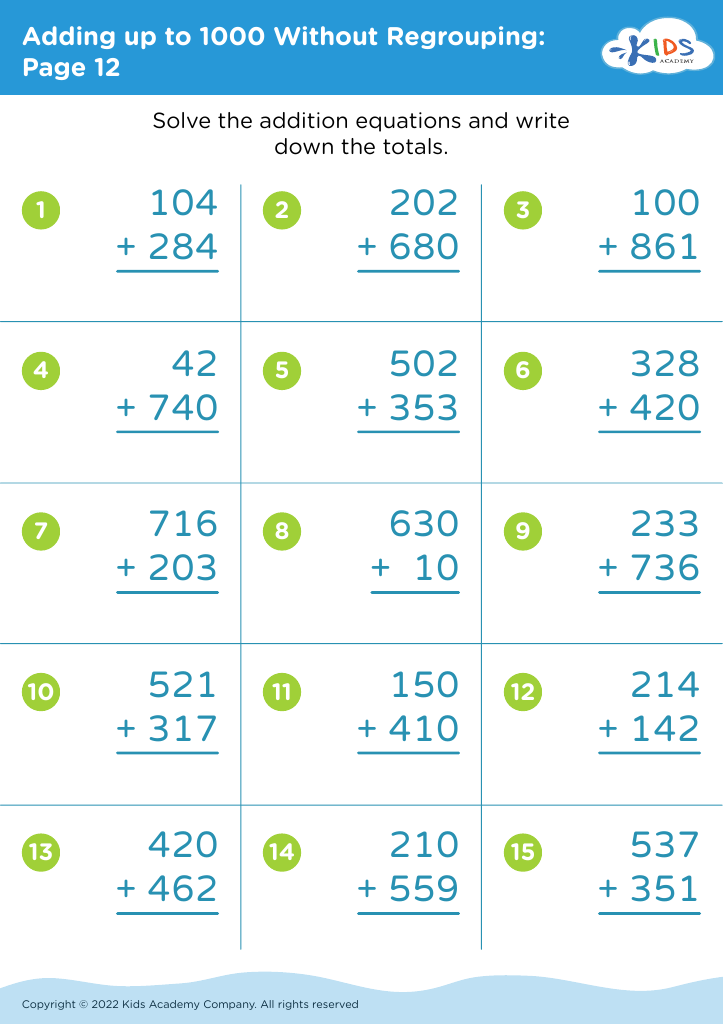
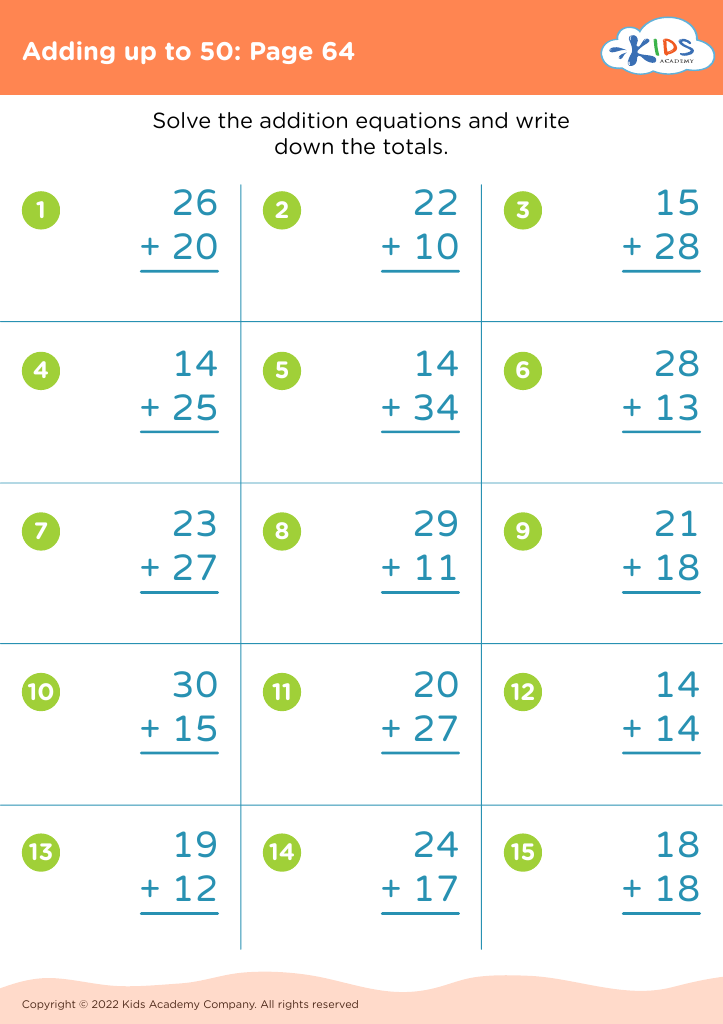
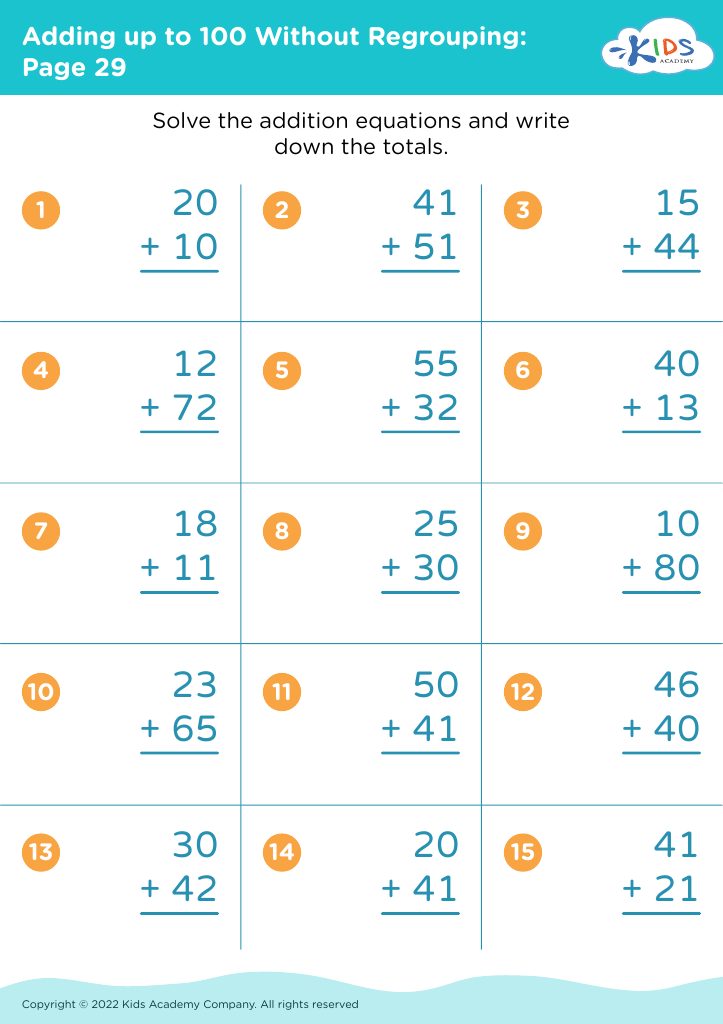
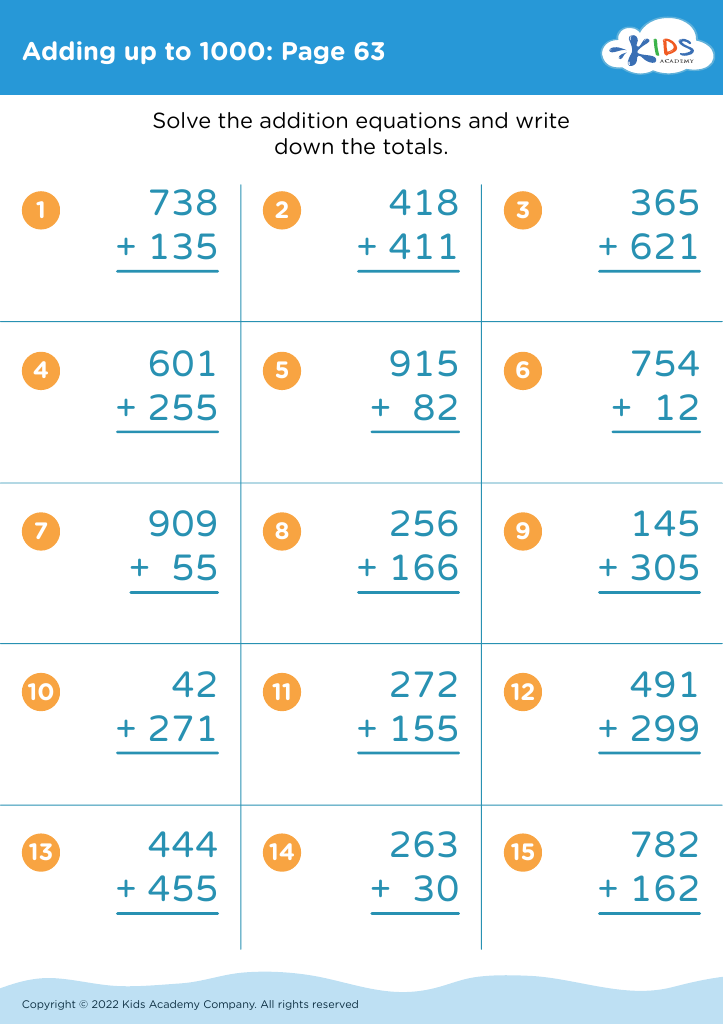








Understanding the concepts of comparing numbers, addition, and subtraction is crucial for children aged 7-8, as these skills form the foundation for more advanced mathematical understanding. At this stage, children encounter real-life situations where comparing quantities and performing basic arithmetic operations is essential. Parents and teachers should care about these skills because they enhance critical thinking and problem-solving abilities.
Comparing numbers teaches children the importance of understanding values in a practical context, preparing them for concepts like greater than, less than, and equal to. This foundational knowledge is applied in everyday scenarios, like managing money, measuring, or assessing changes in a quantity. Moreover, mastering addition and subtraction builds numerical fluency and promotes confidence, paving the way for success in future mathematical concepts, such as multiplication and division.
Additionally, these skills promote cognitive development and abstract thinking. By engaging children in activities that involve comparing numbers and solving addition and subtraction problems, parents and teachers foster an enjoyable learning atmosphere. This, in turn, increases students' motivation and curiosity about mathematics, laying the groundwork for lifelong mathematical skills important in both academic and real-world settings. Ultimately, a strong grasp of these concepts empowers children, preparing them for future academic challenges and daily life.








