Counting skills Addition & Subtraction Worksheets for Ages 7-8 - Page 6
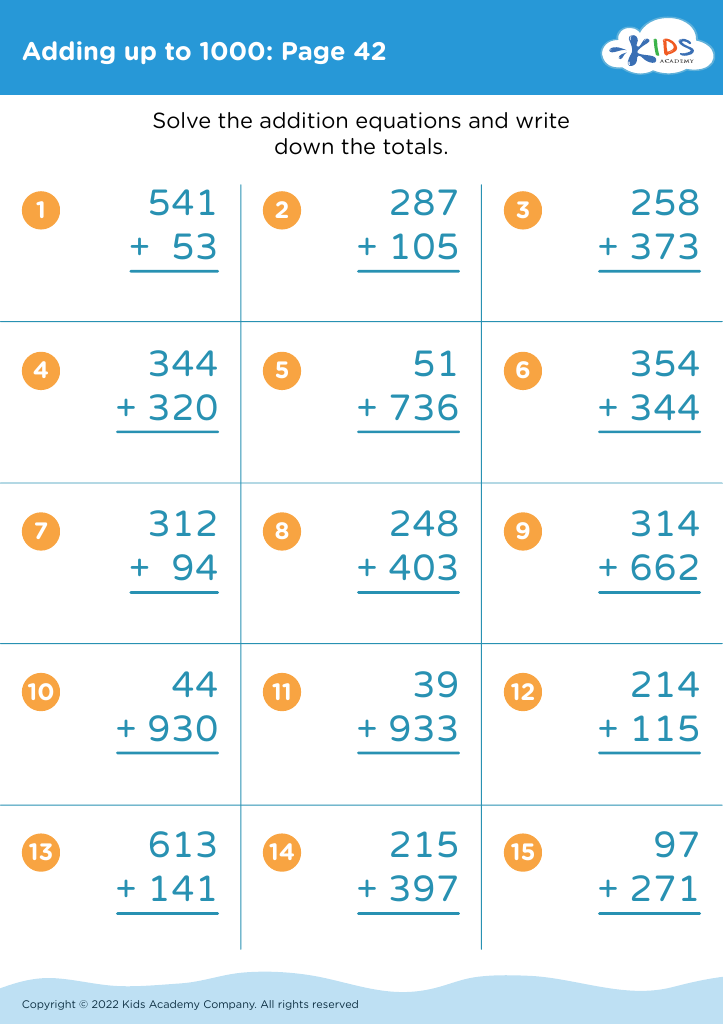
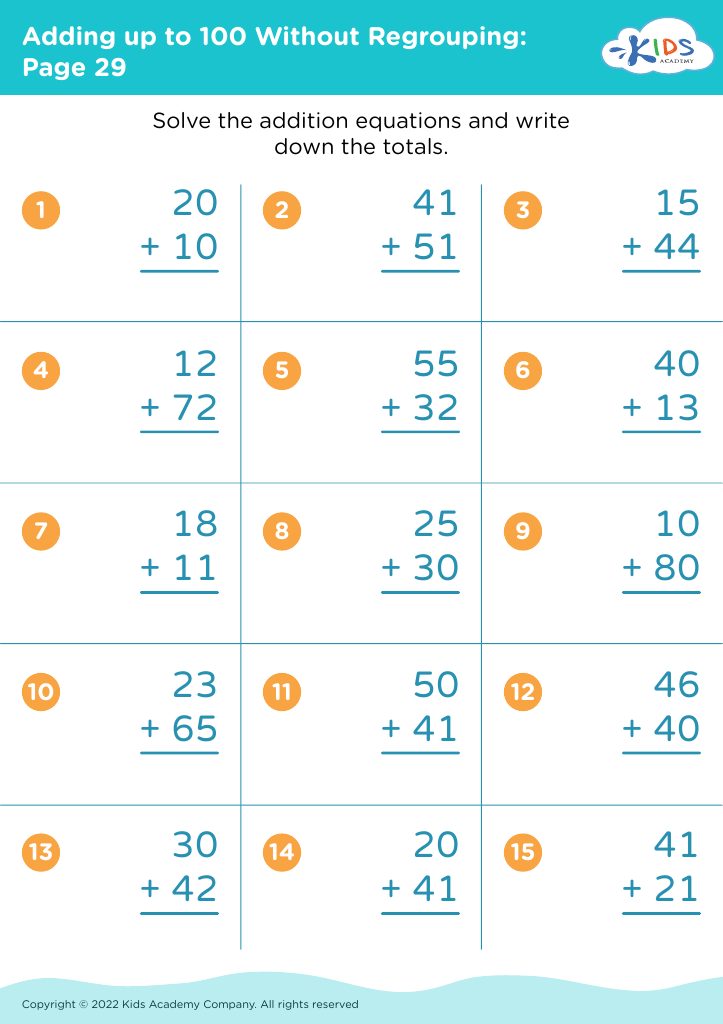
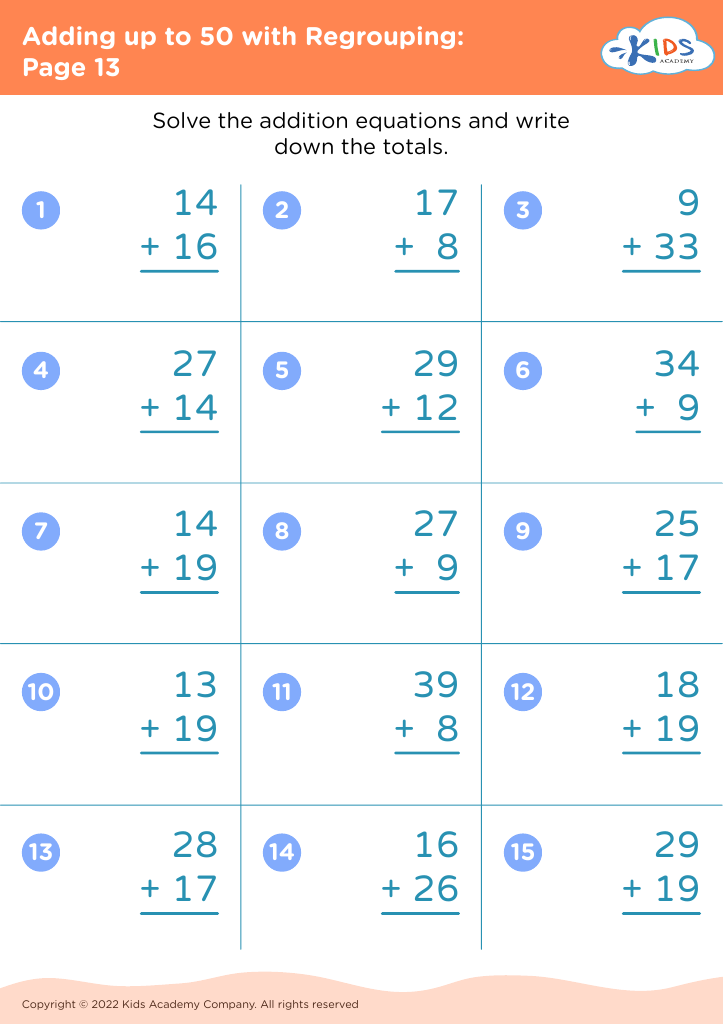
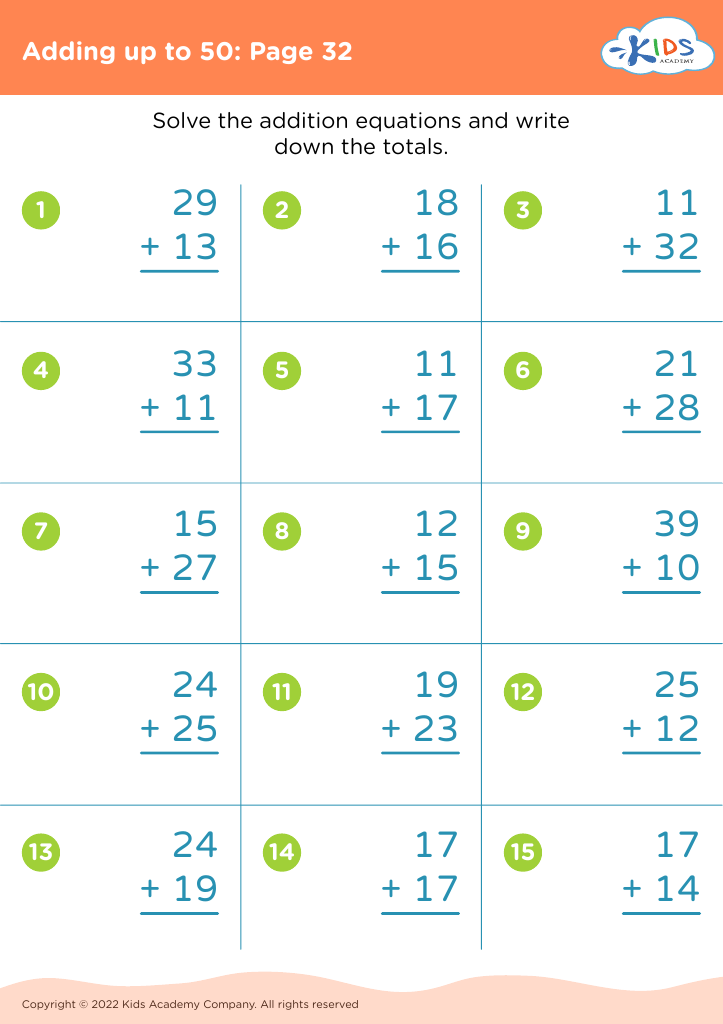



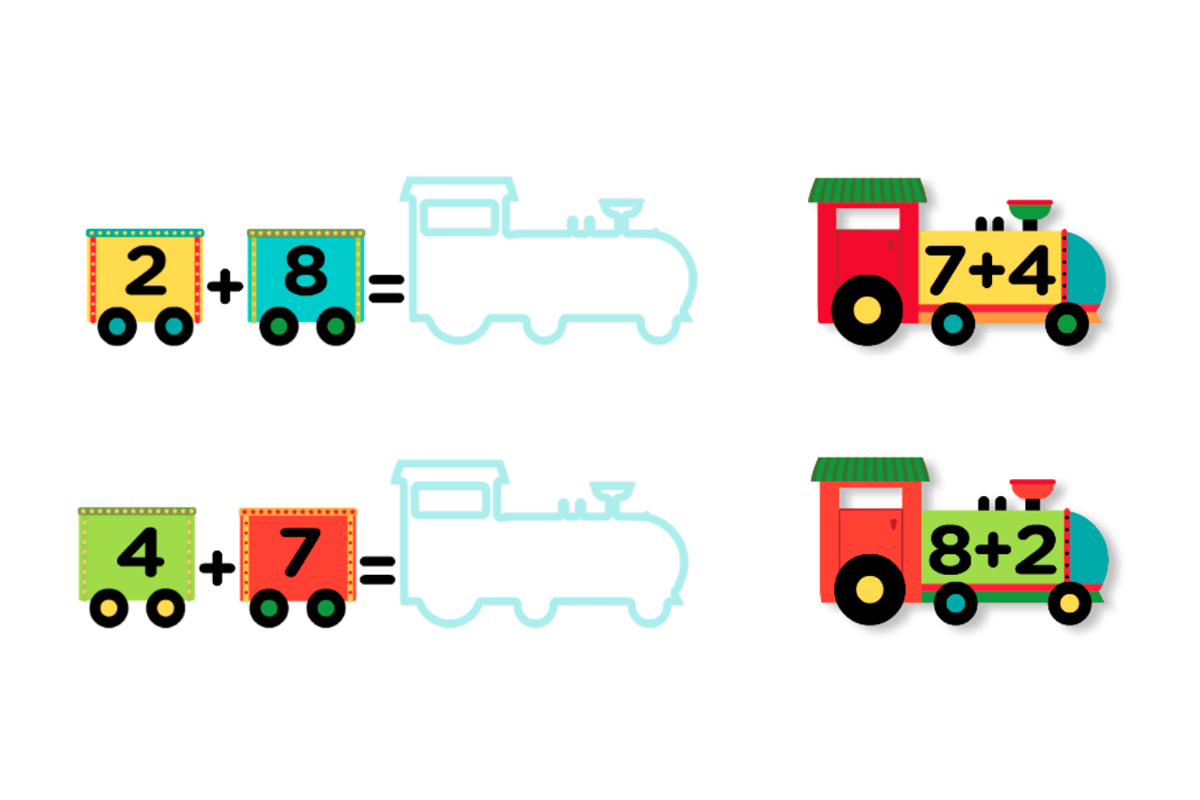




Counting skills, along with addition and subtraction, are vital building blocks in a child's mathematical development, especially for ages 7-8. Parents and teachers should care about these skills because they form the foundational understanding required for more complex math concepts. Mastery in these early arithmetic operations paves the way for academic success and confidence in subjects like algebra and geometry, which are crucial in STEM fields.
Furthermore, addition and subtraction are not just academic requirements but practical life skills. They aid in everyday activities such as managing money, understanding time, and even in playing games and sports which require scorekeeping. Proficiency in these areas helps children develop logical thinking and problem-solving skills, which are essential for decision-making processes in their future personal and professional lives.
A solid grasp of counting, addition, and subtraction also boosts cognitive development by enhancing memory, attention to detail, and sequencing abilities. When parents and teachers emphasize these skills, they are essentially helping children build a strong mathematical foundation, fostering a positive attitude towards learning, and equipping them with practical tools that are useful both inside and outside the classroom. Investing attention in these early stages will yield long-term benefits for a child's overall development and success.








