Enhancing logical thinking Addition & Subtraction Worksheets for Ages 7-8
3 filtered results
-
From - To
Boost your child's logical thinking skills with our engaging Addition and Subtraction worksheets designed specifically for ages 7-8. These worksheets challenge young learners to think critically and develop problem-solving strategies while mastering essential math concepts. Featuring a variety of fun and interactive exercises, children will enhance their reasoning abilities as they tackle addition and subtraction problems in creative ways. Perfect for classroom use or home practice, our resources foster a love for learning, making math enjoyable and accessible. Equip your child with the tools they need for academic success, and watch as their confidence and skills grow through enriching, thoughtful exercises.
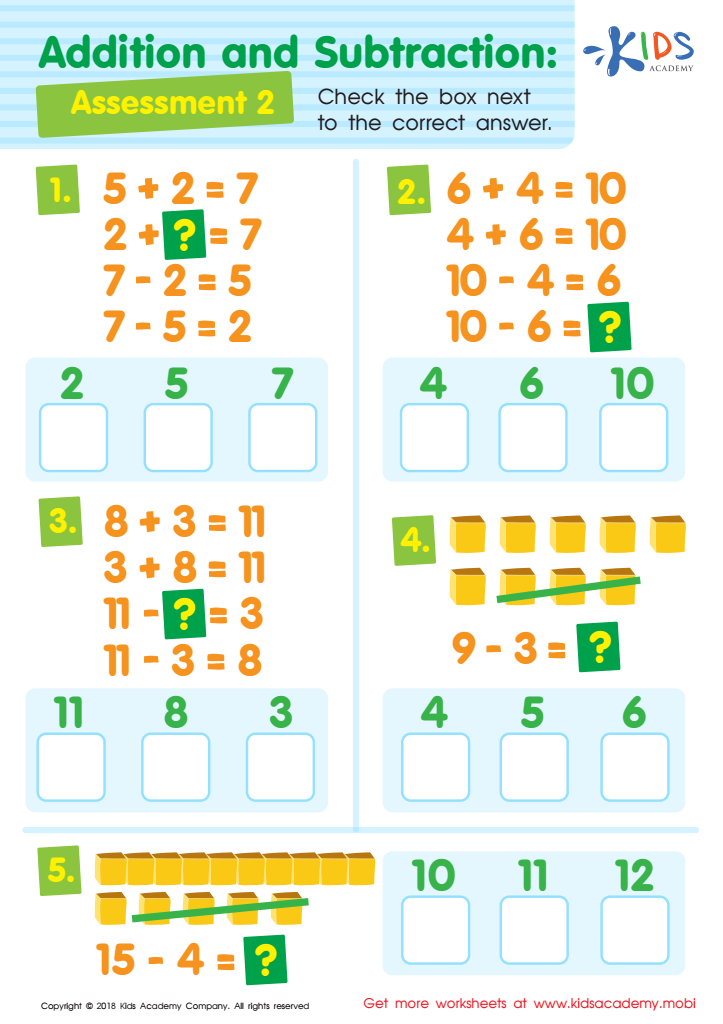
Addition and Subtraction Assessment 2 Worksheet
 Assign to My Students
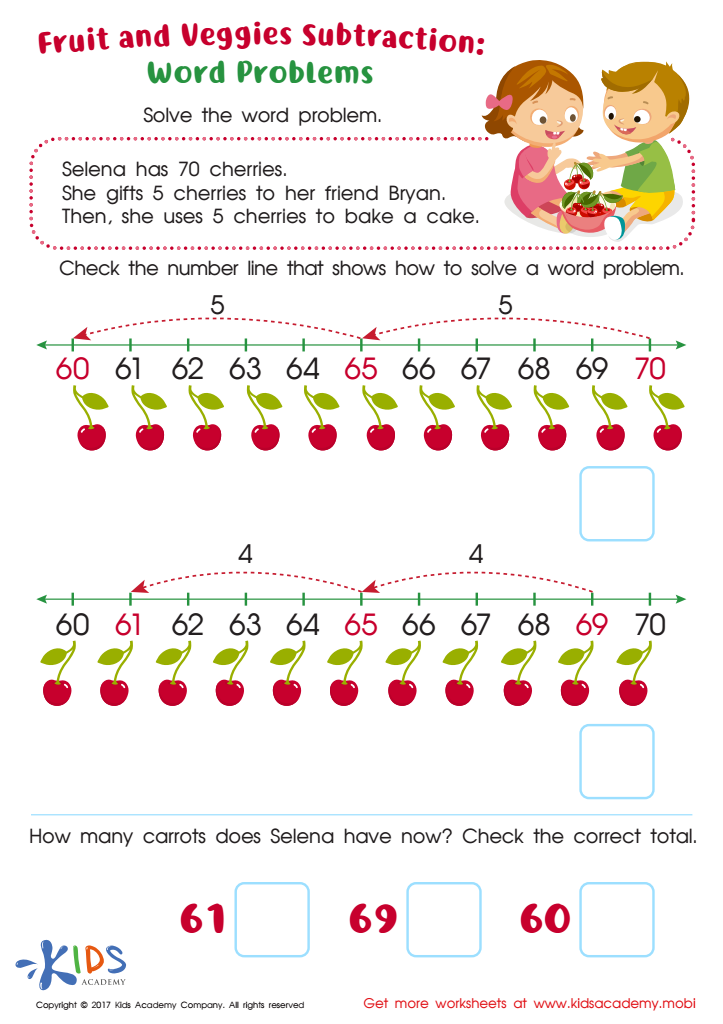
Subtraction Word Problems Free Printable
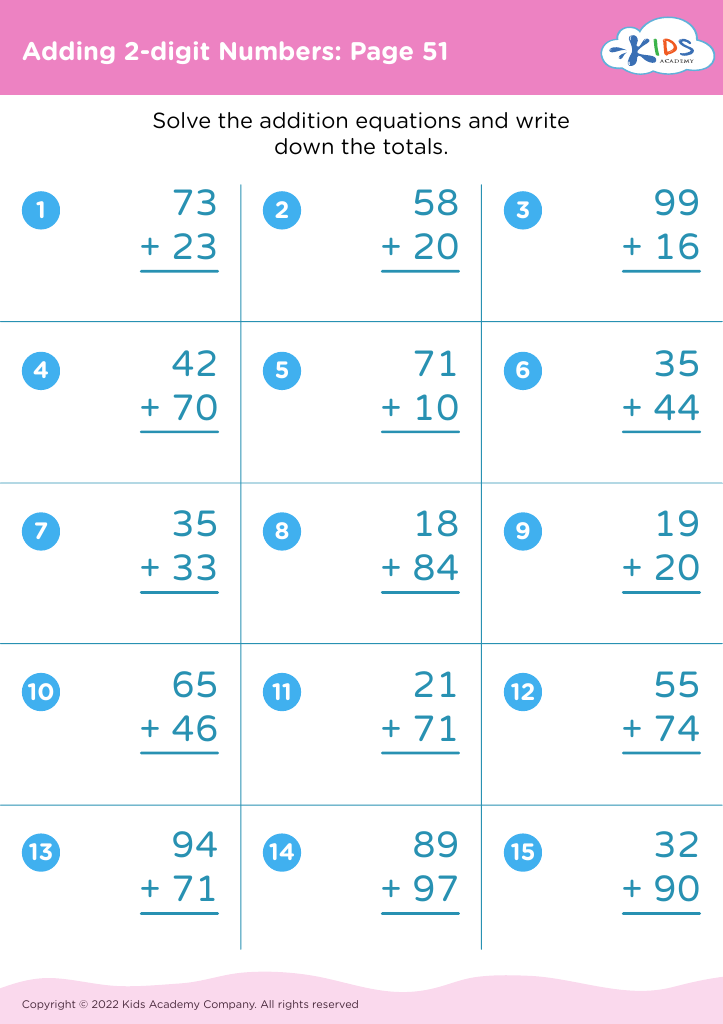








Enhancing logical thinking in addition and subtraction for children aged 7-8 is crucial for their cognitive development and overall academic success. At this age, children are transitioning from basic arithmetic to more complex mathematical concepts. Strengthening their logical thinking skills helps them understand the 'why' behind mathematical operations, rather than just memorizing steps.
Logical thinking fosters problem-solving abilities, enabling students to tackle not only math problems but also real-life situations. When children grasp how numbers relate to one another, they become more confident in using addition and subtraction flexibly, which is essential for tackling larger numbers and developing mental math skills.
Moreover, a solid foundation in these basic operations enhances performance in higher-level subjects like algebra and geometry, critical in later grades. Teachers and parents play a vital role in this developmental stage; by providing engaging activities, games, and puzzles, they can spark curiosity and encourage deeper understanding.
Ultimately, by focusing on logical thinking in addition and subtraction, parents and teachers equip children with the skills necessary for academic success and everyday reasoning, fostering lifelong learners who are equipped to navigate an increasingly complex world.








