Fine Motor Skills (coloring) Addition & Subtraction Worksheets for Ages 7-8
3 filtered results
-
From - To
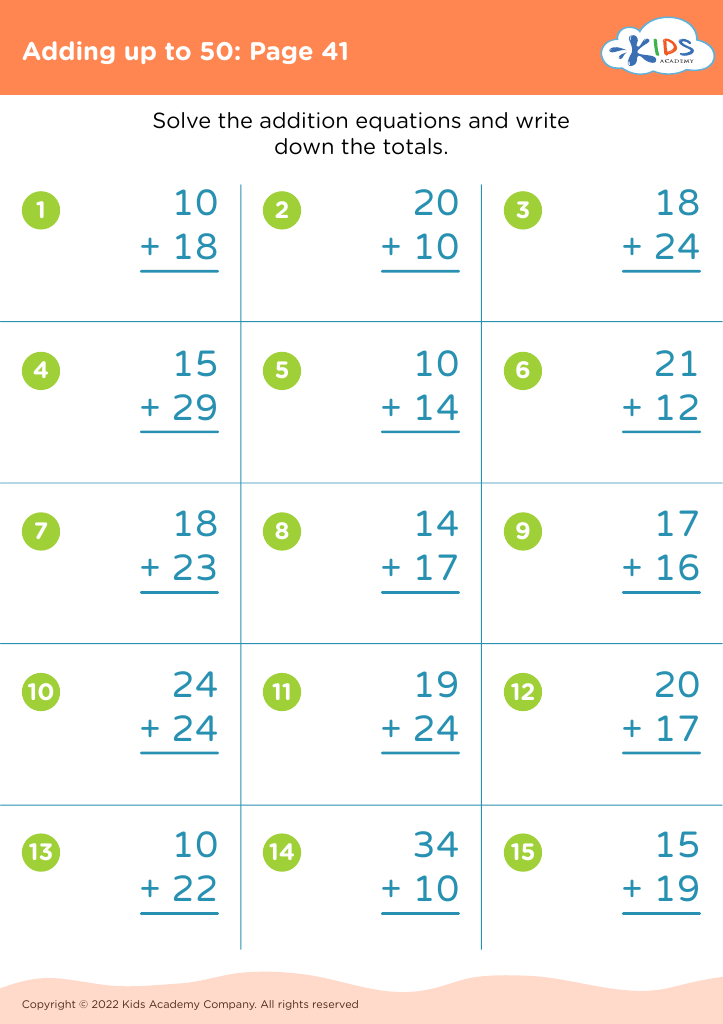
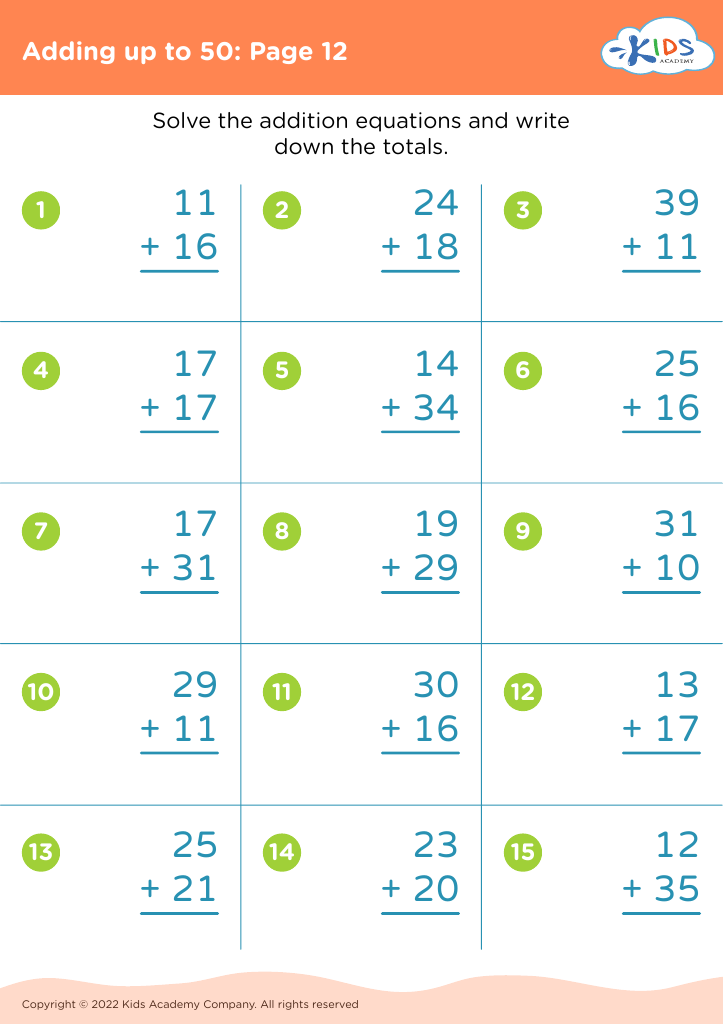
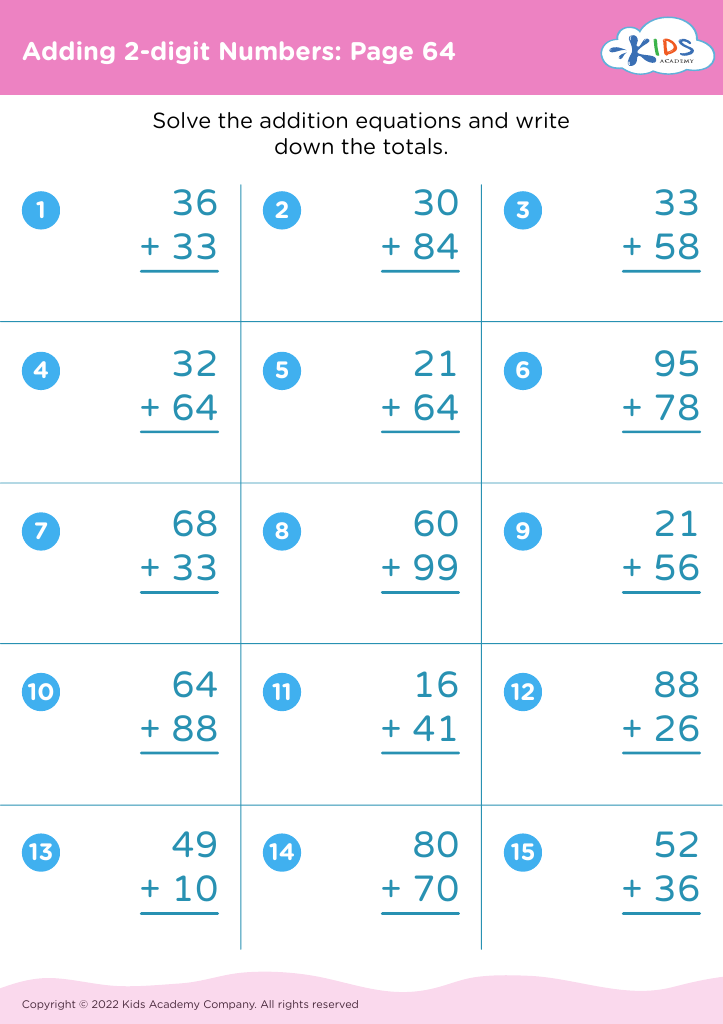
Enhance your child's fine motor skills while mastering addition and subtraction with our engaging worksheets for ages 7-8. These printable resources uniquely combine arithmetic practice with creative coloring fun, helping young learners develop coordination and control. Each worksheet features vibrant designs that encourage self-expression while reinforcing math concepts. As kids complete their calculations and add vibrant colors, they improve hand-eye coordination and dexterity—skills crucial for writing and other tasks. Perfect for home or classroom use, these worksheets provide a playful, educational experience that nurtures both math proficiency and fine motor development. Download now to inspire and entertain your child!








Fine motor skills are essential for children aged 7-8 as they form the foundation for numerous everyday tasks and academic activities. Activities like coloring not only promote creativity but also enhance fine motor coordination, hand-eye coordination, and grip strength. These skills enable children to write neatly, manipulate objects effectively, and perform self-care tasks, fostering independence.
In addition to fine motor development, engaging in activities like coloring and simple math operations such as addition and subtraction helps reinforce cognitive skills. When children color, they practice staying within lines, which translates into better writing control. Teaching math concepts through hands-on activities allows them to grasp fundamental numerical ideas in a tangible way, making learning more enriching and fun.
Furthermore, these skills support literacy development as writing and drawing are integral to expressing ideas. When parents and teachers prioritize fine motor skills alongside academic learning, they equip children with the tools necessary for success, both in school and in life. Nurturing these abilities not only boosts confidence but also enhances problem-solving skills, contributing to overall cognitive growth. In sum, the integration of fine motor skills in learning activities is crucial for comprehensive child development.








