
Handwriting practice Addition & Subtraction Worksheets for Ages 7-8
5 filtered results
Difficulty Level
Grade
Age
-
From - To
Subject
Activity
Standards
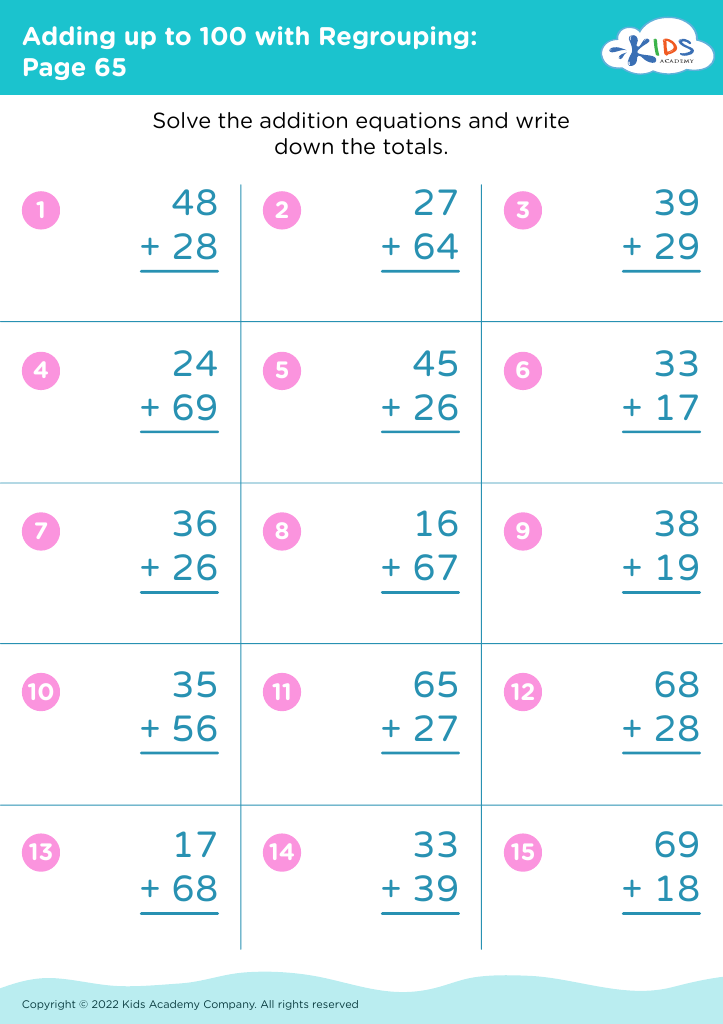
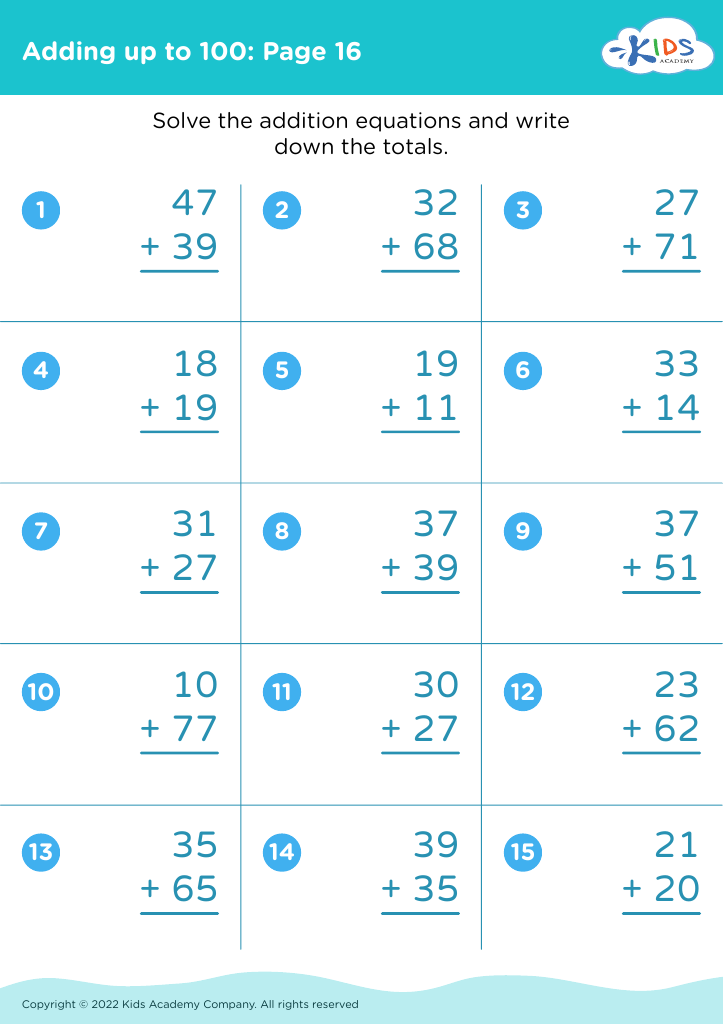
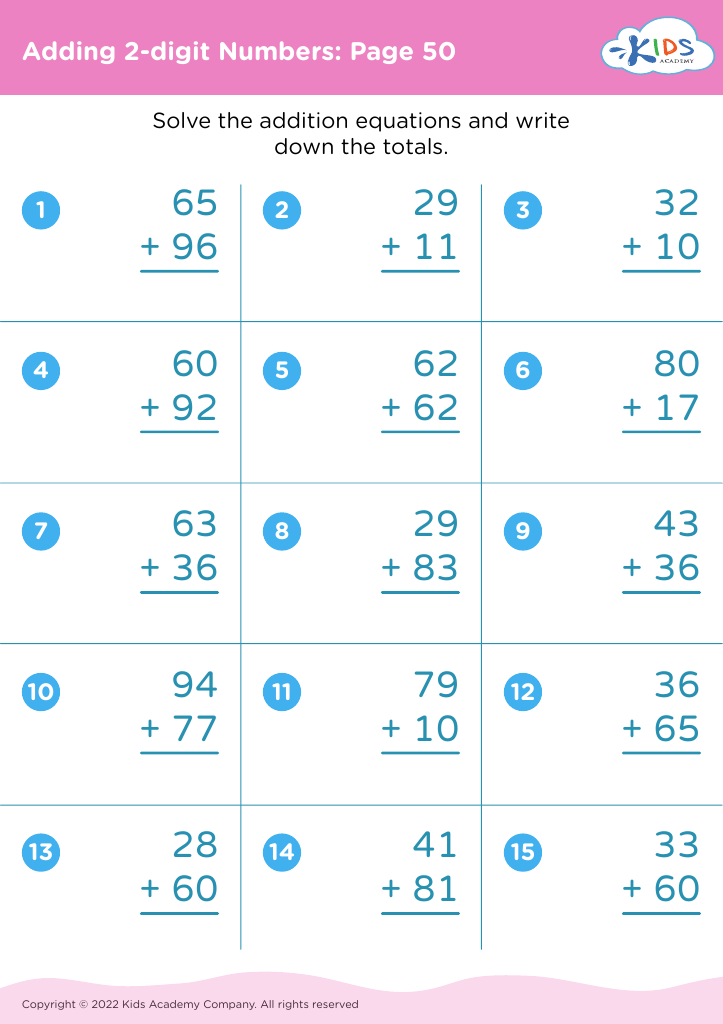
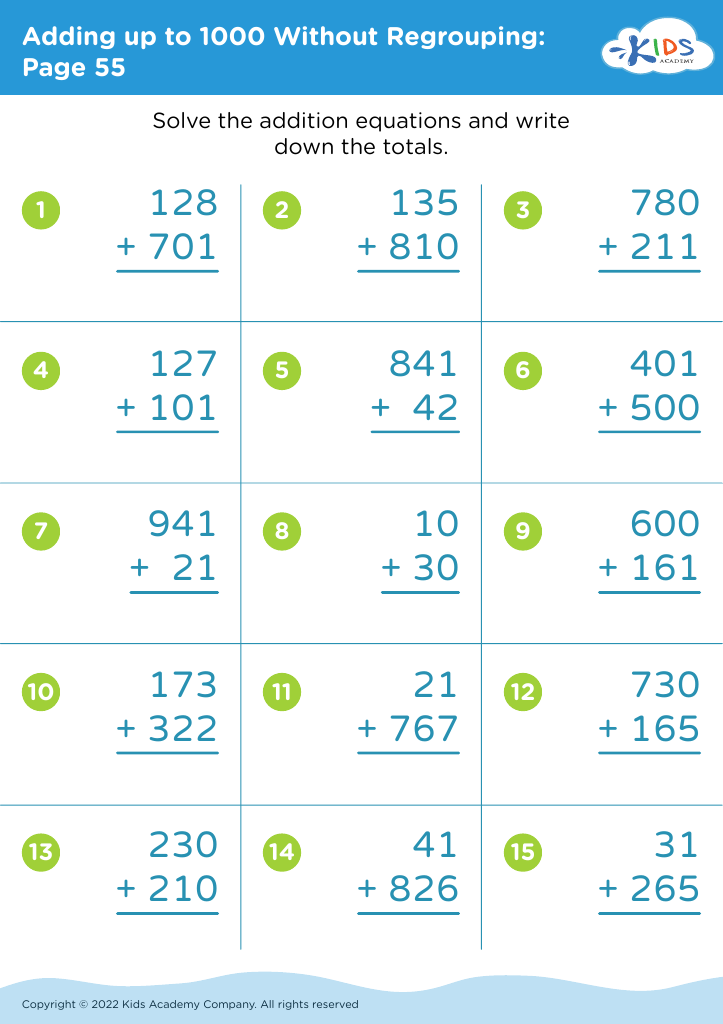
Boost your child's learning with our Handwriting Practice Addition & Subtraction Worksheets designed for ages 7-8. These engaging worksheets combine essential math skills with handwriting development, helping young learners enhance their number writing alongside basic addition and subtraction concepts. Each worksheet is thoughtfully crafted to encourage precision in both calculation and penmanship, ensuring that your child gains confidence and proficiency in their math abilities. Perfect for classroom or home use, these printables provide a fun, interactive way to master math basics while strengthening fine motor skills. Help your child succeed with these invaluable learning resources today!
Favorites
With answer key
Interactive
Join Kids Academy for Free
Who is primarily going to use this learning content?








Handwriting practice for addition and subtraction is crucial for children aged 7-8, as it intertwines foundational math skills with motor skills development. As children transition from learning to write to writing to learn, neat handwriting becomes essential for clear communication of mathematical concepts. Practice helps them master number formation, reinforcing number recognition and aiding in problem-solving.
Furthermore, this age marks a significant shift in mathematical understanding, where abstract concepts are introduced. By neatly recording their calculations, children enhance their ability to track their work, reducing errors and fostering confidence in their problem-solving skills. Legible handwriting ensures that each step of a solution can be easily followed, allowing educators and parents to effectively provide support and guidance.
Moreover, the process of writing assists with cognitive memory, helping children recall procedures and strategies for addition and subtraction. As they practice, students also develop patience and focus—essential skills both in math and overall education.
By prioritizing handwriting practice in math, parents and teachers can equip children with the tools they need to succeed academically while instilling positive habits that benefit all areas of learning. Cultivating both proficiency and care in their work lays a strong foundation for future education.








