Improves counting skills Addition & Subtraction Worksheets for Ages 7-8
5 filtered results
-
From - To
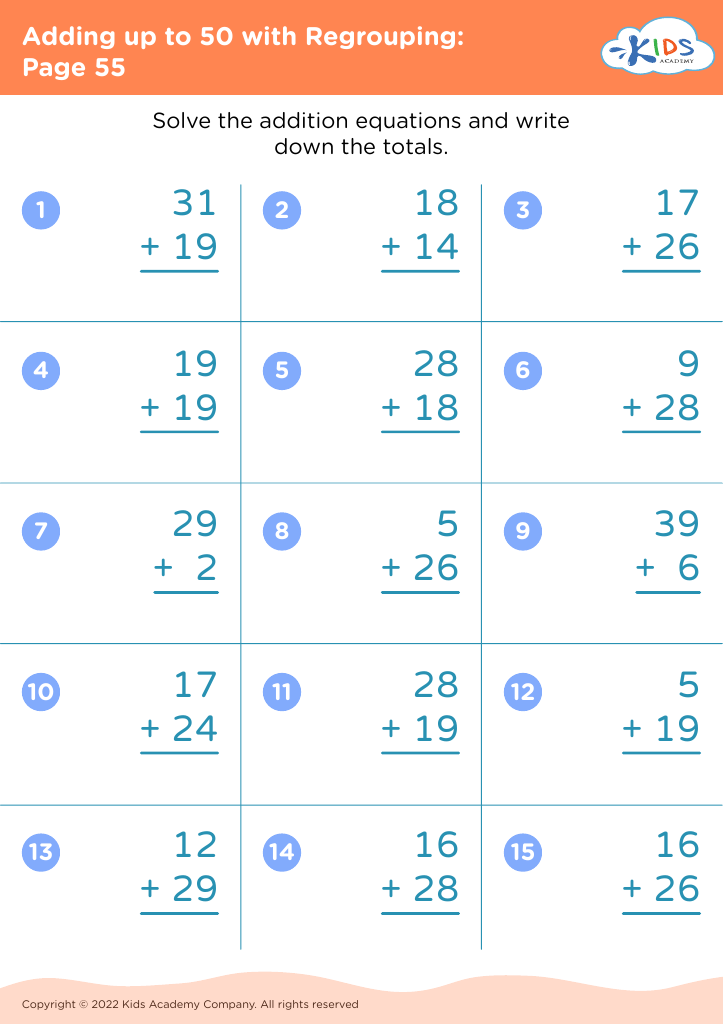
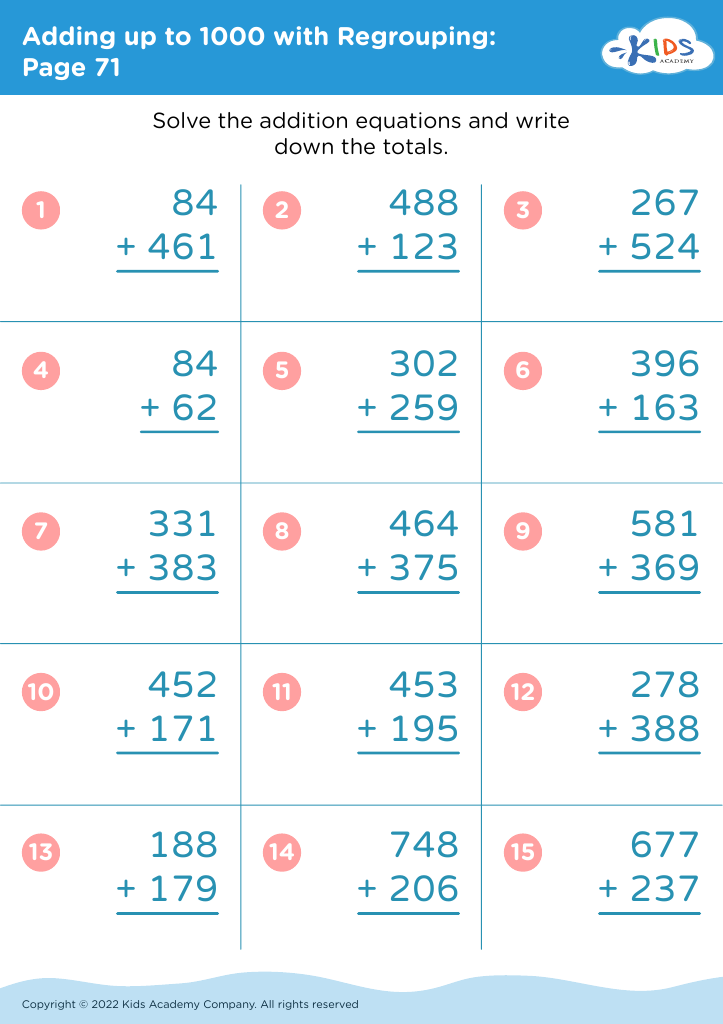
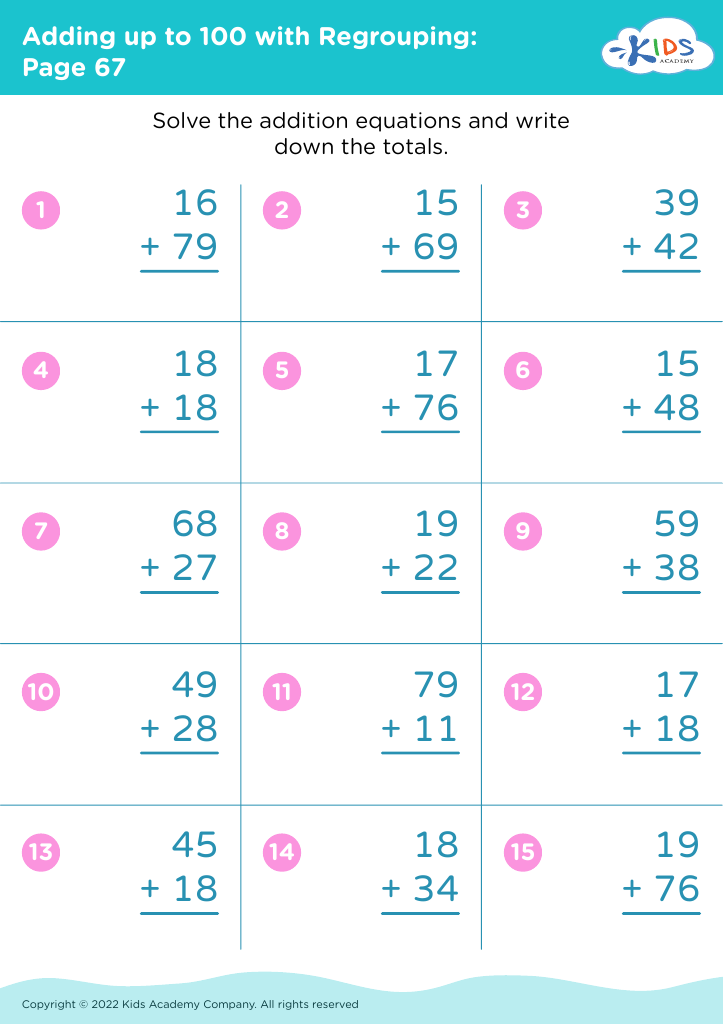
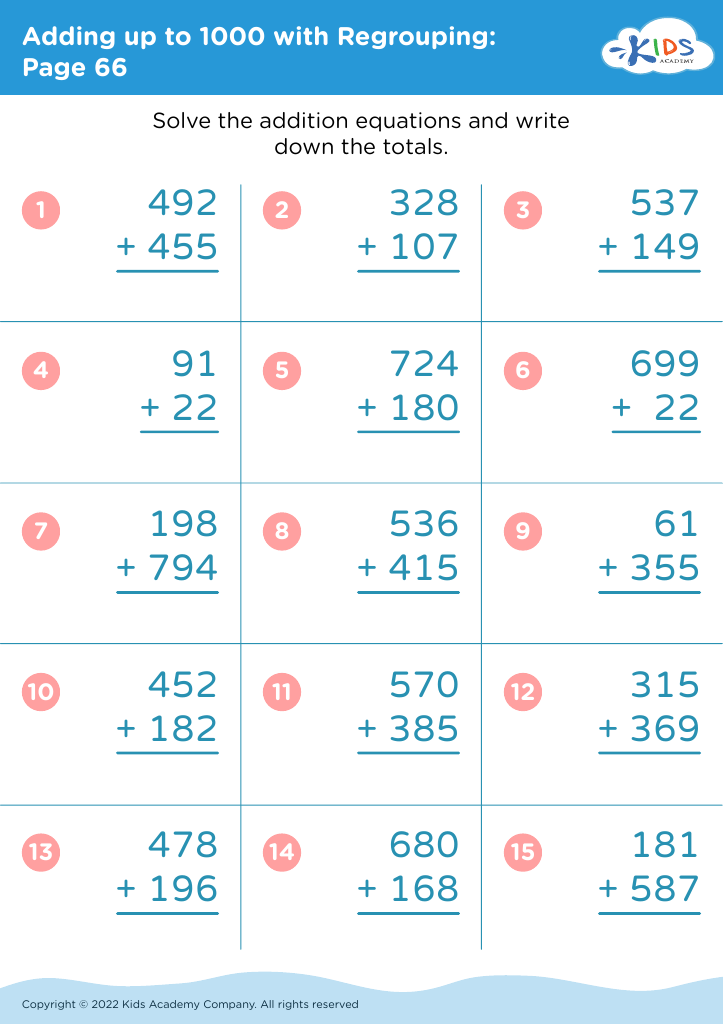
Enhance your child's counting skills with our engaging Addition and Subtraction Worksheets designed for ages 7-8. These printable resources offer a rich variety of fun and interactive activities, aimed at reinforcing fundamental math concepts through hands-on practice. Each worksheet is crafted to challenge and motivate young learners, fostering a solid understanding of basic arithmetic while boosting confidence in their abilities. Parents and teachers alike can use these worksheets to track progress and encourage math fluency. Discover the joy of learning as your child conquers addition and subtraction, paving the way for future academic success! Start their math journey today!
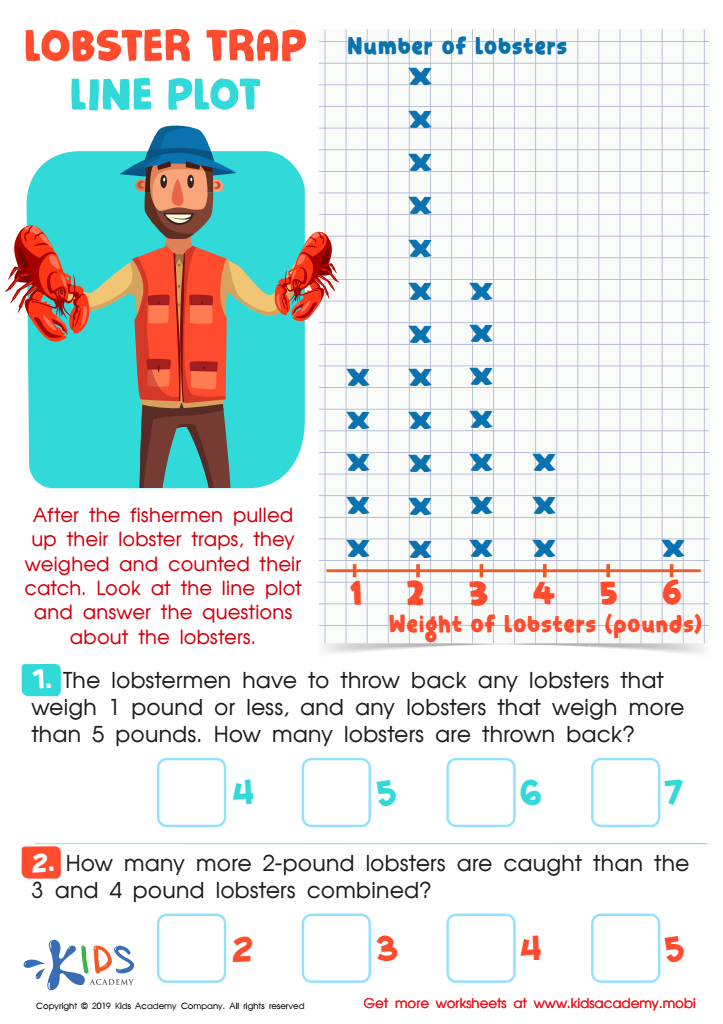
Lobster Trap Line Plot Worksheet
 Assign to My Students








Parents and teachers should prioritize the improvement of counting skills and the mastery of addition and subtraction for children aged 7-8, as these are fundamental building blocks for all future mathematical learning. At this age, children are transitioning from concrete operations to more abstract thinking. Strong counting skills facilitate not only basic arithmetic but also foster problem-solving abilities essential for advanced math concepts.
Improved counting skills enhance a child’s confidence in tackling more complex problems and reduce math anxiety, a common hurdle in education. Mastery of addition and subtraction lays the groundwork for an understanding of more sophisticated mathematical concepts, such as multiplication, division, and fractions, which children will encounter in later grades.
Furthermore, developing these skills supports cognitive growth by promoting logical reasoning and critical thinking. Beyond academics, these abilities are applicable in everyday situations, such as handling money or time management. Involving both parents and teachers in nurturing these skills ensures a cohesive approach to learning, allowing children to see the relevance of math in real-life scenarios. Ultimately, fostering strong counting skills and basic arithmetic not only prepares children for academic success but also equips them with essential life skills.








