Improving mathematical skills Addition & Subtraction Worksheets for Ages 7-8
4 filtered results
-
From - To
Enhance your child's mathematical abilities with our carefully designed Addition & Subtraction Worksheets for ages 7-8. These engaging and educational resources focus on developing core arithmetic skills through fun, illustrated problems. Our worksheets provide a variety of exercises that help young learners improve their accuracy and speed in solving addition and subtraction questions. Perfect for both classroom use and at-home practice, these activities build confidence and lay a solid foundation for future math success. Strengthen your child's knowledge and watch their skills grow with our expertly crafted, age-appropriate worksheets from Kids Academy.
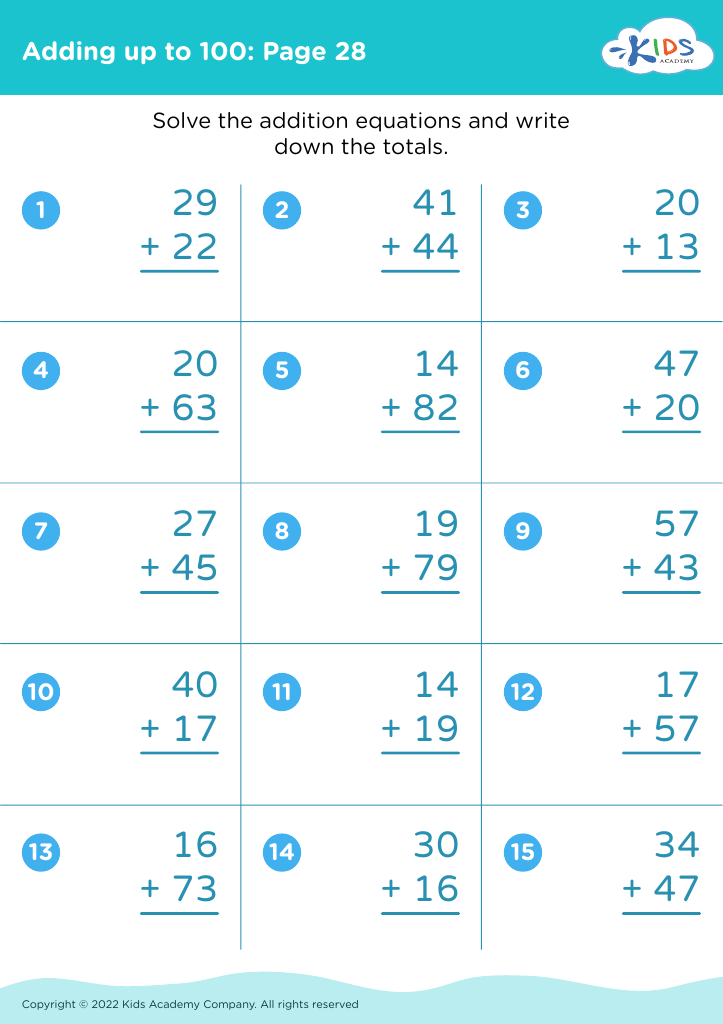
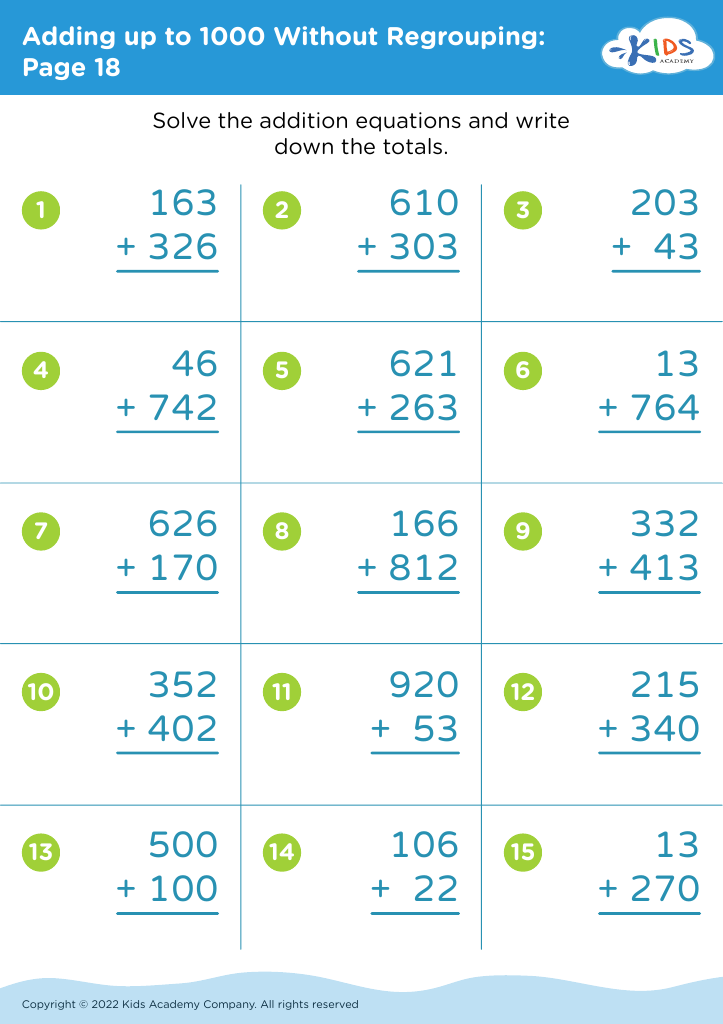
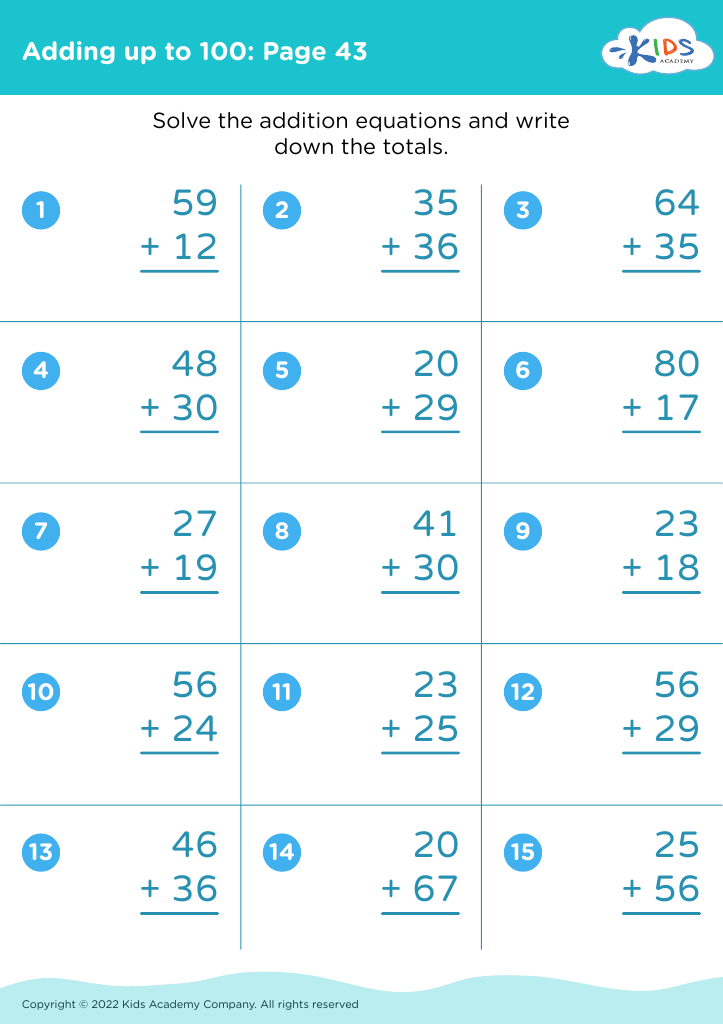
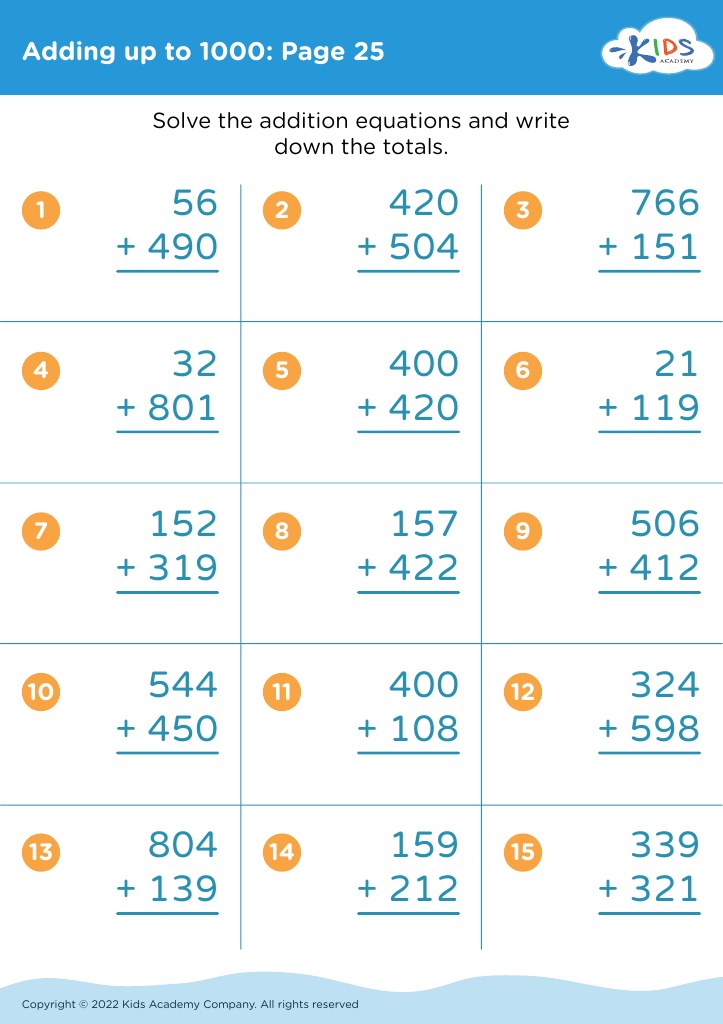








Improving mathematical skills in addition and subtraction for children aged 7-8 is crucial for several reasons. At this age, these fundamental arithmetic skills form the building blocks for more advanced mathematical concepts. Developing proficiency in addition and subtraction not only boosts a child's confidence but also lays the groundwork for learning multiplication, division, and fractions later on.
For teachers, focusing on these skills helps ensure that all students are keeping pace with the curriculum and achieving key learning milestones. Effective teaching of addition and subtraction can foster a sense of achievement and positive attitude towards mathematics, reducing math anxiety from an early age.
For parents, being engaged in their child's mathematical development enriches the child's learning experience. It offers opportunities for real-world applications and practical learning, such as counting money, measuring ingredients for recipes, or calculating distances. These everyday examples reinforce the importance and utility of math, making learning both relevant and fun.
Furthermore, early mathematical competence is linked to later academic success. Children who master these basic skills are better positioned to excel not only in mathematics but across other subjects that require logical thinking and problem-solving abilities. Thus, both parents and teachers play a pivotal role in nurturing the mathematicians of the future.








