Logic development Addition & Subtraction Worksheets for Ages 7-8
3 filtered results
-
From - To
Enhance your child's critical thinking skills with our engaging Logic Development Addition & Subtraction Worksheets for ages 7-8. These carefully designed activities combine essential math practice with problem-solving challenges that promote logical reasoning. Children will not only improve their addition and subtraction abilities but also develop fundamental skills needed for future success in math. Our worksheets cater to various learning styles, featuring vibrant illustrations and interactive tasks that make learning enjoyable. Perfect for home or classroom use, these resources will empower young learners to build confidence in their mathematical capabilities while fostering a love for learning. Explore the fun of logic today!
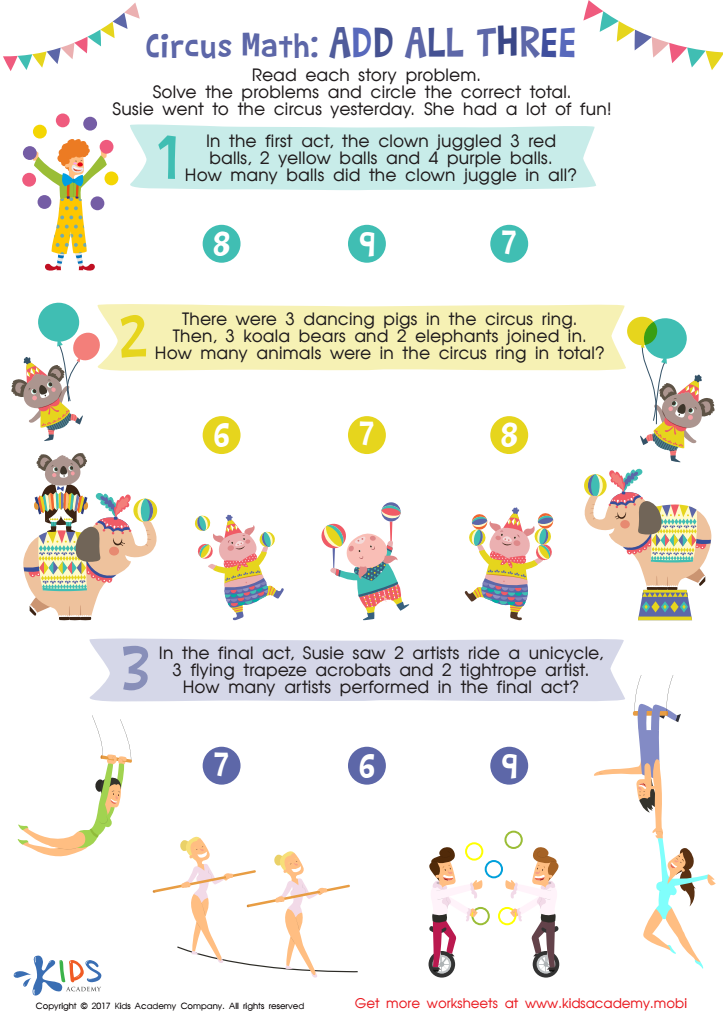
Circus Math Printable
 Assign to My Students

Stolen Cheese Case Maze Worksheet
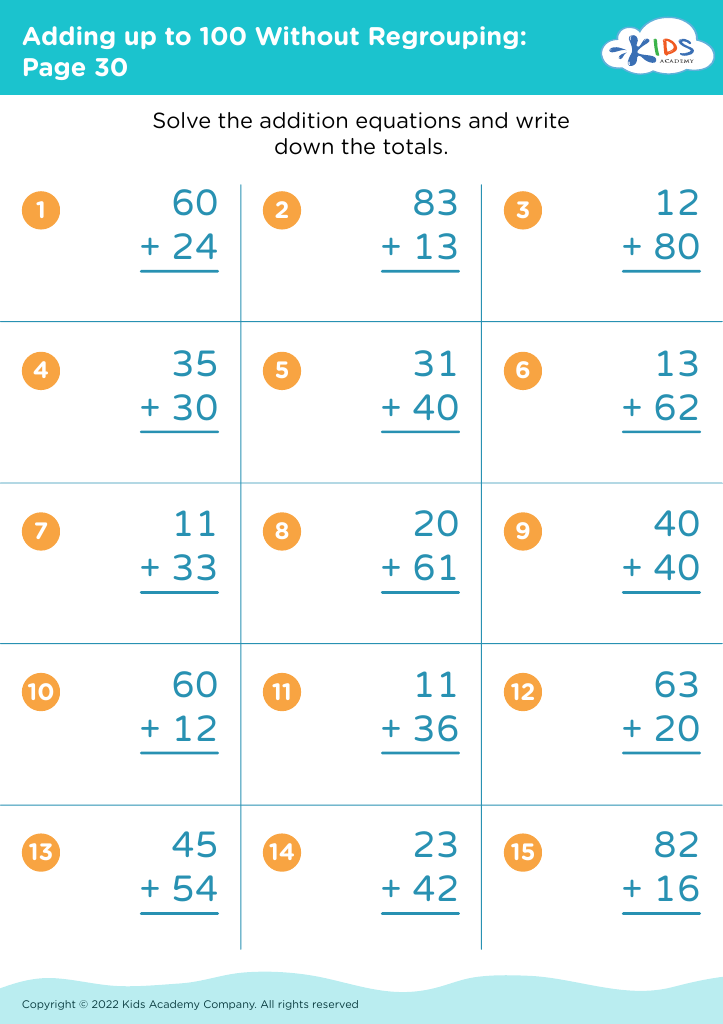








Parents and teachers should prioritize logic development in addition and subtraction for children aged 7-8 because early mathematical skills form the foundation for future learning. At this stage, children are not only learning to manipulate numbers but are also developing critical thinking and problem-solving abilities. These skills are essential not only in math but across all areas of education and daily life.
By fostering a strong grasp of addition and subtraction, children enhance their ability to reason logically and articulate thoughts coherently. This age group begins to explore concepts like basic arithmetic operations, which are vital for higher-level mathematics. Engaging children with challenges and puzzles encourages them to think analytically, boosting their cognitive development.
Furthermore, children who master these basic operations are likely to experience greater confidence in their mathematical abilities, reducing anxiety related to numbers as they progress through school. This reduction in math apprehension allows for a more positive attitude towards STEM subjects, which are increasingly important in a technology-driven world. By investing in logical and mathematical reasoning now, parents and teachers help ensure children thrive academically and are better prepared for complex future concepts in mathematics and beyond.








