Mental arithmetic Addition & Subtraction Worksheets for Ages 7-8
3 filtered results
-
From - To
Discover our engaging Mental Arithmetic Addition & Subtraction Worksheets designed specifically for kids aged 7-8! These worksheets focus on enhancing your child's arithmetic skills through fun, interactive activities that promote quick thinking and problem-solving. With a variety of exercises, including challenging word problems and timed calculations, your child will build confidence in their mathematical abilities. Perfect for at-home practice or classroom learning, these worksheets cater to different learning styles, making math enjoyable. Foster your child's love for numbers while helping them develop essential mental arithmetic skills. Start their journey to math mastery today with our comprehensive resources!
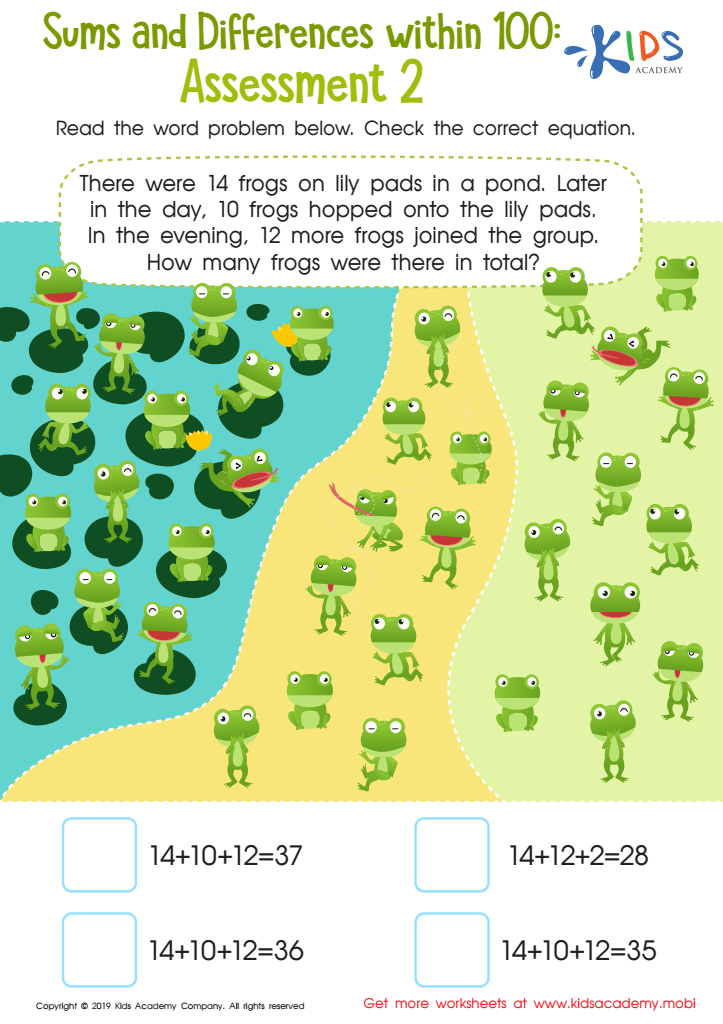
Sums and Differences Within 1 - Assessment 2 Worksheet
 Assign to My Students
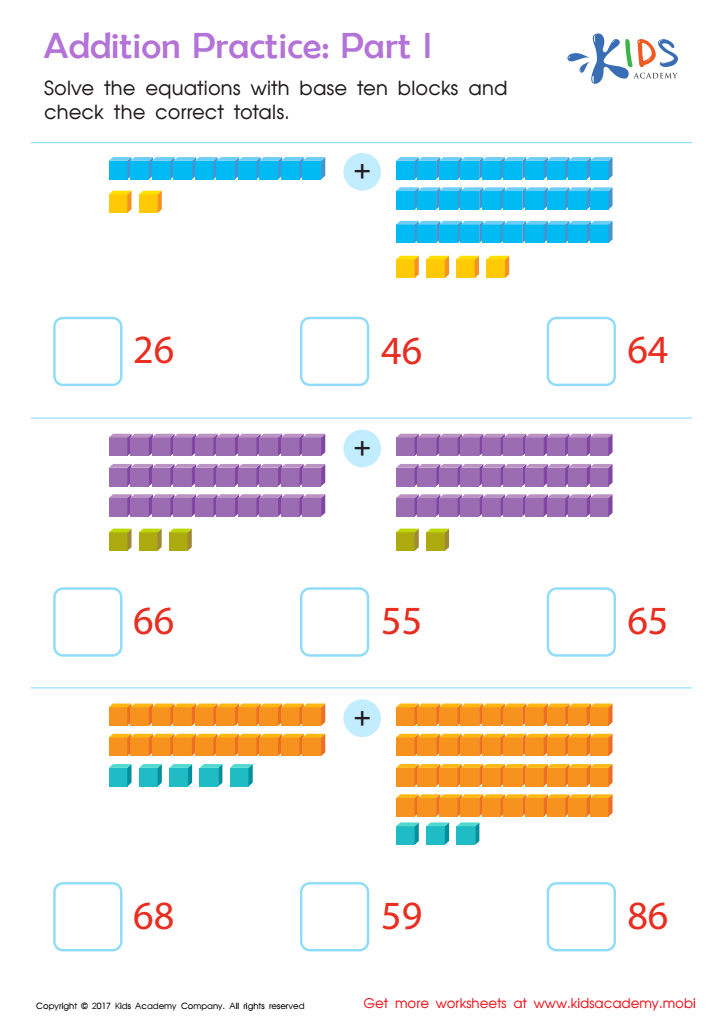
Addition Practice Sheet: Part 1
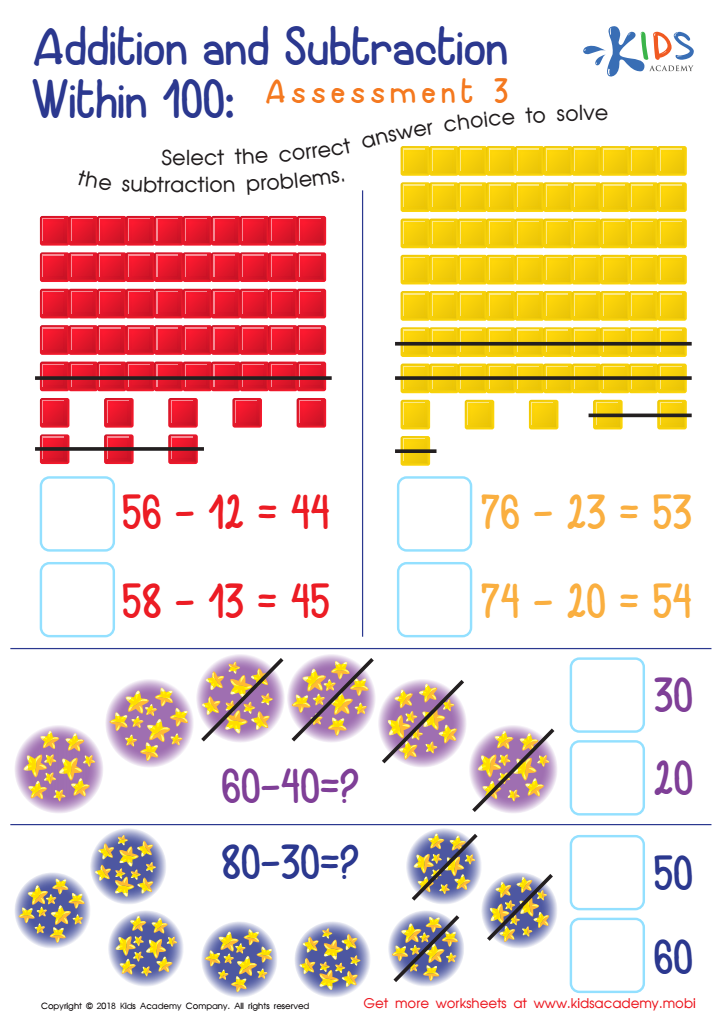
Addition and Subtraction Within 1: Assessment 3 Worksheet








Mental arithmetic for addition and subtraction plays a critical role in a child’s cognitive development, especially for ages 7-8. At this age, children are transitioning from simple arithmetic to more complex mathematical concepts. Developing strong mental math skills fosters a solid foundation for future learning.
Knowing how to perform addition and subtraction mentally enhances a child’s ability to solve problems quickly and effectively, benefiting their academic performance. It builds confidence in their mathematical abilities and encourages independent thinking. Engaging in mental arithmetic also stimulates the brain, improving memory and concentration, which are vital skills for learning across all subjects.
Moreover, it prepares students for real-world situations where quick calculations may be necessary, such as during shopping, cooking, or managing allowances. By investing time in mental math, parents and teachers help cultivate perseverance and resilience, as children learn to tackle challenges without reliance on calculators.
Ultimately, mental arithmetic equips children with essential life skills, promoting not just proficiency in mathematics but a positive attitude towards learning. Encouraging these skills now can inspire a lifelong love for math and problem-solving, making it crucial for parents and educators to prioritize this aspect of learning.








