Filters

33 filtered results

Clear all filters
Favorites
With answer key
Interactive

33 filtered results

Difficulty Level

Grade


Introduce your child to a world of fun and learning with our "Shape Recognition Addition & Subtraction Worksheets" for kids aged 7-8. Combining math skills and shape recognition, these worksheets provide a comprehensive way to practice addition and subtraction while identifying different shapes. Designed to enhance mathematical thinking and spatial awareness, each worksheet includes engaging activities that capture children's interest and reinforce key concepts. Perfect for home or classroom use, these printable resources make learning enjoyable and effective. Download now from Kids Academy and help your child build a strong foundation in math and geometry!
Check out this FREE Trial Lesson on Addition & Subtraction for age 7-8!

P

Favorites
With answer key
Interactive
  • 7-8
  • Shape Recognition
  • Addition & Subtraction
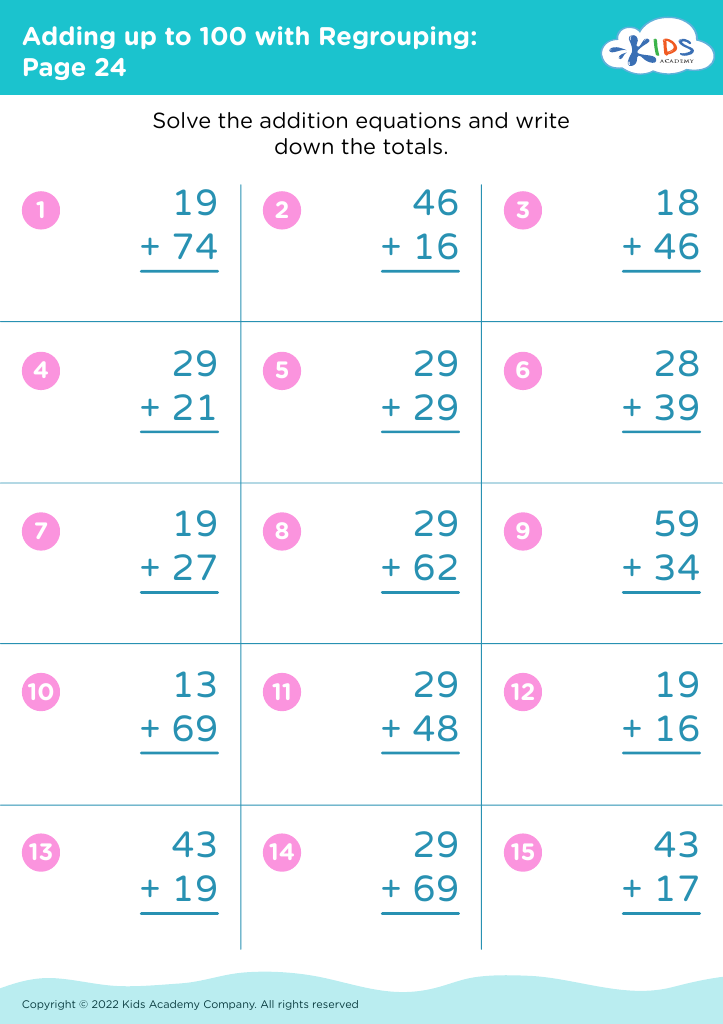
Adding up to 100 with Regrouping: Page 24
Worksheet
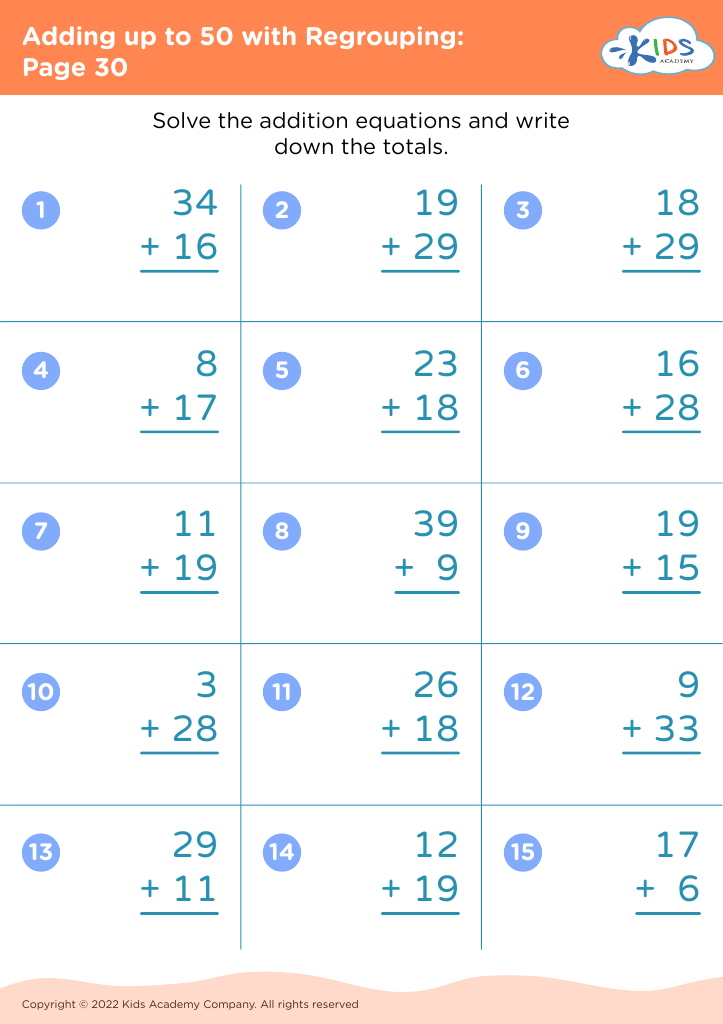
Adding up to 50 with Regrouping: Page 30
Worksheet
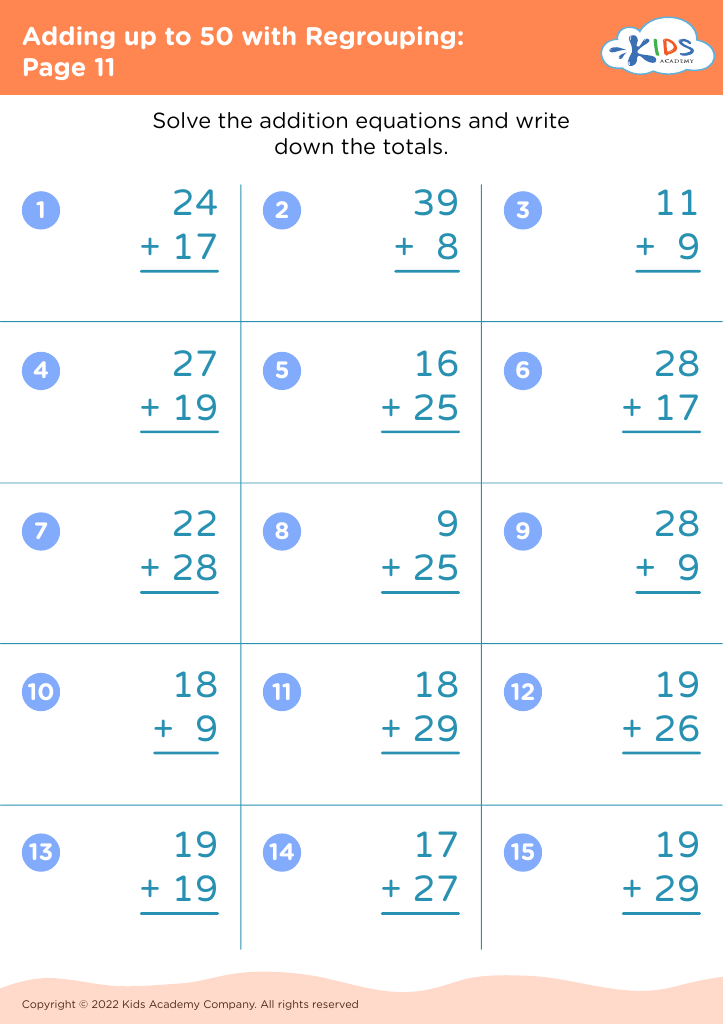
Adding up to 50 with Regrouping: Page 11
Worksheet
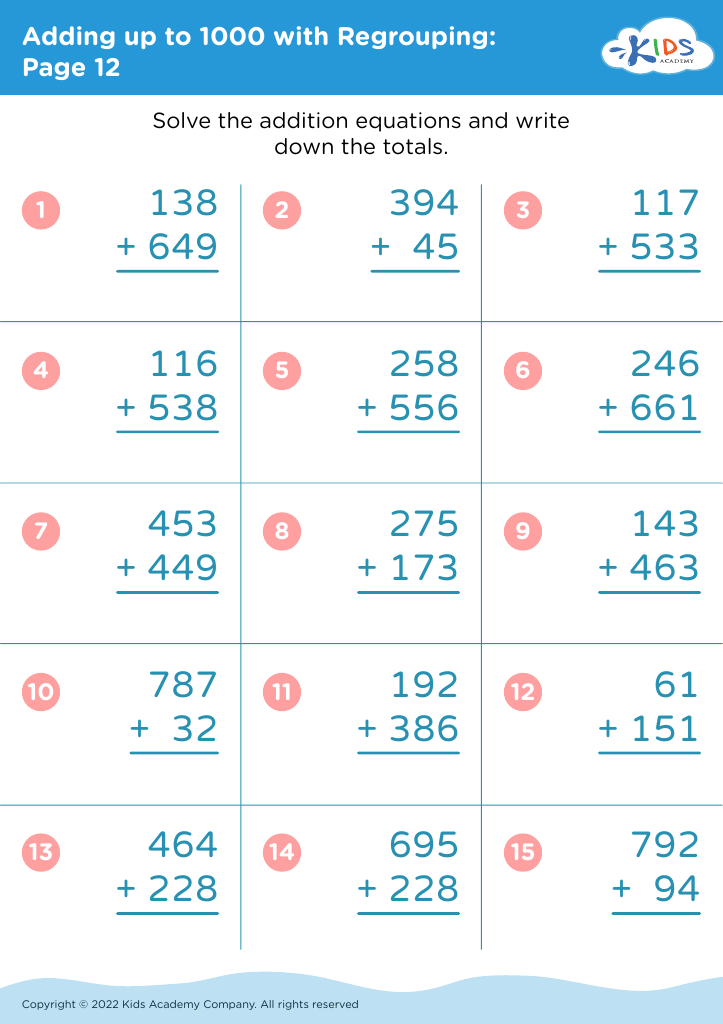
Adding up to 1000 with Regrouping: Page 12
Worksheet
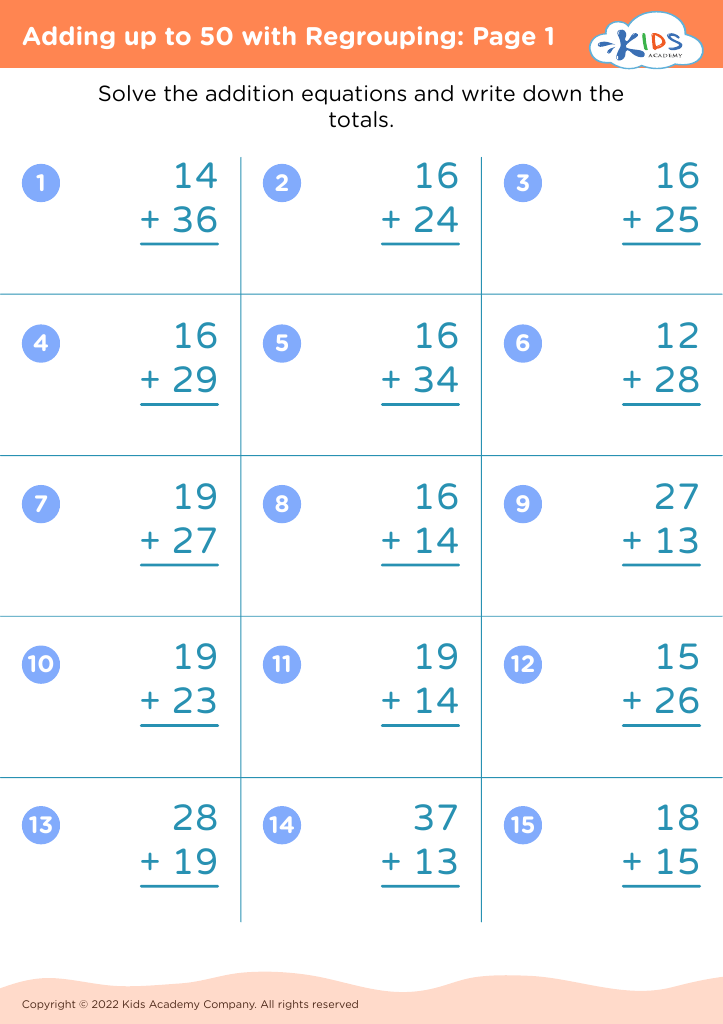
Adding up to 50 with Regrouping: Page 1
Worksheet
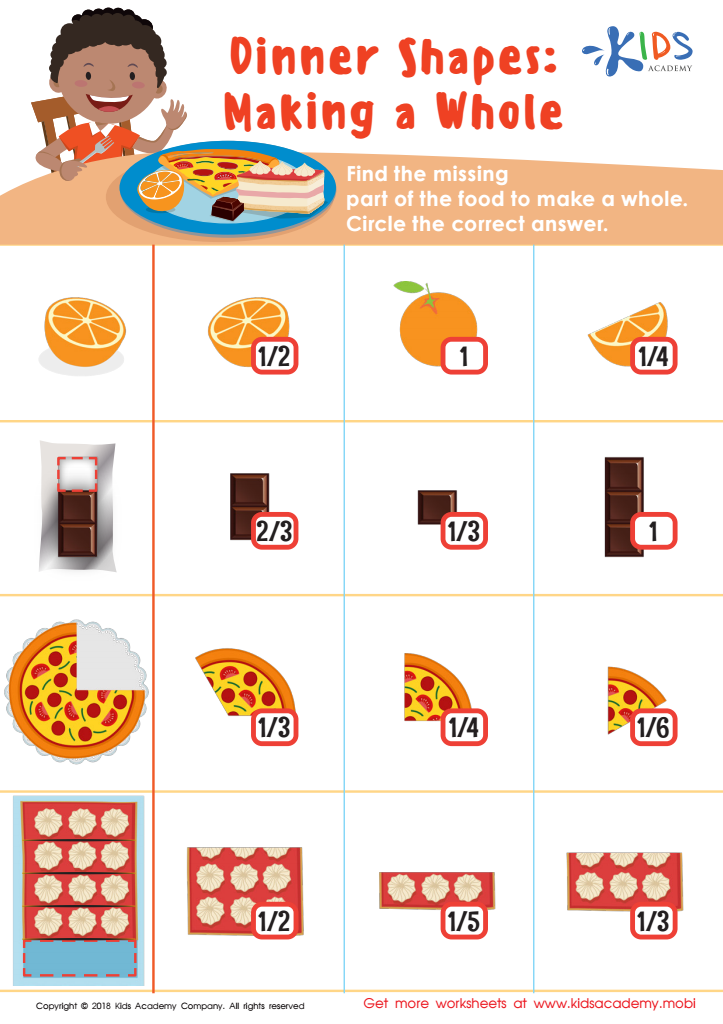
Dinner Shapes: Making a Whole Worksheet

Dinner Shapes: Making a Whole Worksheet

Using food and snacks to stimulate learning and interest in topics is a great strategy. Fractions can prove tricky, but this worksheet can help your child become an expert. Have them look for the missing parts of the food to make a whole, then circle the answer.
Dinner Shapes: Making a Whole Worksheet
Worksheet
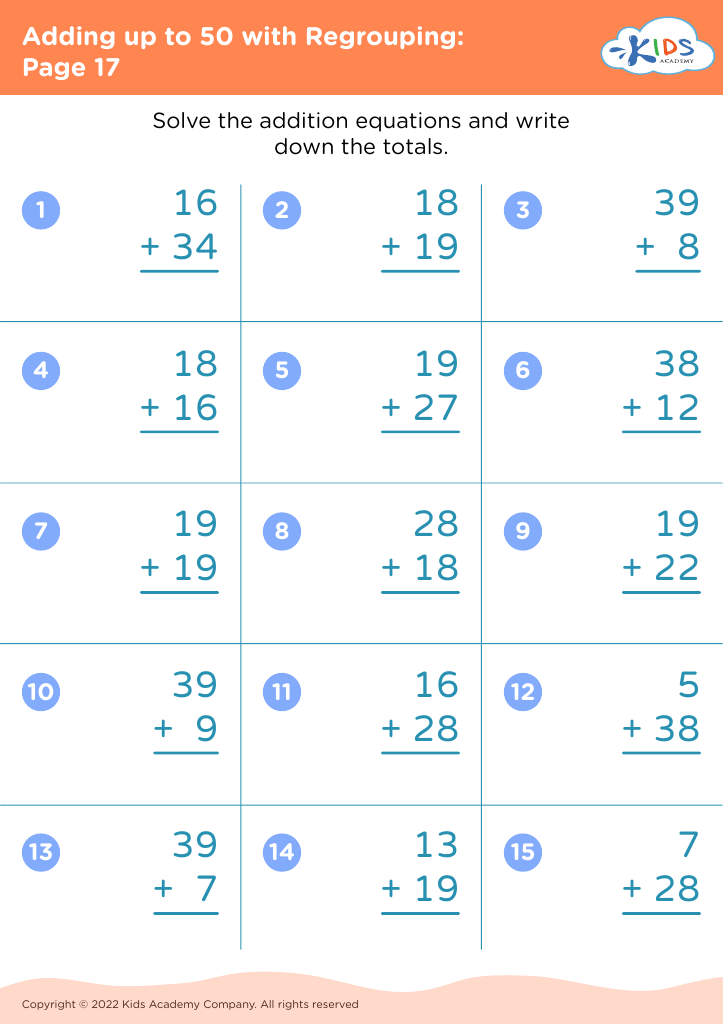
Adding up to 50 with Regrouping: Page 17
Worksheet
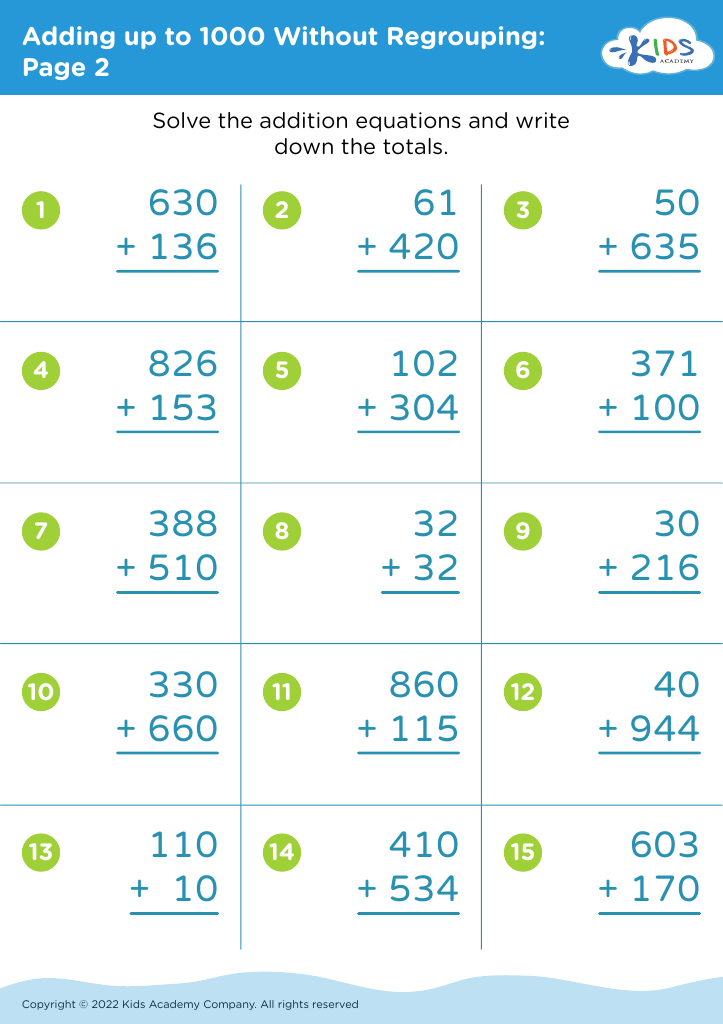
Adding up to 1000 Without Regrouping: Page 2
Worksheet
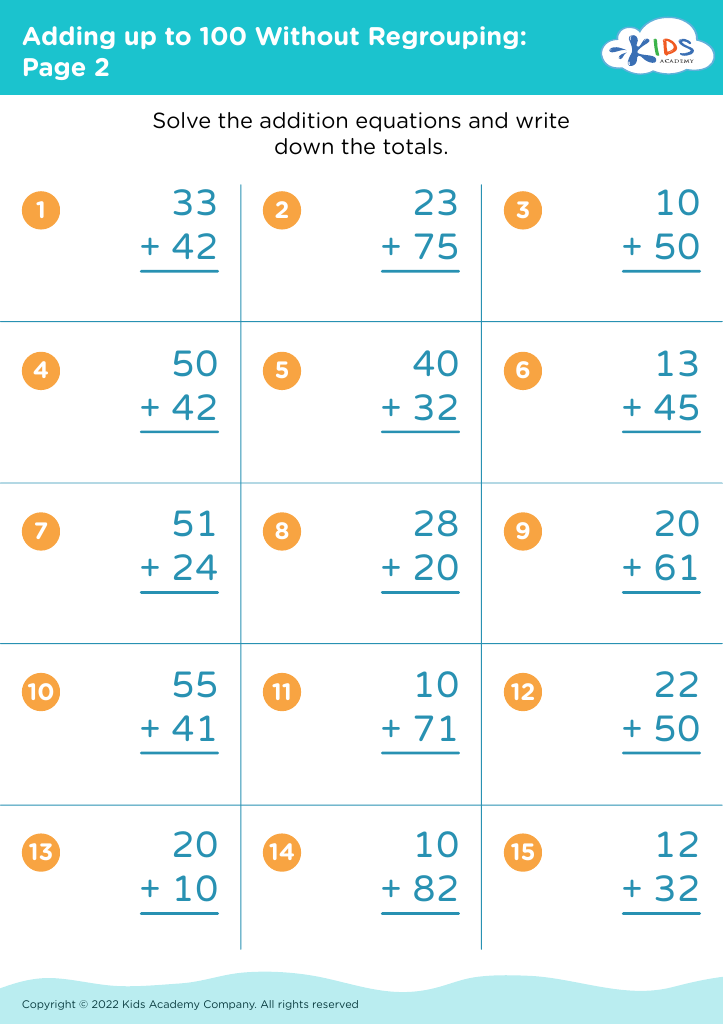
Adding up to 100 Without Regrouping: Page 2
Worksheet
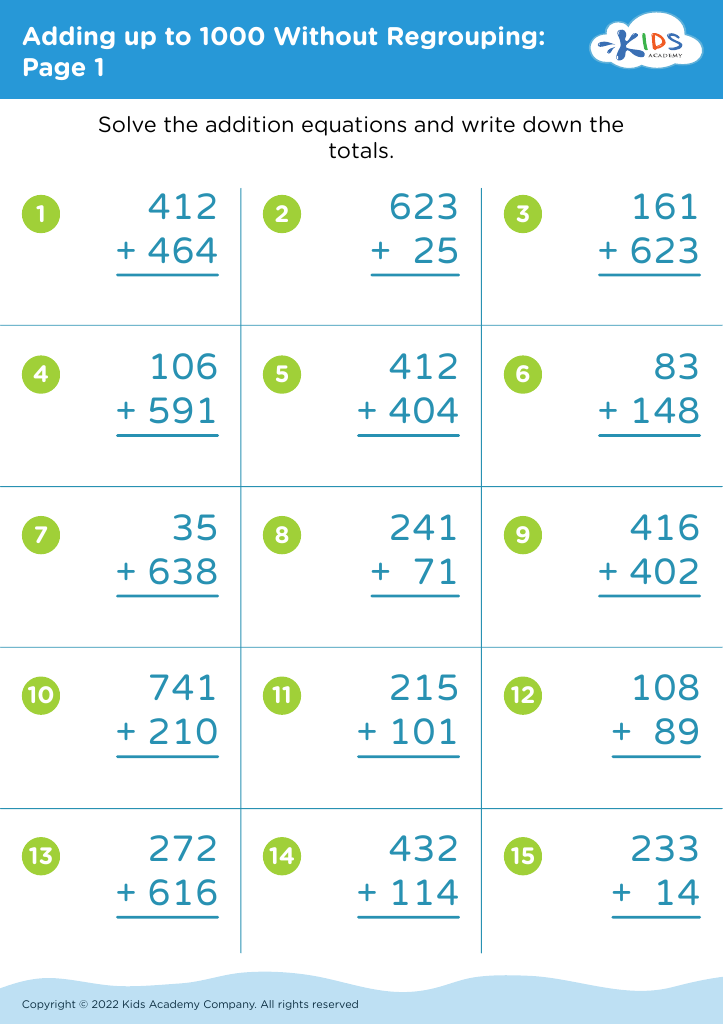
Adding up to 1000 Without Regrouping: Page 1
Worksheet
Count in the School of Magic Worksheet

Count in the School of Magic Worksheet

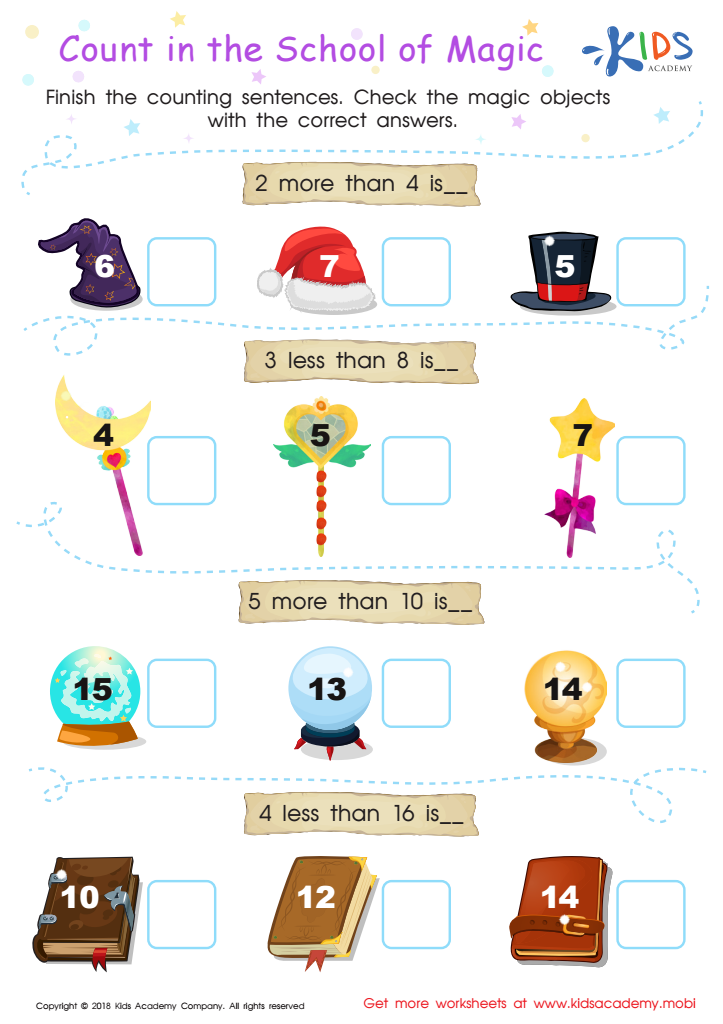
Your math learners can explore the School of Magic with this worksheet. They'll read equations with addition and subtraction numbers under 20, count back and forth to find the answer, then complete the counting sentences. Fun pictures and easy accuracy make it an enjoyable and successful learning experience.
Count in the School of Magic Worksheet
Worksheet
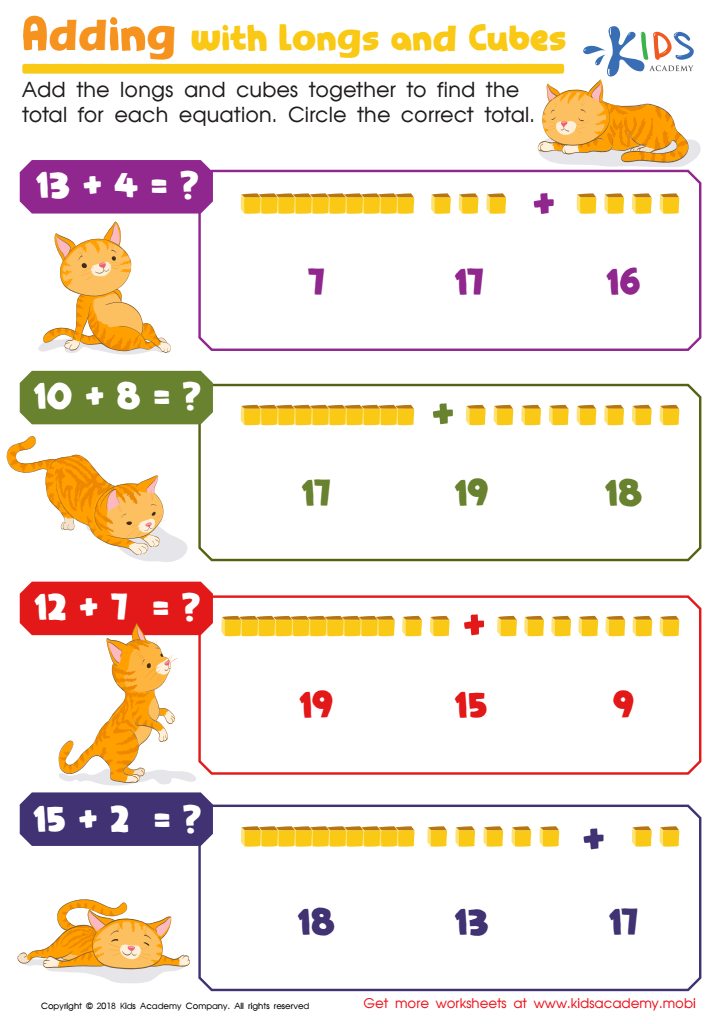
Adding With Longs and Cubes Worksheet
Adding With Longs and Cubes Worksheet
Math might not be your child's favorite, but they must master it to advance. If they're having difficulties or don't like it, use this worksheet to make it easier. Have them add longs and cubes together to find the total for each question, then circle the correct answer. This exercise can help make math experiences better.
Adding With Longs and Cubes Worksheet
Worksheet
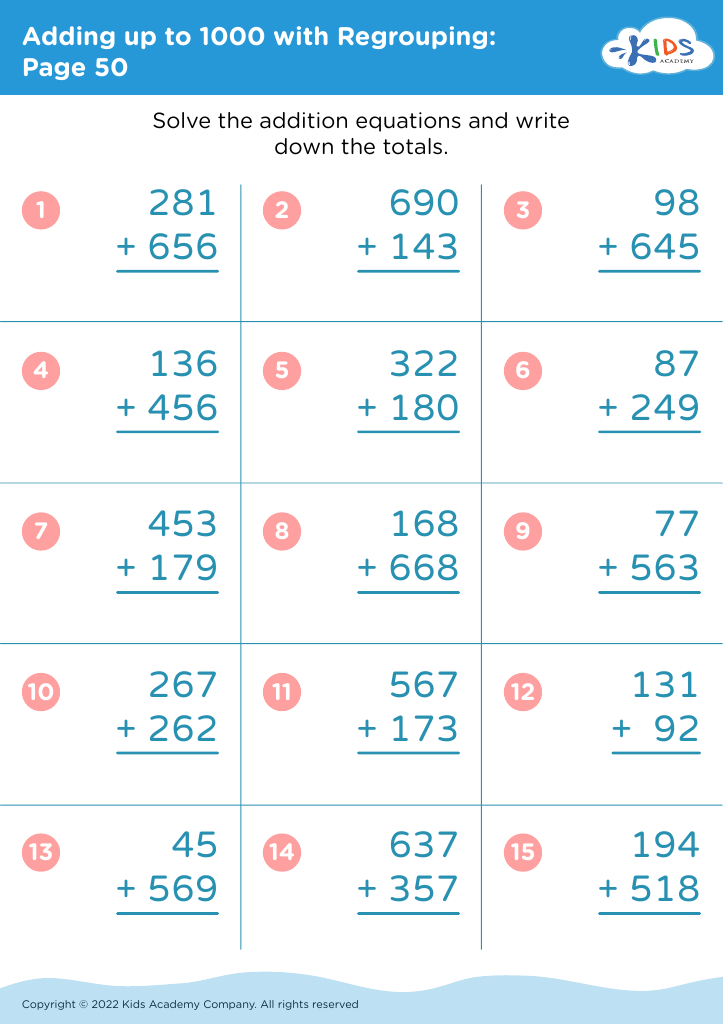
Adding up to 1000 with Regrouping: Page 50
Worksheet
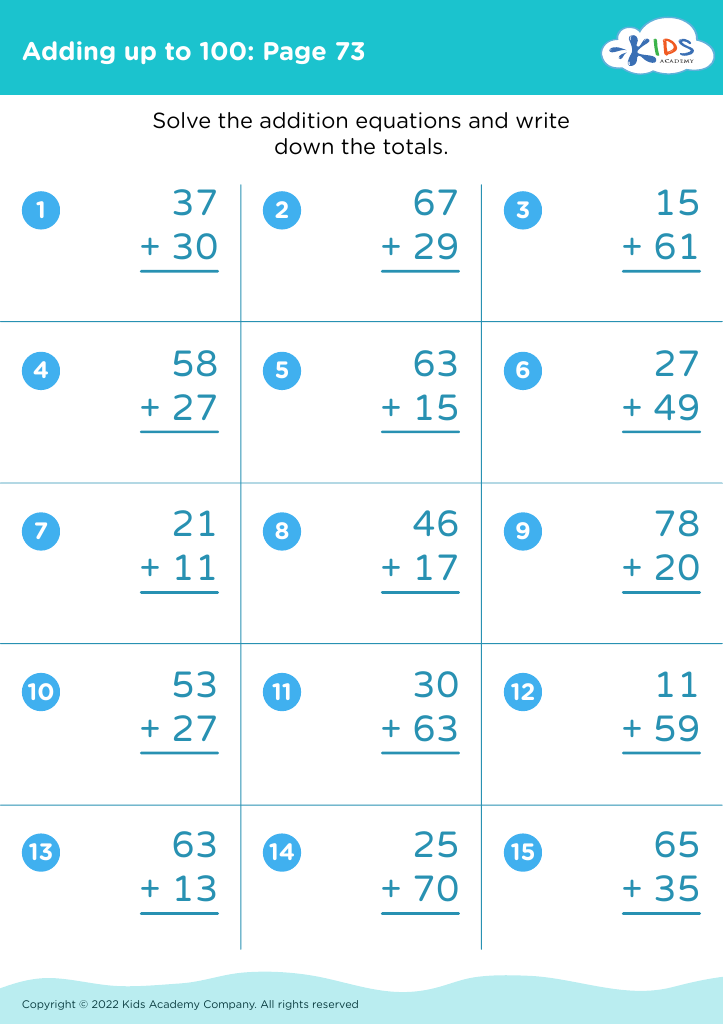
Adding up to 100: Page 73

Adding up to 100: Page 73

Adding up to 100: Page 73
Worksheet
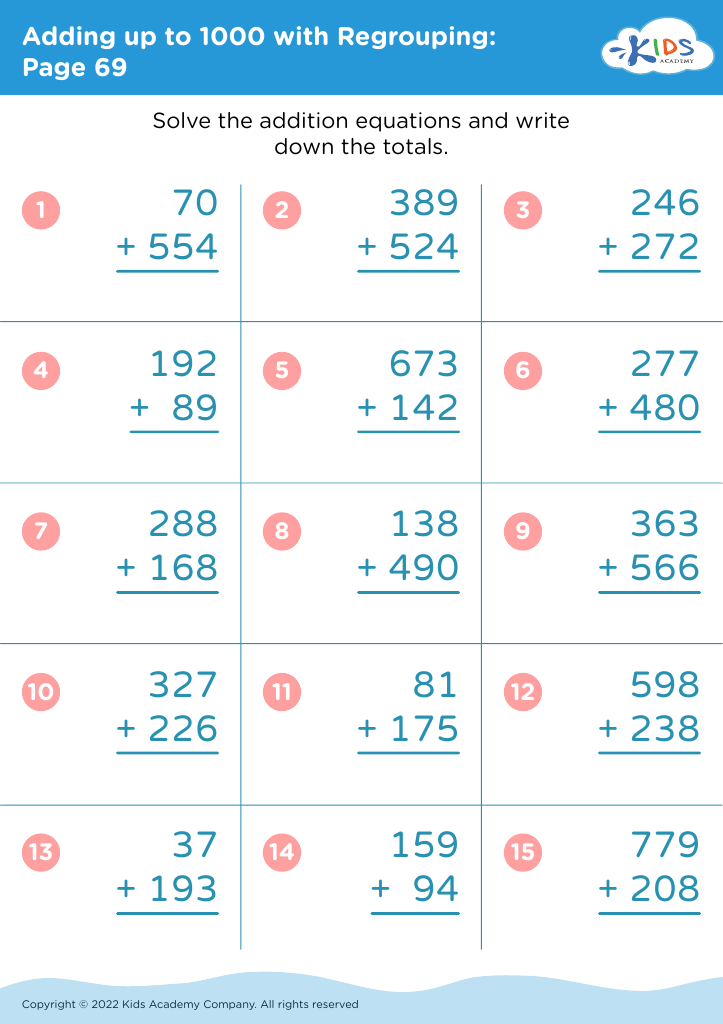
Adding up to 1000 with Regrouping: Page 69
Worksheet
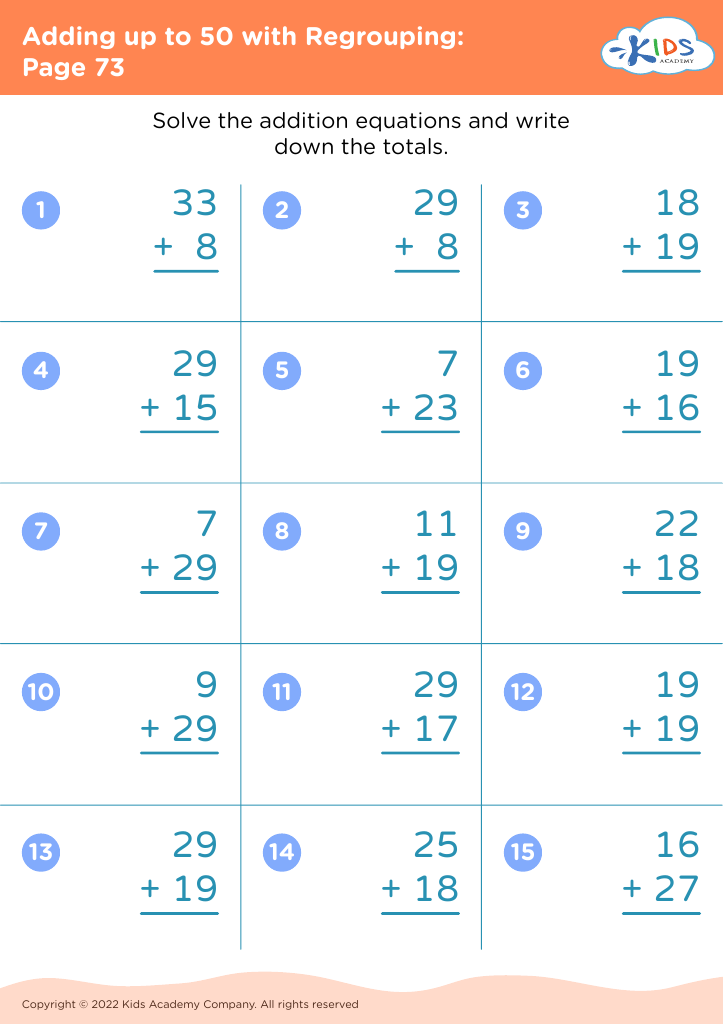
Adding up to 50 with Regrouping: Page 73
Worksheet
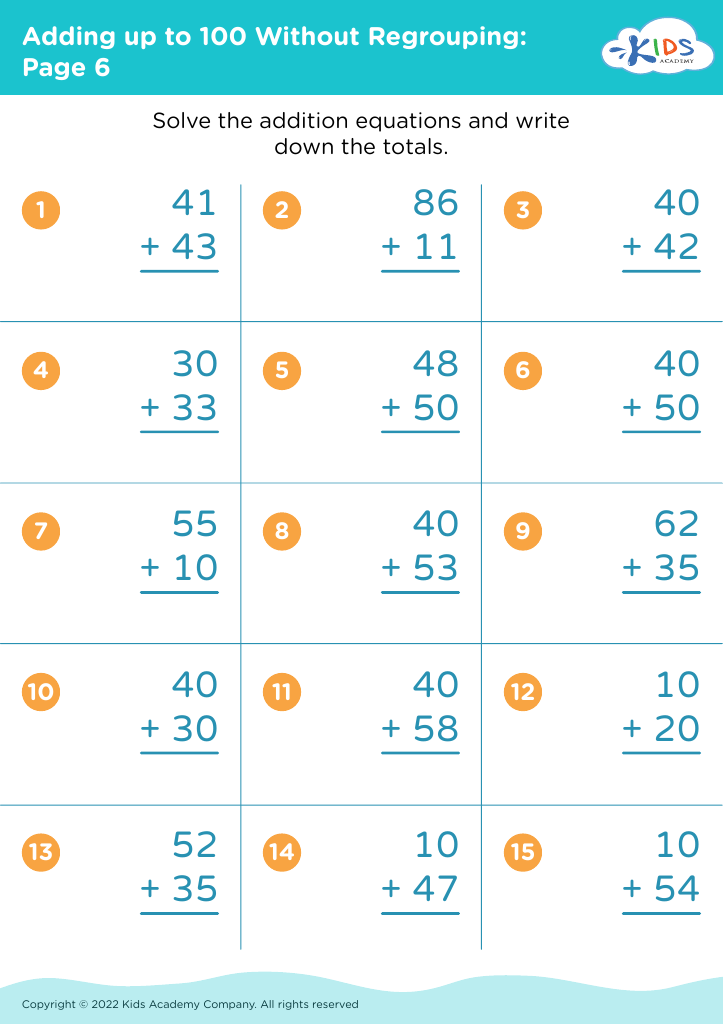
Adding up to 100 Without Regrouping: Page 6
Worksheet
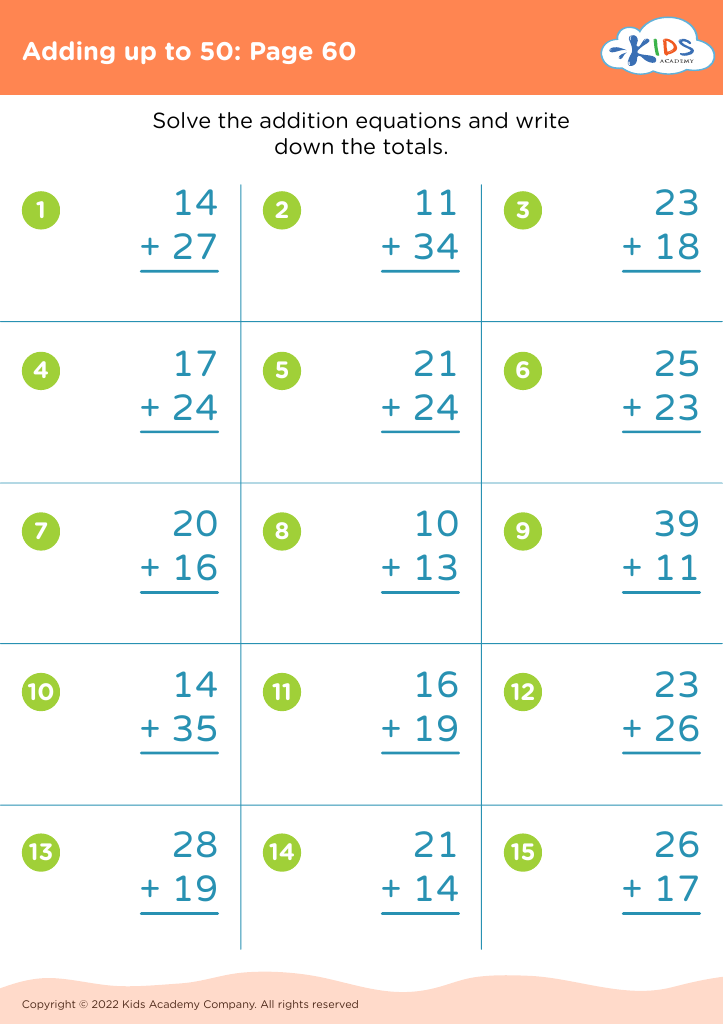
Adding up to 50: Page 60

Adding up to 50: Page 60

Adding up to 50: Page 60
Worksheet
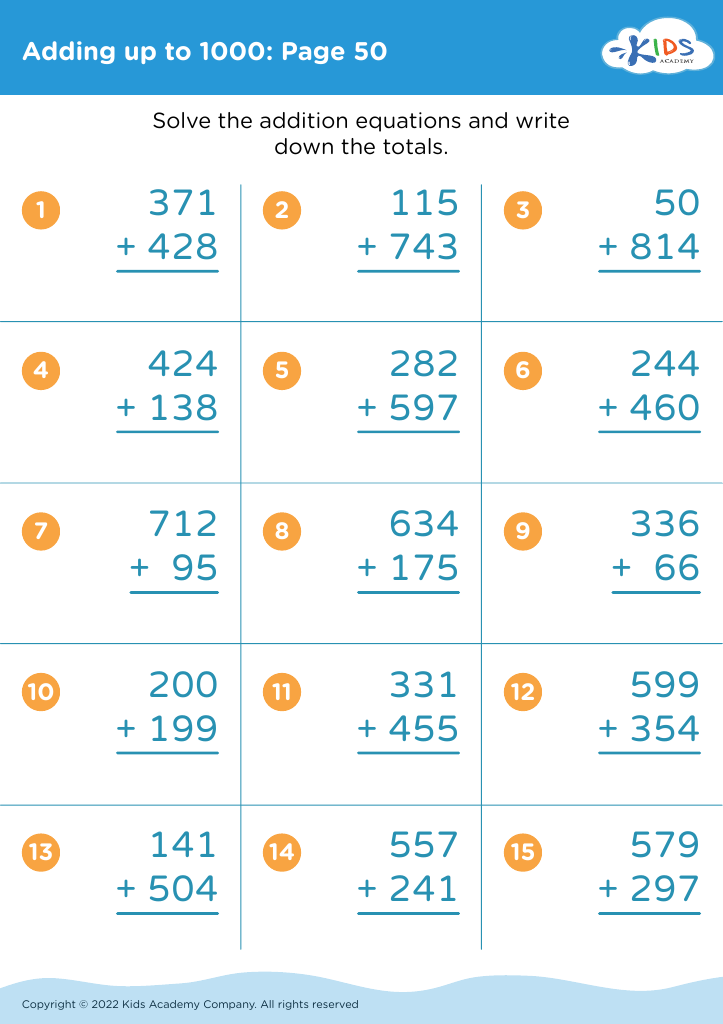
Adding up to 1000: Page 50

Adding up to 1000: Page 50

Adding up to 1000: Page 50
Worksheet
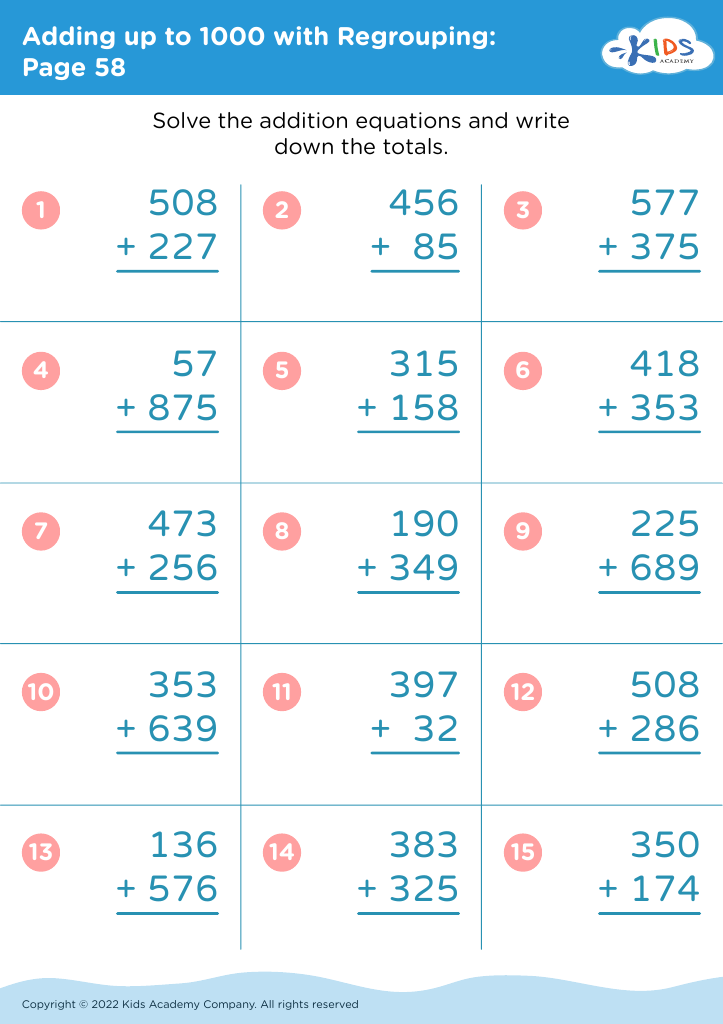
Adding up to 1000 with Regrouping: Page 58
Worksheet
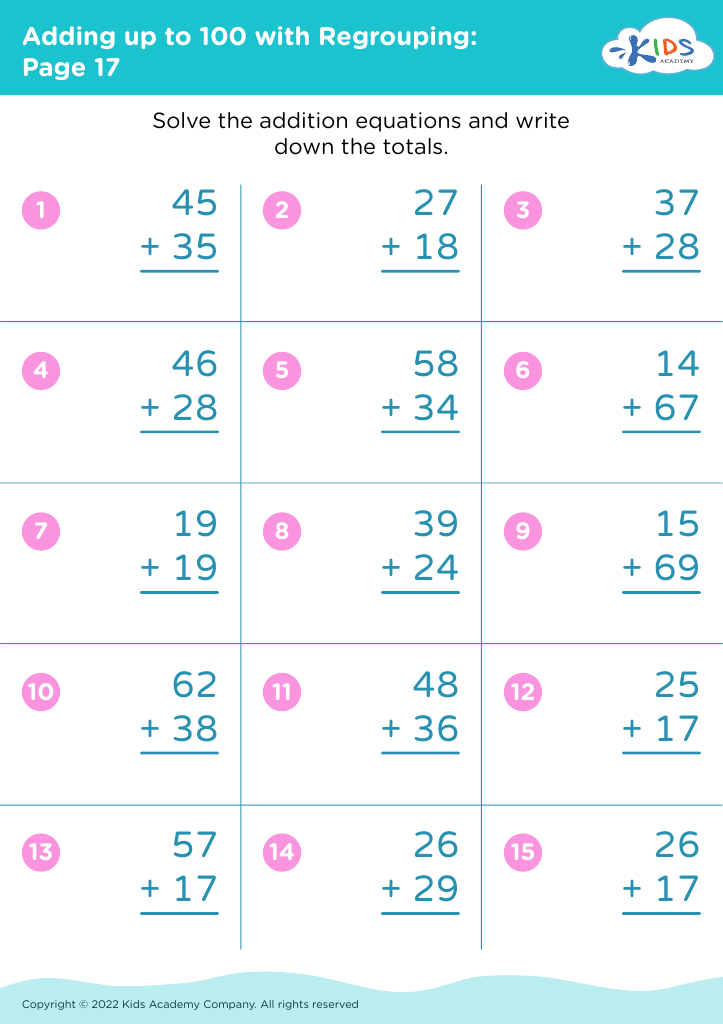
Adding up to 100 with Regrouping: Page 17
Worksheet
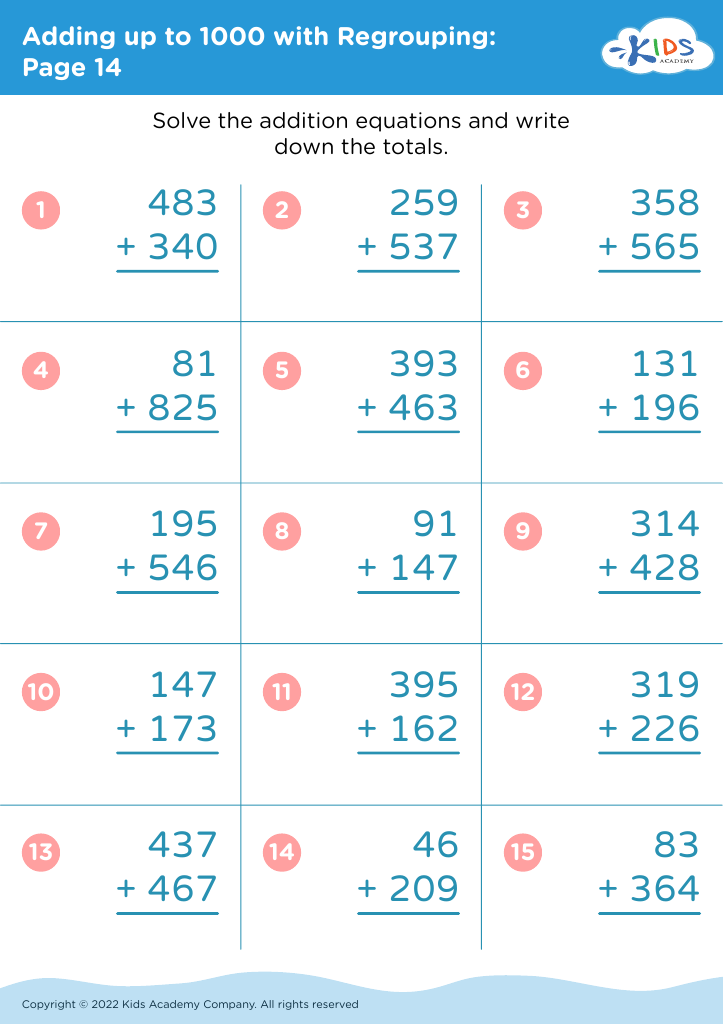
Adding up to 1000 with Regrouping: Page 14
Worksheet
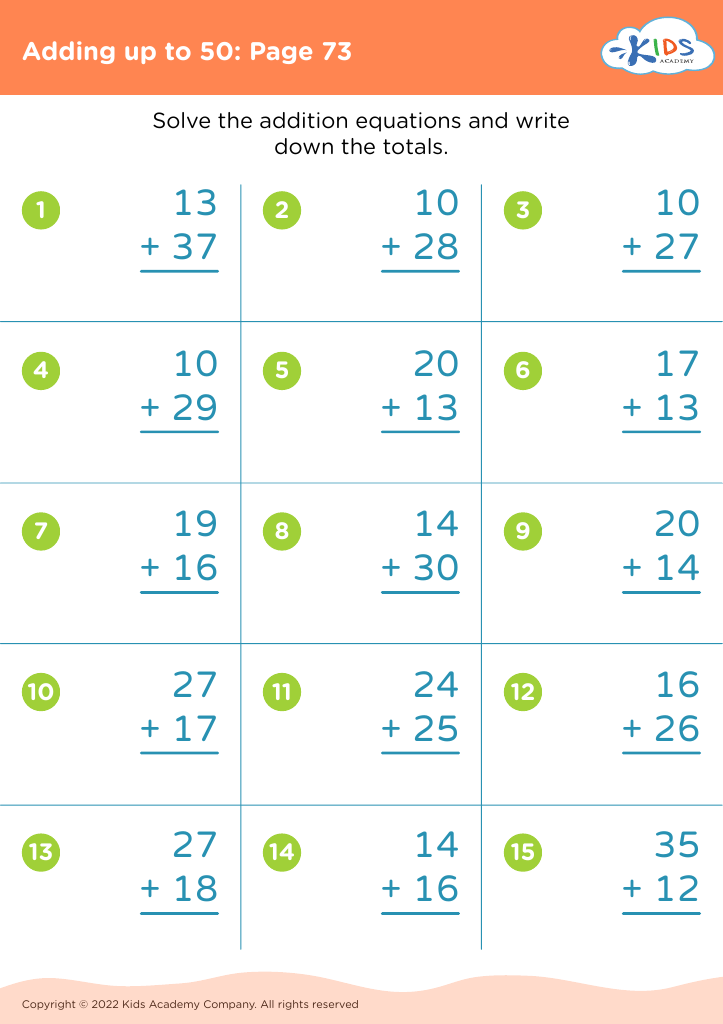
Adding up to 50: Page 73

Adding up to 50: Page 73

Adding up to 50: Page 73
Worksheet
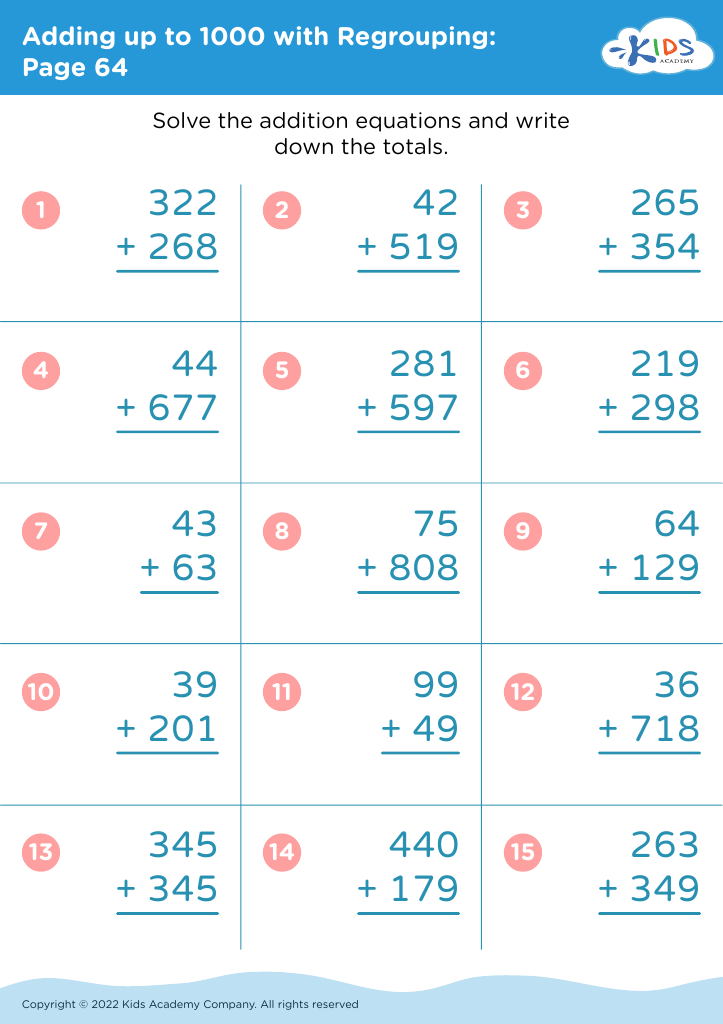
Adding up to 1000 with Regrouping: Page 64
Worksheet


Shape recognition, addition, and subtraction are crucial skills for children aged 7-8, forming the foundation for more advanced mathematical concepts. Parents and teachers should emphasize these areas because they nurture cognitive development and critical thinking skills. Shape recognition aids spatial awareness, helping children understand geometry, a key aspect of their future academic journey. Recognizing and distinguishing between different shapes enhances visual perception and classification skills, which are beneficial across various subjects.

Addition and subtraction, essential arithmetic operations, enable children to solve basic math problems, fostering numerical literacy. Mastery of these skills is fundamental for future tasks such as multiplication, division, and problem-solving, laying the groundwork for more complex mathematical concepts.

Integrating shape recognition with addition and subtraction encourages a holistic learning approach. For example, using shapes to visualize addition and subtraction problems makes abstract concepts more concrete, aiding comprehension and retention. This combined methodology also promotes engagement and interest in math through interactive and tangible learning experiences.

Furthermore, these skills are not only academically beneficial but also practical in daily life. Understanding shapes assists in navigating and organizing everyday objects, while basic arithmetic is essential for managing time, money, and other practical activities. Therefore, focusing on these skills ensures well-rounded cognitive development and prepares children for future academic and life challenges.