Understand number relationships Addition & Subtraction Worksheets for Ages 7-8
3 filtered results
-
From - To
Our "Understand Number Relationships: Addition & Subtraction Worksheets for Ages 7-8" are designed to help young learners grasp essential math concepts. These engaging worksheets focus on building a solid understanding of addition and subtraction through relatable activities that emphasize number relationships. Your child will enhance their problem-solving skills, boost their arithmetic confidence, and foster a love for learning math. Perfect for classroom use or additional practice at home, each worksheet is crafted to make math accessible and enjoyable. Unlock your child's potential with targeted exercises that turn number relationships into fun, interactive learning experiences.
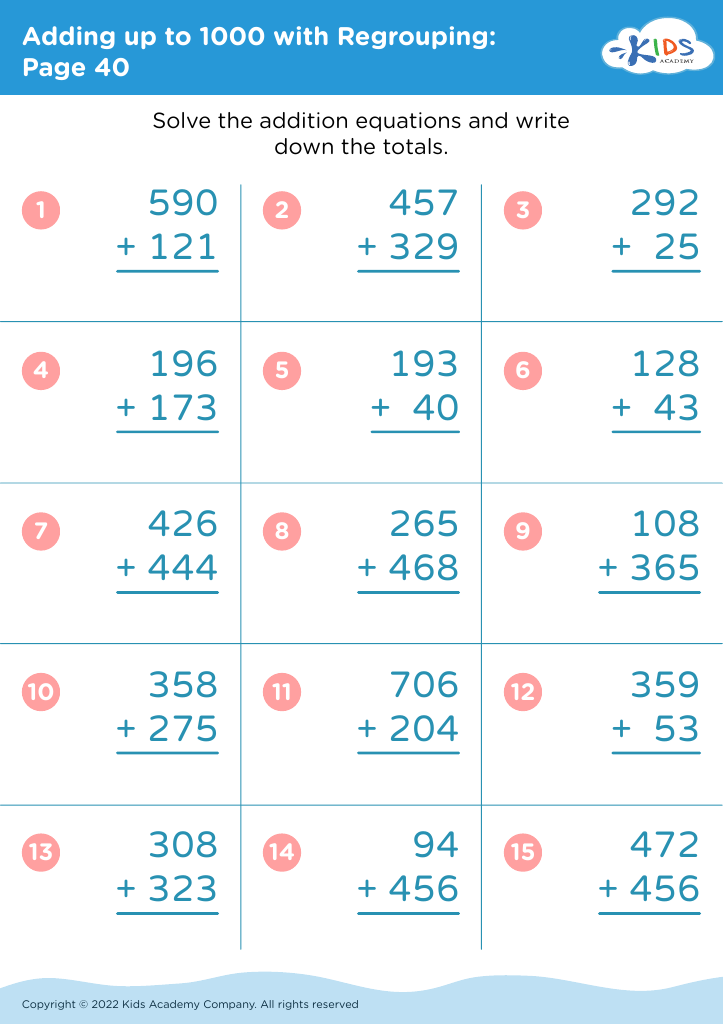
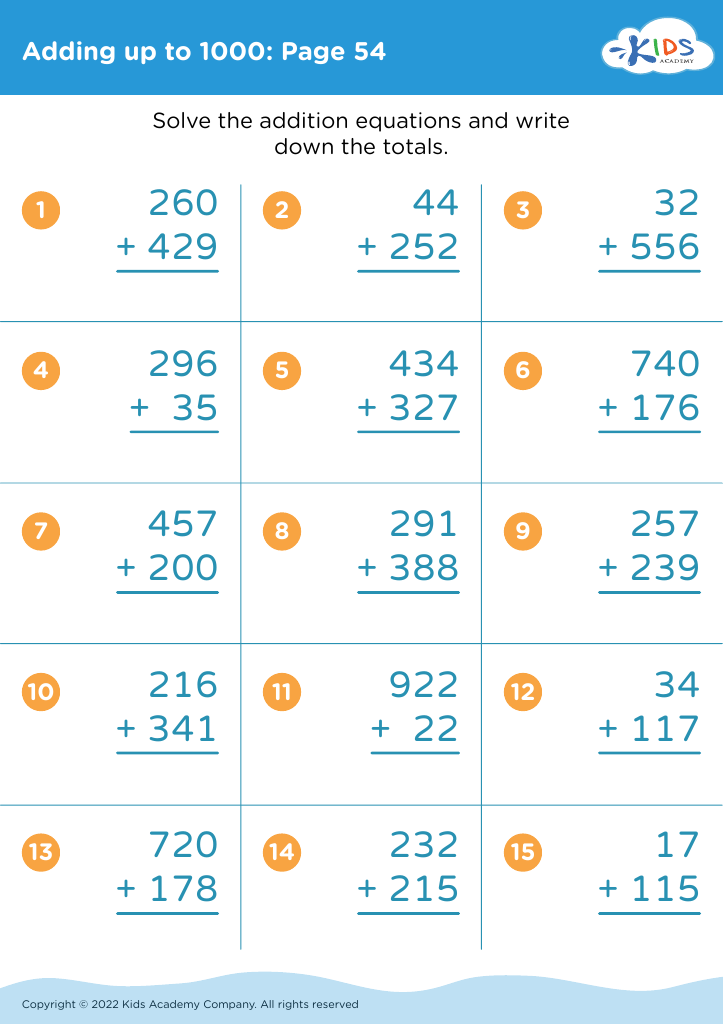
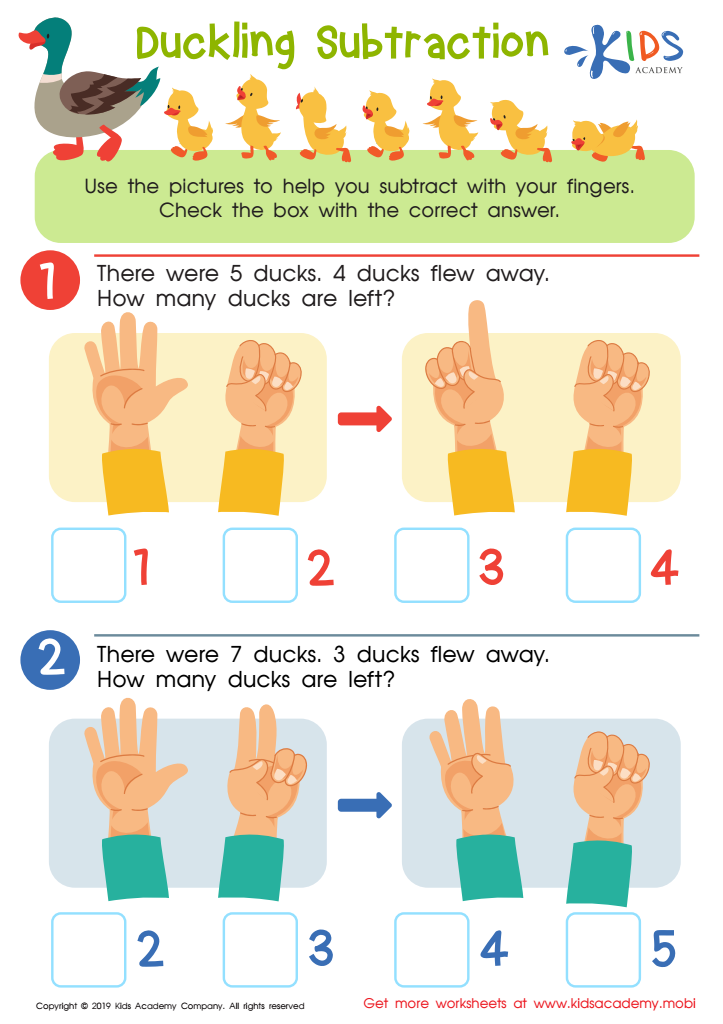
Duckling Subtraction Worksheet
 Assign to My Students








Understanding number relationships, addition, and subtraction at ages 7-8 is crucial for a child's mathematical foundation. During these formative years, students develop number sense, which is the ability to understand, relate, and connect numbers intuitively. Grasping concepts like addition and subtraction lays the groundwork for more complex arithmetic, including multiplication, division, and eventually algebraic thinking.
Firstly, number relationships, such as knowing that 7 is one more than 6 and one less than 8, help children make sense of addition and subtraction. When students can seamlessly add and subtract, they build confidence in their mathematical skills, encouraging a positive attitude towards the subject. Confidence at this stage can lead to greater engagement and a willingness to tackle challenging problems.
Additionally, mastering these basic operations enhances problem-solving skills. Students learn various strategies to approach and solve problems, fostering critical thinking and logical reasoning. For instance, understanding that the difference between 15 and 8 can also be found by knowing how much you need to add to 8 to get 15 teaches flexibility in thinking.
Moreover, parents and teachers play a pivotal role in supporting this learning. Engaging students with practical and fun activities, such as counting games, puzzle problems, and real-life applications, can strengthen these skills. Ensuring students understand addition and subtraction sets a solid platform for future academic success and everyday life applications, like handling money, which are essential life skills.








