Understanding equations Addition & Subtraction Worksheets for Ages 7-8
7 filtered results
-
From - To
Discover our "Understanding Equations: Addition & Subtraction Worksheets" designed specifically for children aged 7-8. These engaging worksheets help young learners grasp the fundamental concepts of equations through interactive exercises that illustrate addition and subtraction in various contexts. Children will enhance their problem-solving skills as they learn to represent and analyze mathematical statements using numerical relationships. Our carefully crafted worksheets include a variety of activities that cater to different learning styles, ensuring each child comprehends the basics of equations confidently. Boost your child's math proficiency with these fun and educational resources that make learning both enjoyable and effective!
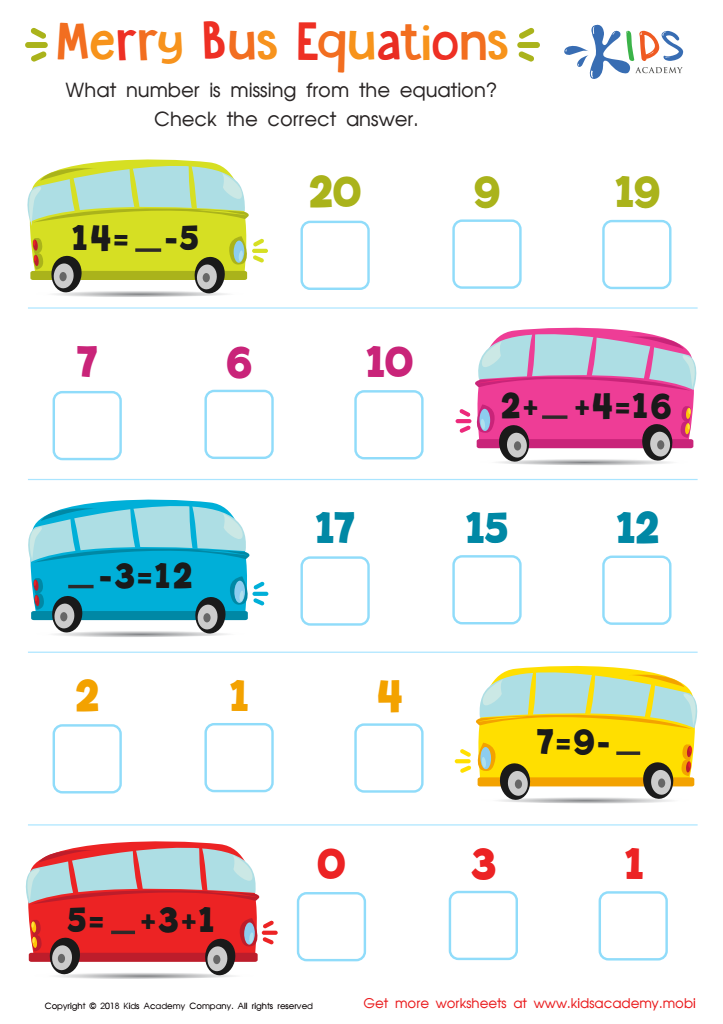
Merry Bus Equations Worksheet
 Assign to My Students
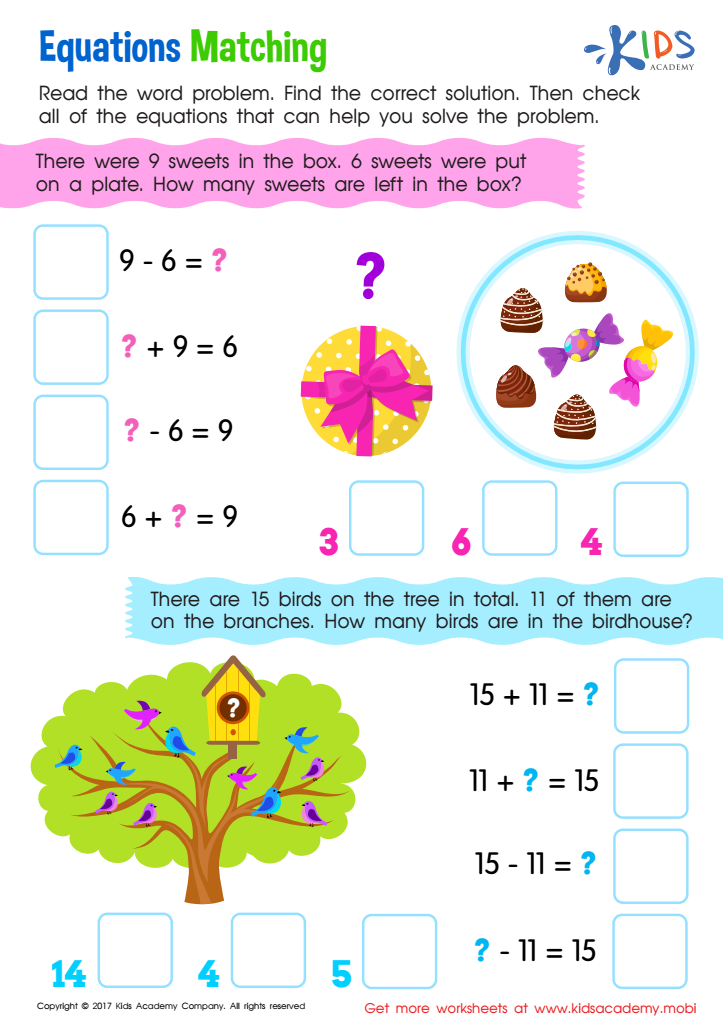
Equations Matching Word Problems Worksheet
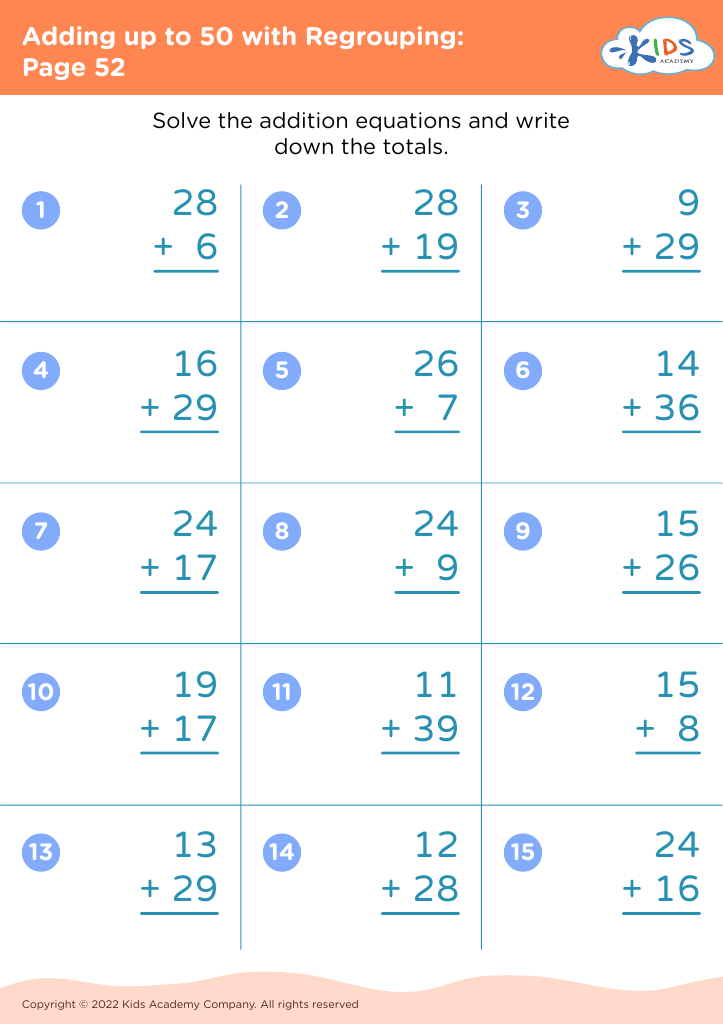
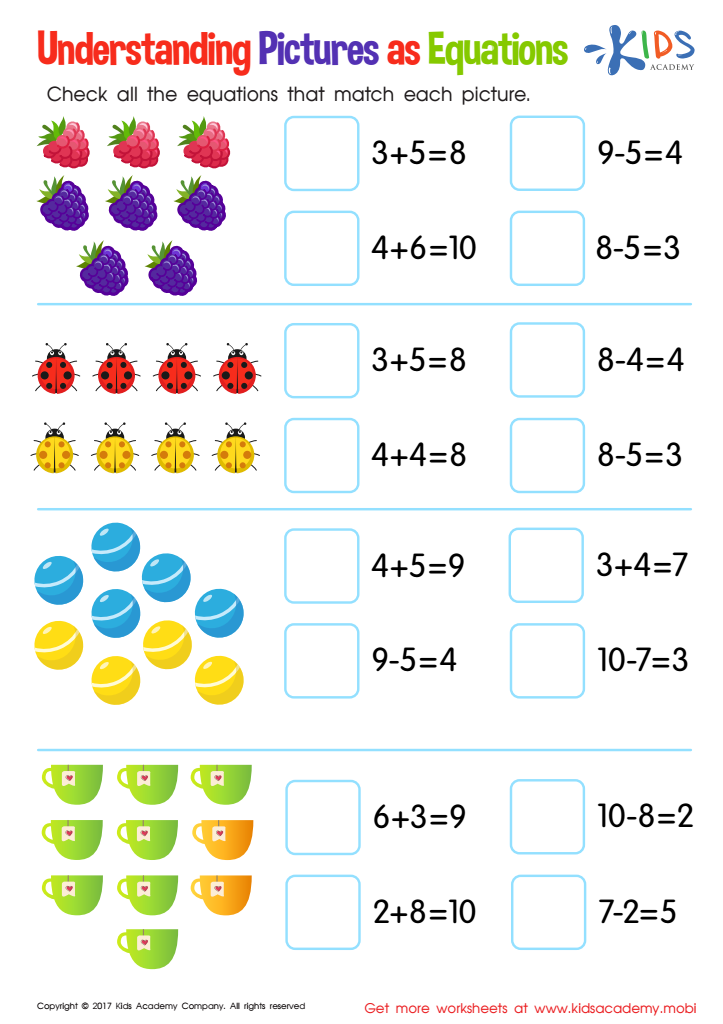
Understanding Pictures as Equations Worksheet
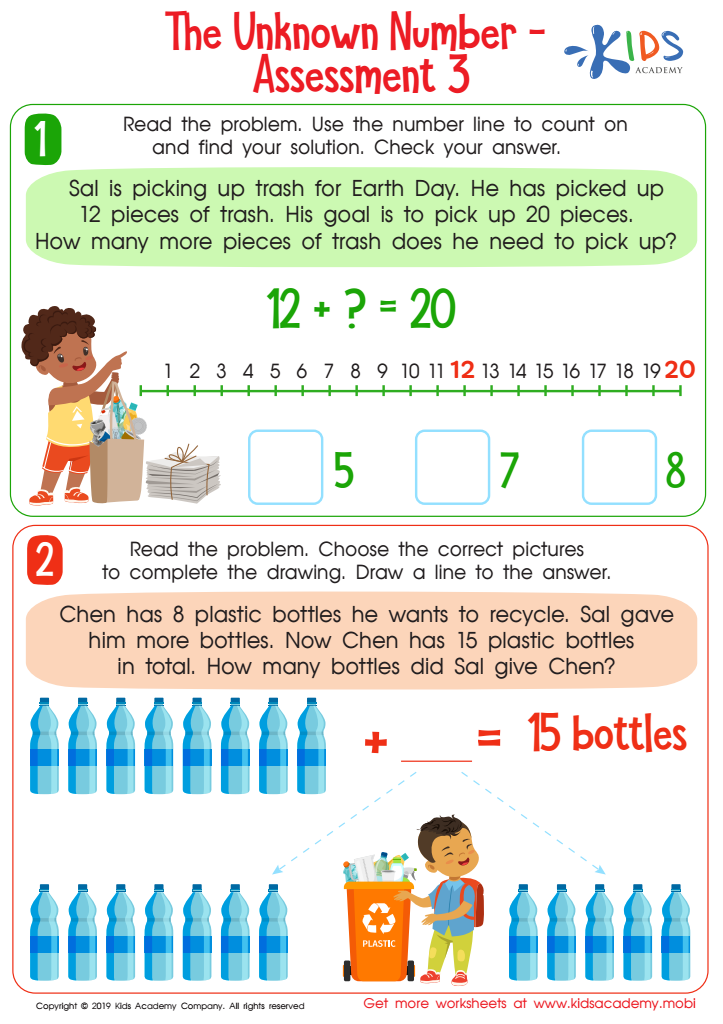
The Unknown Number - Assessment 3 Worksheet
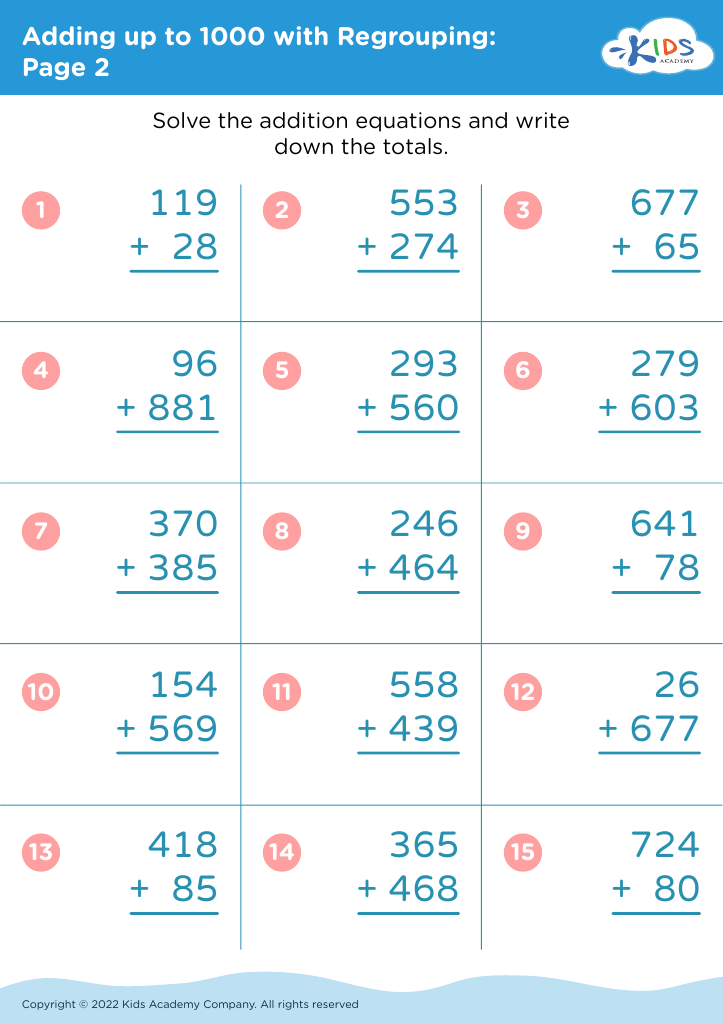
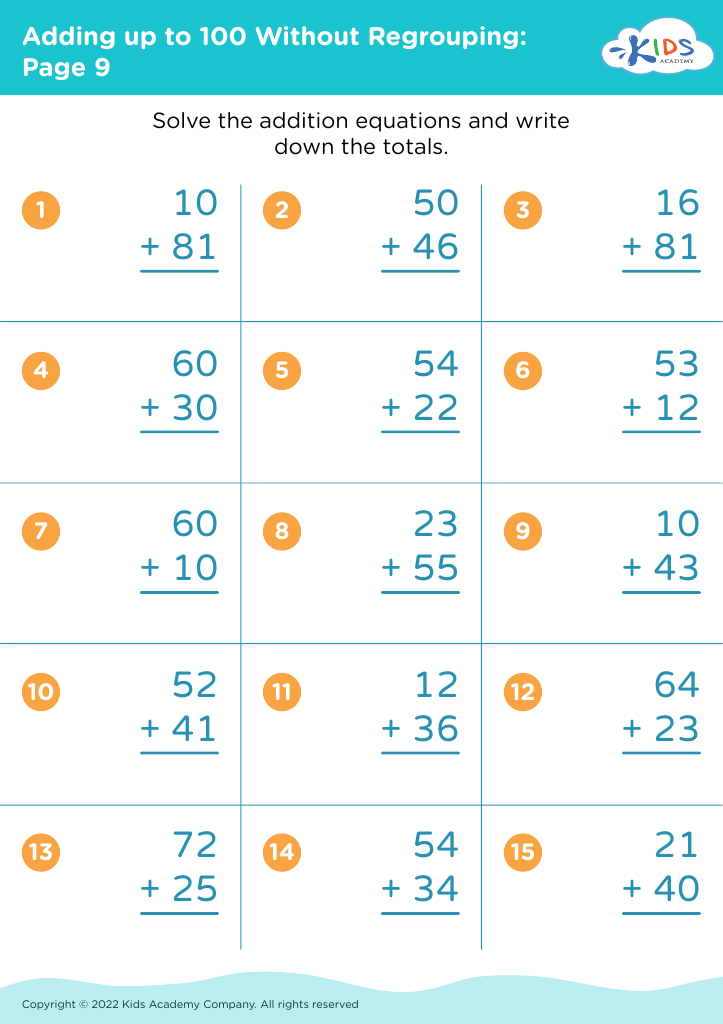








Understanding equations of addition and subtraction is crucial for children aged 7-8 as it serves as the foundation for their mathematical learning. During this developmental stage, children begin to transition from concrete arithmetic processes to more abstract concepts involving operations and relationships. This is essential for fostering critical thinking and problem-solving skills.
When parents and teachers prioritize the comprehension of equations, they help children grasp the relationship between numbers. This knowledge aids in developing flexible thinking, allowing children to view problems from different angles, recognize patterns, and enhance their ability to tackle more complex mathematical concepts in the future.
By making connections between addition and subtraction, learners are equipped to understand the importance of these operations in real-life situations, such as budgeting, sharing, or even in role-play scenarios like shopping. Additionally, this knowledge aids in early access to algebraic thinking—where understanding expressions, equations, and inequalities becomes crucial.
Encouraging children to explore equation structures cultivates confidence and a positive attitude toward math, promoting a lifelong interest in the subject. Therefore, both parents and teachers play a pivotal role as facilitators of rich mathematical learning experiences that will benefit children throughout their educational journey and beyond.








