Filters

31 filtered results

Clear all filters
Favorites
With answer key
Interactive

31 filtered results

Difficulty Level

Grade


Our "Understanding Patterns Addition & Subtraction Worksheets" are specially designed for children aged 7-8. These engaging and educational worksheets help young learners master key math concepts by recognizing and creating patterns in addition and subtraction problems. Through fun, interactive exercises, children develop critical thinking skills and enhance their number sense. Perfect for both classroom use and at-home practice, these worksheets support the development of strong mathematical foundations, ensuring that students gain confidence in their abilities. Explore a range of carefully crafted activities that boost your child's understanding and enjoyment of math.
Check out this FREE Trial Lesson on Addition & Subtraction for age 7-8!

P

Favorites
With answer key
Interactive
  • 7-8
  • Understanding patterns
  • Addition & Subtraction
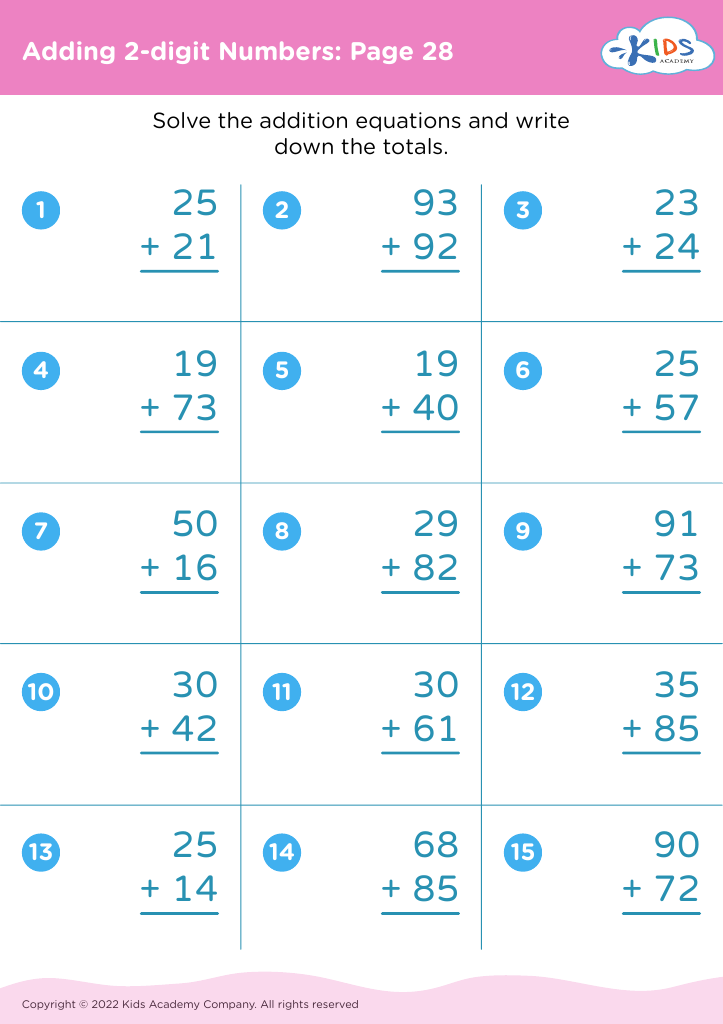
Adding 2-digit Numbers: Page 28

Adding 2-digit Numbers: Page 28

Adding 2-digit Numbers: Page 28
Worksheet
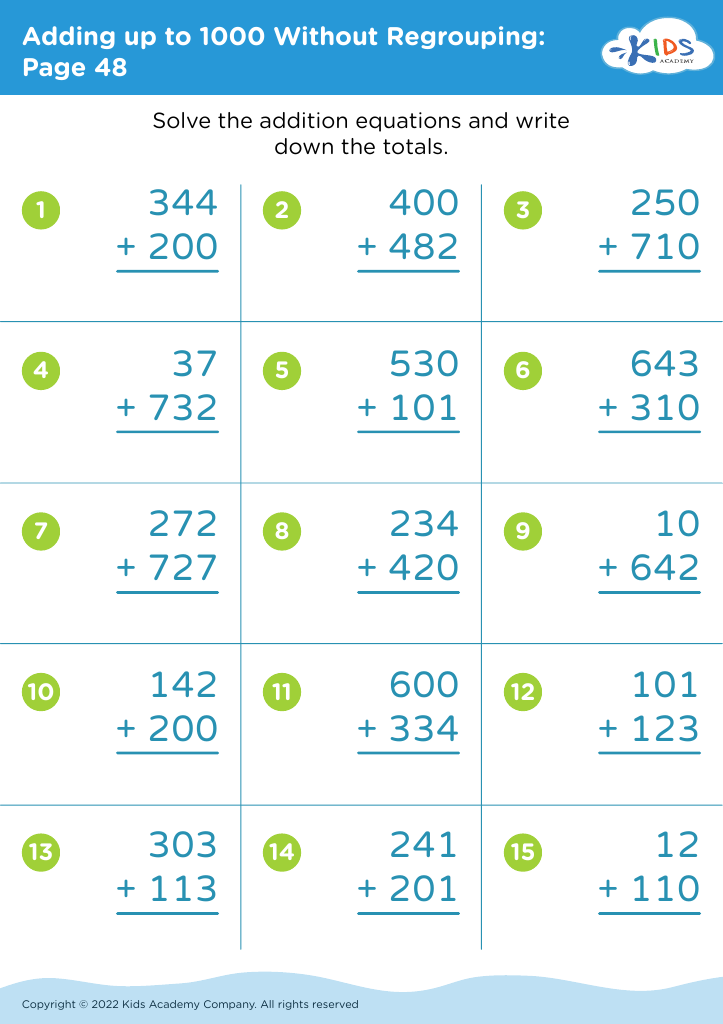
Adding up to 1000 Without Regrouping: Page 48
Worksheet
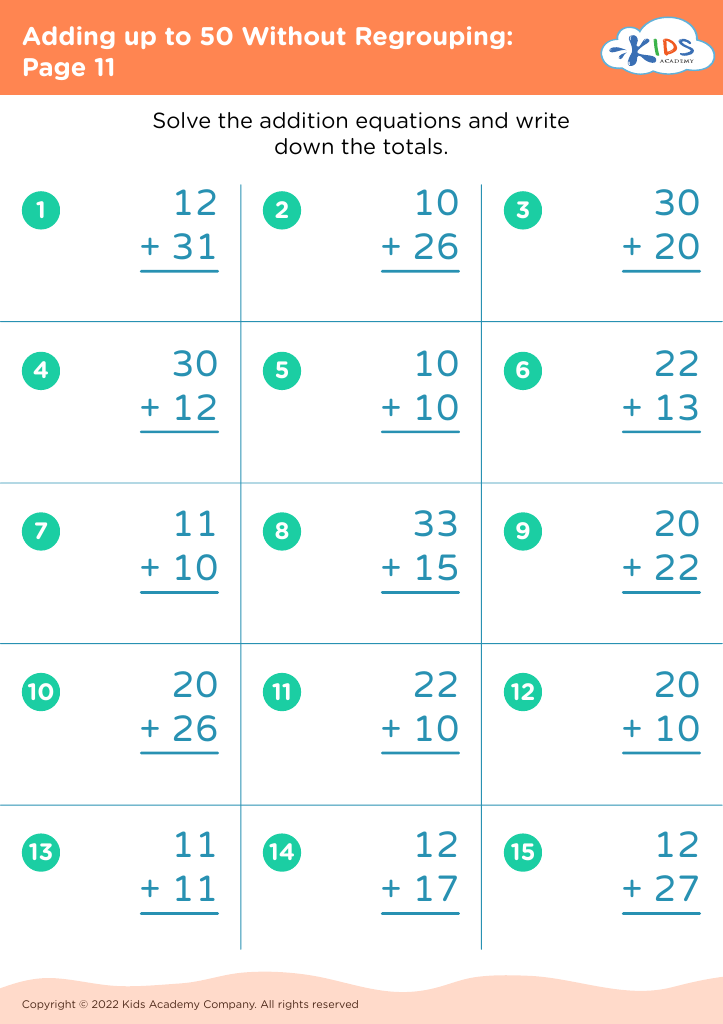
Adding up to 50 Without Regrouping: Page 11
Worksheet
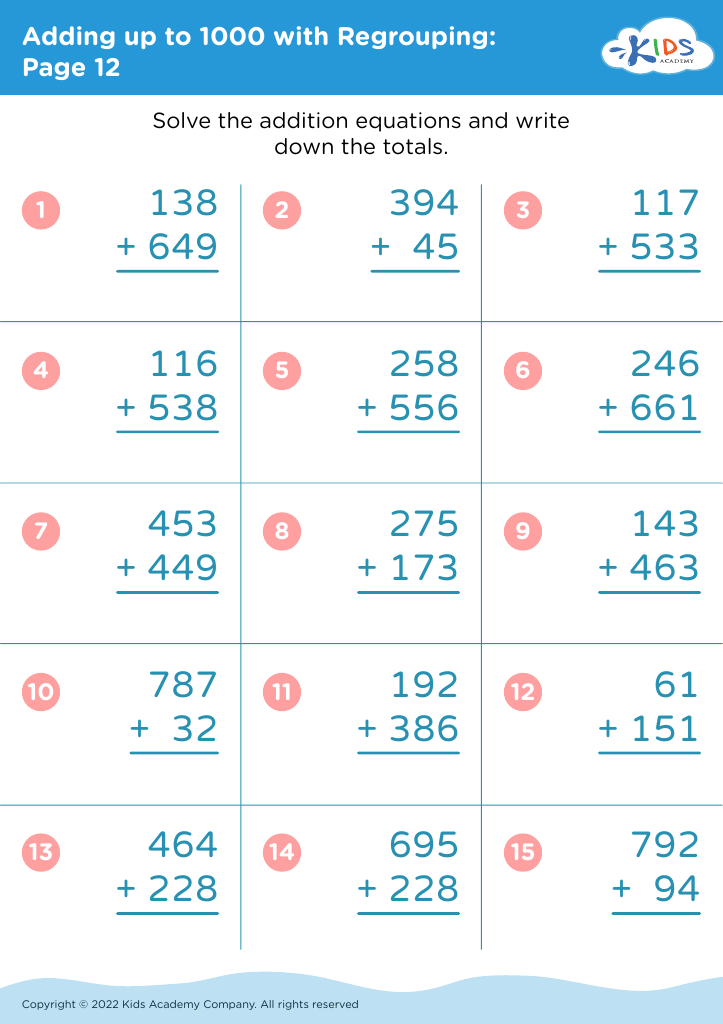
Adding up to 1000 with Regrouping: Page 12
Worksheet
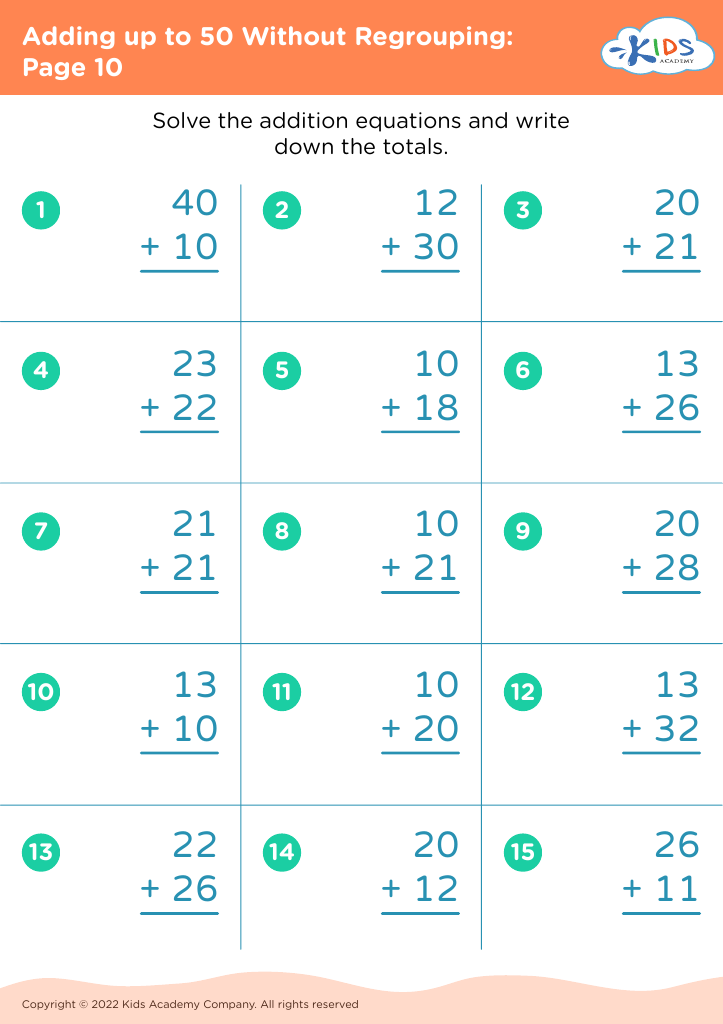
Adding up to 50 Without Regrouping: Page 10
Worksheet
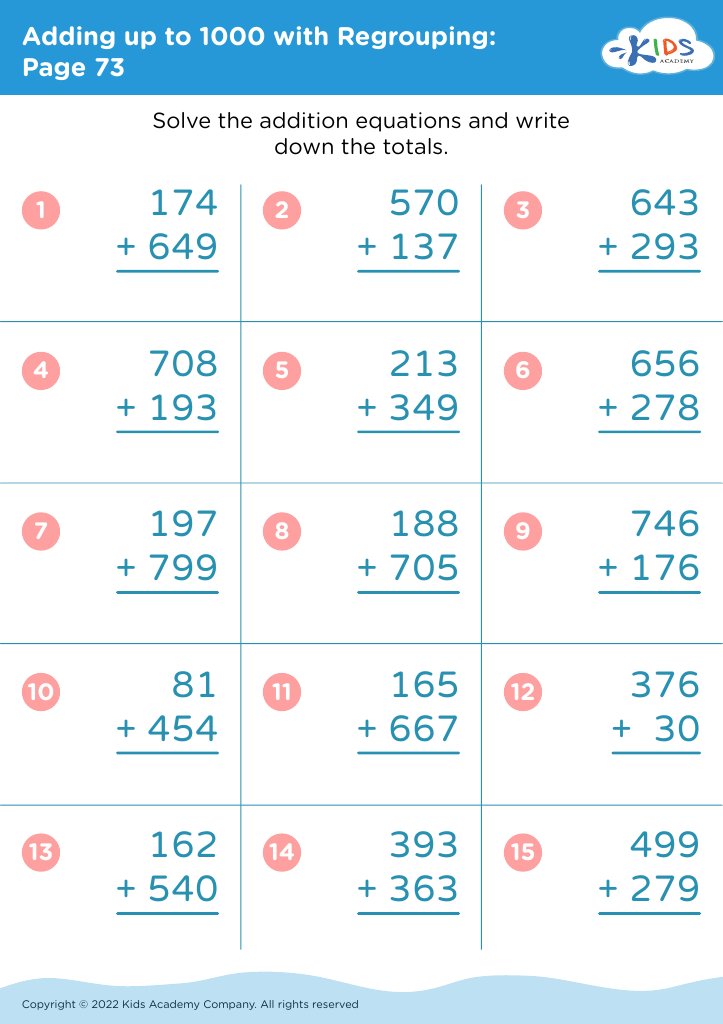
Adding up to 1000 with Regrouping: Page 73
Worksheet
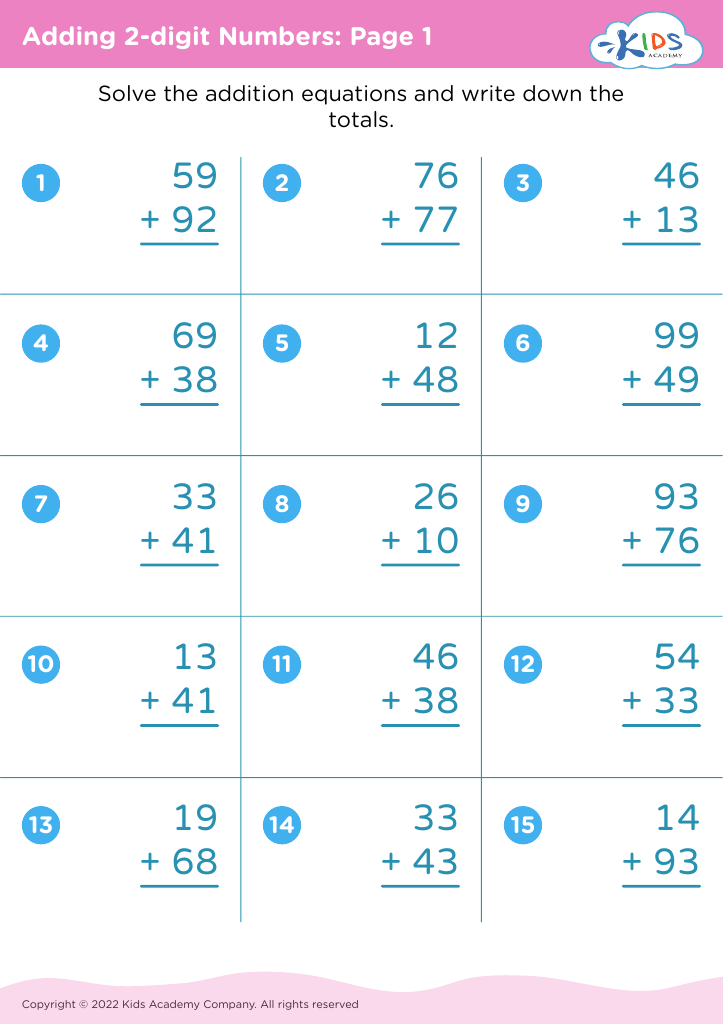
Adding 2-digit Numbers: Page 1

Adding 2-digit Numbers: Page 1

Adding 2-digit Numbers: Page 1
Worksheet
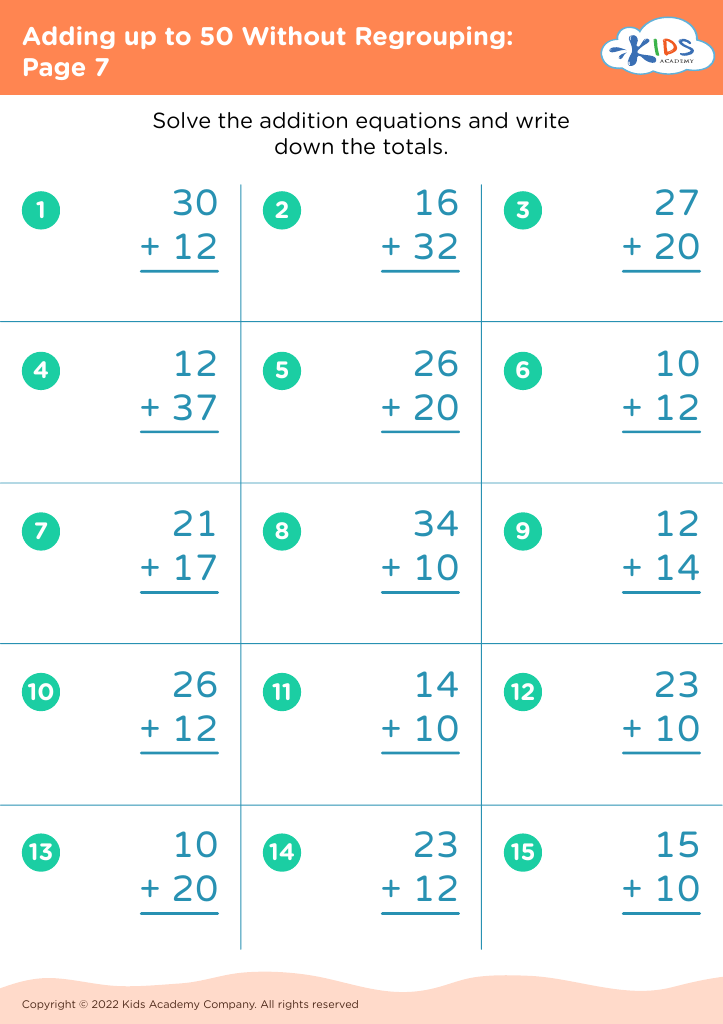
Adding up to 50 Without Regrouping: Page 7
Worksheet
Second Grade Math Worksheets

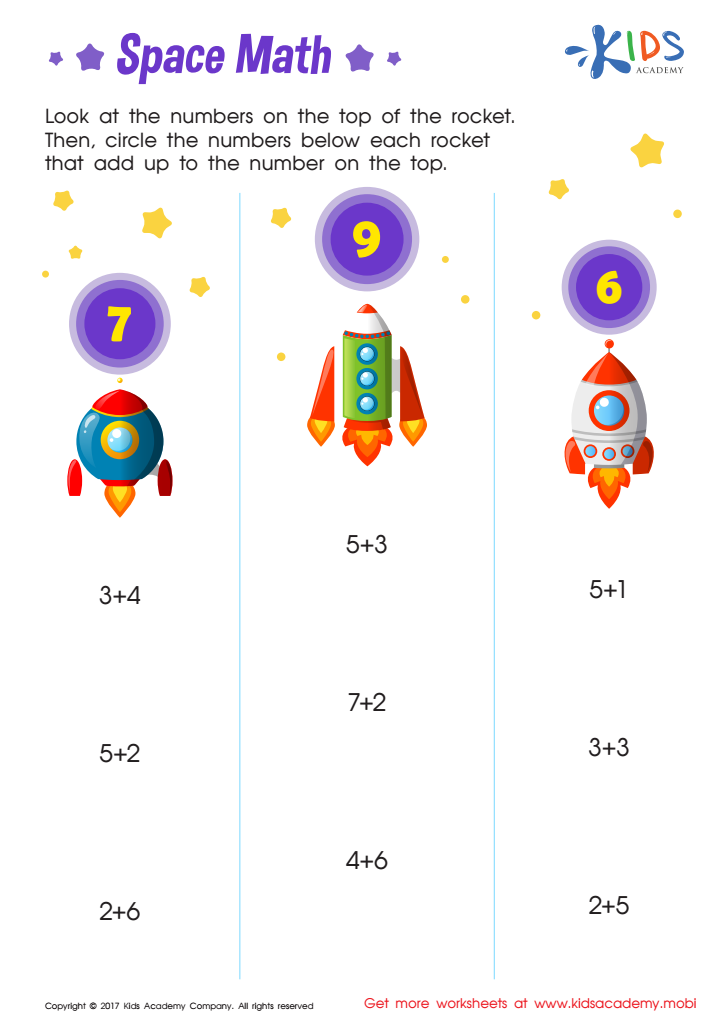
Addition: Space Math Worksheet

Fun and engaging space-themed practice with vivid pictures and matching numbers will make learning more meaningful. Take their math skills out of this galaxy today with Kids Academy!
Addition: Space Math Worksheet
Worksheet
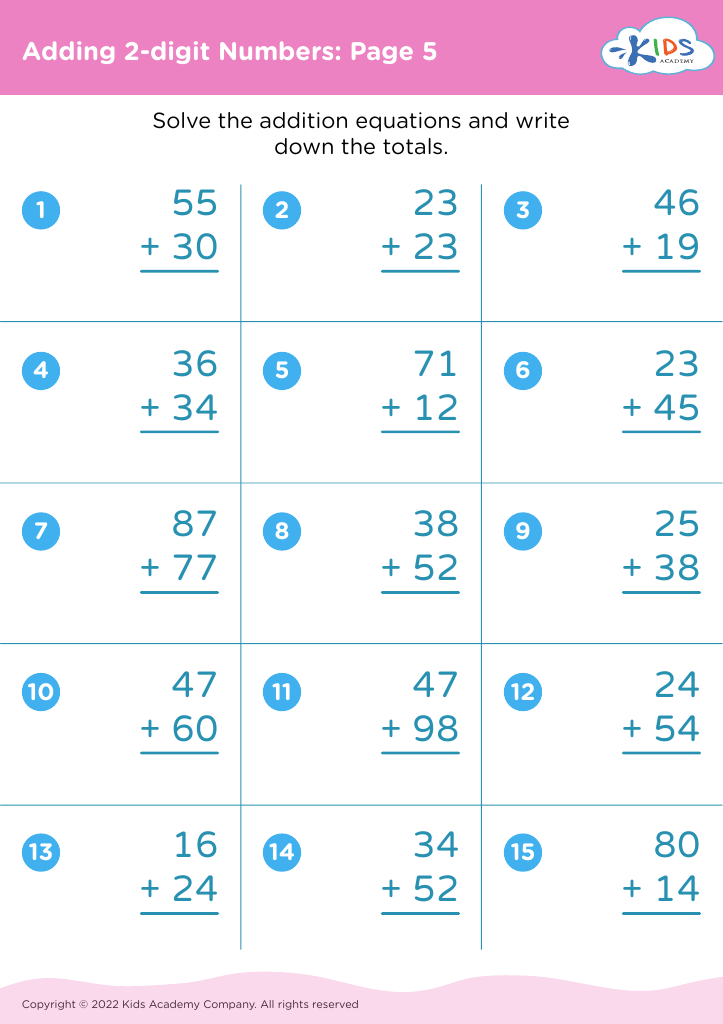
Adding 2-digit Numbers: Page 5

Adding 2-digit Numbers: Page 5

Adding 2-digit Numbers: Page 5
Worksheet
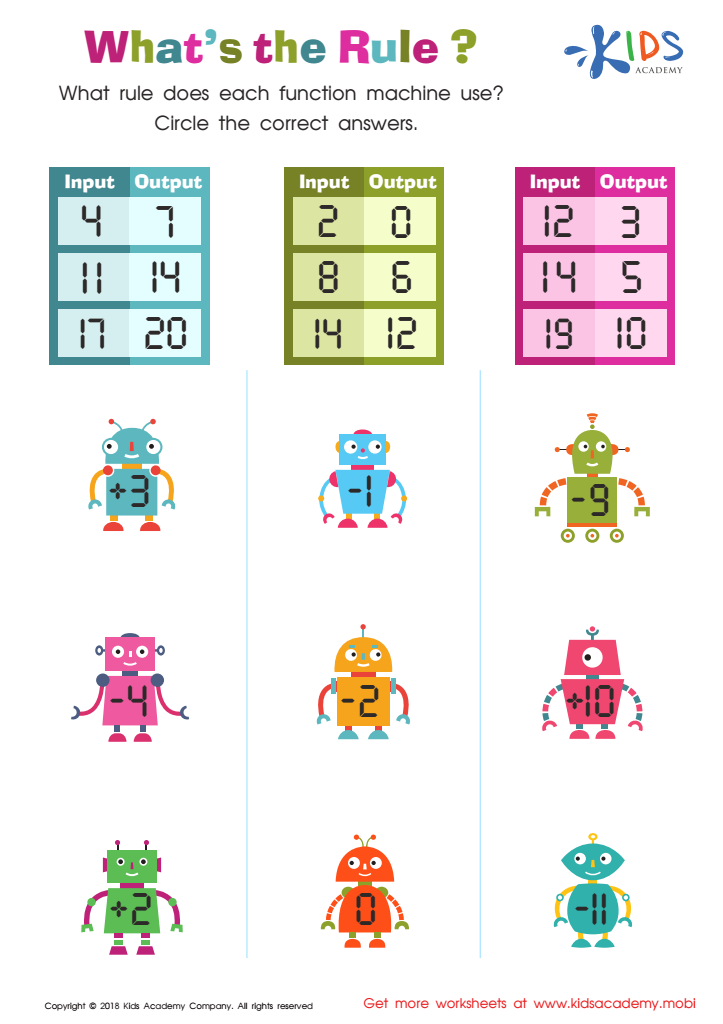
What's the Rule Worksheet

What's the Rule Worksheet

Robots are here to help your child find the relationship between each set of numbers! Adorably illustrated worksheets use vivid pictures that each contain a rule. Look at each function machine and find the pattern or relationship between the input and output. Then, complete the sheet by circling the correct answer!
What's the Rule Worksheet
Worksheet
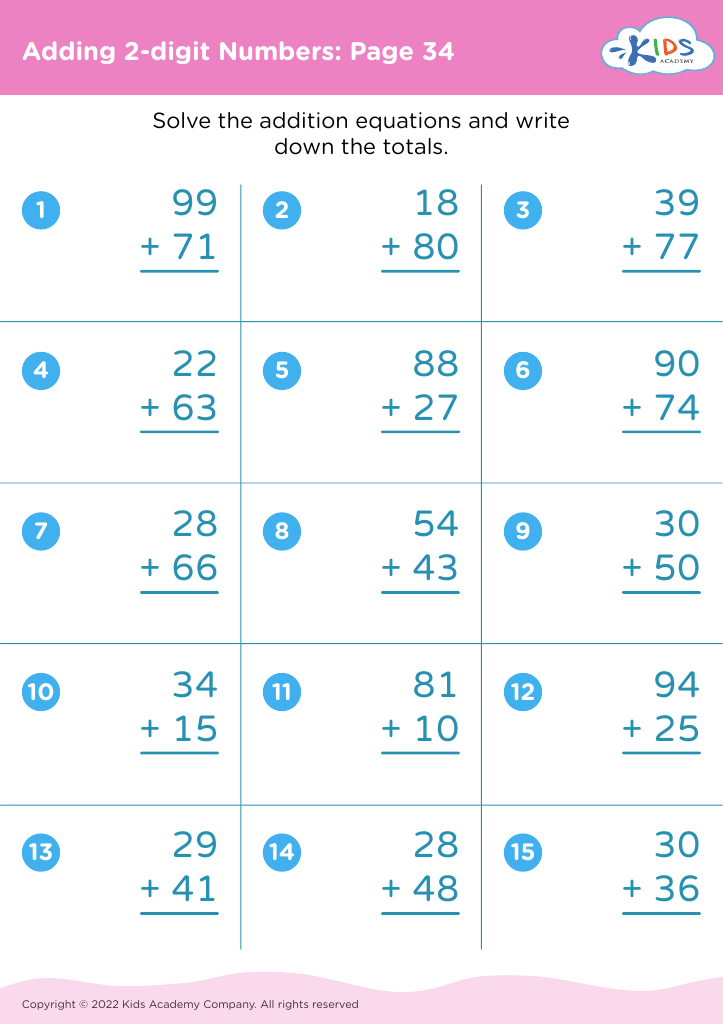
Adding 2-digit Numbers: Page 34

Adding 2-digit Numbers: Page 34

Adding 2-digit Numbers: Page 34
Worksheet
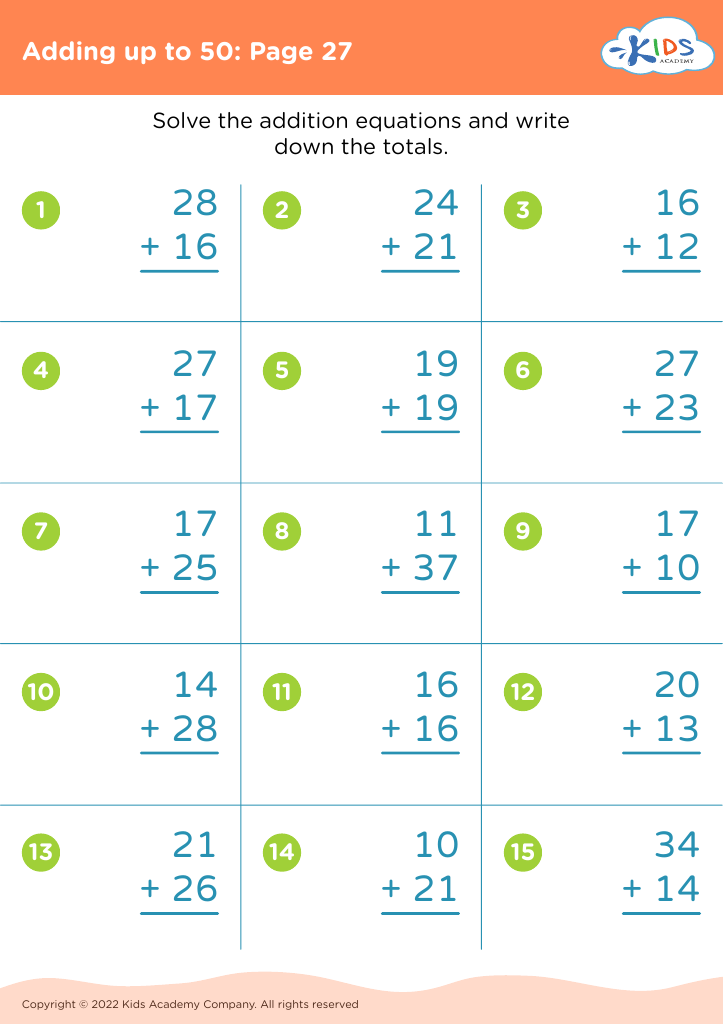
Adding up to 50: Page 27

Adding up to 50: Page 27

Adding up to 50: Page 27
Worksheet
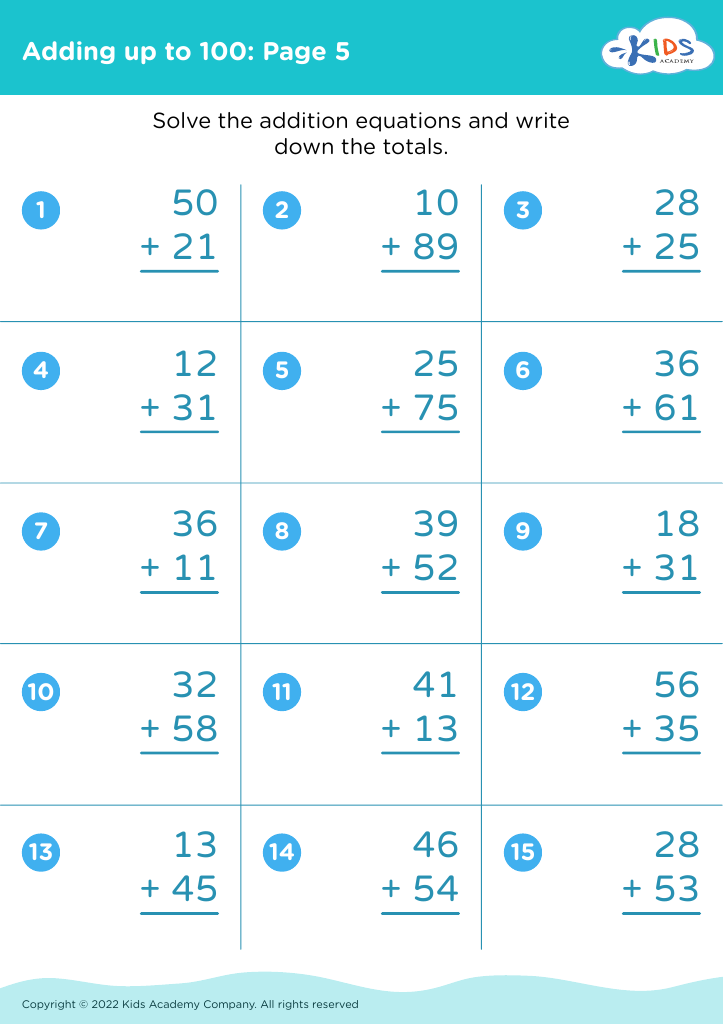
Adding up to 100: Page 5

Adding up to 100: Page 5

Adding up to 100: Page 5
Worksheet
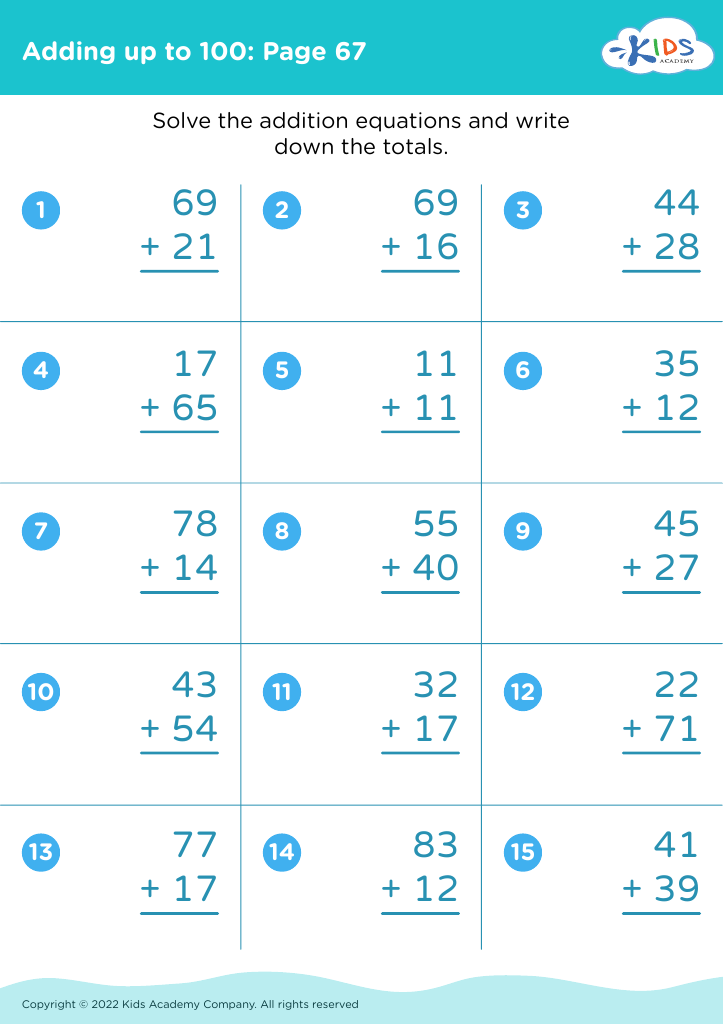
Adding up to 100: Page 67

Adding up to 100: Page 67

Adding up to 100: Page 67
Worksheet
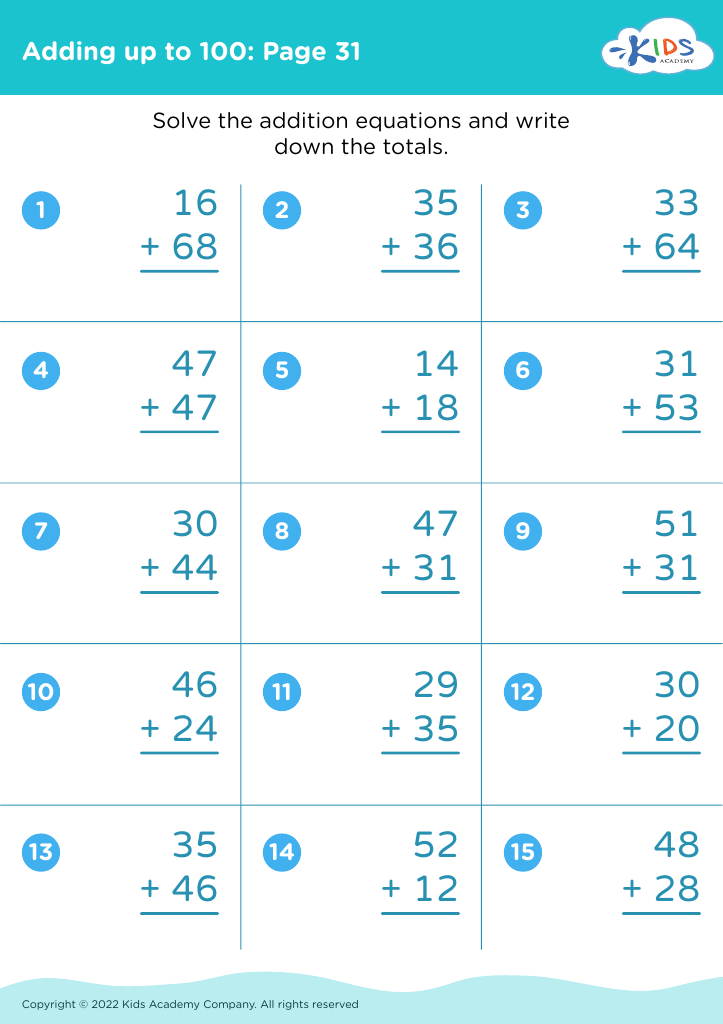
Adding up to 100: Page 31

Adding up to 100: Page 31

Adding up to 100: Page 31
Worksheet
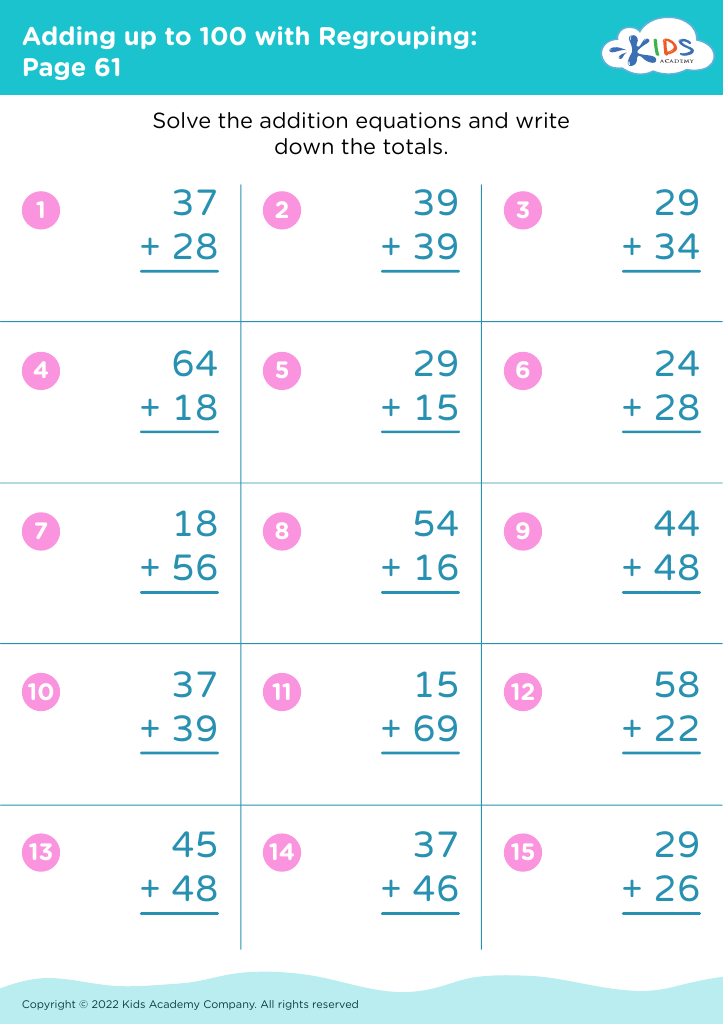
Adding up to 100 with Regrouping: Page 61
Worksheet
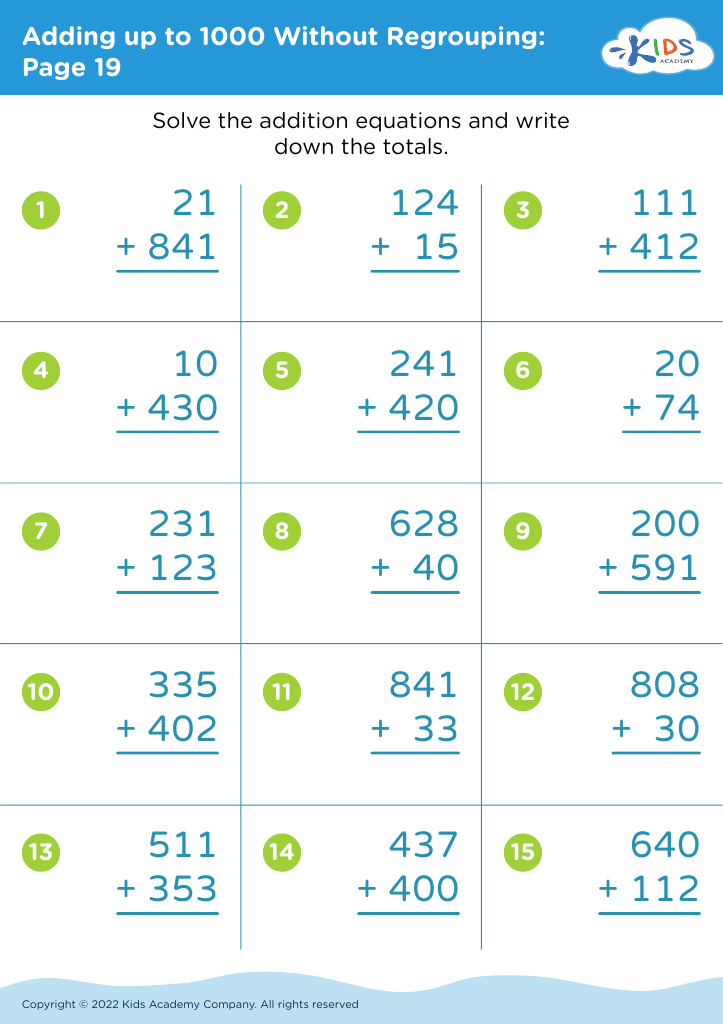
Adding up to 1000 Without Regrouping: Page 19
Worksheet
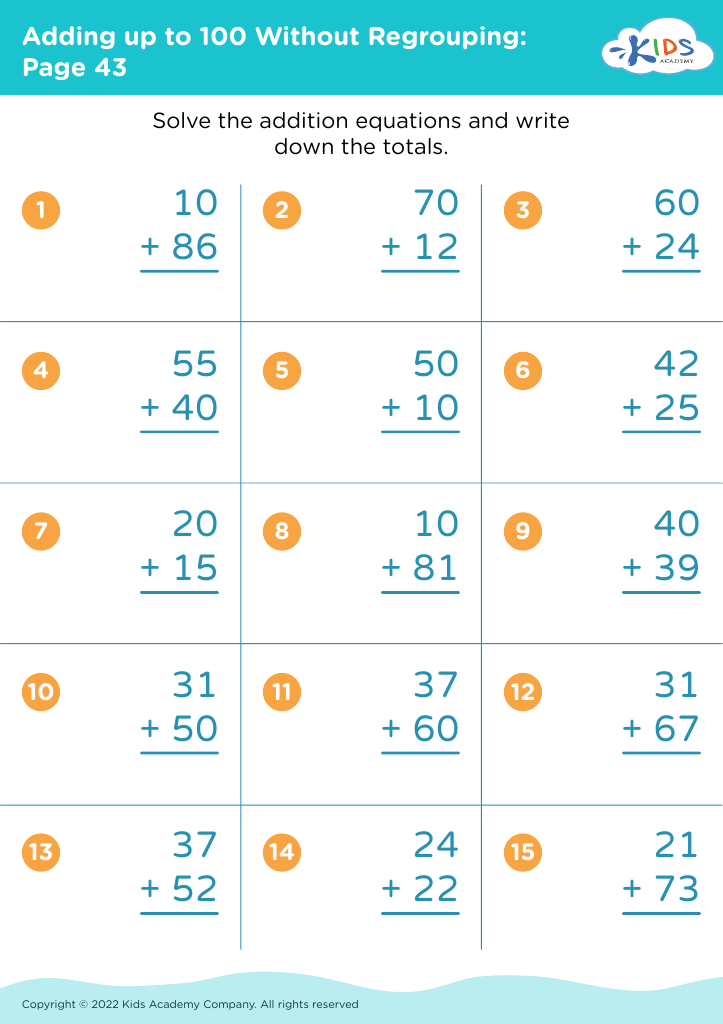
Adding up to 100 Without Regrouping: Page 43
Worksheet
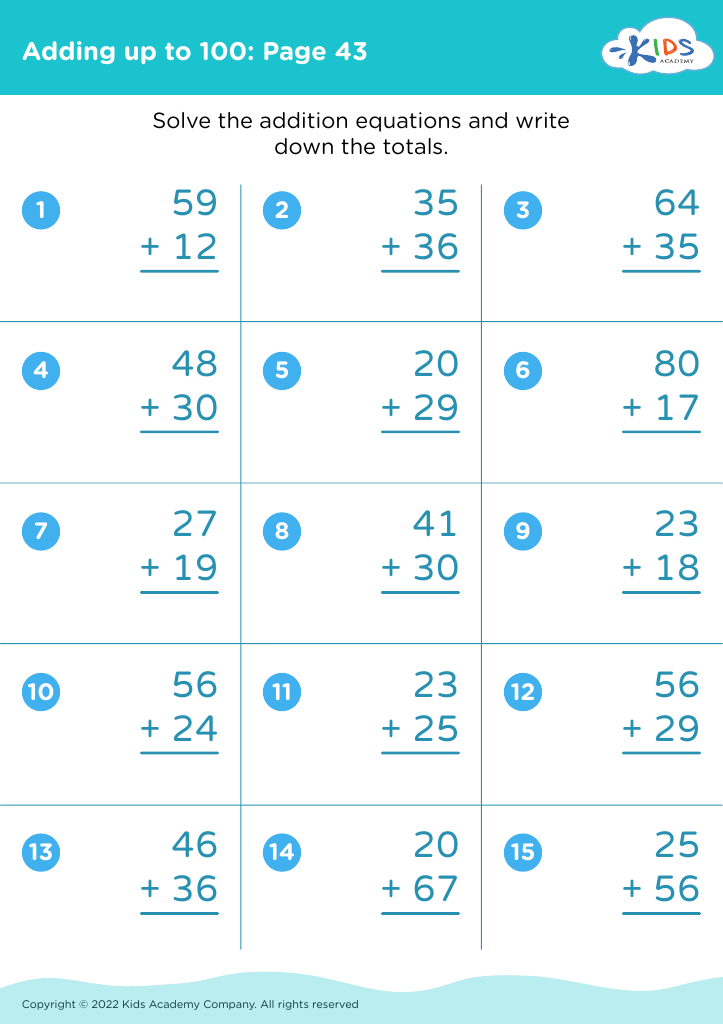
Adding up to 100: Page 43

Adding up to 100: Page 43

Adding up to 100: Page 43
Worksheet
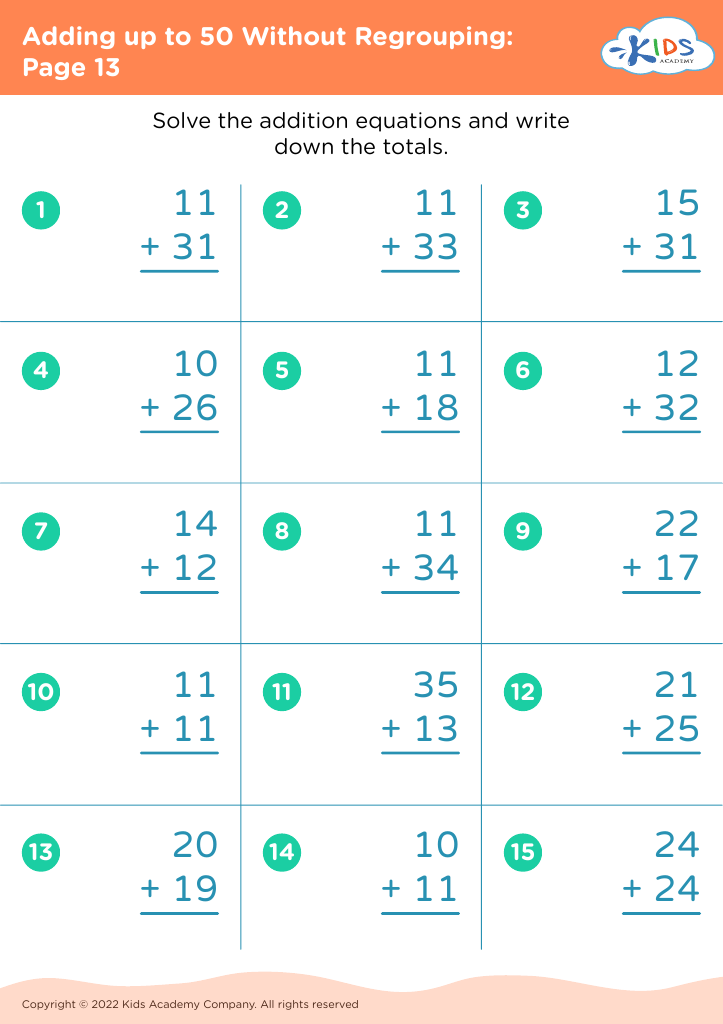
Adding up to 50 Without Regrouping: Page 13
Worksheet
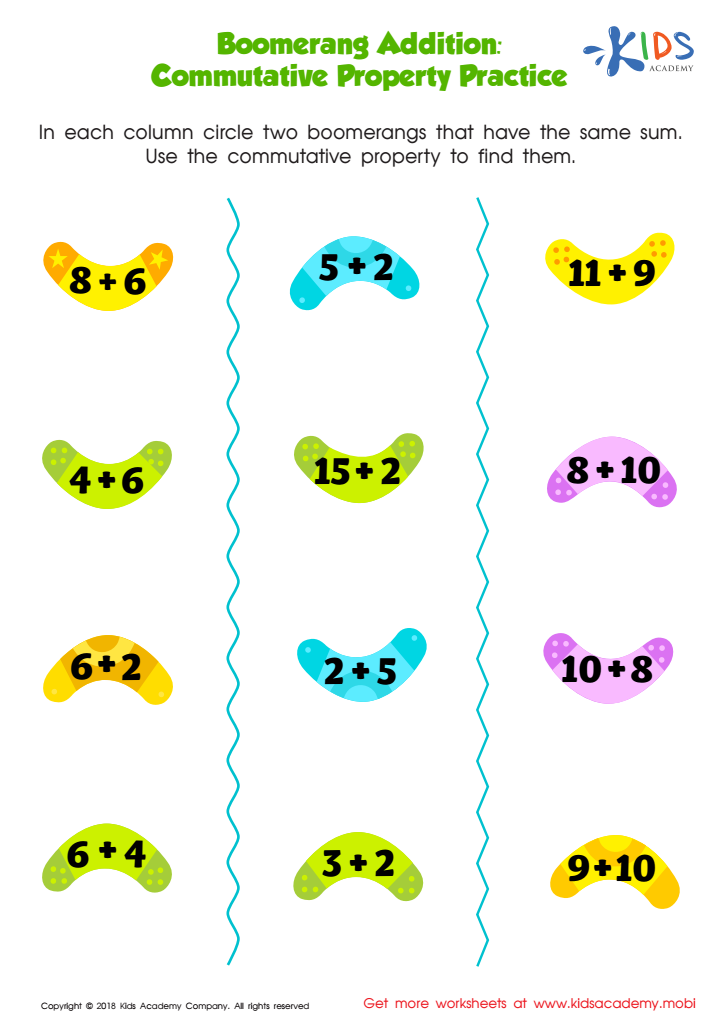
Boomerang Addition Worksheet
Boomerang Addition Worksheet

Kids know that when a boomerang is thrown, it reverses its path back. The same goes for addition: numbers can be rearranged and the sum will remain the same. Use this worksheet to find matching pairs of colorful boomerangs and equations. Look through each column and use the commutative property to find the pairs with the same sum.
Boomerang Addition Worksheet

Worksheet
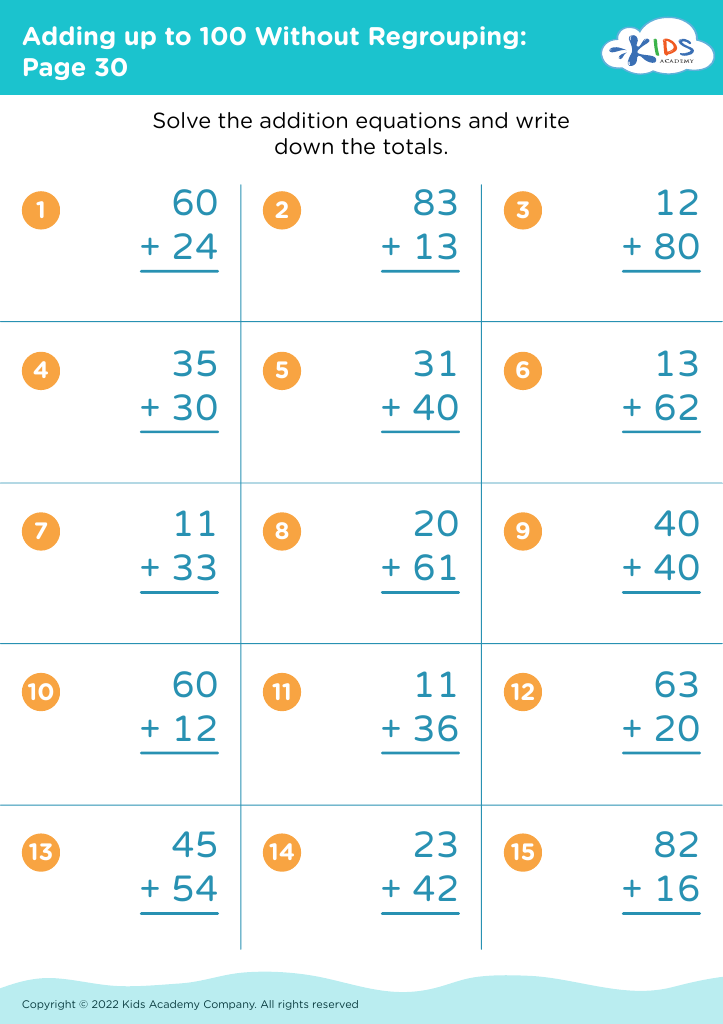
Adding up to 100 Without Regrouping: Page 30
Worksheet
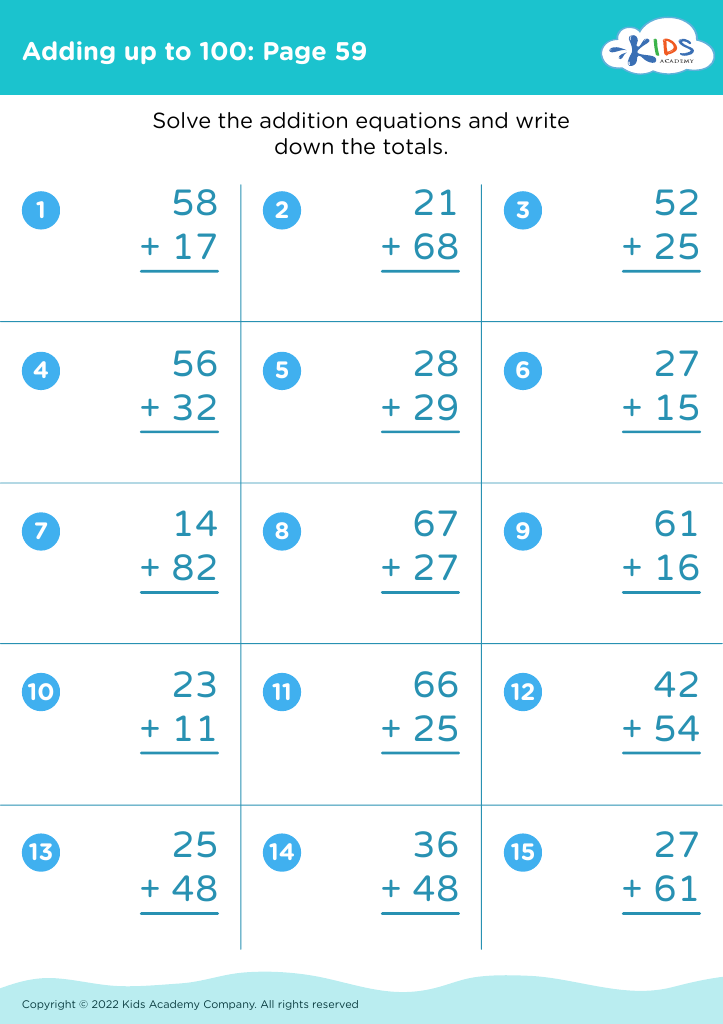
Adding up to 100: Page 59

Adding up to 100: Page 59

Adding up to 100: Page 59
Worksheet


Understanding patterns in addition and subtraction forms a critical foundation for children aged 7-8, setting the stage for more complex math skills. At this age, young learners are developing their number sense, a crucial component of mathematical comprehension. By recognizing and understanding patterns in addition and subtraction, they transition from counting individual numbers to recognizing arithmetic operations more intuitively.

First, patterns provide a structured way for children to learn and predict numerical outcomes. For example, the commutative property (8 + 2 = 2 + 8) and recognizing sequences in addition (e.g., adding 1 every time leads to a sequence) help children grasp basic math concepts more quickly and accurately.

Second, comprehension of patterns improves problem-solving skills. When students recognize that subtracting a small number from a larger one consistently reduces the total in predictable steps, they can tackle arithmetic problems with greater confidence and accuracy.

Lastly, understanding these patterns isn't just about immediate math skills; it fosters logical thinking and cognitive development. These skills are transferable across subjects and necessary for everyday decision-making and scientific reasoning.

By focusing on these patterns, parents and teachers equip children with tools that simplify learning, enabling them to build a strong mathematical foundation crucial for future academic and life successes.