Understanding patterns Addition & Subtraction Worksheets for Ages 7-8 - Page 2
31 filtered results
-
From - To
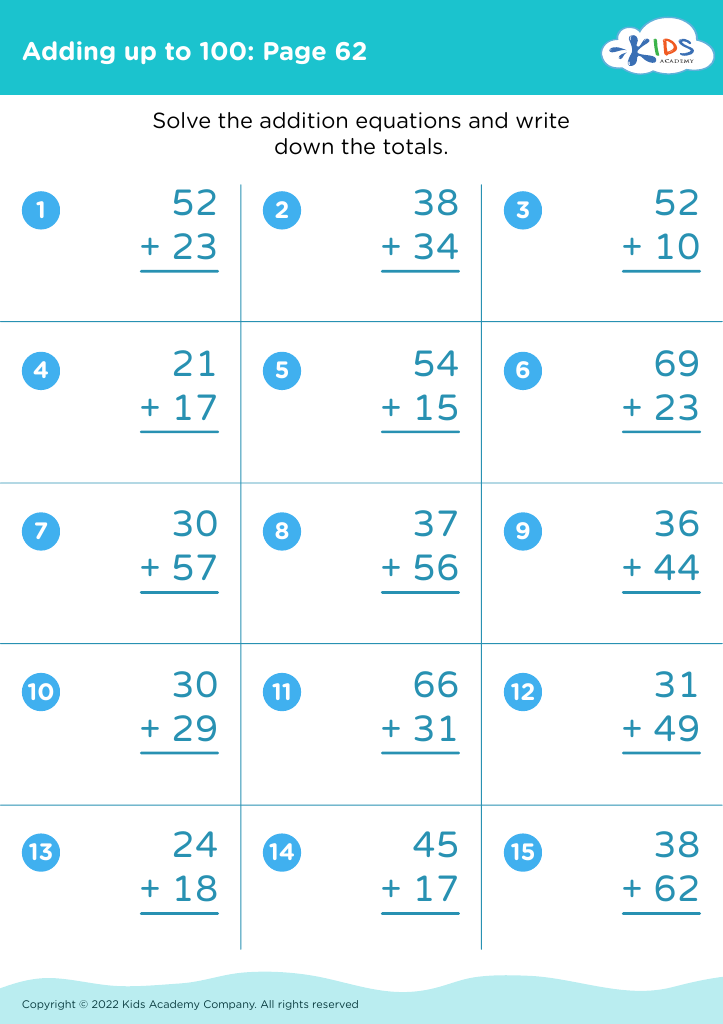
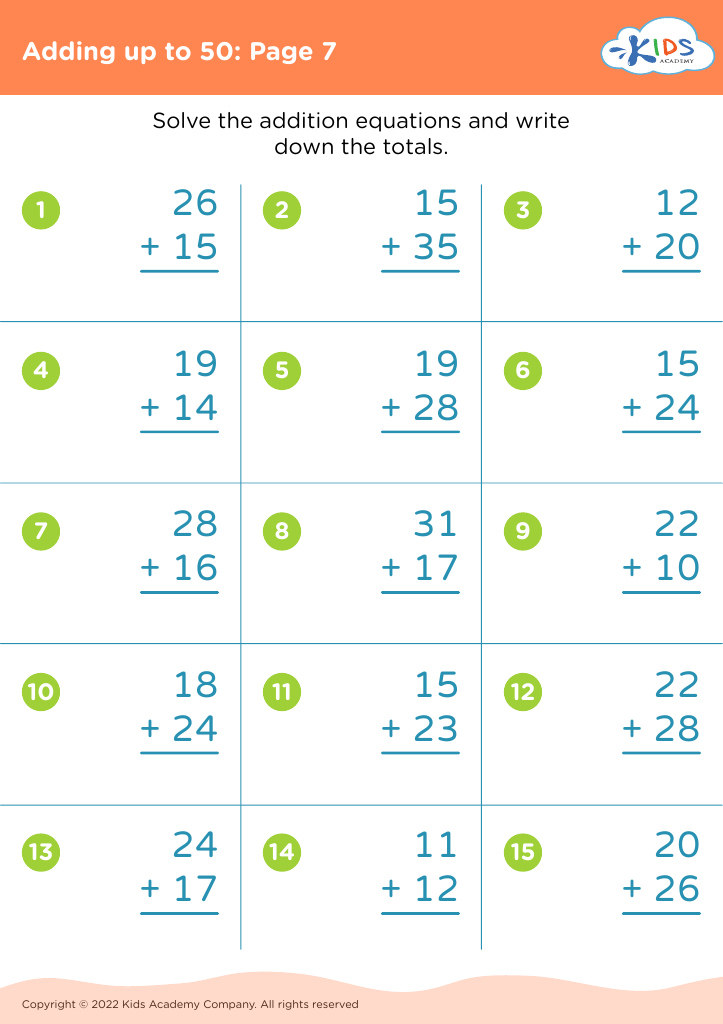
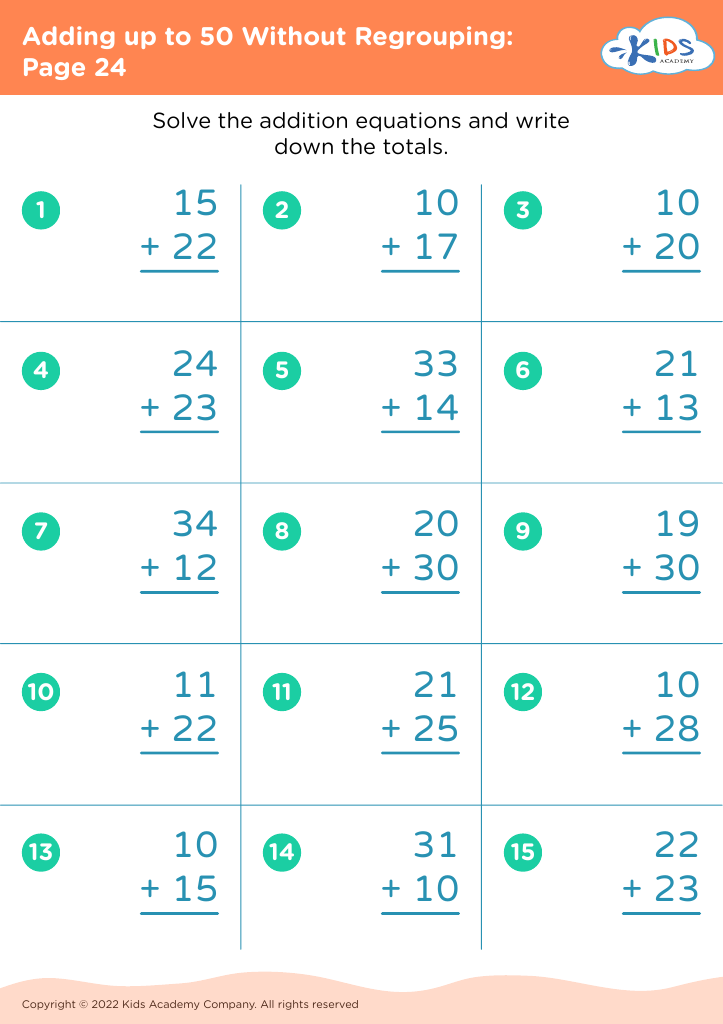
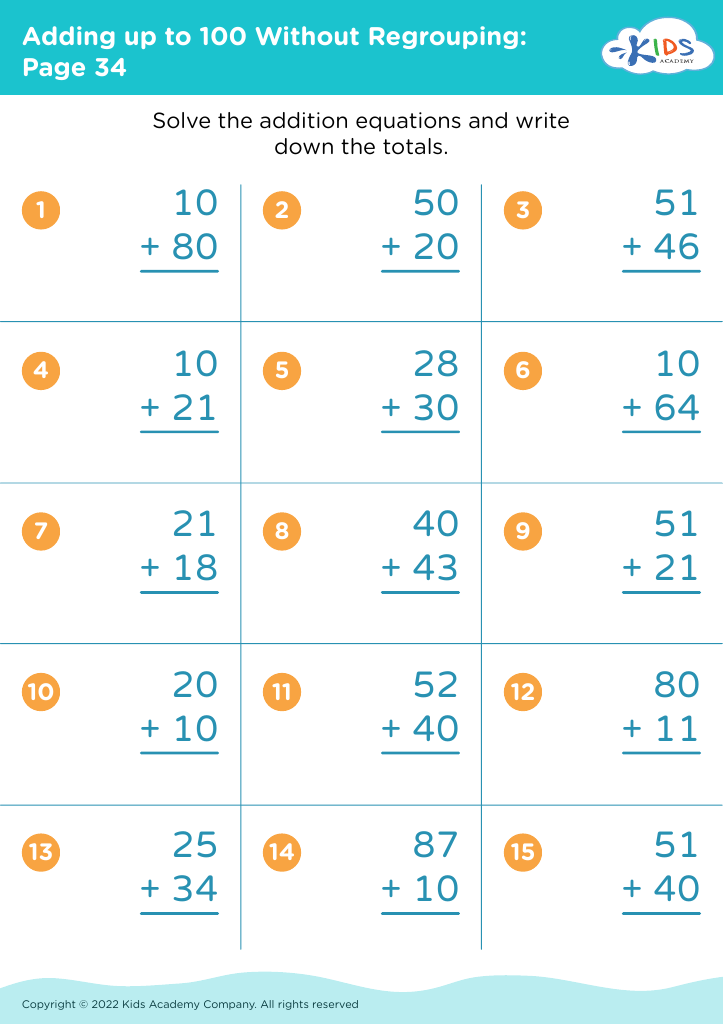
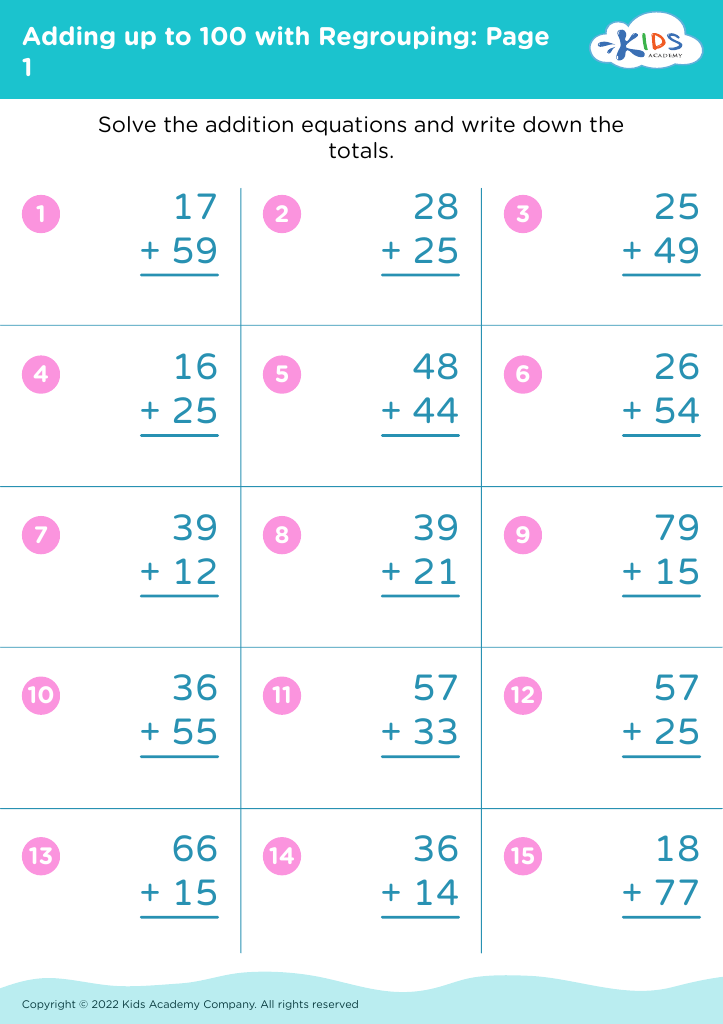
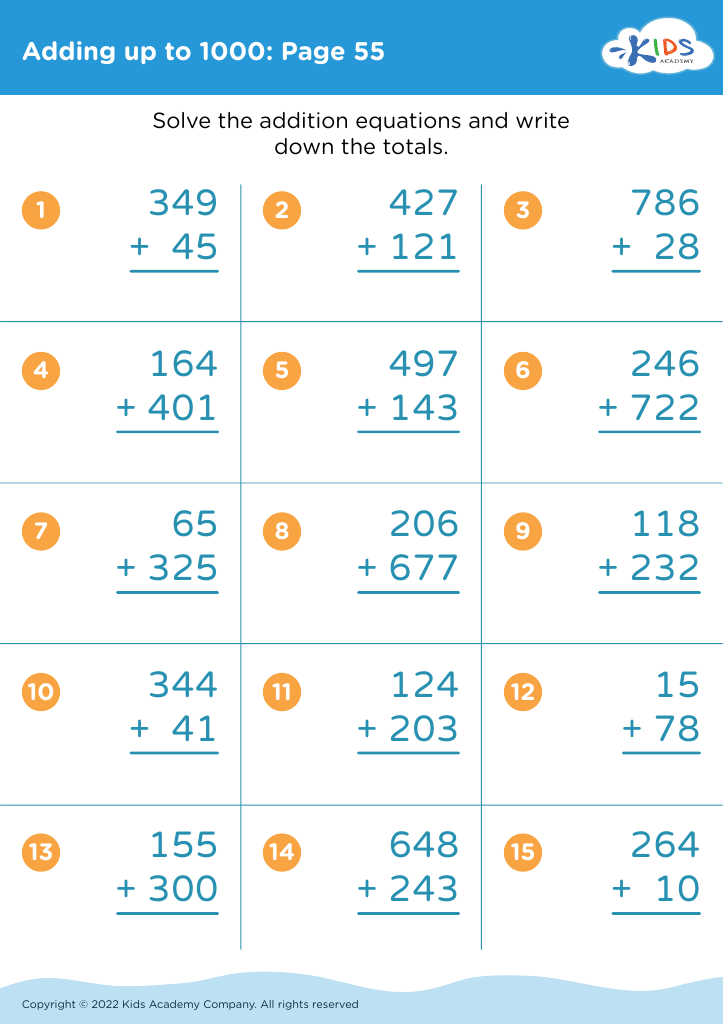
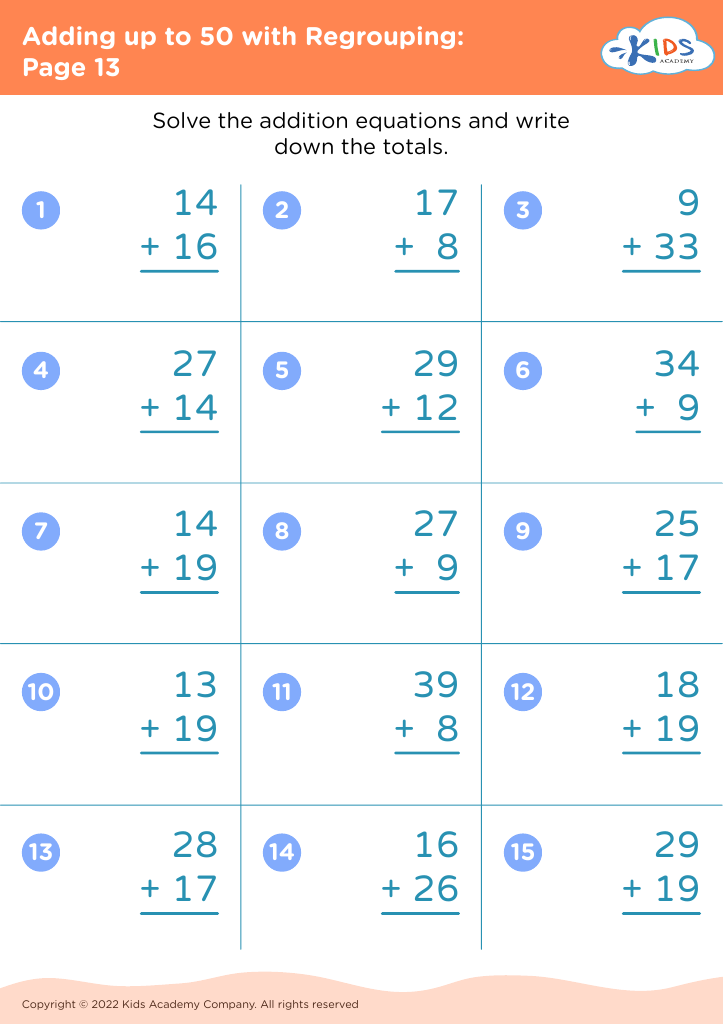








Understanding patterns in addition and subtraction forms a critical foundation for children aged 7-8, setting the stage for more complex math skills. At this age, young learners are developing their number sense, a crucial component of mathematical comprehension. By recognizing and understanding patterns in addition and subtraction, they transition from counting individual numbers to recognizing arithmetic operations more intuitively.
First, patterns provide a structured way for children to learn and predict numerical outcomes. For example, the commutative property (8 + 2 = 2 + 8) and recognizing sequences in addition (e.g., adding 1 every time leads to a sequence) help children grasp basic math concepts more quickly and accurately.
Second, comprehension of patterns improves problem-solving skills. When students recognize that subtracting a small number from a larger one consistently reduces the total in predictable steps, they can tackle arithmetic problems with greater confidence and accuracy.
Lastly, understanding these patterns isn't just about immediate math skills; it fosters logical thinking and cognitive development. These skills are transferable across subjects and necessary for everyday decision-making and scientific reasoning.
By focusing on these patterns, parents and teachers equip children with tools that simplify learning, enabling them to build a strong mathematical foundation crucial for future academic and life successes.








