Basic arithmetic skills Addition Worksheets for Ages 7-8
7 filtered results
-
From - To
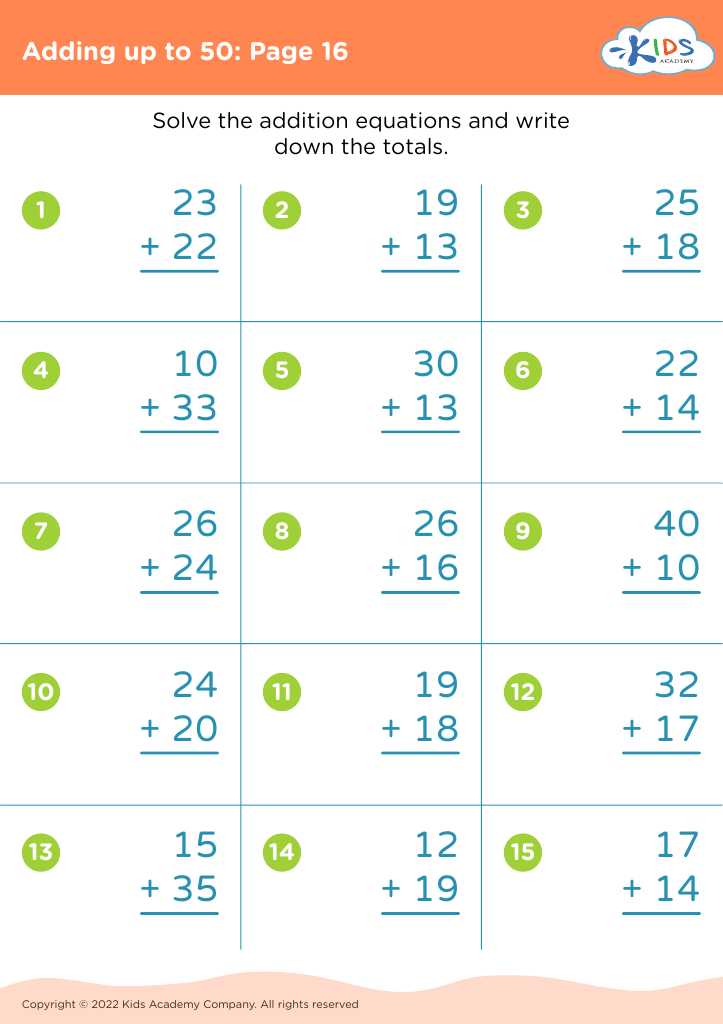
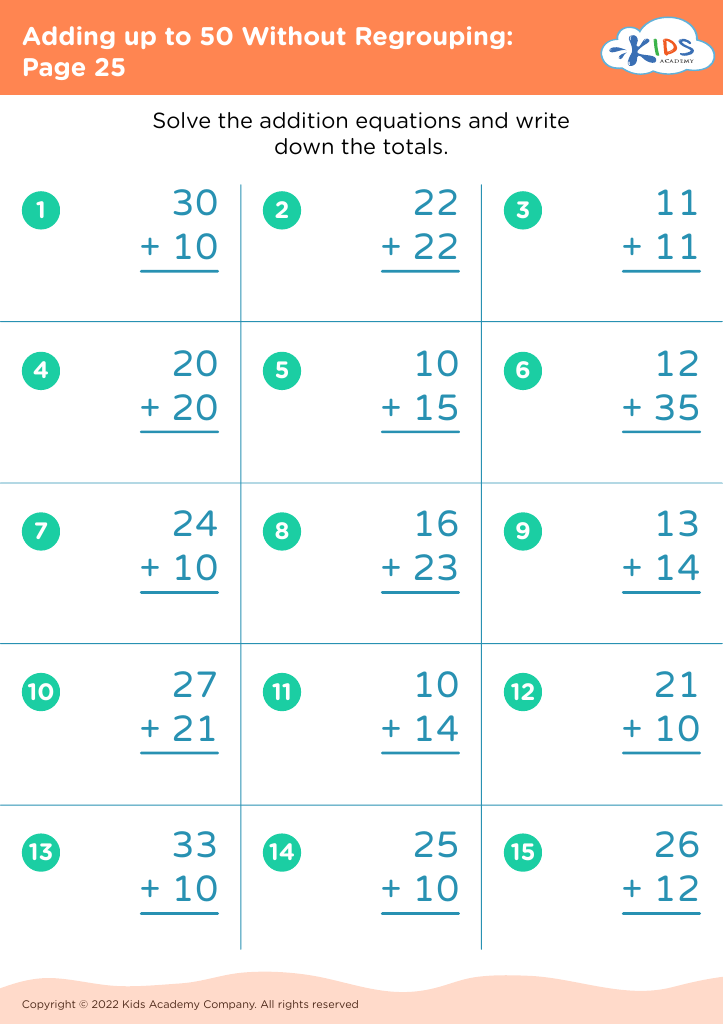
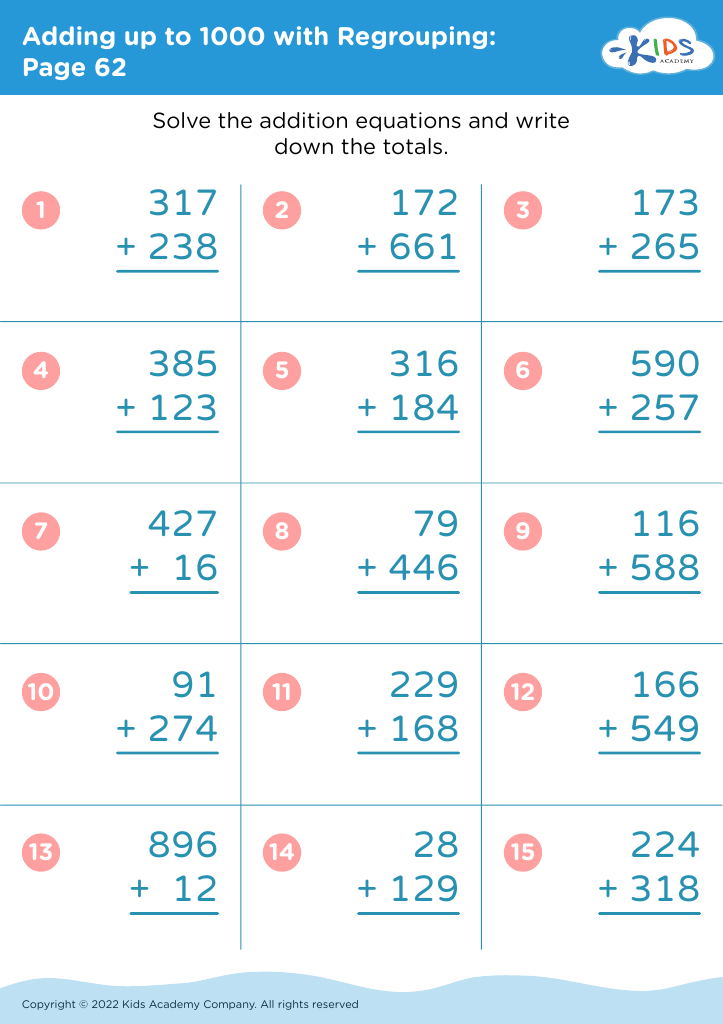
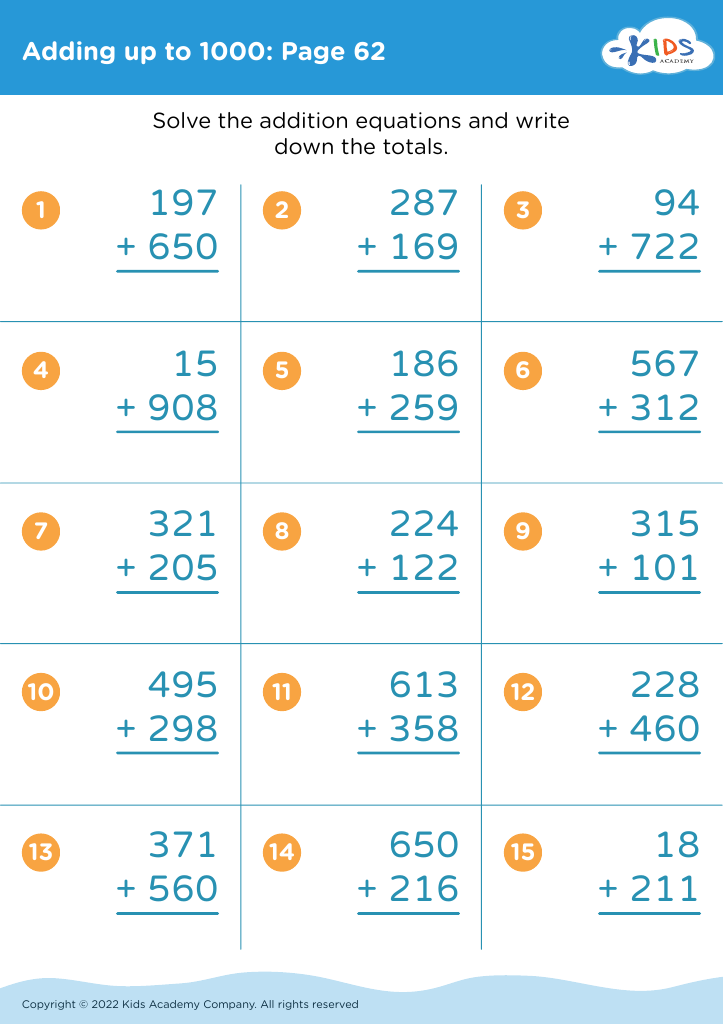
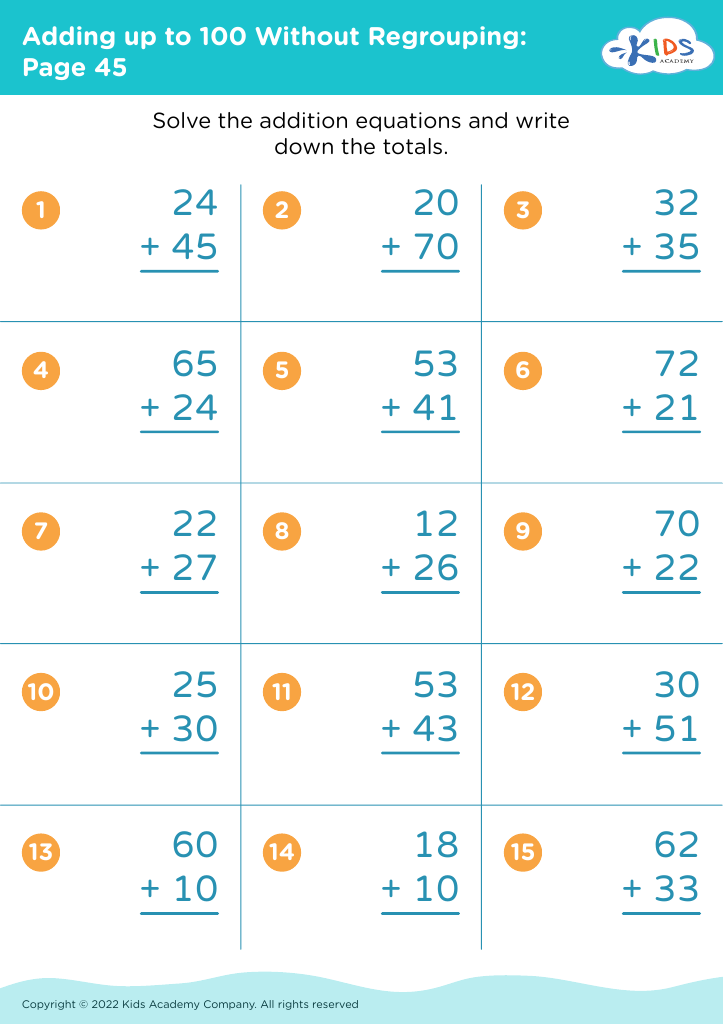
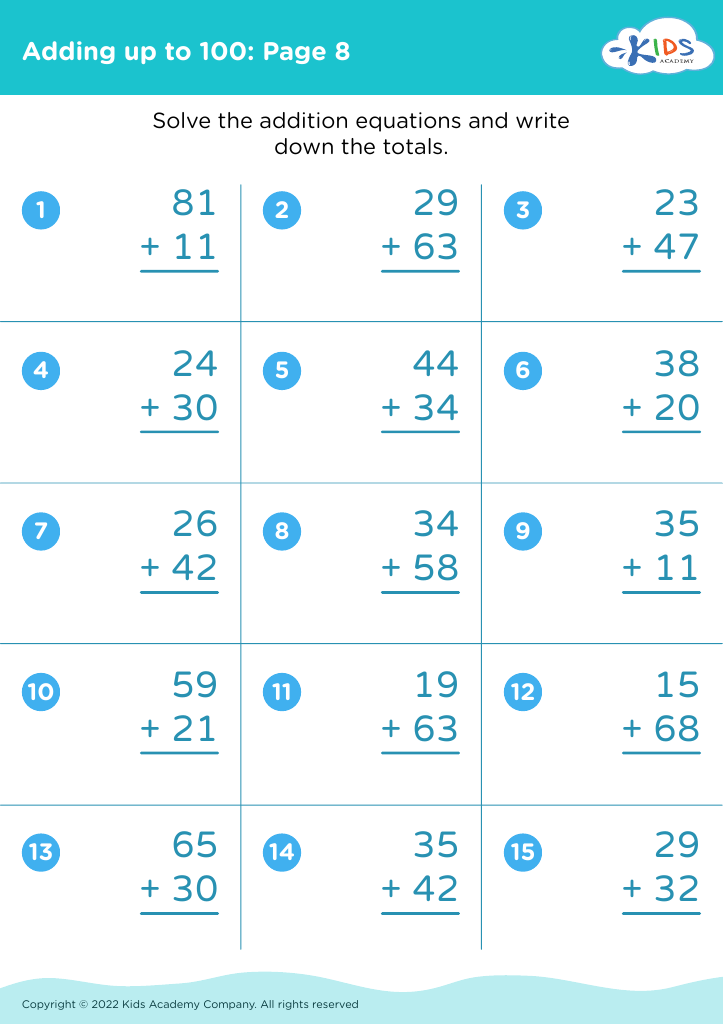
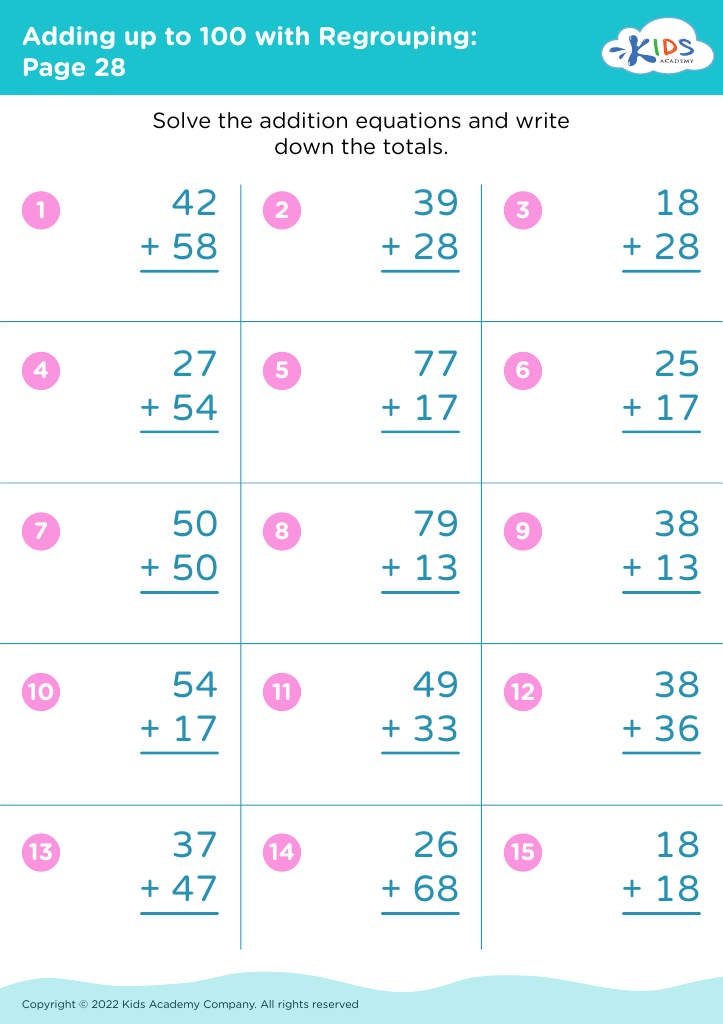
Enhance your child’s foundational math abilities with our Basic Arithmetic Skills Addition Worksheets for Ages 7-8. These engaging and educational worksheets are designed to help young learners practice and master the essential skills of addition. Each worksheet offers fun and visually appealing problems tailored for children, ensuring that practice feels like play. Perfectly suited for home or classroom use, these resources help children build confidence, improve problem-solving skills, and develop a love for math. Watch your child's proficiency grow as they progress through varying difficulty levels, preparing them for more advanced mathematical concepts. Start their journey to arithmetic excellence today!








Basic arithmetic skills, particularly addition, hold substantial importance for children aged 7-8. At this developmental stage, foundational arithmetic skills serve as building blocks for more complex mathematical concepts. Proficiency in addition aids in enhancing cognitive skills such as critical thinking, problem-solving, and logical reasoning. When children fluently understand and perform addition, they build confidence that extends to all areas of learning and stimulates a positive attitude towards mathematics.
For parents and teachers, prioritizing addition is crucial as it influences academic success. Children who master basic arithmetic can progress to more advanced topics, like multiplication, fractions, and algebra, with greater ease. This early mastery supports overall numeracy, which is essential for daily life activities, from telling time to managing money.
Additionally, fostering addition skills helps children develop persistence and patience. These qualities are valuable not only academically but also in real-life scenarios, where challenges and problem-solving are inevitable.
In essence, focusing on addition at this age ensures a strong mathematical foundation, facilitates deeper comprehension of more advanced math concepts in the future, and cultivates essential life skills. Parents and teachers play pivotal roles in nurturing these skills through encouragement, practice, and creating a supportive learning environment.








