Enhance critical thinking Addition Worksheets for Ages 7-8
4 filtered results
-
From - To
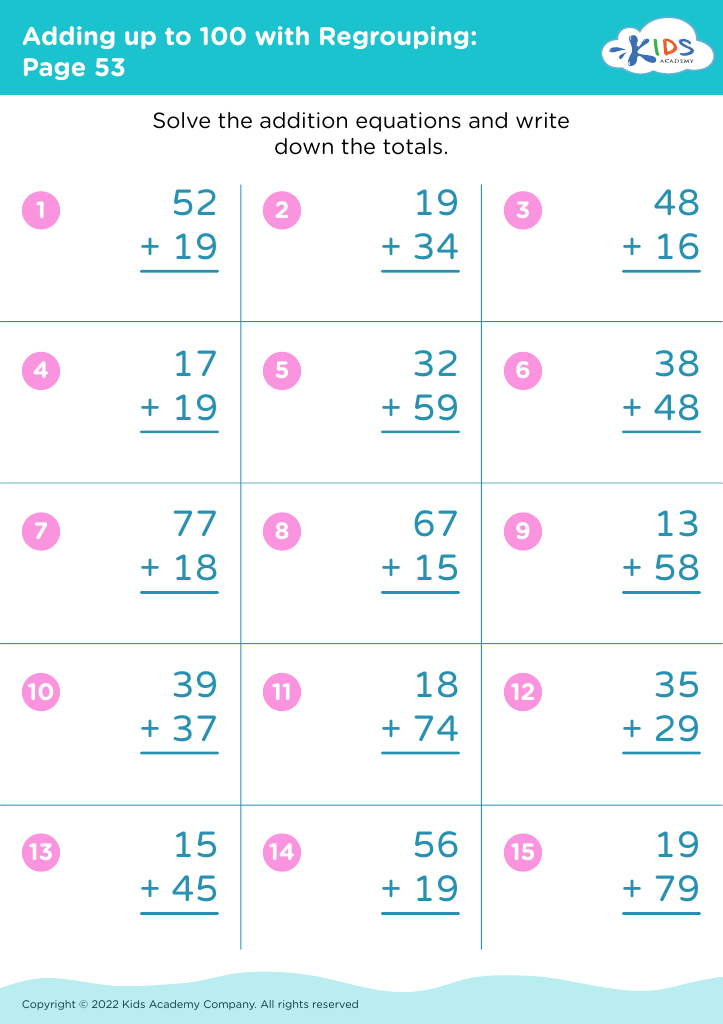
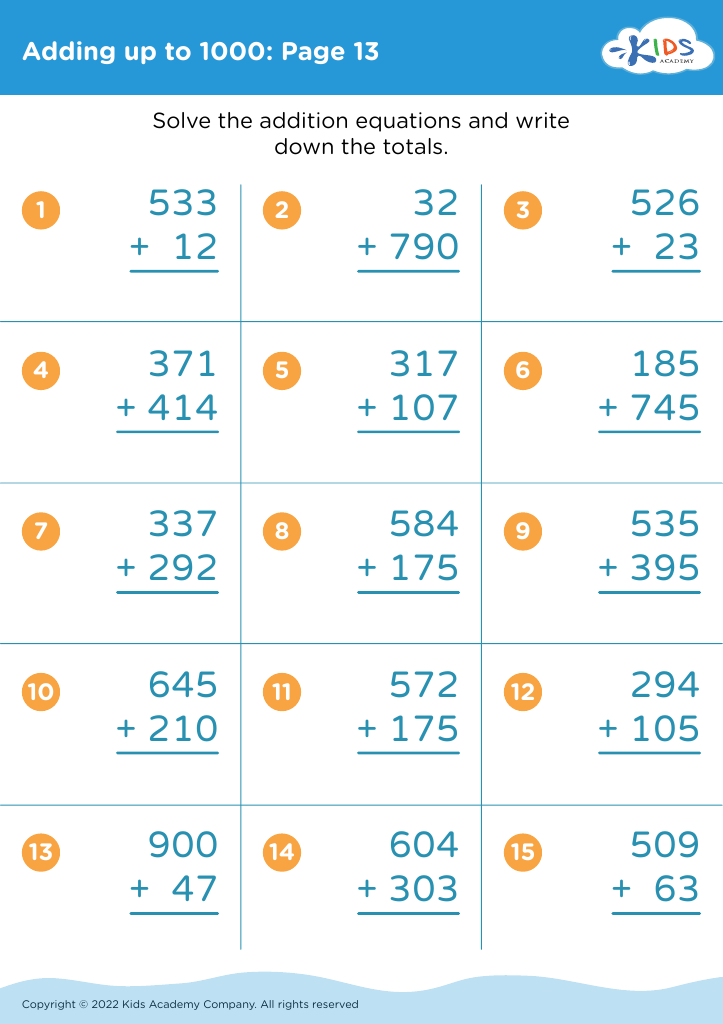
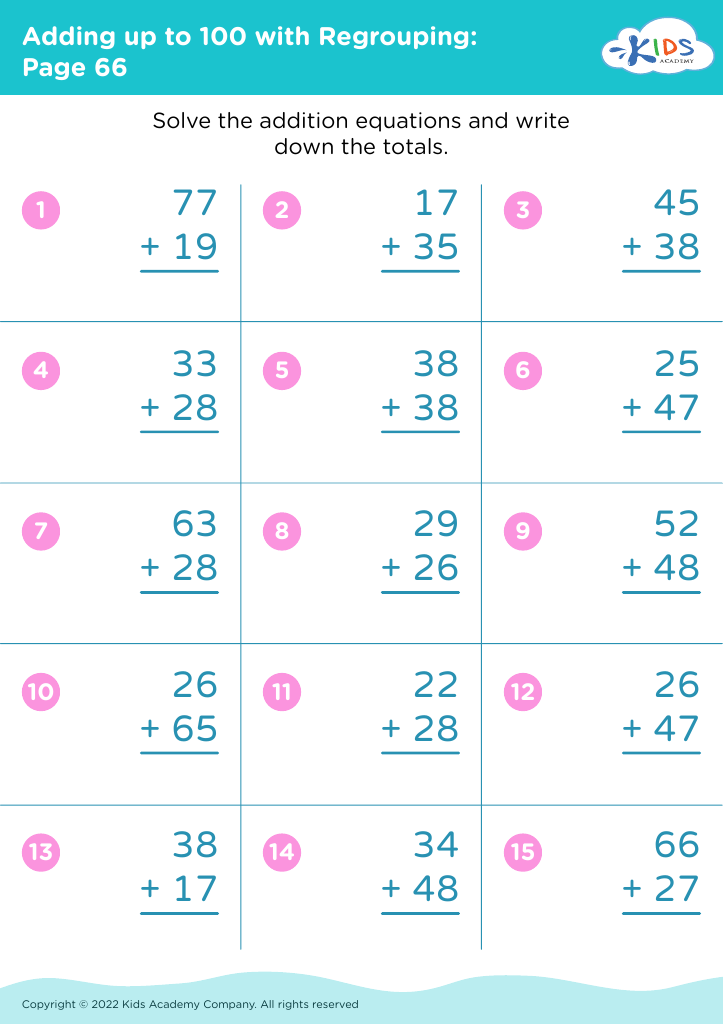
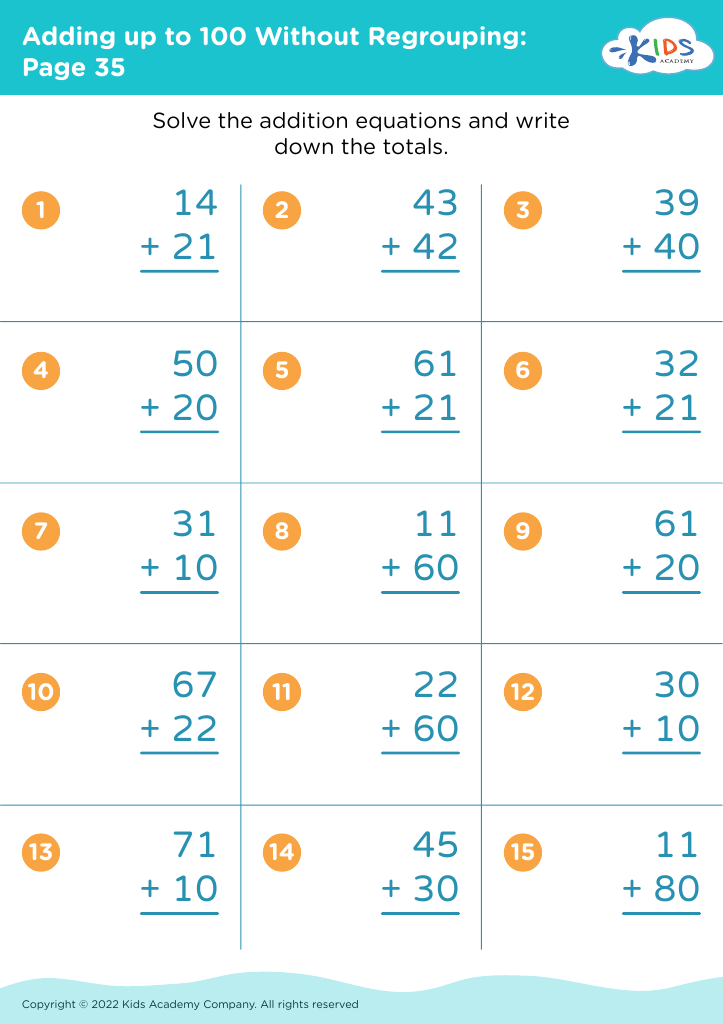
Discover our "Enhance Critical Thinking Addition Worksheets" designed specifically for children ages 7-8! These interactive worksheets go beyond basic math skills by encouraging students to develop their analytical and problem-solving abilities. With a variety of engaging addition problems, kids will be challenged to think critically as they explore different strategies for finding solutions. Ideal for classroom or home use, these worksheets not only reinforce math concepts but also foster cognitive skills essential for academic growth. Perfect for enhancing young minds, our resources make learning fun and effective, setting the foundation for a lifetime of critical thinking and numerical reasoning.








Enhancing critical thinking in children ages 7-8 is vital for their overall development, and both parents and teachers play crucial roles in this process. At this age, children are curious, asking questions about the world around them. Encouraging critical thinking helps them learn to analyze information, make informed decisions, and solve problems creatively.
When parents and teachers foster critical thinking, they prepare children for future academic challenges. Enabling them to evaluate situations and challenge assumptions builds a strong foundation for later studies, especially in subjects like math and science. Addition, as a fundamental skill, can serve as a springboard for developing these thinking skills—such as identifying patterns, testing hypotheses, and applying logic.
Furthermore, critical thinkers are equipped to navigate social situations better, enhancing their communication skills and emotional intelligence. This can lead to improved relationships and collaboration with peers.
Finally, by prioritizing critical thinking, parents and teachers also instill a lifelong love for learning. Children who think critically tend to be more engaged, resilient, and willing to explore various subjects deeply, setting the stage for future academic and personal success. In essence, nurturing critical thinking now paves the way for children’s achievements throughout their lives.








