Enhance fine motor skills Addition Worksheets for Ages 7-8
3 filtered results
-
From - To
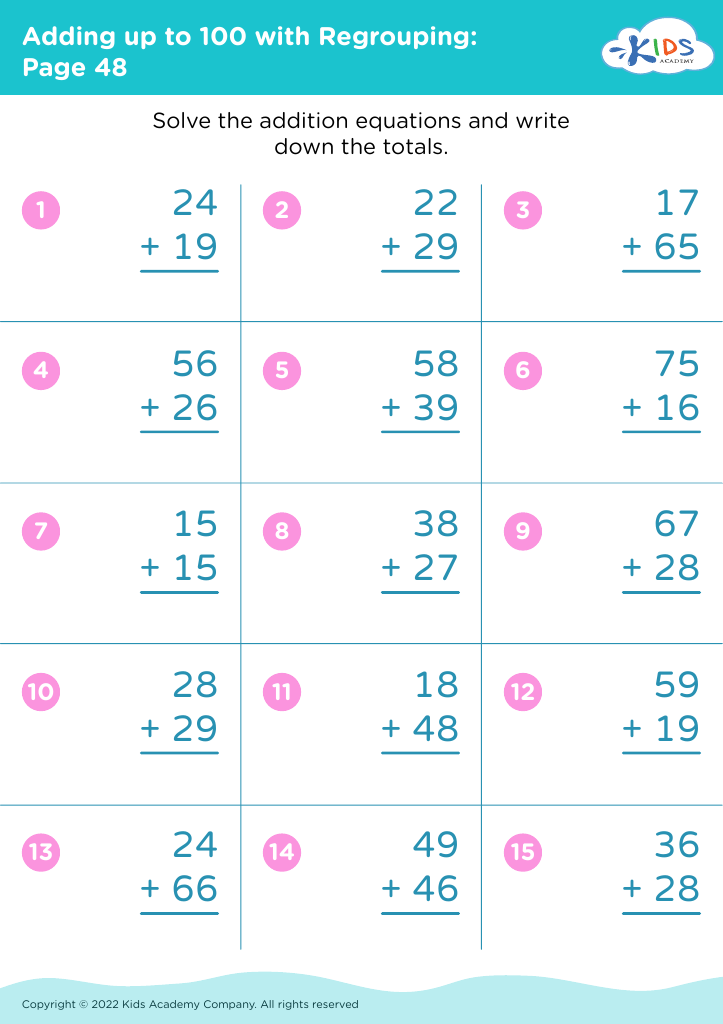
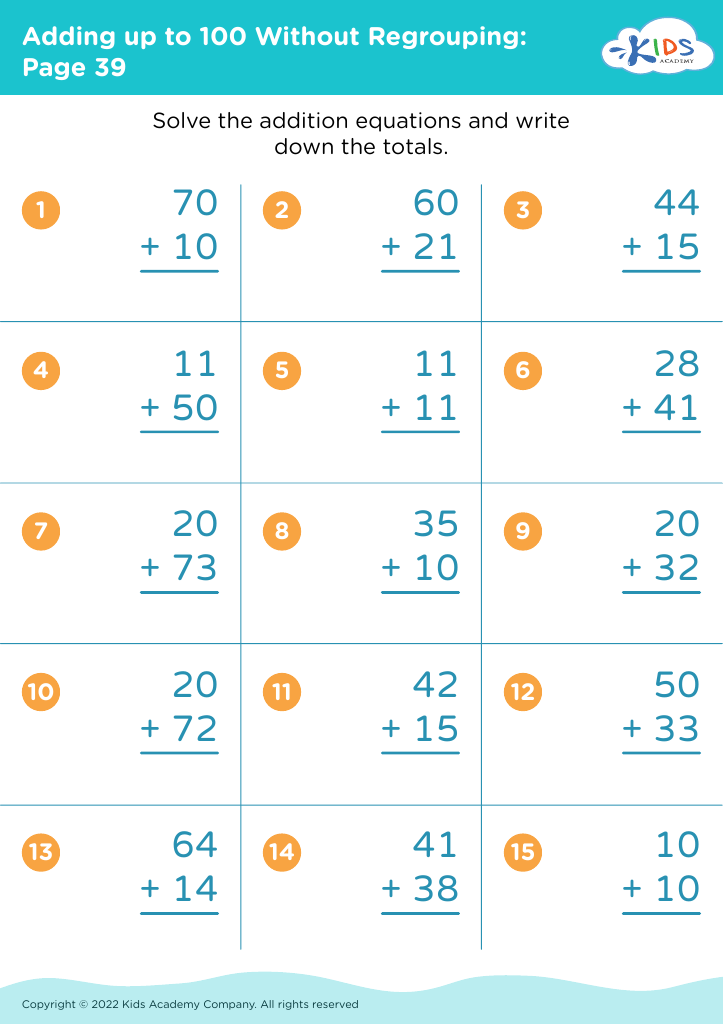
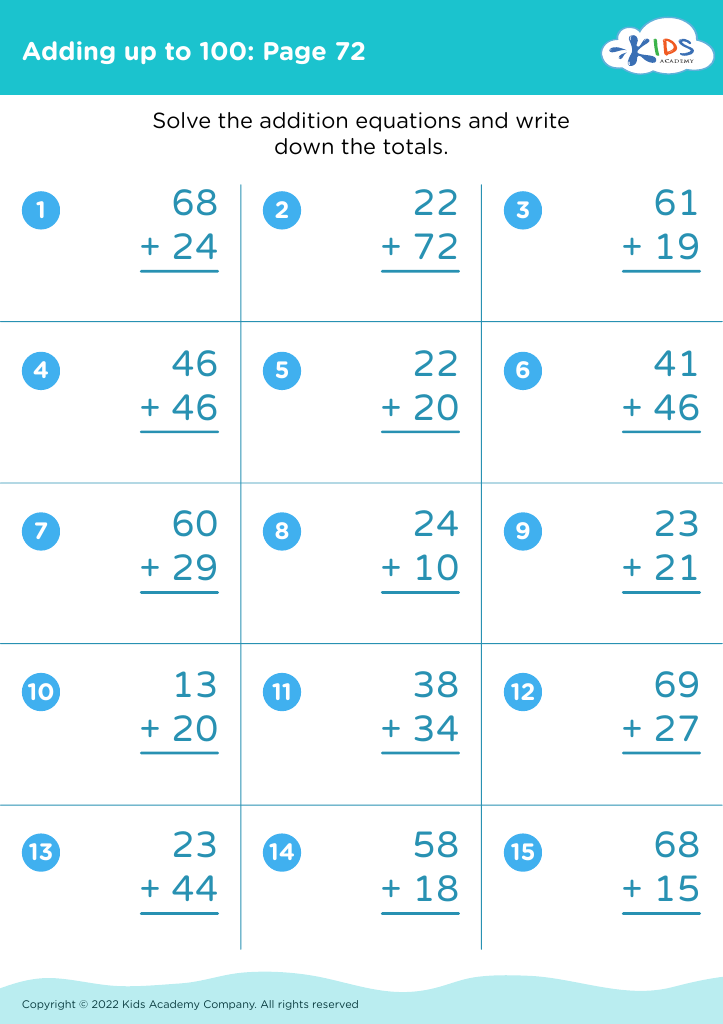
Boost your child's fine motor skills with our engaging addition worksheets designed for ages 7-8! These thoughtfully crafted activities not only enhance mathematical abilities but also develop crucial hand-eye coordination and dexterity. Your little learner will enjoy tracing numbers, connecting dots, and completing fun addition puzzles that make math practice enjoyable. Our worksheets encourage concentration and precision, providing a comprehensive approach to learning that integrates fine motor development. Perfect for homeschoolers, educators, or extra practice at home, these resources effectively support educational growth while keeping students entertained. Give your child the tools they need to succeed both academically and physically!








Enhancing fine motor skills in children aged 7-8 is crucial for their overall development and academic success. At this age, children are refining their coordination and dexterity, which impacts their ability to engage in daily activities and schoolwork. Parents and teachers should care because fine motor skills are foundational for tasks like writing, cutting with scissors, and completing craft projects. Improved fine motor skills lead to better handwriting, which can increase confidence and motivation in school, positively influencing academic performance.
Additionally, activities that promote fine motor development encourage patience, concentration, and problem-solving skills. These attributes are not just beneficial in an educational setting; they also prepare children for more complex skills as they grow, including technological tasks and sports. Furthermore, many everyday tasks require fine motor coordination, from dressing themselves to using utensils.
Lastly, reinforcing fine motor skills in educational and home settings fosters parent-child connections through shared activities, promoting social and emotional development. Thus, by emphasizing fine motor skill enhancement, both parents and teachers play vital roles in ensuring children are equipped with essential life skills necessary for their progression in school and beyond.








