Enhancing problem-solving abilities Addition Worksheets for Ages 7-8
10 filtered results
-
From - To
Introducing our "Enhancing Problem-Solving Abilities Addition Worksheets for Ages 7-8"! Carefully designed to boost mathematical skills, these engaging worksheets encourage young learners to tackle addition problems creatively. The tasks are structured to build confidence and improve critical thinking, helping kids process and solve problems efficiently. Each worksheet provides fun, challenging exercises that promote a deep understanding of addition concepts, making math enjoyable and accessible. Perfect for classroom use or homeschooling, our addition worksheets prepare children aged 7-8 for future math success. Elevate your child's problem-solving abilities today with these expertly crafted educational resources!
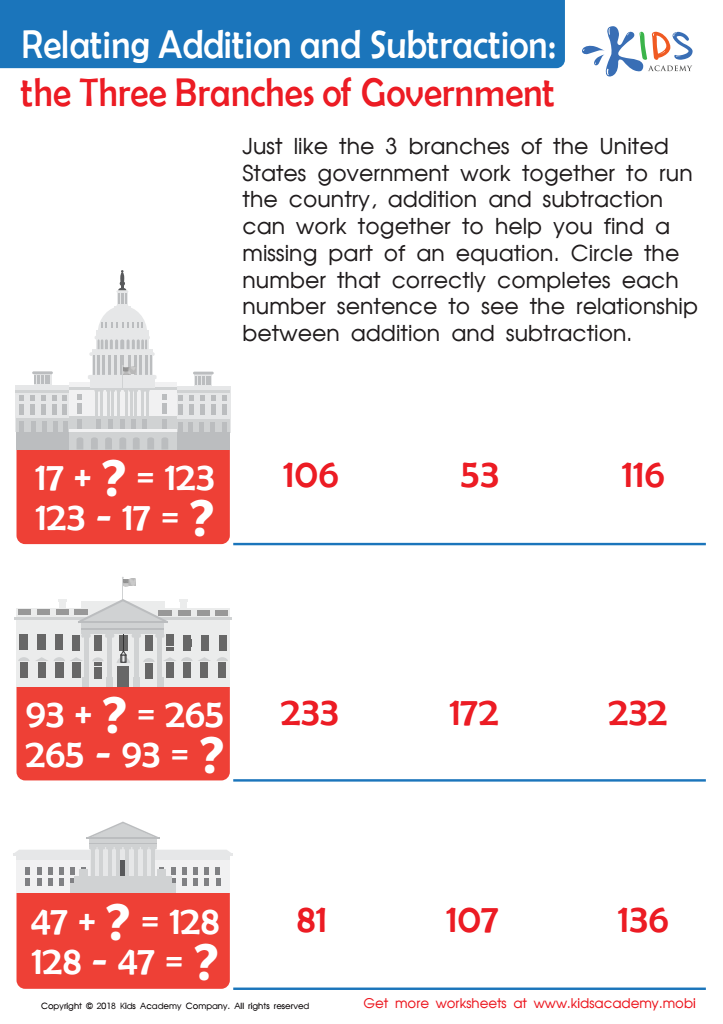
The Three Branches of Government Worksheet
 Assign to My Students
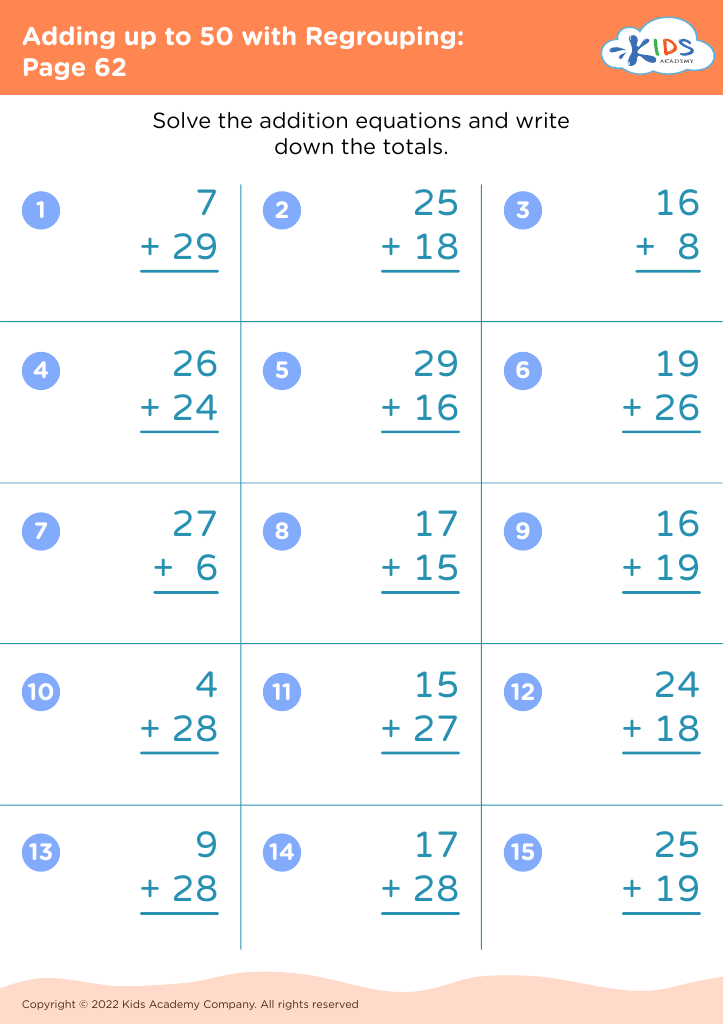
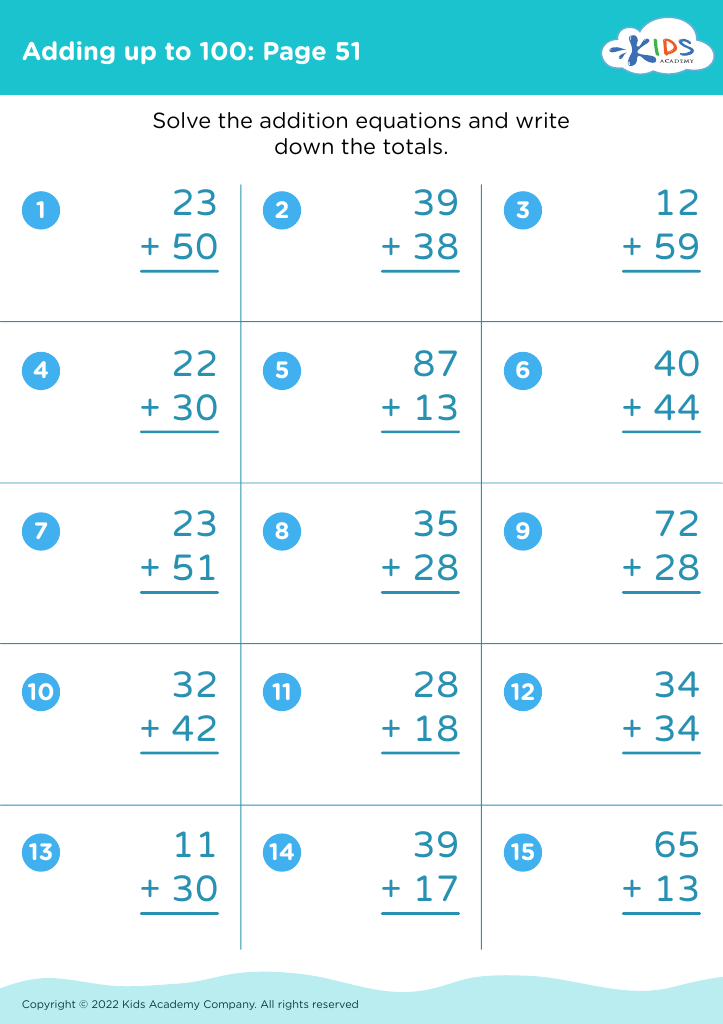
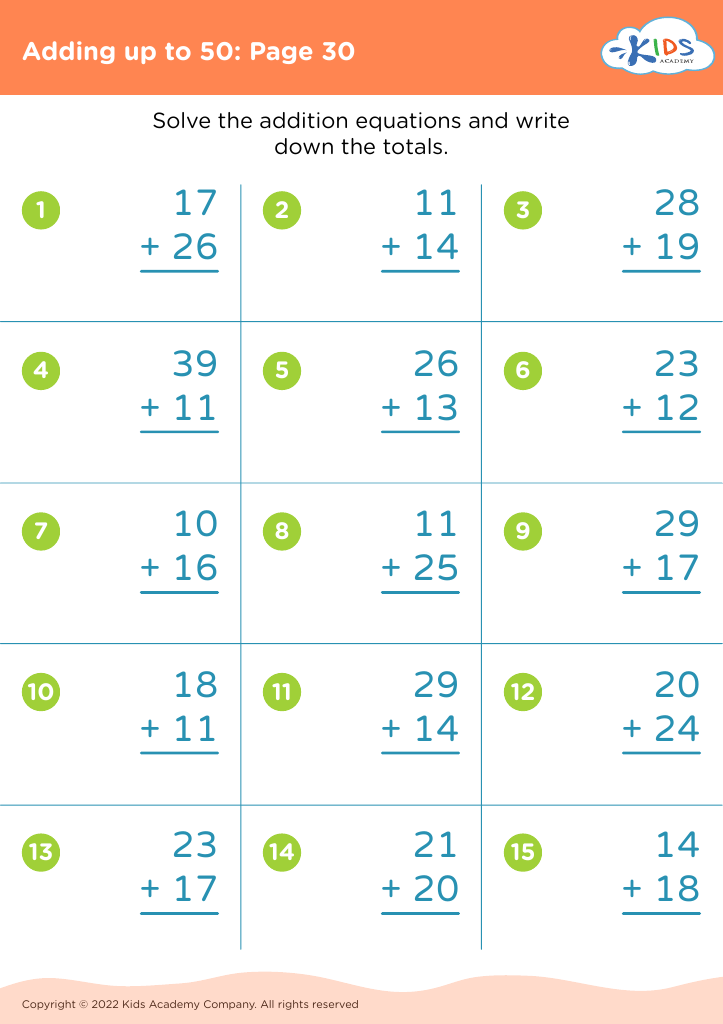
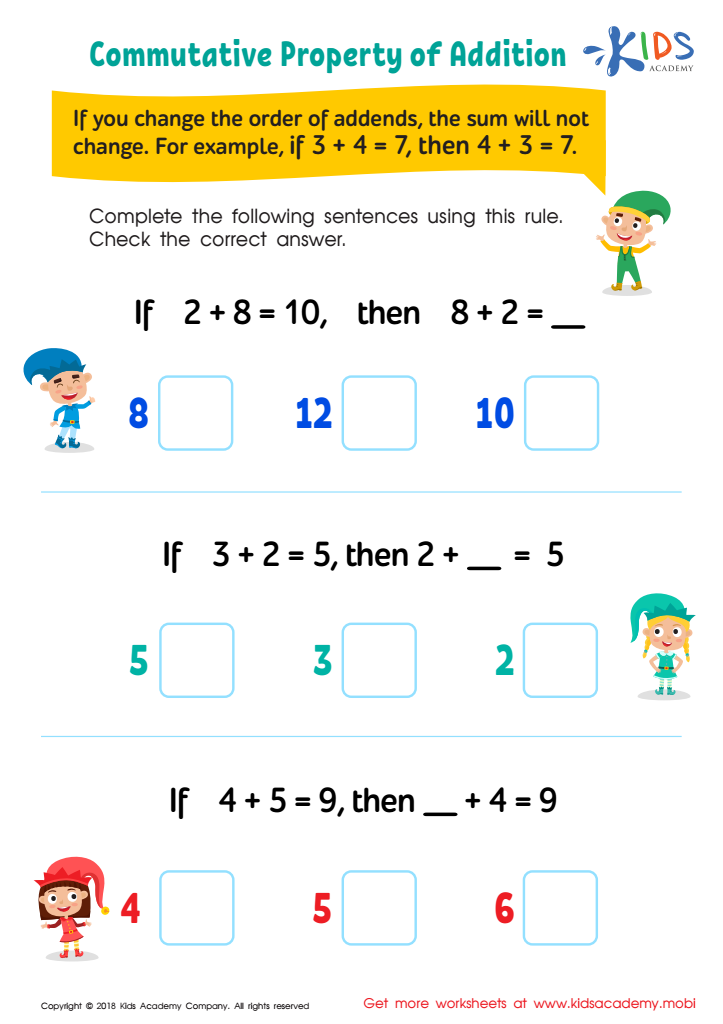
Commutative Property of Addition Worksheet
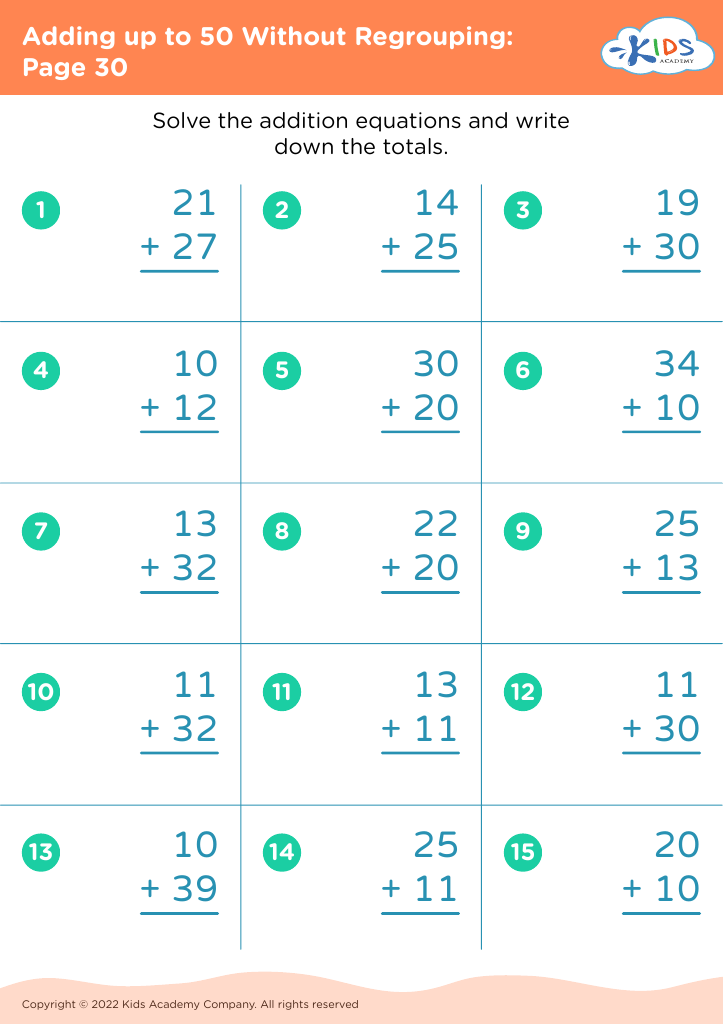








Enhancing problem-solving abilities in addition for ages 7-8 is crucial as it lays the foundation for effective mathematical understanding and broad cognitive development. At this age, children are typically in the second or third grade, where they’re introduced to more complex arithmetic concepts beyond basic counting. Improving problem-solving skills in addition can fortify their abilities to tackle larger, multi-step problems, fostering logical thinking and reasoning.
Moreover, the skills learned through problem-solving in addition transcend mathematics. They teach critical thinking, patience, persistence, and the ability to break down larger tasks into manageable parts, which are invaluable life skills. For instance, a child who learns to approach addition problems methodically using strategies like grouping or using number lines will also become more adept at managing time, organizing tasks, and approaching new challenges with confidence.
Incorporating problem-solving in lessons makes learning interactive and engaging, promoting a healthy attitude toward mistakes and corrections. This resilience in the face of errors is essential not just for academic success but for emotional and social growth as well. Thus, focusing on enhancing problem-solving abilities early on supports both academic achievement and ongoing personal development. Teachers and parents, therefore, play a pivotal role in creating a rich environment where these foundational skills can blossom.








