Filters

36 filtered results

Clear all filters
Favorites
With answer key
Interactive

36 filtered results

Difficulty Level

Grade


Subject

    Enhance your child's mathematical journey with our Fine Motor Skills Addition Worksheets for ages 7-8! Designed to make learning both fun and engaging, these worksheets help children develop crucial fine motor skills while mastering addition concepts. Every exercise focuses on hand-eye coordination and dexterity through various playful activities, such as tracing numbers and connecting dots. These worksheets not only reinforce arithmetic skills but also promote crucial skills necessary for writing and crafting. Perfect for home or classroom use, our resources support a holistic approach to learning, ensuring your child builds confidence and proficiency in math while enhancing their fine motor skills.
    Check out this FREE Trial Lesson on Addition for age 7-8!

    Short and Long Vowel Sort

    Favorites
    With answer key
    Interactive
    • 7-8
    • Fine Motor Skills
    • Addition
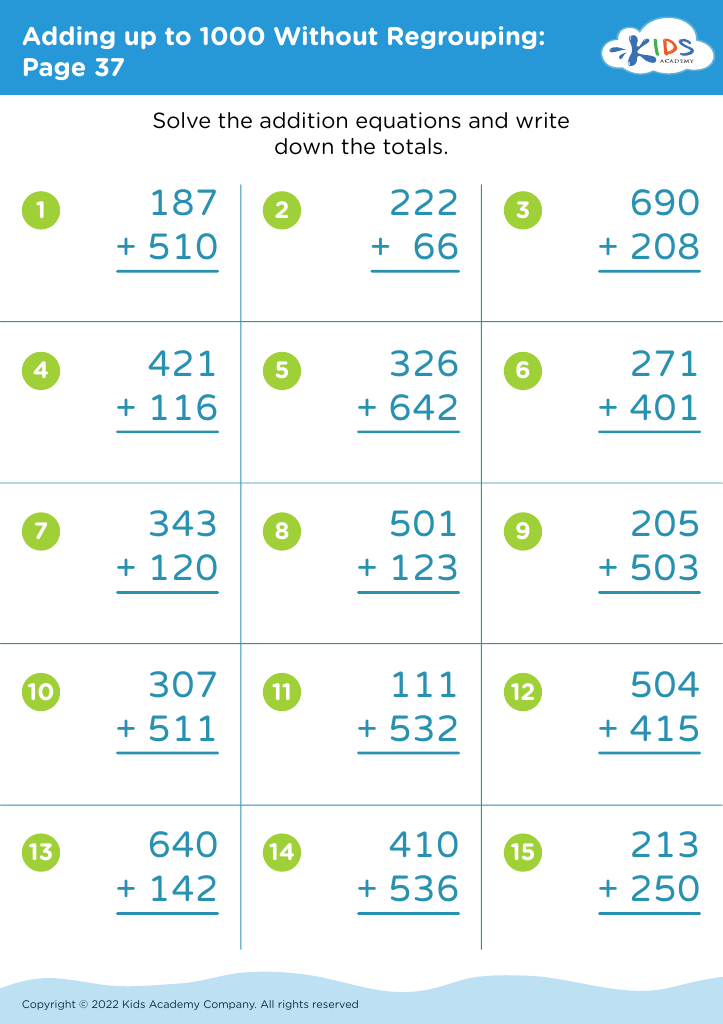
    Adding up to 1000 Without Regrouping: Page 37
    Adding up to 1000 Without Regrouping: Page 37
    Adding up to 1000 Without Regrouping: Page 37
    Worksheet
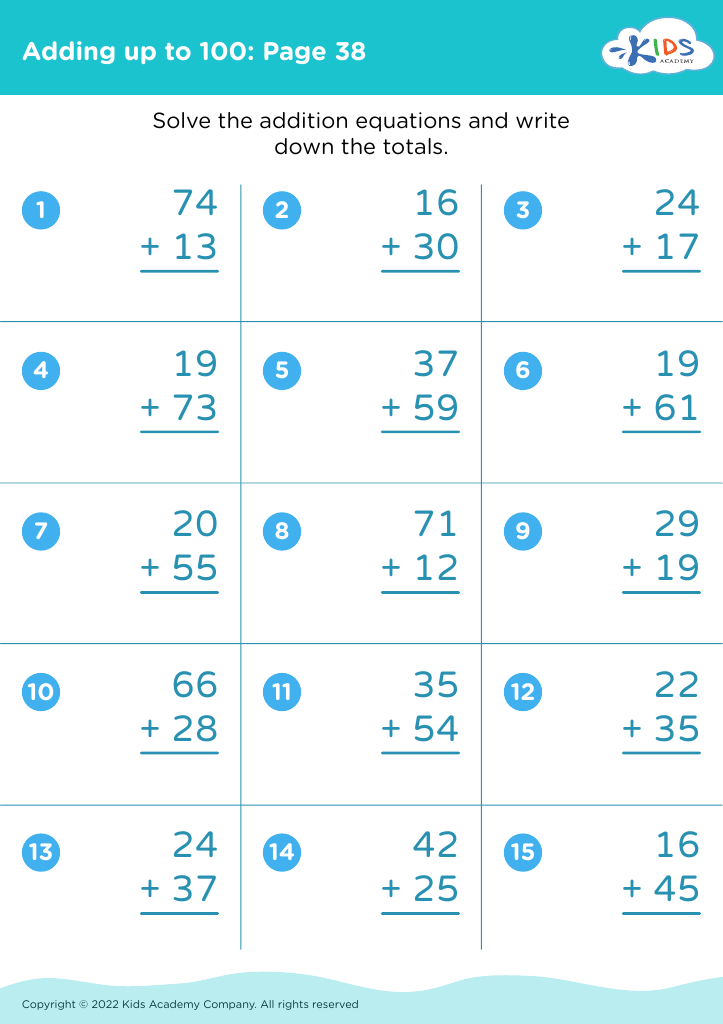
    Adding up to 100: Page 38
    Adding up to 100: Page 38

    Adding up to 100: Page 38

    Adding up to 100: Page 38
    Worksheet
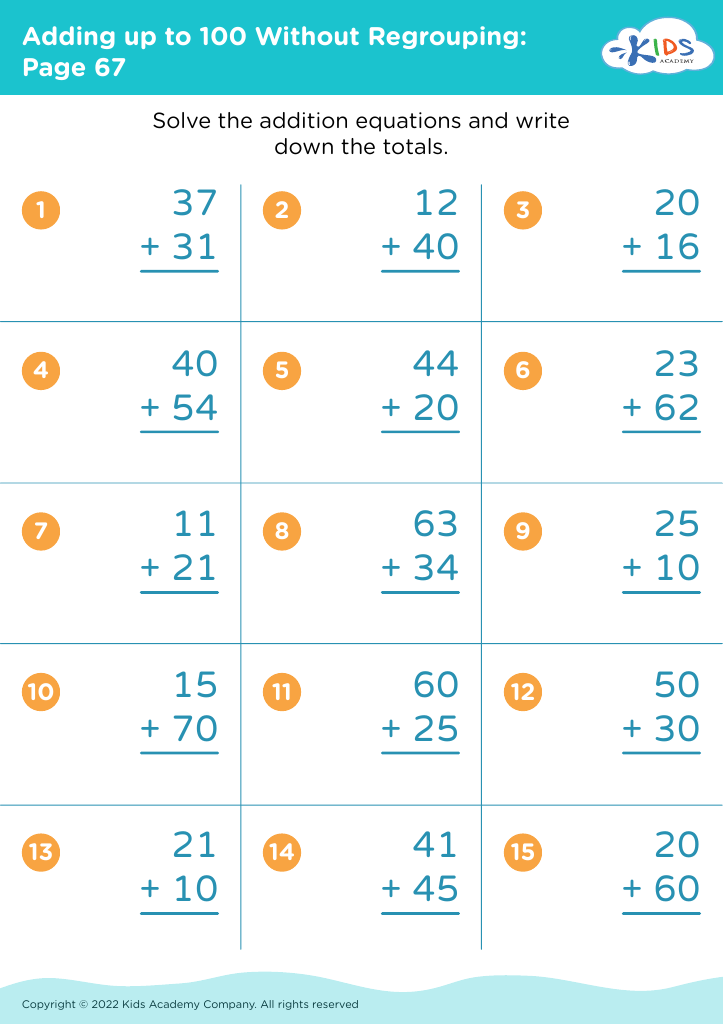
    Adding up to 100 Without Regrouping: Page 67
    Adding up to 100 Without Regrouping: Page 67
    Adding up to 100 Without Regrouping: Page 67
    Worksheet
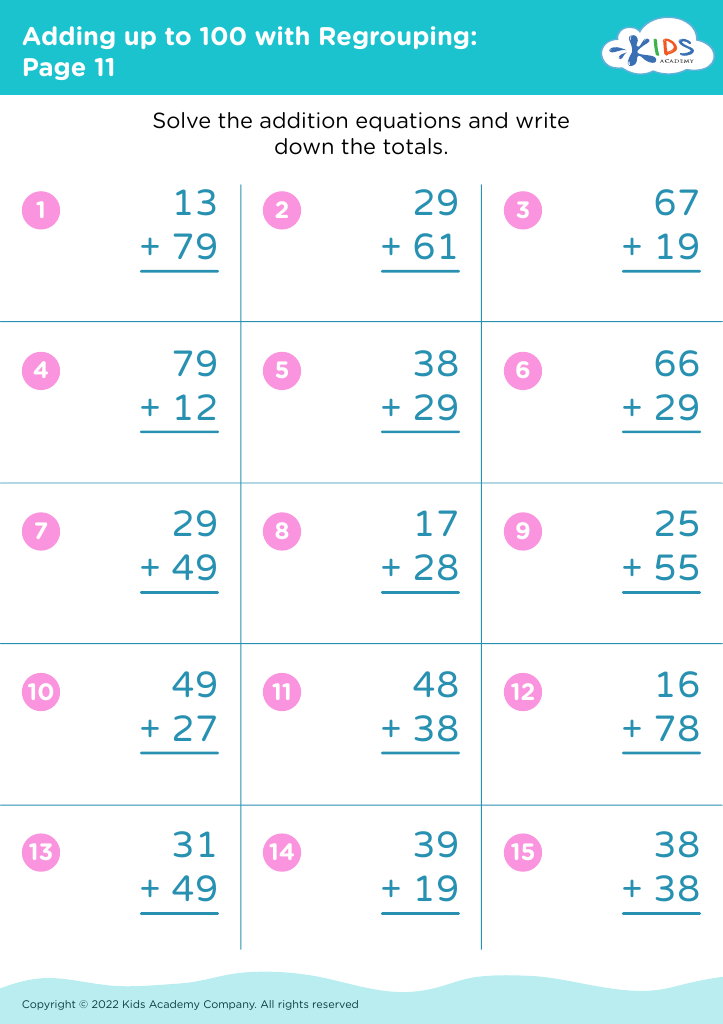
    Adding up to 100 with Regrouping: Page 11
    Adding up to 100 with Regrouping: Page 11
    Adding up to 100 with Regrouping: Page 11
    Worksheet
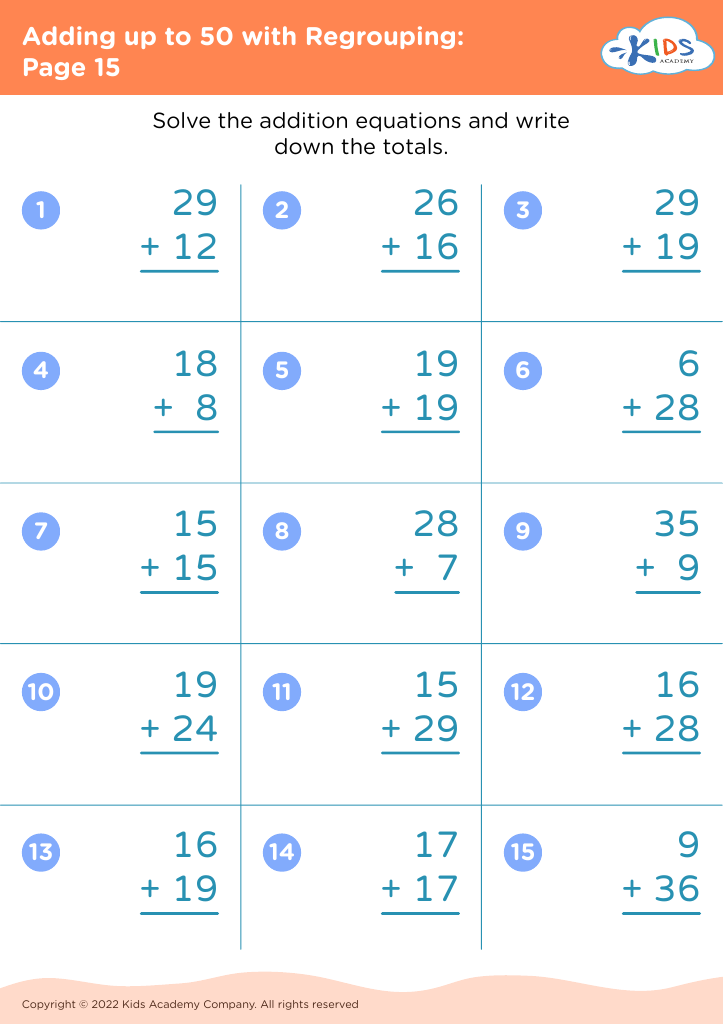
    Adding up to 50 with Regrouping: Page 15
    Adding up to 50 with Regrouping: Page 15
    Adding up to 50 with Regrouping: Page 15
    Worksheet
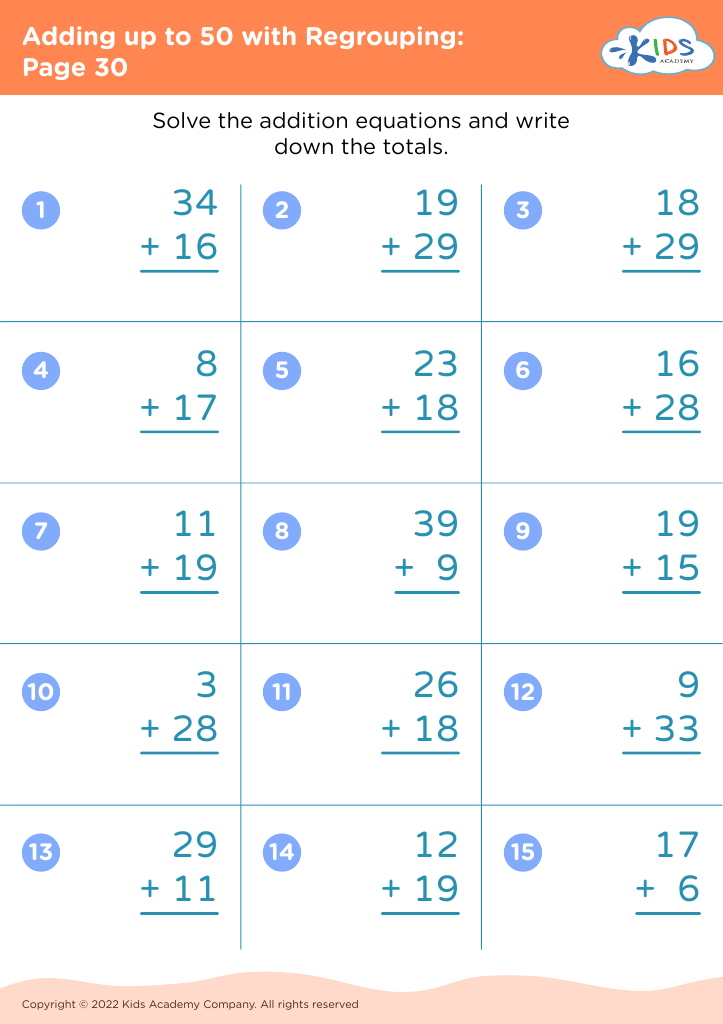
    Adding up to 50 with Regrouping: Page 30
    Adding up to 50 with Regrouping: Page 30
    Adding up to 50 with Regrouping: Page 30
    Worksheet
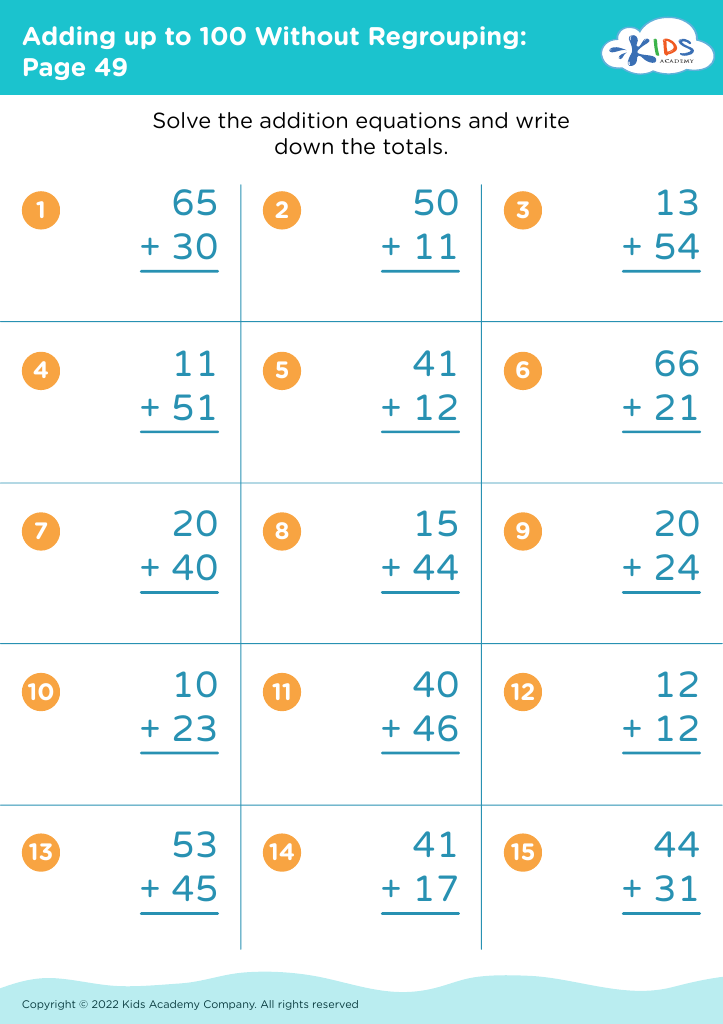
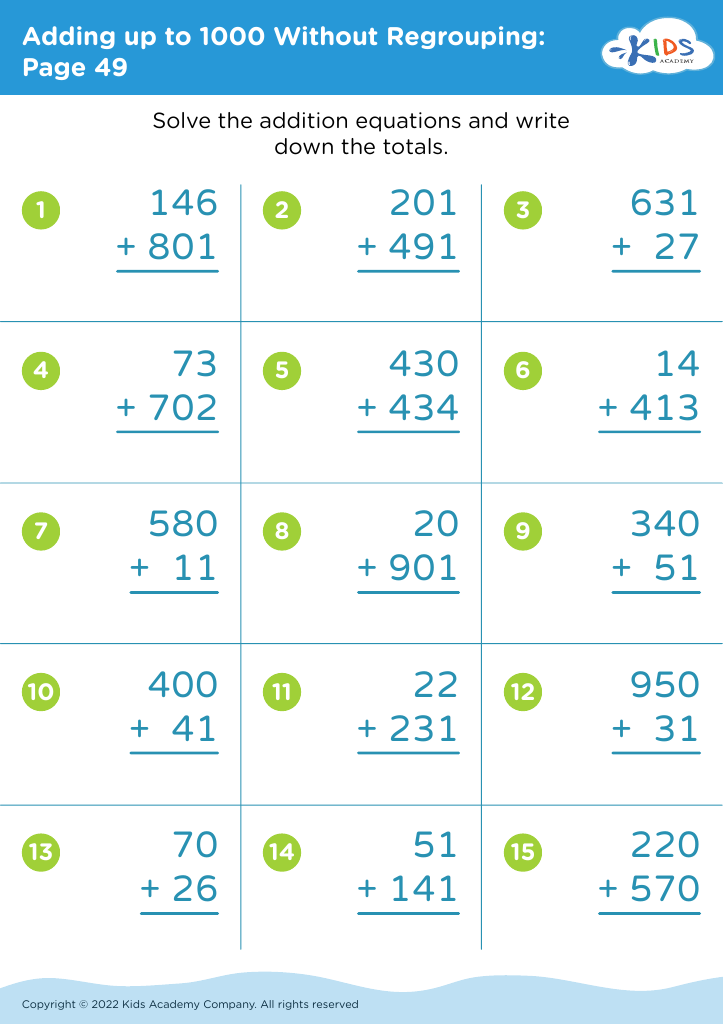
    Adding up to 100 Without Regrouping: Page 49
    Adding up to 100 Without Regrouping: Page 49
    Adding up to 100 Without Regrouping: Page 49
    Worksheet
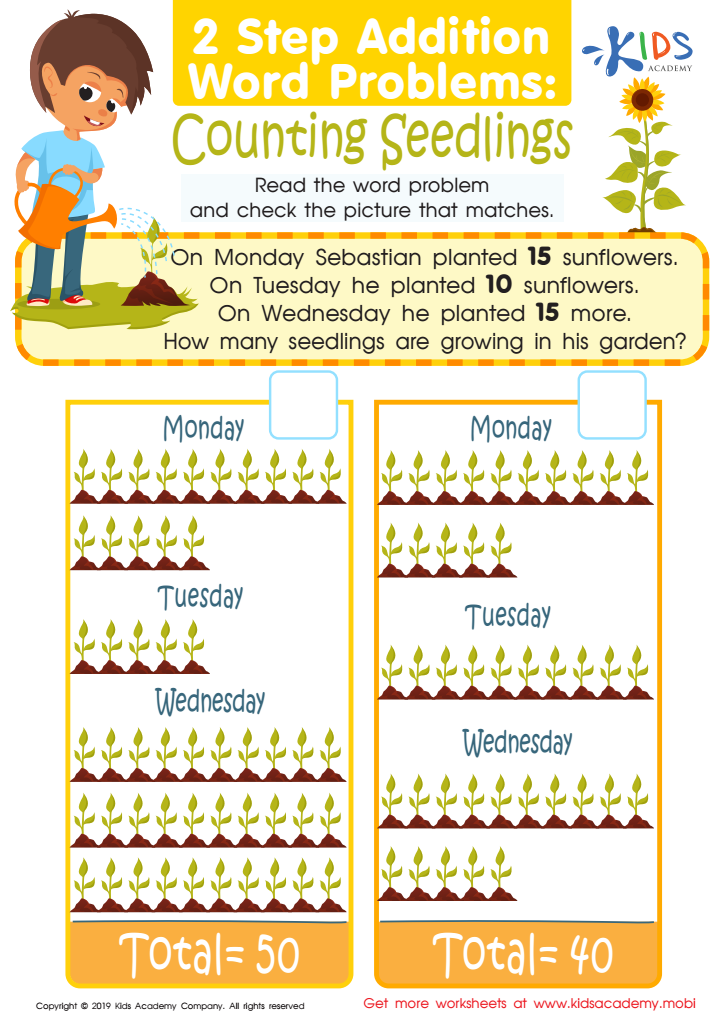
    Counting Seedlings Worksheet
    Counting Seedlings Worksheet

    Counting Seedlings Worksheet

    Understanding math word problems is key. Multiple steps can prove challenging - this free worksheet provides one-to-one picture representation to help kids solve multi-step addition word problems. Strengthen addition skills by choosing the matching picture to the answer.
    Counting Seedlings Worksheet
    Worksheet
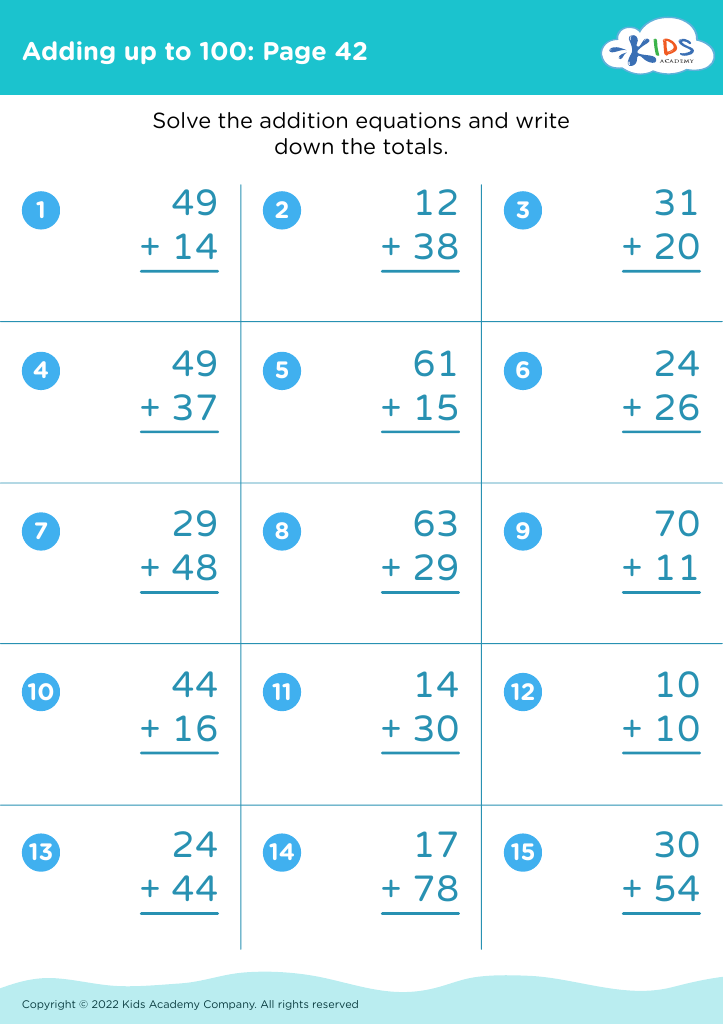
    Adding up to 100: Page 42
    Adding up to 100: Page 42

    Adding up to 100: Page 42

    Adding up to 100: Page 42
    Worksheet
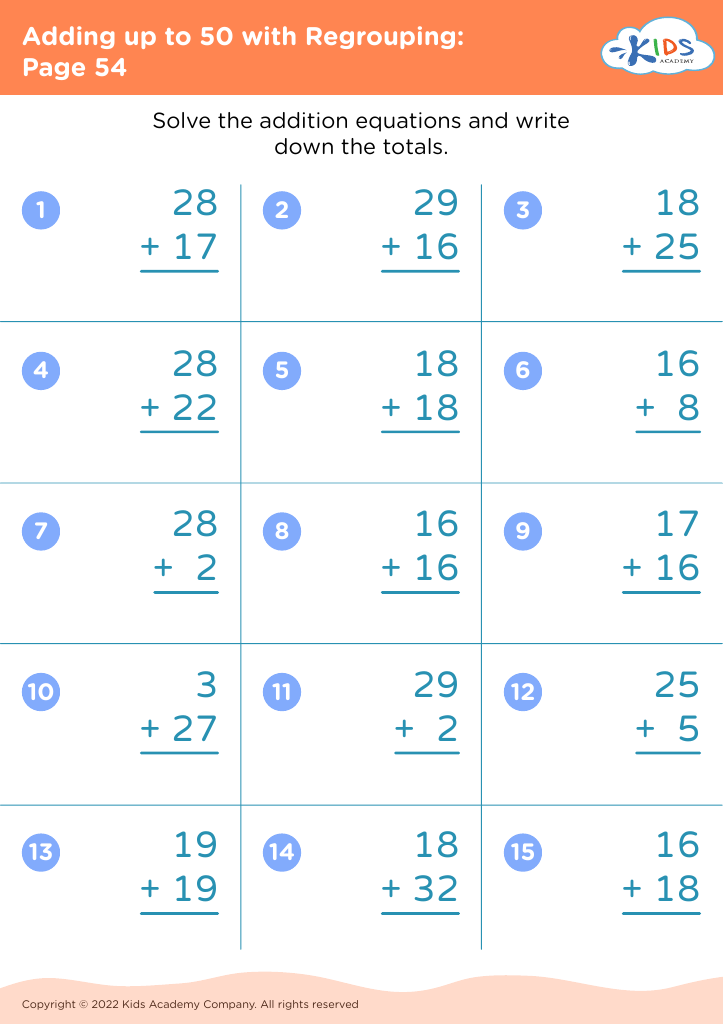
    Adding up to 50 with Regrouping: Page 54
    Adding up to 50 with Regrouping: Page 54
    Adding up to 50 with Regrouping: Page 54
    Worksheet
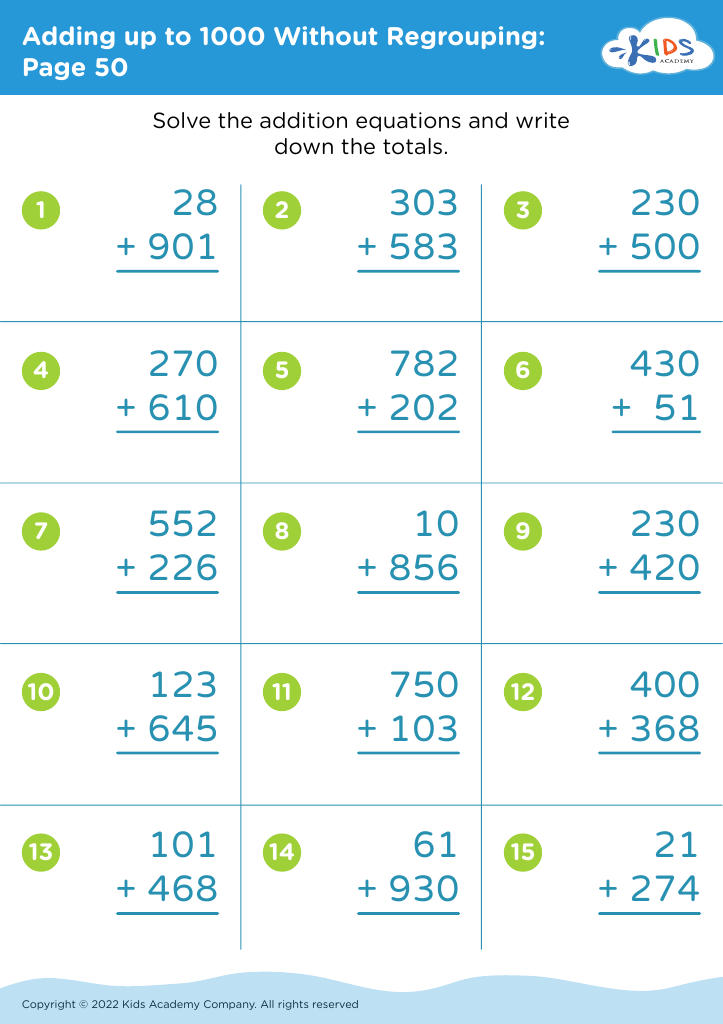
    Adding up to 1000 Without Regrouping: Page 50
    Adding up to 1000 Without Regrouping: Page 50
    Adding up to 1000 Without Regrouping: Page 50
    Worksheet
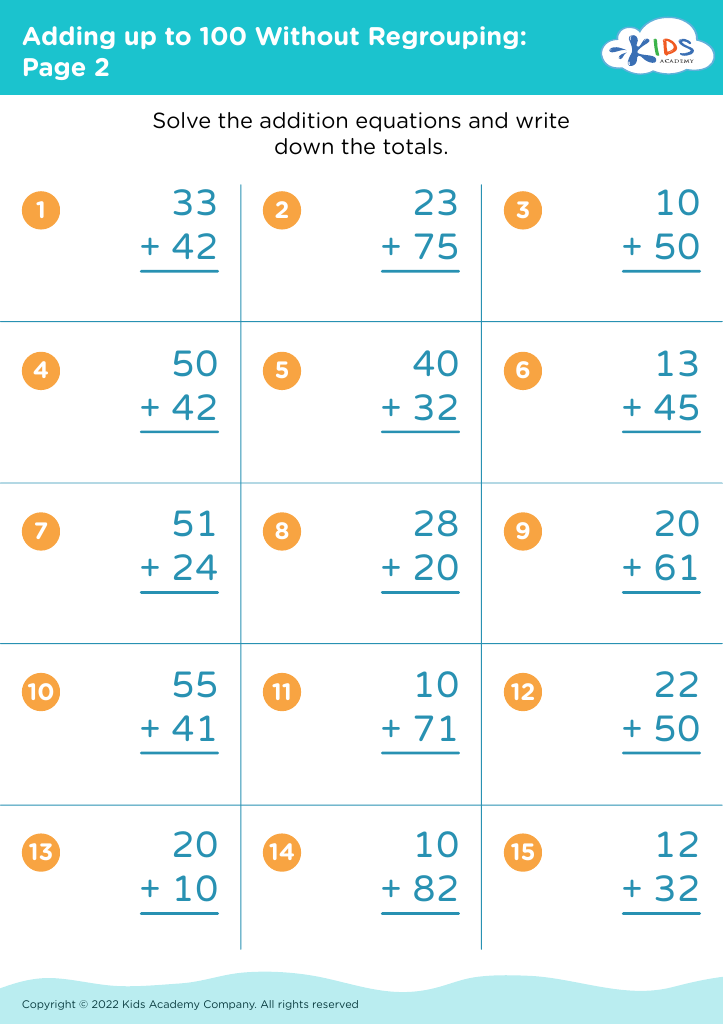
    Adding up to 100 Without Regrouping: Page 2
    Adding up to 100 Without Regrouping: Page 2
    Adding up to 100 Without Regrouping: Page 2
    Worksheet
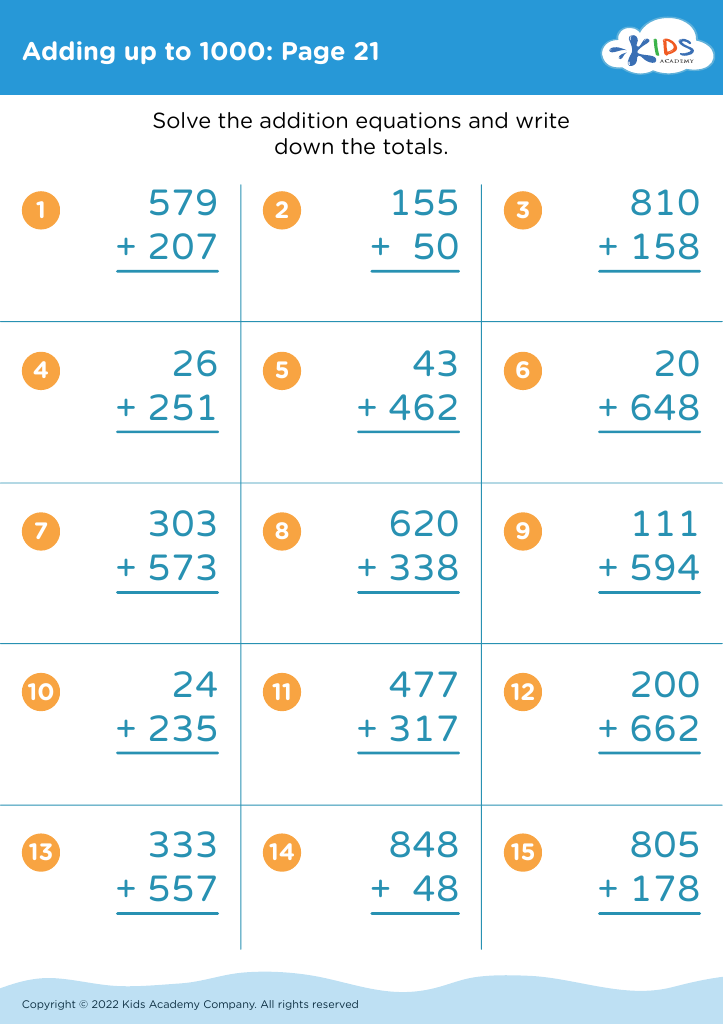
    Adding up to 1000: Page 21
    Adding up to 1000: Page 21

    Adding up to 1000: Page 21

    Adding up to 1000: Page 21
    Worksheet
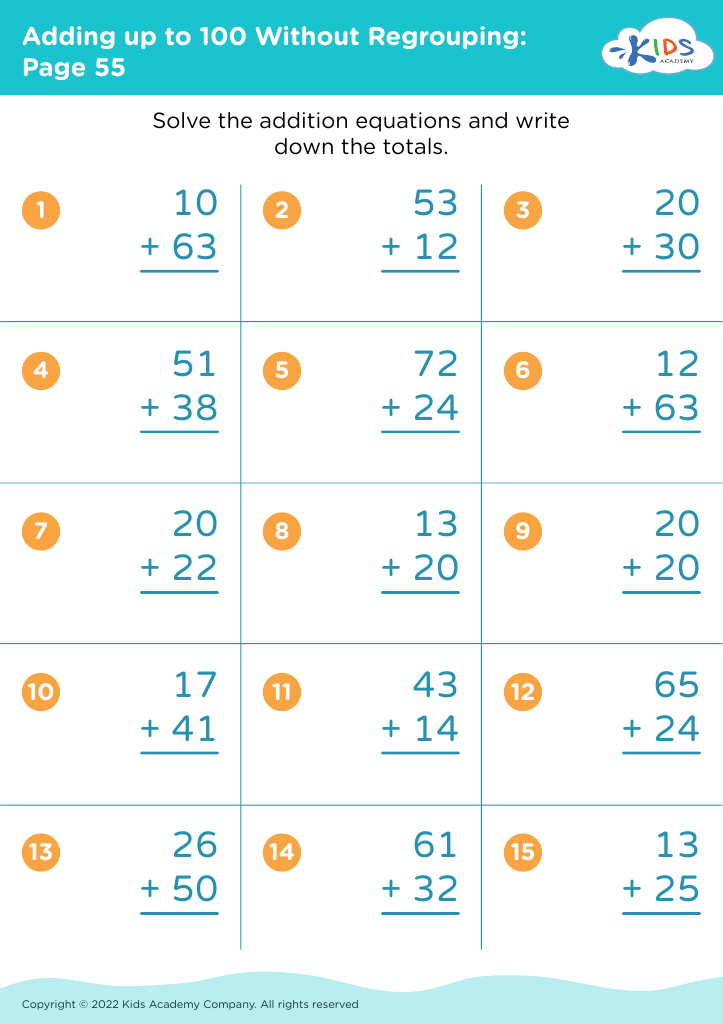
    Adding up to 100 Without Regrouping: Page 55
    Adding up to 100 Without Regrouping: Page 55
    Adding up to 100 Without Regrouping: Page 55
    Worksheet
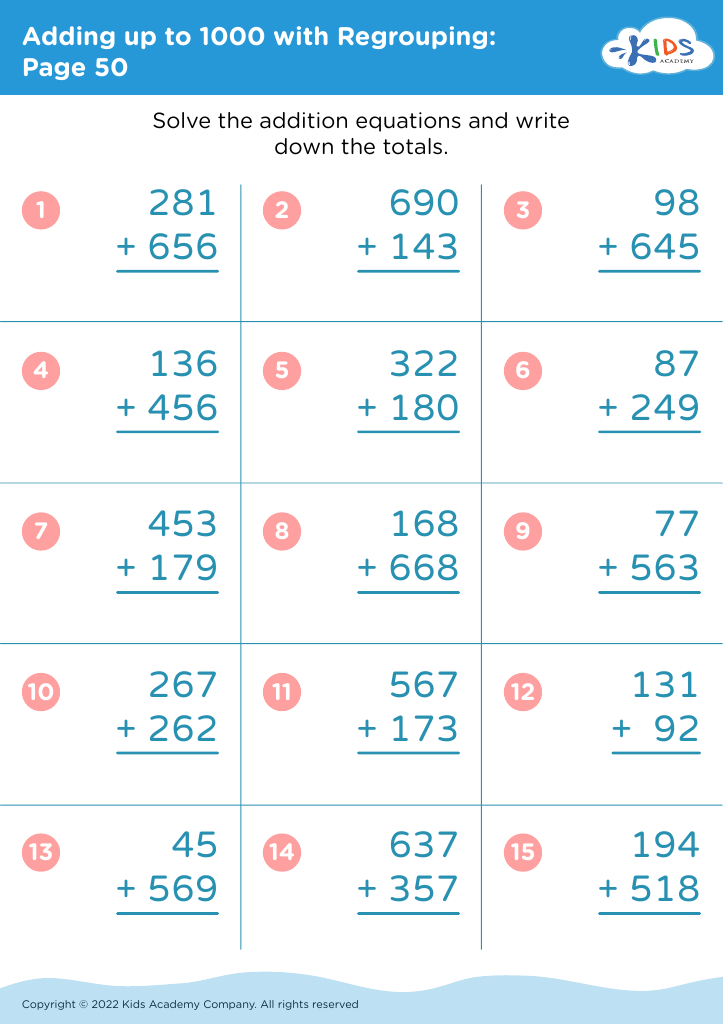
    Adding up to 1000 with Regrouping: Page 50
    Adding up to 1000 with Regrouping: Page 50
    Adding up to 1000 with Regrouping: Page 50
    Worksheet
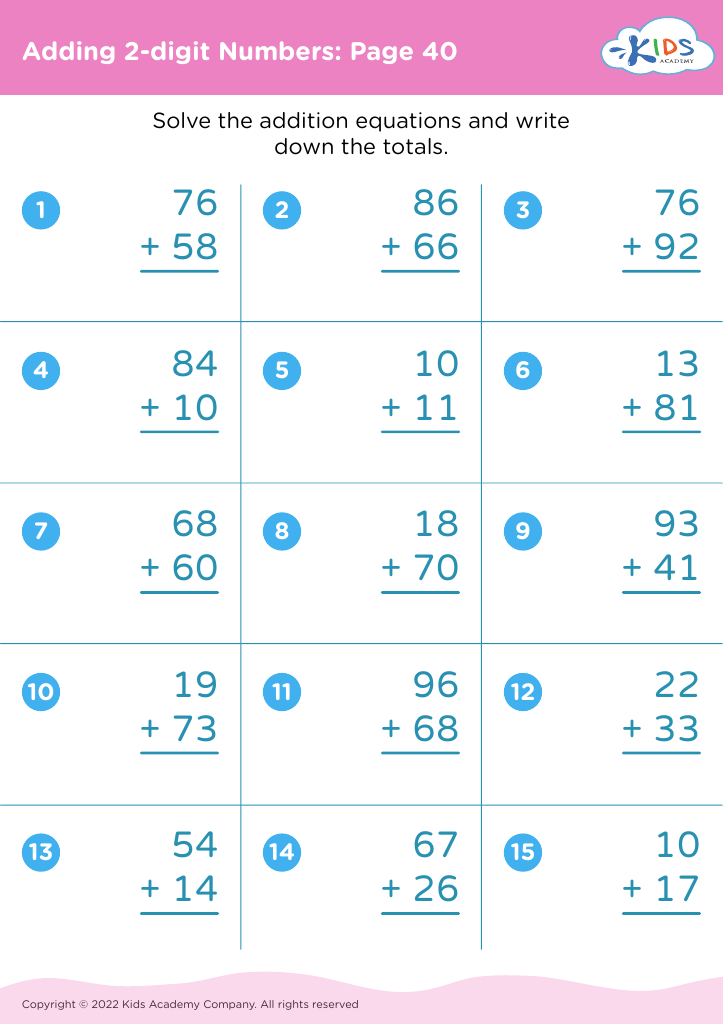
    Adding 2-digit Numbers: Page 40
    Adding 2-digit Numbers: Page 40

    Adding 2-digit Numbers: Page 40

    Adding 2-digit Numbers: Page 40
    Worksheet
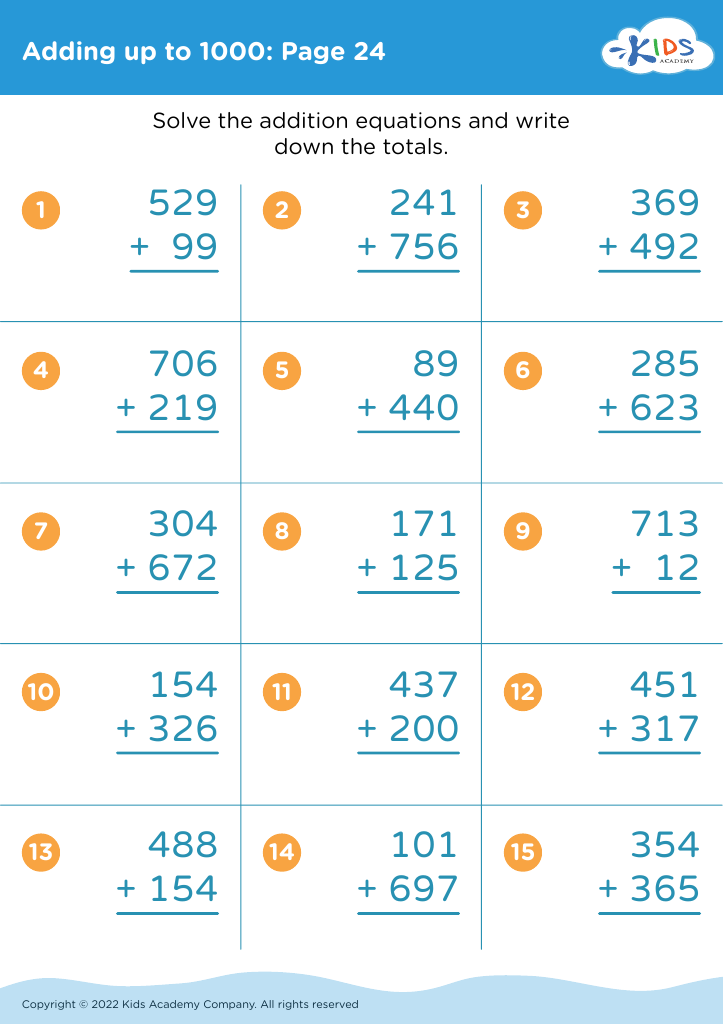
    Adding up to 1000: Page 24
    Adding up to 1000: Page 24

    Adding up to 1000: Page 24

    Adding up to 1000: Page 24
    Worksheet
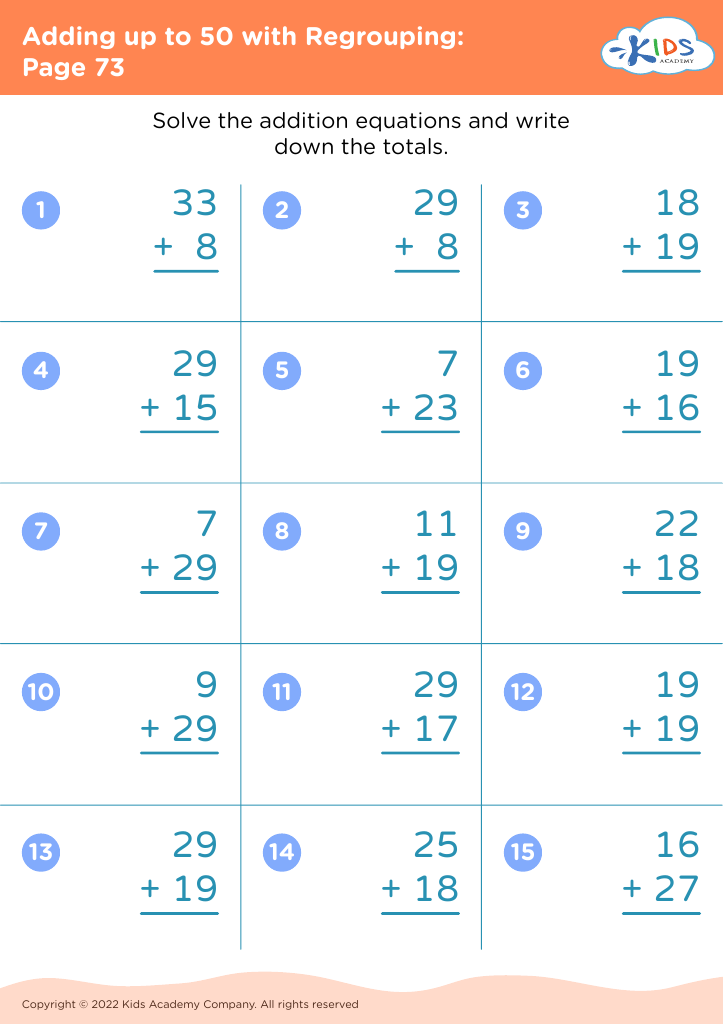
    Adding up to 50 with Regrouping: Page 73
    Adding up to 50 with Regrouping: Page 73
    Adding up to 50 with Regrouping: Page 73
    Worksheet
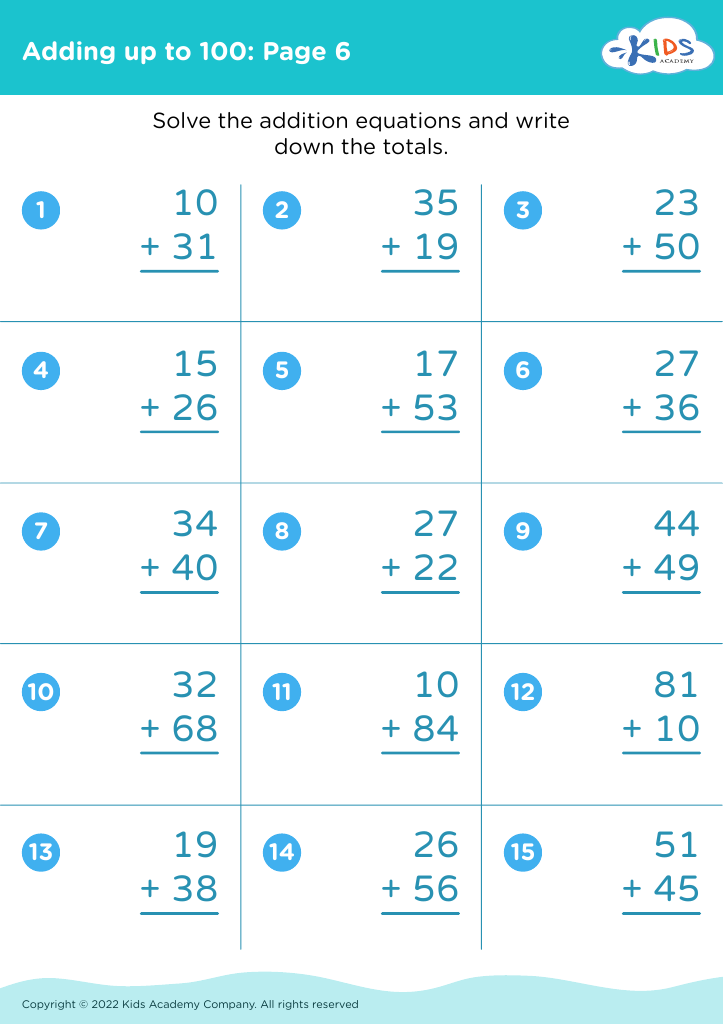
    Adding up to 100: Page 6
    Adding up to 100: Page 6

    Adding up to 100: Page 6

    Adding up to 100: Page 6
    Worksheet
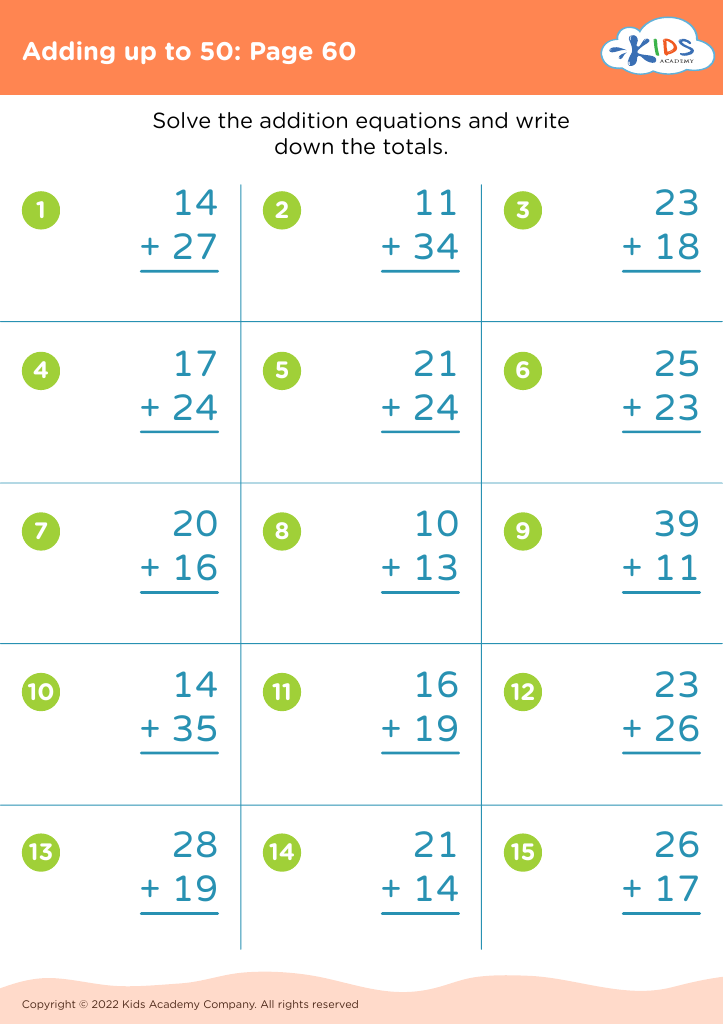
    Adding up to 50: Page 60
    Adding up to 50: Page 60

    Adding up to 50: Page 60

    Adding up to 50: Page 60
    Worksheet
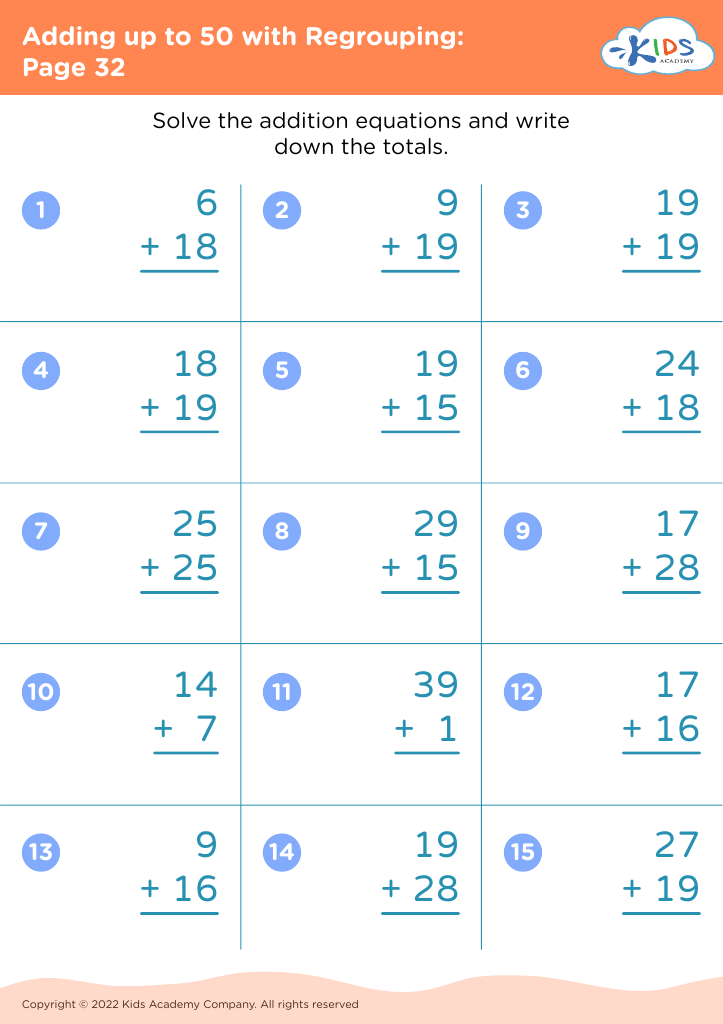
    Adding up to 50 with Regrouping: Page 32
    Adding up to 50 with Regrouping: Page 32
    Adding up to 50 with Regrouping: Page 32
    Worksheet
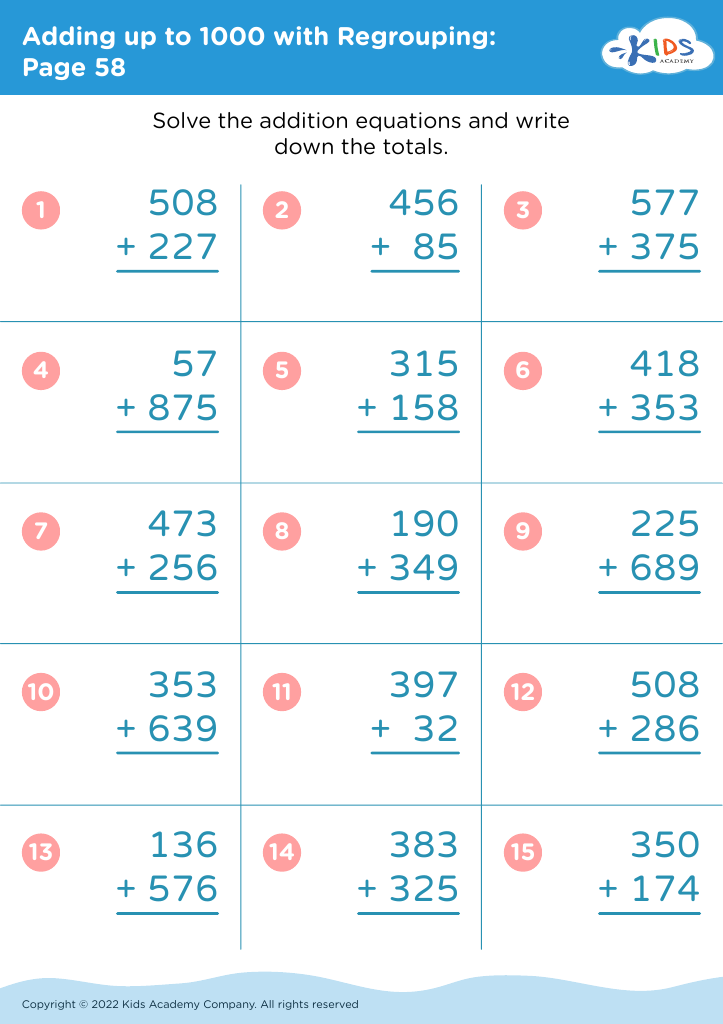
    Adding up to 1000 with Regrouping: Page 58
    Adding up to 1000 with Regrouping: Page 58
    Adding up to 1000 with Regrouping: Page 58
    Worksheet
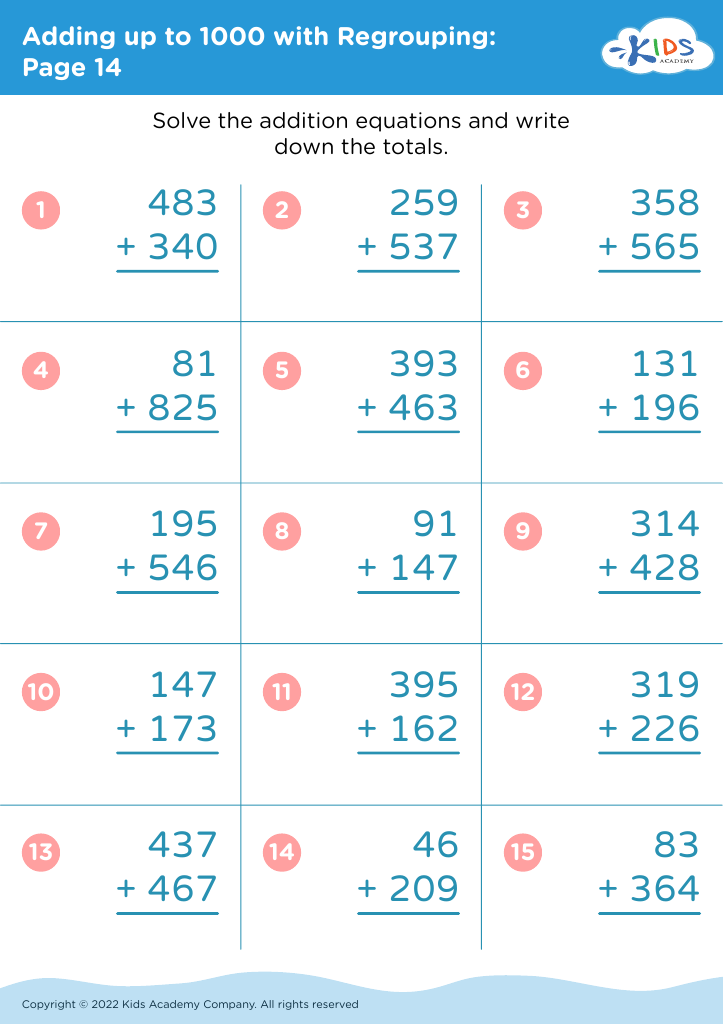
    Adding up to 1000 with Regrouping: Page 14
    Adding up to 1000 with Regrouping: Page 14
    Adding up to 1000 with Regrouping: Page 14
    Worksheet
    Adding up to 1000 Without Regrouping: Page 49
    Adding up to 1000 Without Regrouping: Page 49
    Adding up to 1000 Without Regrouping: Page 49
    Worksheet


    Fine motor skills form the foundation for a child's overall development, particularly in the critical ages of 7-8 when they transition into more complex tasks. These skills involve the coordination of small muscles in the hands and fingers, crucial for activities such as writing, drawing, and manipulating small objects. Parents and teachers should prioritize fine motor skill development because it directly influences a child's academic performance and self-esteem.

    At this age, children are expected to express thoughts clearly on paper and engage more in crafting activities that require precision. Struggling with these skills can lead to frustration and a lack of confidence, affecting their willingness to participate in classroom activities. Moreover, well-developed fine motor skills contribute to independence, enabling children to perform daily tasks like buttoning shirts or tying shoelaces.

    Empowerment through fine motor-related exercises also fosters creativity and problem-solving abilities. Parents can support this development at home through engaging activities like arts and crafts, puzzles, or playing with building blocks. Teachers can integrate fine motor skill enrichment into their lesson plans, ensuring that children receive balanced learning experiences. Ultimately, nurturing these skills equips children for future challenges, both educationally and socially, enhancing their overall growth and adaptability.