
Following instructions Addition Worksheets for Ages 7-8
13 filtered results
Difficulty Level
Grade
Age
-
From - To
Subject
Activity
Standards
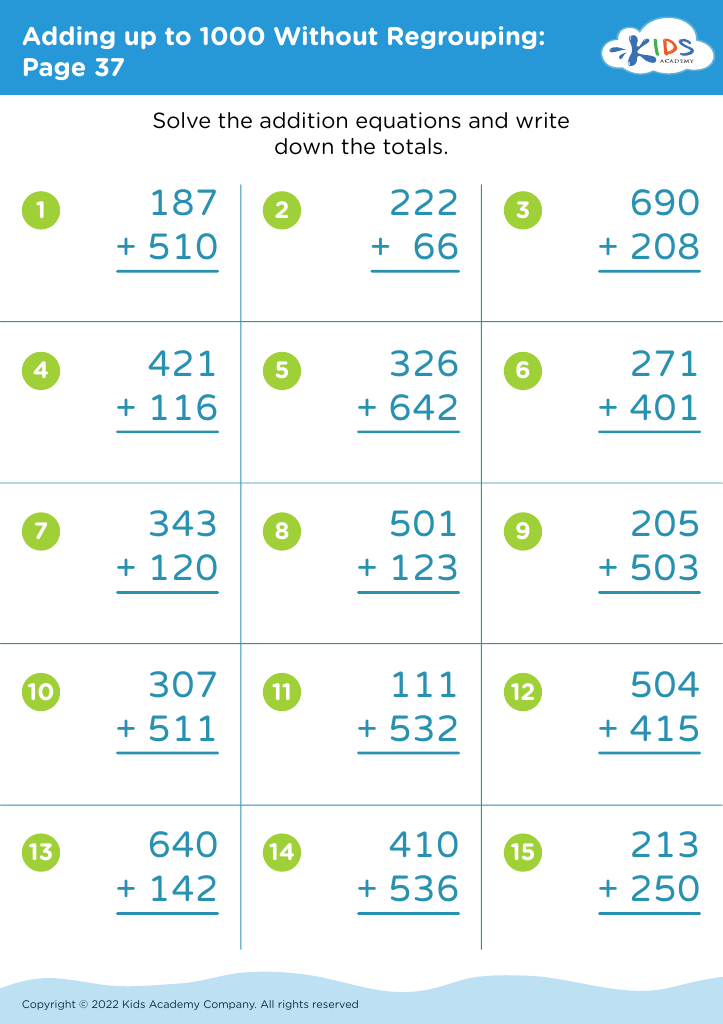
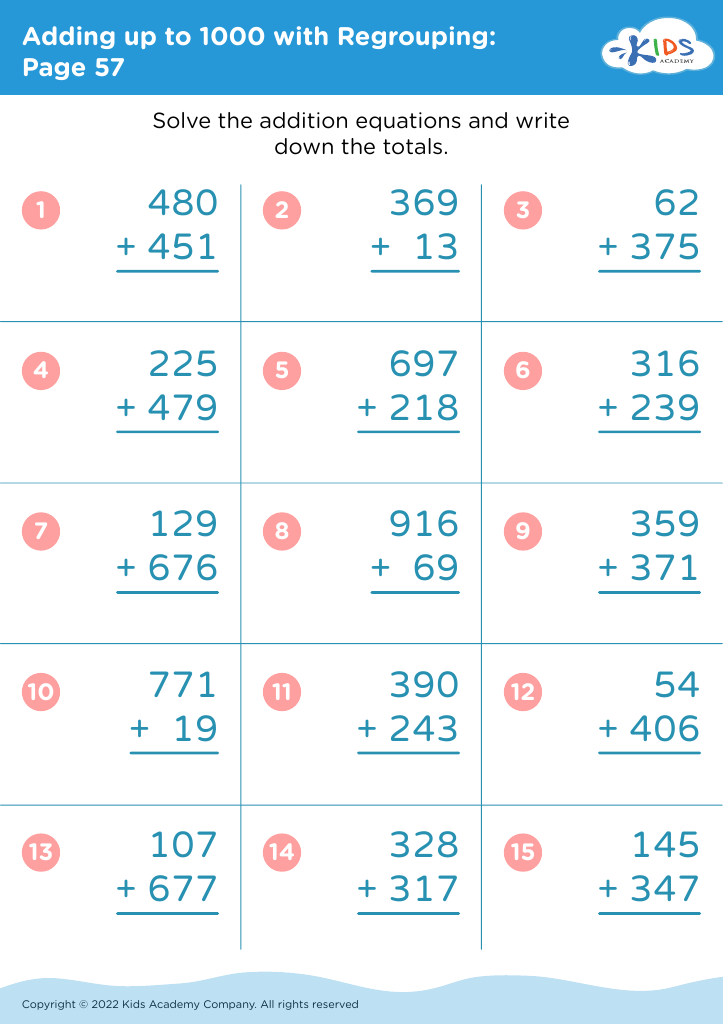
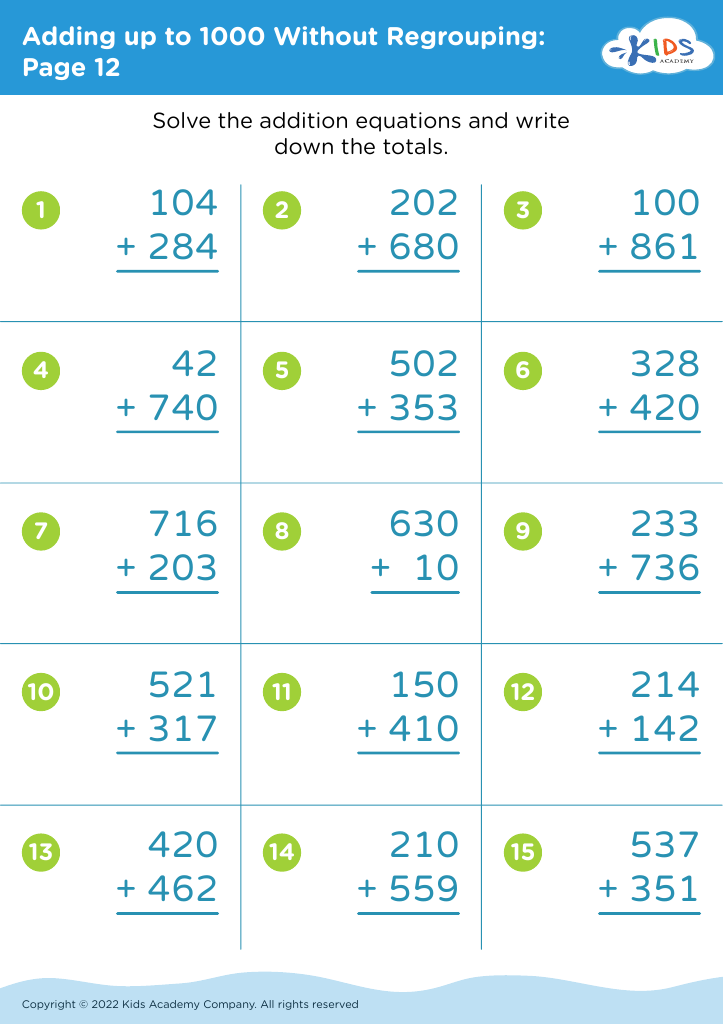
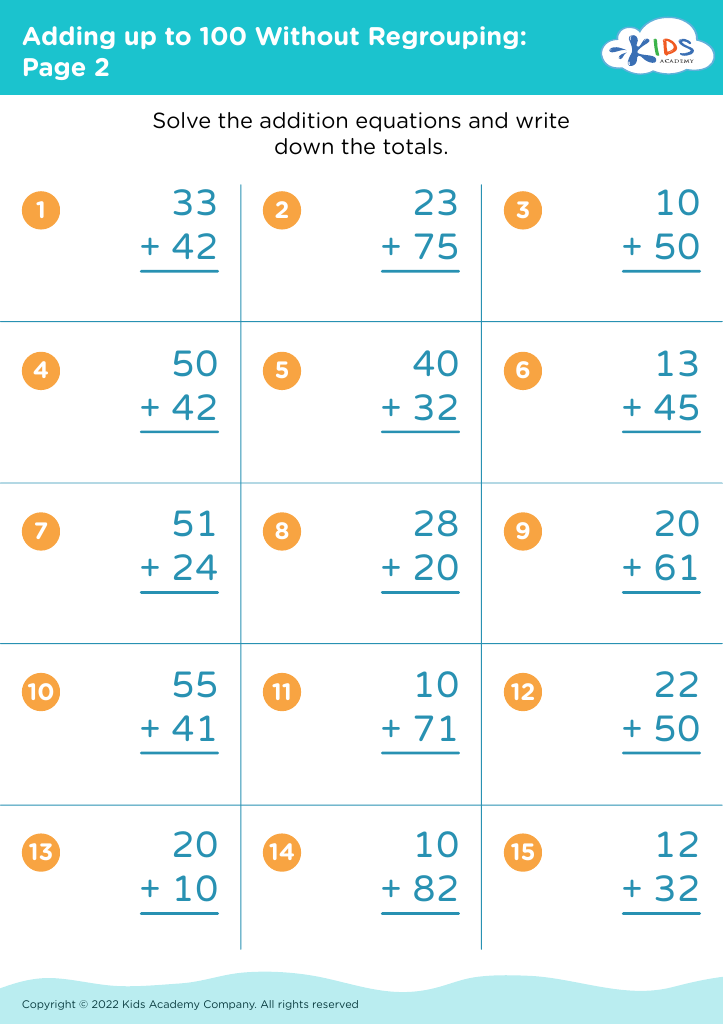
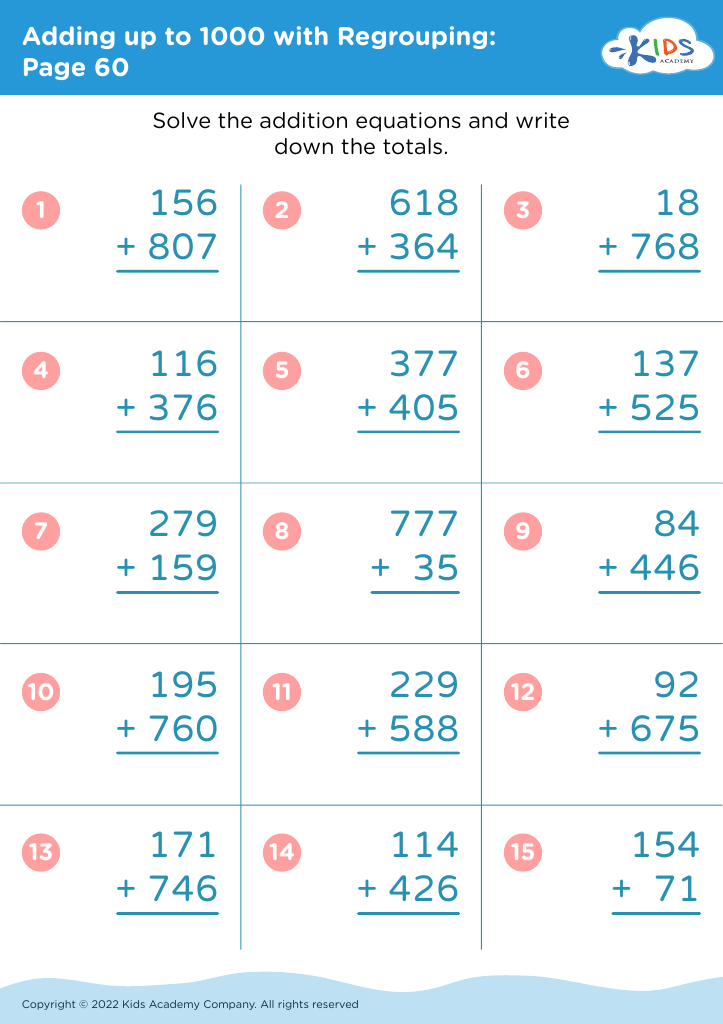
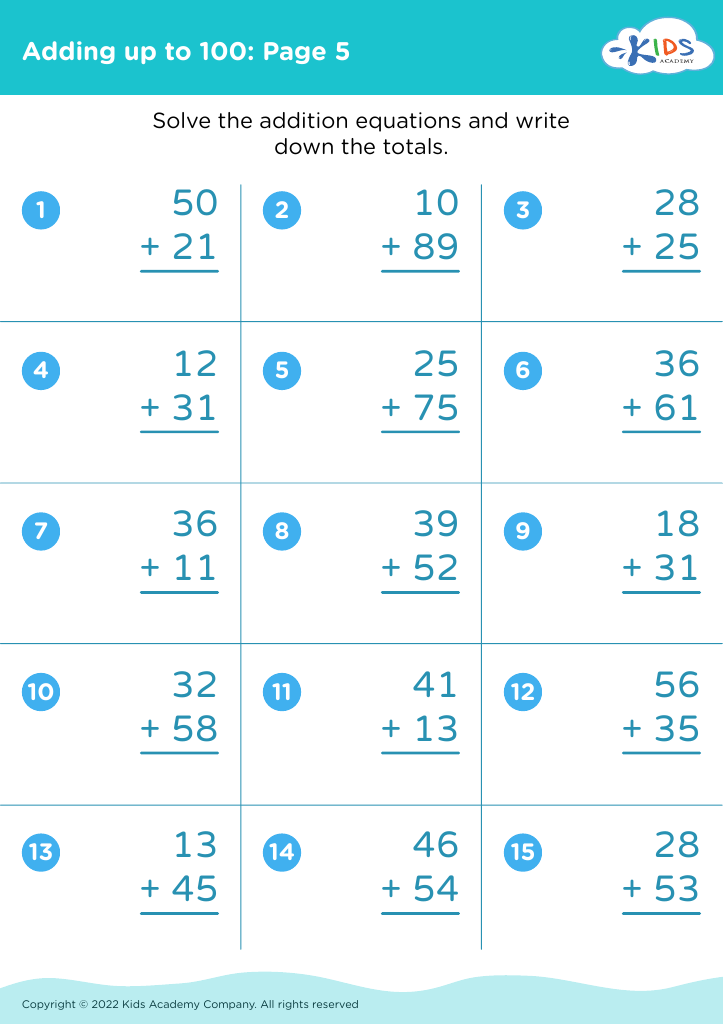
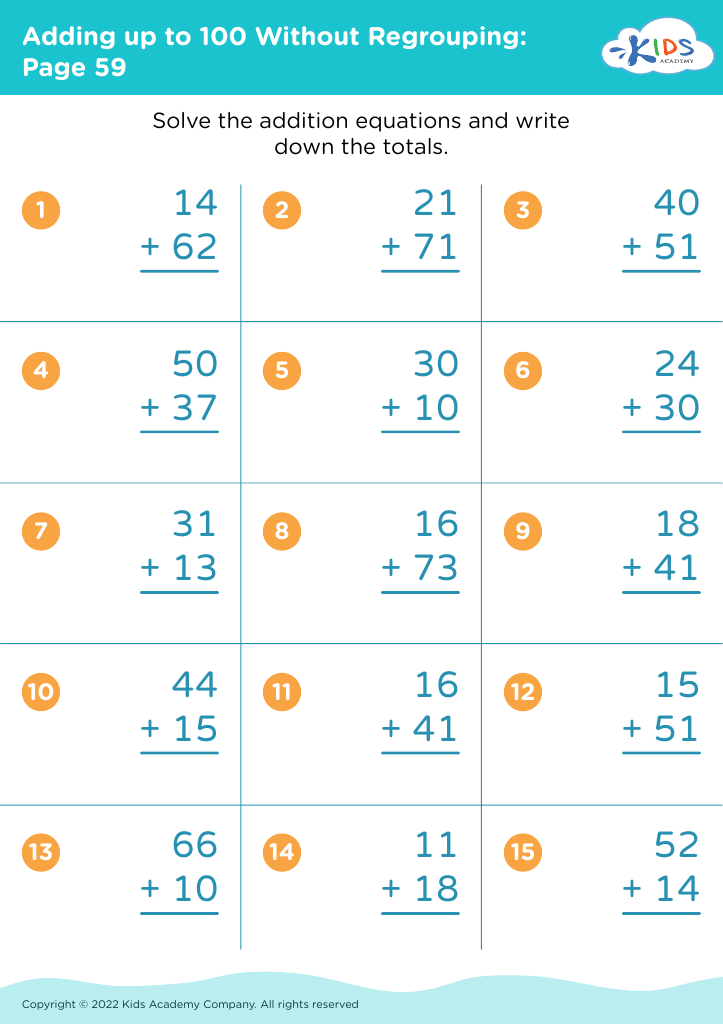
Boost your child's math skills with our "Following Instructions Addition Worksheets" for ages 7-8! These engaging worksheets are designed to enhance addition mastery while developing crucial listening and comprehension abilities. By integrating fun, themed activities, children hone their capacity to follow directions accurately, ensuring a strong foundation for future learning. Ideal for homeschooling or supplemental classroom practice, these printable resources turn learning into an enjoyable journey. Foster your child's confidence in math and guide them towards academic success with these expertly crafted, easy-to-use addition worksheets. Explore our collection and watch your youngster’s skills flourish!
Favorites
With answer key
Interactive
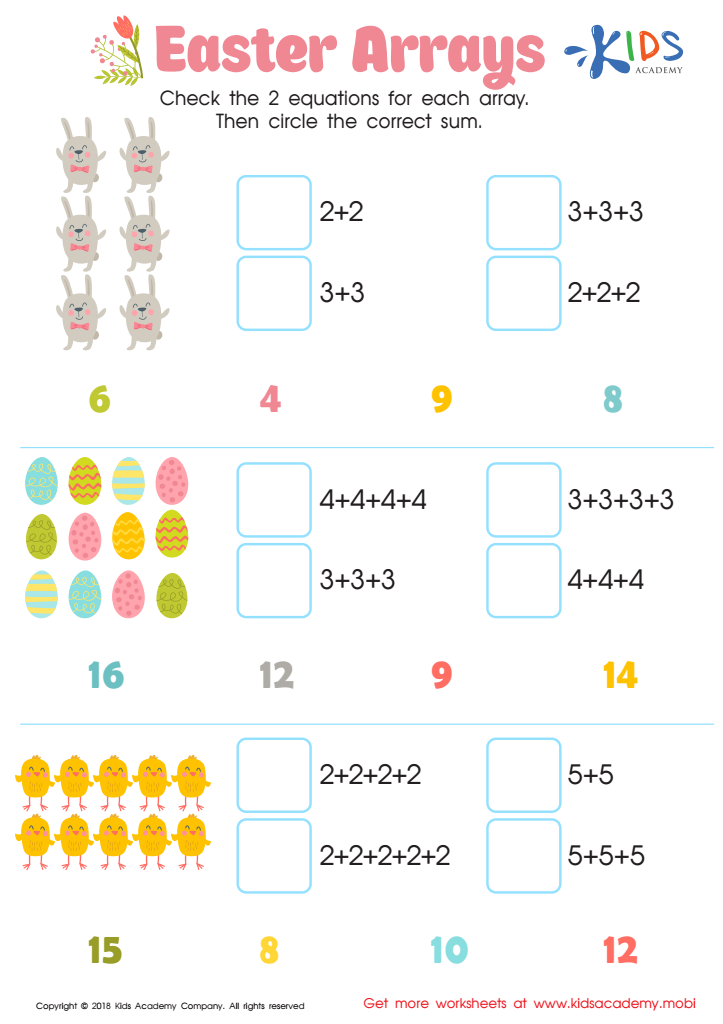
Easter Arrays Worksheet
Does your child love Easter? Do they adore the Easter bunny and egg hunts? Help them have fun with this worksheet! Go through it with them and check the equations for each array. Then, have them circle the correct sum. It's a great way to make the holiday extra exciting!
 Assign to My Students
Easter Arrays Worksheet
Worksheet
Join Kids Academy for Free
Who is primarily going to use this learning content?








Following instructions is a fundamental skill that significantly benefits children aged 7-8, both academically and socially. One key area where this skill is particularly impactful is in learning addition, a critical mathematical concept for this age group. When parents and teachers emphasize the importance of following instructions during addition lessons, they are fostering essential habits in children that aid overall cognitive development.
Understanding instructions helps children approach addition problems systematically, enhancing their problem-solving skills. At ages 7-8, kids are developing their ability to concentrate and follow multi-step processes. Clear instructions act as a guiding framework, allowing them to tackle each step methodically and understand the logic behind the operations. This systematic approach not only improves their addition proficiency but also builds a strong foundation for more complex mathematical concepts they will encounter later.
Additionally, the ability to follow instructions extends beyond the math classroom. It cultivates discipline, attention to detail, and the capability to understand and execute tasks accurately—skills that are valuable in all areas of learning and daily life. Therefore, by prioritizing the practice of following instructions in the context of learning addition, parents and teachers equip children with the tools necessary for academic success and practical life skills, setting them up for future achievements.








