
Fraction Addition Addition Worksheets for Ages 7-8
14 filtered results
Difficulty Level
Grade
Age
-
From - To
Subject
Activity
Standards
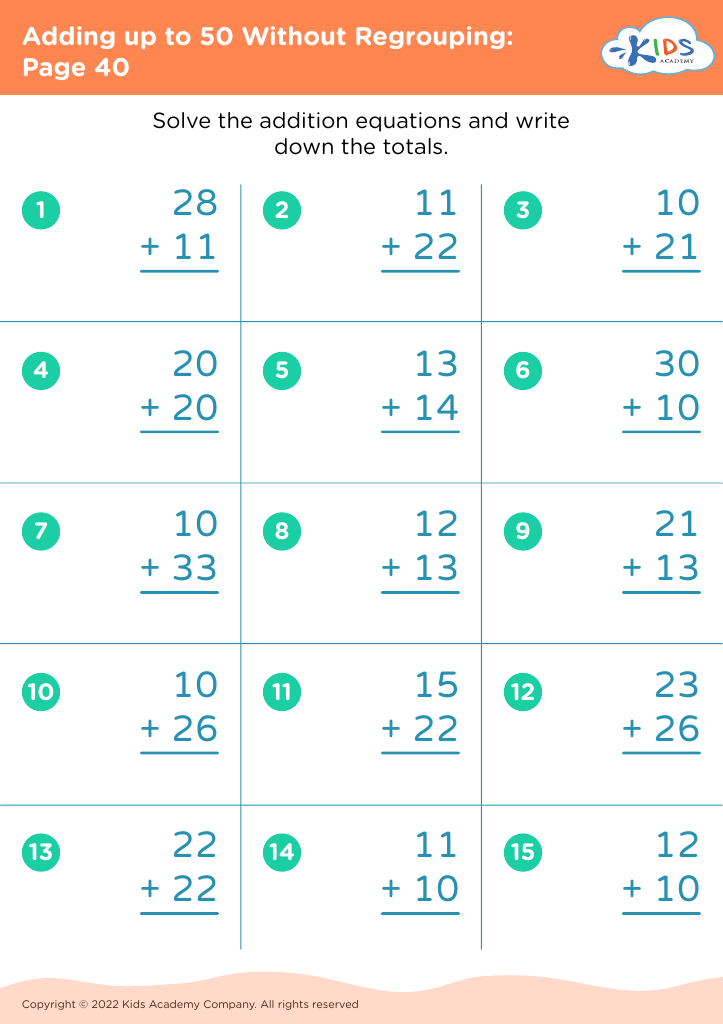
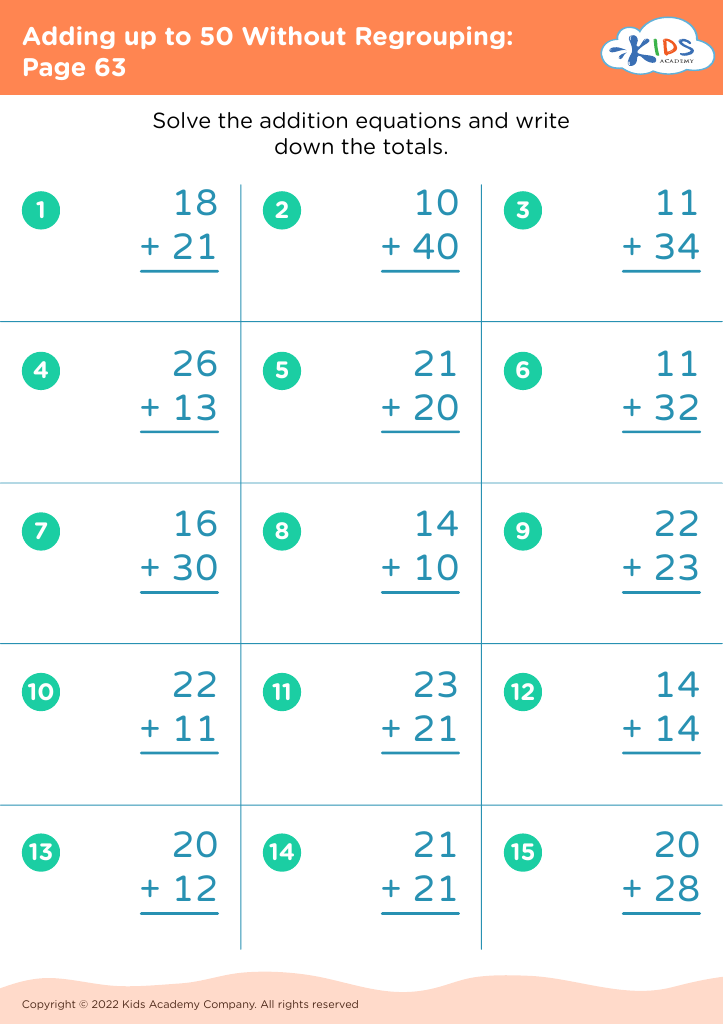
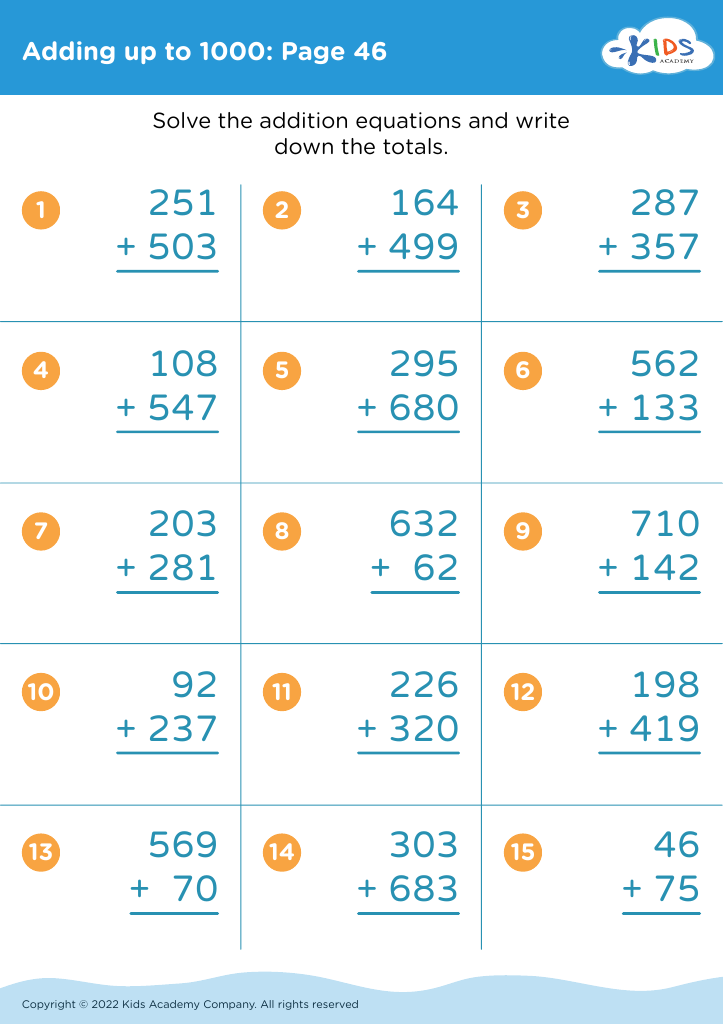
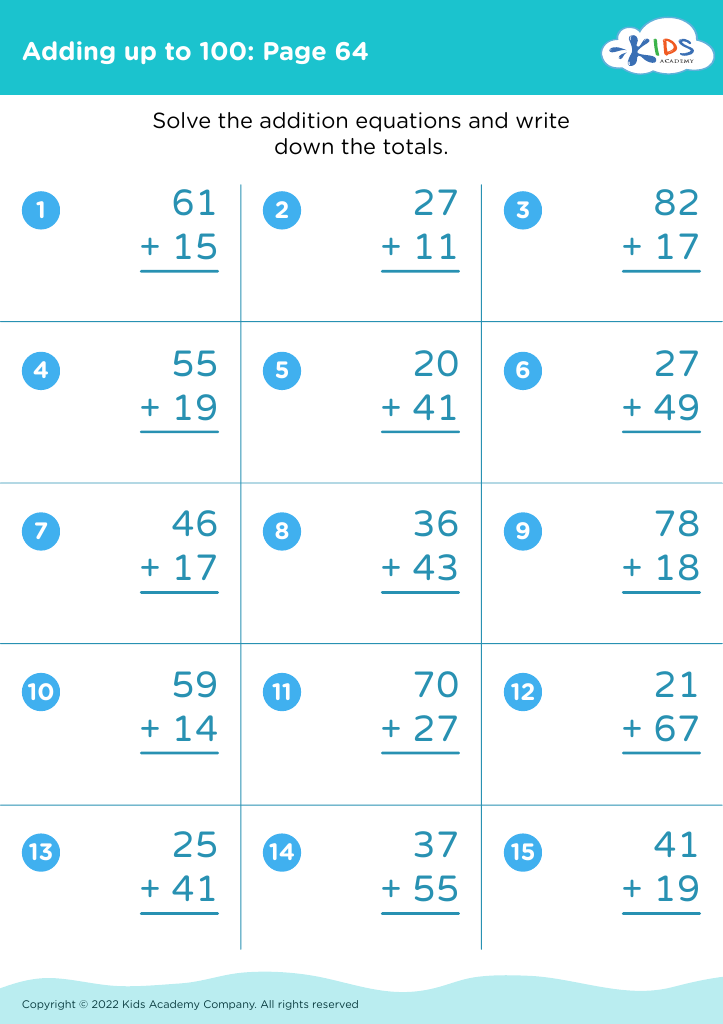
Enhance your child's math skills with our engaging Fraction Addition Worksheets, designed specifically for ages 7-8. These worksheets provide a fun and interactive way for young learners to master the concept of adding fractions. With various exercises, including visual aids and practical examples, your child will gain confidence in understanding fraction addition. Our carefully curated materials cater to different learning styles, ensuring they build a strong foundation in mathematics. Perfect for classroom use or at-home practice, these worksheets are an excellent resource to support your child’s mathematical journey while making learning enjoyable. Start boosting their skills today!
Favorites
With answer key
Interactive
Join Kids Academy for Free
Who is primarily going to use this learning content?








Fraction addition is a crucial mathematical skill that lays the foundation for more complex concepts children will encounter as they advance in their education. For children aged 7-8, mastering fraction addition enhances their understanding of numbers, thereby building critical thinking and problem-solving abilities.
By grasping how to add fractions, children learn to compare parts of a whole, which is foundational for understanding ratios, percentages, and various real-world applications like cooking, budgeting, and measuring. This knowledge is particularly essential as fractions are prevalent in everyday life.
Engaging in fraction addition allows children to improve their conceptual understanding, as they’ll practice working with like and unlike denominators. This offers opportunities for collaborative group work, fostering communication and teamwork, and also enhances their confidence as problem solvers.
Additionally, parents and teachers play an essential role in connecting abstract math to tangible experiences. Encouraging them to use visuals, manipulatives, or real-life examples makes learning fun and relatable, further motivating children. Ultimately, understanding fraction addition not only strengthens children's mathematical foundation but also sparks a longer-term interest in STEM subjects. Nurturing these skills creates lifelong learners who see the value in mathematics and its application in their daily lives.








