Learn new vocabulary Addition Worksheets for Ages 7-8
4 filtered results
-
From - To
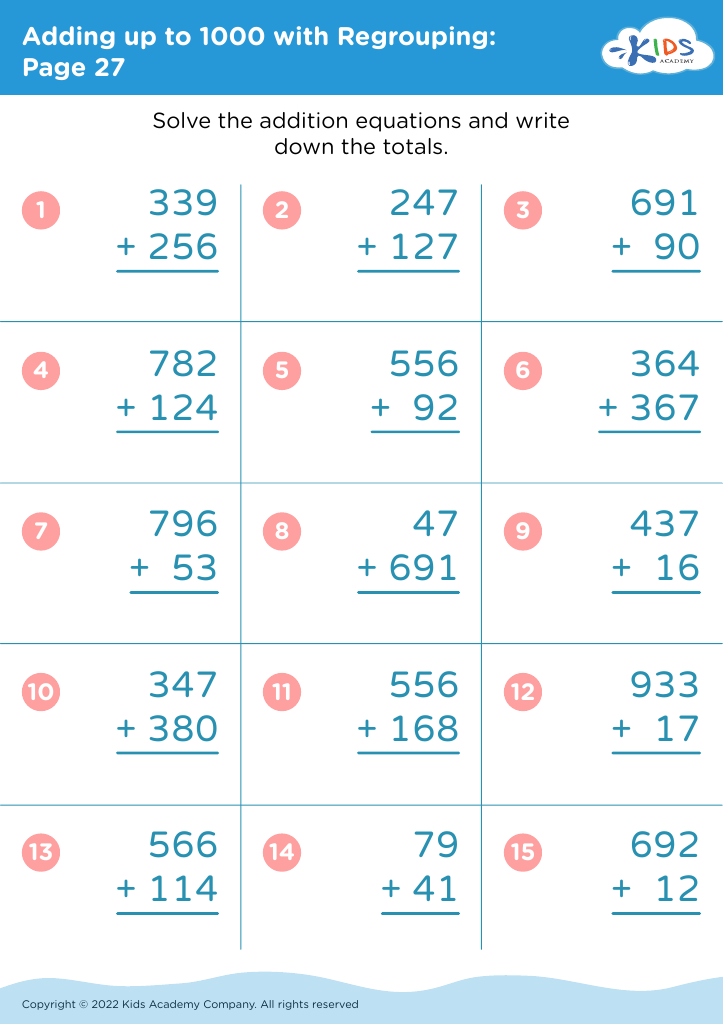
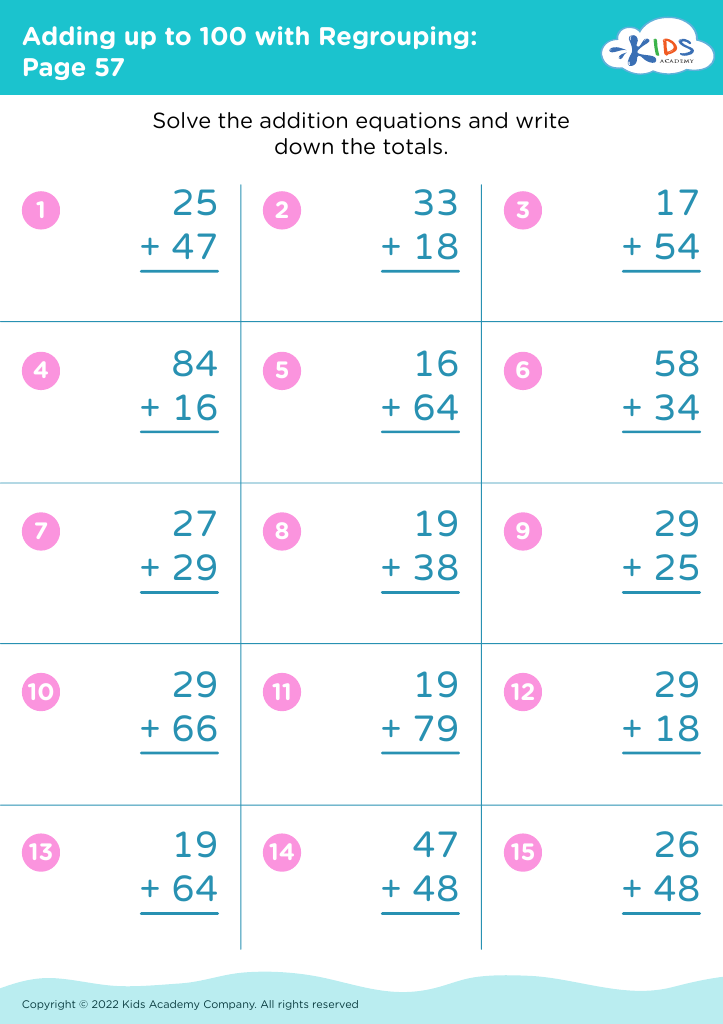
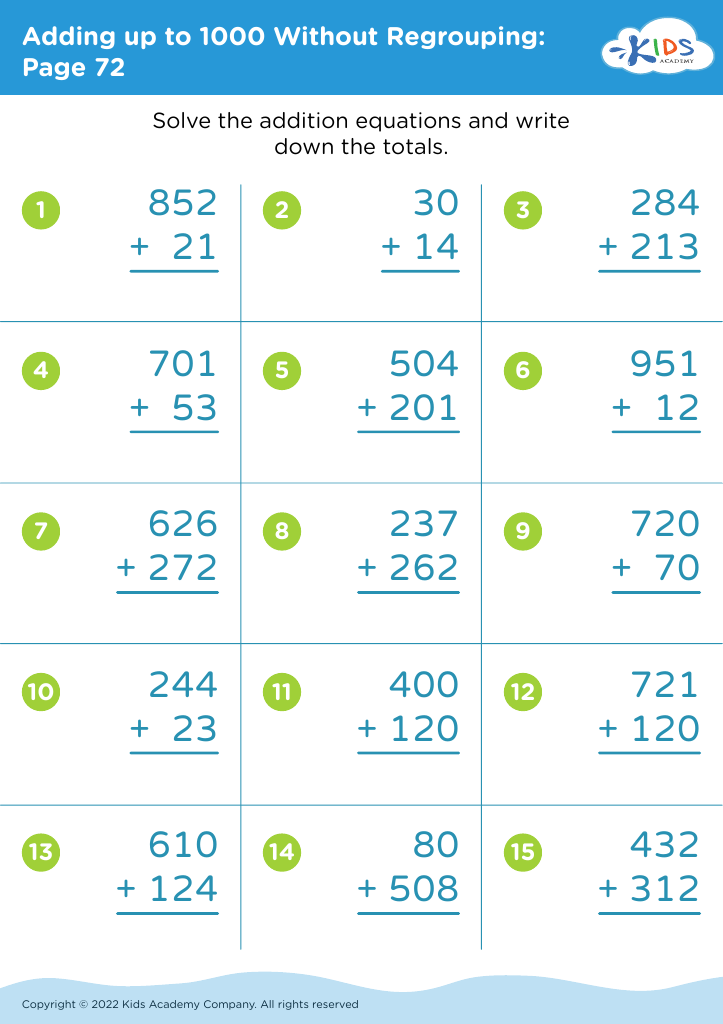
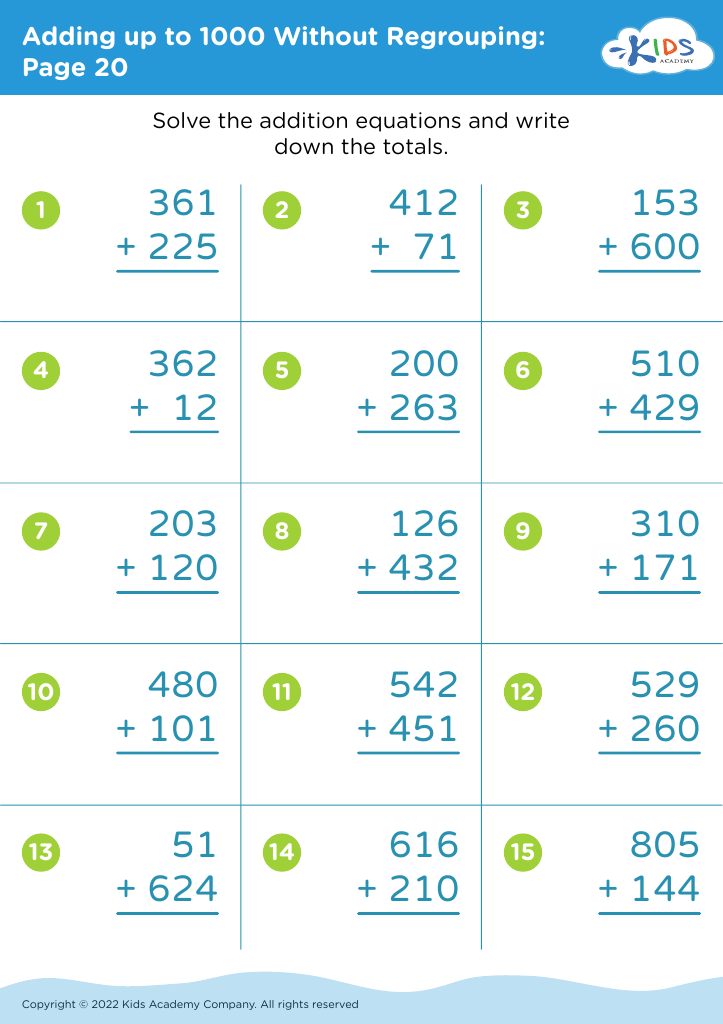
Introduce a world of mathematical fun with our "Learn New Vocabulary Addition Worksheets for Ages 7-8." These engaging worksheets are designed to build your child's addition skills while expanding their mathematical vocabulary. Through dynamic and interactive exercises, kids learn essential math terms and concepts, enhancing their understanding and confidence in addition. Each worksheet offers a variety of problems that combine visual illustrations and word-based questions, enabling children to connect math language with practical applications. Perfect for beginners and young learners looking to solidify their fundamentals, these worksheets make learning addition an enjoyable and educational adventure.







.jpg)
Building a strong vocabulary at an early age is crucial for a child’s educational development, and the same applies to mathematical concepts such as addition. For children aged 7-8, being proficient in vocabulary enables them to understand and follow instructions, grasp new concepts, and communicate effectively. These skills are fundamental for their overall academic success and later life.
Learning new vocabulary specifically in the context of addition can make a significant difference. As children begin to encounter more complex mathematical problems, they often face new terms. Understanding words like "sum," "total," "addend," and "equals" can help them follow math instructions accurately and solve problems more effectively. This foundation aids in developing their critical thinking and problem-solving skills. Moreover, being comfortable with math vocabulary can remove anxiety around math classes, leading to a more positive learning experience.
Teachers and parents should care about reinforcing this vocabulary, as it not only boosts academic performance but also instills confidence in students. Structured learning and casual conversations incorporating these terms can help. By fostering a rich vocabulary that includes math-related words, we prepare children to be more successful, confident learners and thinkers. This strong base supports their lifelong learning journey, making it essential for parents and teachers to prioritize.








