Numerical problem solving Addition Worksheets for Ages 7-8
3 filtered results
-
From - To
Enhance your child's math skills with our engaging Numerical Problem Solving Addition Worksheets designed specifically for ages 7-8. These worksheets present fun and challenging scenarios that help young learners apply their addition skills to real-world problems. With a variety of exercises, your child will practice critical thinking and develop a deeper understanding of numerical concepts. Each worksheet encourages creativity and problem-solving strategies to boost confidence in math. Ideal for classroom use or at-home practice, these resources provide the perfect opportunity for children to master addition while enjoying the learning process. Download now and spark a love for math in your little ones!
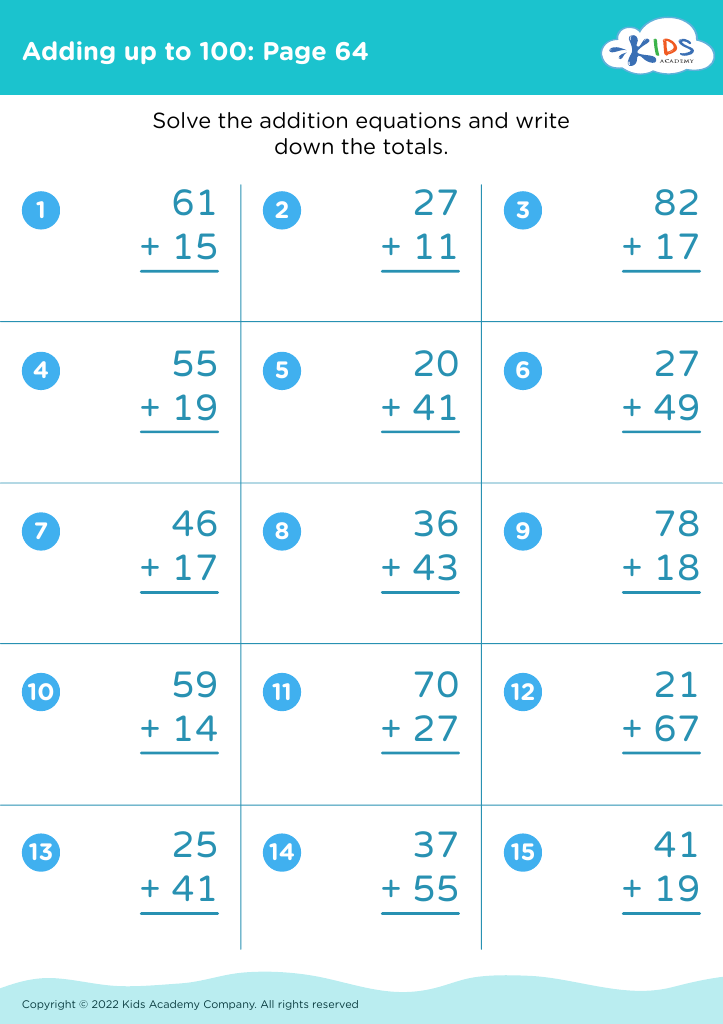
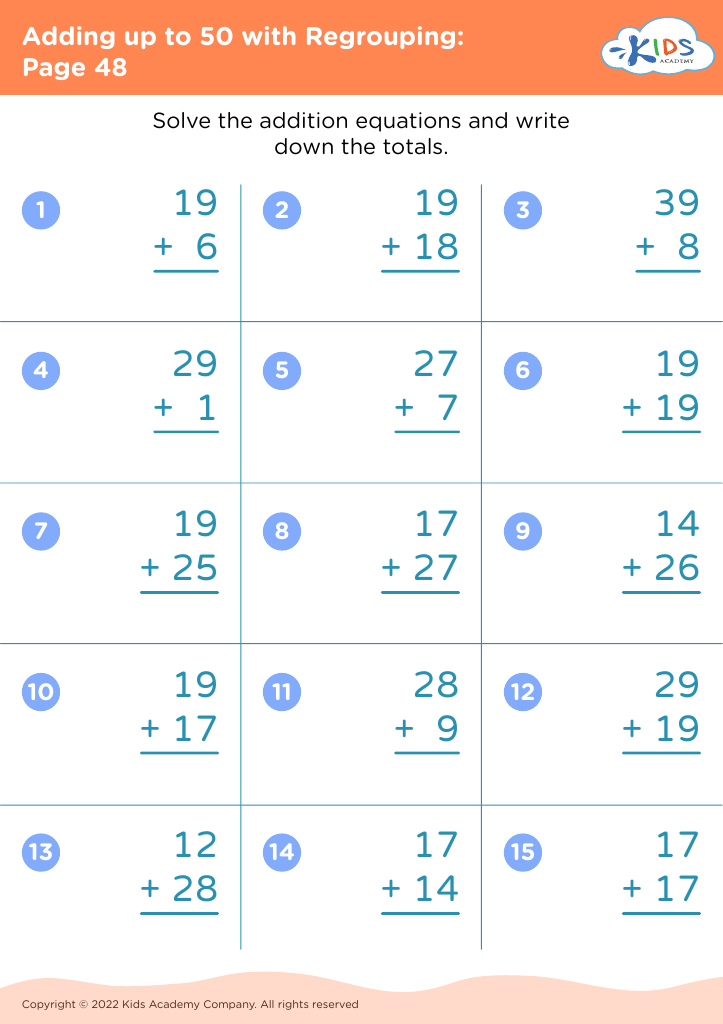
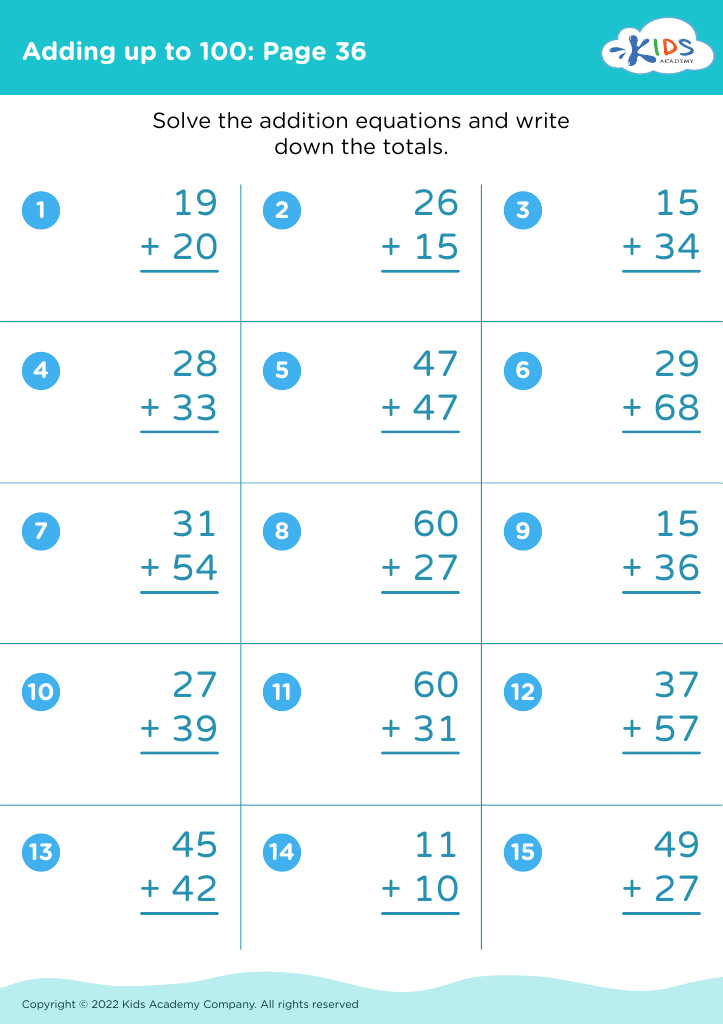








Numerical problem-solving through addition is a pivotal skill for children aged 7-8 as it lays the groundwork for their mathematical development. At this age, children begin to encounter more complex mathematical concepts, making addition a fundamental building block for future learning, such as multiplication, fractions, and advanced problem-solving.
Parents and teachers should care about this because developing strong addition skills enhances children's confidence and fosters a positive attitude towards math. Mastery of addition enables students to approach problems more independently and boosts their critical thinking abilities. Additionally, it encourages persistence and resilience; tackling numerically challenging problems together equips children with strategies that are applicable beyond mathematics.
Furthermore, strong numeracy skills improve academic performance across subjects, not just in math. Everyday tasks like budgeting allowance, understanding time, and measuring ingredients for recipes hinge on their ability to solve addition problems. Moreover, parental involvement and encouragement can significantly enrich a child's learning experience. Daily practice and engagement foster a deeper understanding, making math not only more enjoyable but also more relevant to real-life situations. Thus, prioritizing addition proficiency can phrase the child’s journey toward becoming a competent, confident thinker.








